Customer Acquisition Strategy in the Telecoms Industry
27 min to read
Published: December 21, 2023
Updated: October 13, 2026
A customer acquisition strategy in the telecoms industry is the combined set of tactics operators use to attract and convert new subscribers: segmentation, personalisation, smart bundling and loyalty rewards. The strongest strategies treat acquisition and retention as one system, because satisfied customers lower churn and become the advocates who bring the next ones in.
Mark Camp
CEO & Founder at PropelloCloud.com
Contents
Key Takeaways
Treat acquisition and retention as one system, because the customers you keep become the advocates who bring in the next ones.
Start with segmentation, grouping customers by usage, value, bundling behaviour and contract length so every offer reaches the right person.
Personalise what each segment sees, from service plans to communication, so interactions feel built for the individual rather than the mass.
Map the acquisition funnel from awareness to action, then fix the stage where prospects actually drop out.
When every network feels the same, experience is what keeps customers, and a good loyalty programme turns staying into its own reward.
Plan around the real obstacles, fierce competition, rising expectations, tighter regulation and the duty to protect customer data.
Track acquisition cost, conversion, lifetime value and churn together, because no single metric tells you whether you are winning the right customers.
Ask a telecoms customer why they are with their provider and most of them pause. There is rarely a reason beyond inertia, and inertia is the weakest thing in the world to build a business on. The moment a sharper deal lands, it goes.
That is the acquisition problem in plain terms. Winning a subscriber costs real money in subsidies, devices and marketing, and too many of them churn out before that spend has paid for itself.
I have watched operators keep topping up a leaking funnel and wonder why the cost per customer never falls.
The operators pulling ahead have stopped running acquisition in a silo. They segment the base properly, personalise what each group actually sees, and let retention carry half the load through advocacy and referral.
Should Telecoms Prioritise Customer Acquisition or Retention?
Both, and treating them as separate budgets is the mistake. In telecoms, acquisition and retention feed each other. Strong retention lowers churn and turns satisfied customers into advocates who drive referrals, which makes every acquisition pound worth the spend.
Here is the logic most operators miss.
Your existing base is the cheapest growth you will ever buy. A customer who stays is one you never have to win twice, and a happy one will tell other people why they stayed.
That is the connection the budget line hides.
Pour everything into acquisition and you are paying full price for growth you could partly earn for free. Invest in retention too, through customer experience, personalised service and a loyalty programme that rewards staying, and the maths changes.
Churn drops, and the customers you keep start doing your acquisition for you through referrals and word of mouth that cost next to nothing.
I have seen the same pattern across sectors: a well-built retention strategy fuels acquisition rather than competing with it.
However, that interlock only works if you know who you’re talking to, which is where segmentation comes in.
How Do Telecoms Use Segmentation to Win Customers?
Grouping subscribers along four lines, usage, customer value, bundling behaviour and contract length allows operators to point the right offer at the right person, allocate budget where it pays, and spot the high-value segments worth defending.
Sharper targeting, less wasted spend, higher conversion. Here’s a closer look at the segmentation types for telecoms operators:
Segmentation type
What it looks at
Best used for
Usage-based
Frequency, duration and which features customers actually use
Tiered data plans and sharper product development
Customer value
Revenue, profit, lifetime value and referral potential (often via the RFM model)
Spotting high-value customers and growth potential
Bundling behaviour
The service combinations customers take up together
Timing renewal offers and converting month-to-month users
Segmentation like this is where any serious acquisition strategy starts.
Before you can tailor an offer, time a renewal nudge or decide who is worth a retention budget, you have to know who you are talking to, and “everyone” is not an answer.
Group your base by how they behave, what they value and how they buy, and generic campaigns give way to messages that actually land.
Where you can, let AI-driven profiling do the heavy lifting, refining those segments as behaviour shifts so the strategy keeps pace instead of ageing.
What Are the Benefits of Effective Segmentation for Telecoms?
Effective segmentation pays off in three places: how you market, how you price, and the experience you deliver.
Targeted Marketing Opportunities
Segmentation lets you reach each group with a message that fits, which matters in a market where a blanket message reaches no one.
It also sharpens timing and cross-selling: knowing which services a segment already values tells you what to offer next, and when.
The point is to offer things that make sense for where a customer actually is.
Customised Pricing Strategies
Pricing is the next lever. Loyalty discounts aimed at high-churn-risk segments protect retention, while segments that value premium features or priority service will pay more for them.
Discounts are only part of it, though: business customers often want predictable flat-rate billing, and others respond to pricing that rewards certain behaviours.
Whatever the model, it only stays competitive if you keep adjusting it as segment behaviour and market conditions shift.
Improved Customer Experience
Finally, segmentation improves the experience itself.
Onboarding can be tailored to reduce friction from the first interaction, and communication adjusted in style and frequency to suit each group.
The same insight sharpens product development, pointing effort at the features a segment actually wants, and it helps support teams handle segment-specific issues faster.
How Does Personalisation Boost Customer Engagement in Telecoms?
Personalisation boosts engagement by making every interaction feel built for the individual rather than the mass. Relevance is what captures customers’ attention and creates brand loyalty.
Telecoms deliver personalisation in three main ways: tailored service plans priced to real usage, communication matched to each customer’s preferred content and channel, and AI tools that predict needs and flag churn risk early.
Tailored Service Plans
Generic data plans are giving way to packages shaped around how each customer actually uses their phone.
Analyse usage, and you can recommend the right balance of data, calls and messaging, so customers pay for what they use and feel they are getting better value for it.
The flexibility cuts both ways: plans can be adjusted as needs change, which keeps customers longer and gives you another axis to segment on.
Personalised Communication
Personalised communication goes well beyond putting a name at the top of an email. It means tailoring the content, timing and channel of each interaction to how a customer actually behaves.
Even a bill can earn its keep: with dynamic printing, operators embed relevant offers directly into statements, turning a routine document into an upsell.
Also, response history shows whether a customer is best reached by email, SMS or post, so the message lands where they will see it.
AI-Driven Tools for Personalisation
AI is where personalisation scales. Algorithms work through far more data than any team could, predicting what a customer needs and adjusting service before they ask.
They can flag the early signs that someone is about to switch, which is the moment to step in with a tailored retention offer.
And in support, chatbots and virtual assistants learn from every interaction, handling routine queries faster while freeing up people for the ones that need them.
Pull personalisation through every stage of the buying journey and conversions improve in your acquisition funnel.
How Does the Telecoms Customer Acquisition Funnel Work?
The telecoms acquisition funnel moves a prospect through four stages: awareness, interest, desire and action. Each stage has a different job to do, content to get noticed, relevant messaging to hold interest, a compelling offer to create desire, and frictionless onboarding to close.
Optimising the funnel means finding where prospects drop out and fixing that stage.
Awareness
At the top of the funnel, informative content and targeted campaigns put the brand in front of the right prospects.
Interest
Interest is held with personalised messaging and propositions that speak to a real need, nudging prospects towards consideration.
Desire
Desire is where the offer does the work. This is the stage where your point of difference becomes the thing a prospect actually wants, so it pays to lead with what a segment values rather than the biggest discount.
In telecoms that usually means one of three plays:
Bundle deals that package related services into something worth more than its parts
Gamification that makes engagement rewarding and repeatable,
A customer-centric offer shaped by what research and segmentation say a group wants.
Each should earn its keep twice, winning the first sale and seeding the loyalty that follows.
Action
Action demands a frictionless close: simple onboarding, effortless transactions and service that sets up a long relationship from day one.
AI chatbots can carry much of the onboarding, resolving routine queries on a self-serve basis and taking friction out of the first experience.
From there it is a matter of refining each stage, spotting the bottlenecks, and applying the strategies above where they fit.
How Do Telecoms Retain Customers in a Commodity Market?
Telecoms retain by making the whole journey exceptional, from sign-up to support, and by running loyalty programmes that reward staying with real value.
When every network looks much the same, experience is what keeps customers.
Connectivity is a commodity. With 5G widely available, most networks offer much the same thing at much the same price, so the network itself is no longer where customers are won or lost. Experience is.
And churn is relentless: GSMA Intelligence found that across 12 major markets, around one in seven mobile users switched provider in the last year, with value for money the top reason.
That is a seventh of the base up for grabs annually, so acquisition never gets to stop running.
The only durable answer is a journey worth staying for, from the first bill to the moment a customer starts recommending you.
Rewards worth having. The best rewards are experiences and exclusive services, not another discount.
Relevant partnerships. Teaming up with complementary brands widens your reach and builds an ecosystem of value, but only if the rewards genuinely resonate.
Brand elevation. The right partnerships position you as innovative and customer-centric in a crowded market.
Your loyalty programme holds the line against churn while actively pulling new customers towards the value you offer. That completes the cycle where your happiest customers become your best acquisition channel.
None of this is theoretical. Three operators, T-Mobile, Vodafone and Telefónica, show what it looks like in practice.
What Can Telecoms Learn From T-Mobile, Vodafone and Telefónica?
T-Mobile built its growth on scrapping contracts and fees and rewarding customers through its T-Mobile Tuesdays programme. Vodafone drives loyalty with VeryMe Rewards and partner perks. Telefónica leans on AI and real-time data to personalise service and keep customers longer.
T-Mobile
T-Mobile rewrote the rules with its Un-carrier strategy, scrapping annual contracts and the hidden fees customers hated.
The loyalty engine behind it is T-Mobile Tuesdays, a weekly rewards app with no points to collect.
Among its recurring perks are $25 all-in Live Nation concert tickets each summer, exactly the kind of experiential reward that lands with a younger, gig-going audience.
It is a masterclass in knowing precisely who you are for.
Vodafone
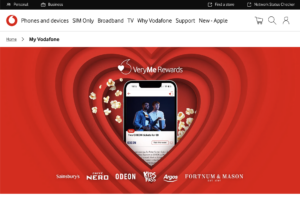
Vodafone’s play is partnerships that turn a phone bill into everyday value. Its VeryMe Rewards app, launched in November 2018, gives customers a rolling mix of treats, partner discounts and prize draws instead of money off their own plan.
The partner line-up is the draw. Recent VeryMe deals have included discounted Odeon cinema tickets, two for as little as £6, alongside offers from the likes of Just Eat and Caffè Nero.
The model is simple: make the rewards relevant enough that customers open the app every week, and the app keeps them close to the brand.
Telefónica
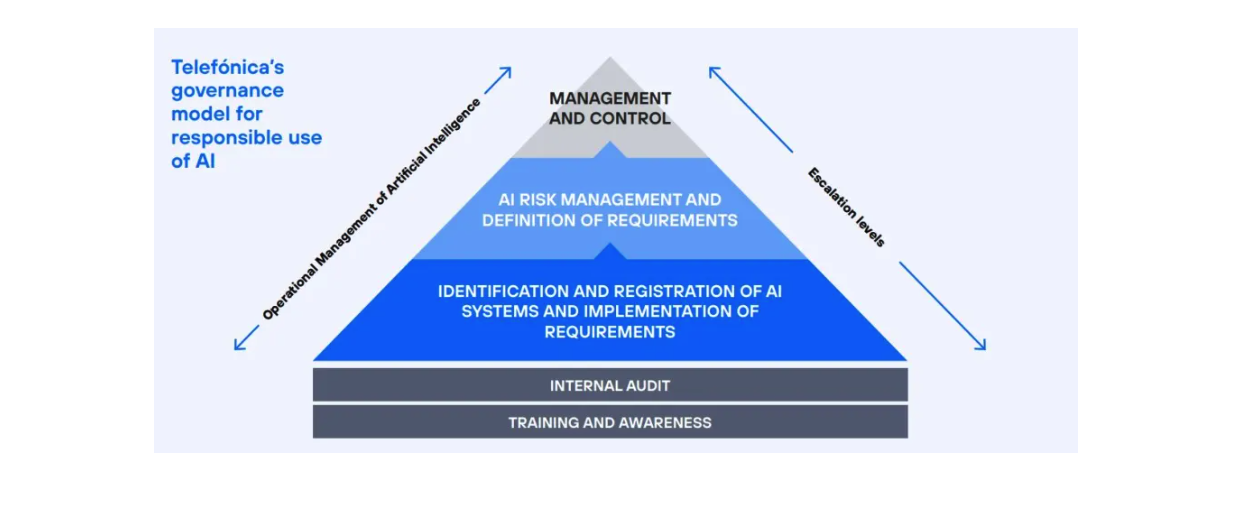
Telefónica’s edge is data. The operator uses AI and real-time analytics to predict what customers need and act on it, from next-best-offer decisions to personalised service.
Working with the AI messaging platform Swrve, Telefónica lifted new-user retention by 50% on one of its apps, by timing messages to the moments customers could actually act on them.
It points to where retention is heading: less broadcasting, more knowing each customer well enough to help before they ask.
What Are the Main Acquisition & Retention Challenges for Telecoms?
Several obstacles stand out. Competition is fierce and switching is easy, so customers leave over price and service. Expectations keep rising towards seamless, personalised experiences. Regulators are cracking down on unfair pricing and loyalty penalties. And as operators use more data to personalise, they must also protect it better.
Each one shapes how you acquire and retain.
Fierce Competition and Rising Expectations
Telecoms customers can leave a provider whenever they like, and plenty do. Providers compete on price, service and innovation all at once, and switching has never been easier, so a better offer elsewhere is a constant threat.
At the same time, expectations keep climbing. Customers now want seamless connectivity, personalised service and genuine value, and they move to whoever delivers it.
Standing still is the one option that guarantees losing them. Carving out a distinct, responsive brand is what keeps you in the running.
Tighter Regulation
Regulators are increasingly willing to step in where operators treat customers unfairly.
In the UK, the long-standing “loyalty penalty”, where out-of-contract customers quietly pay more than new ones, has drawn regulatory action. From 2025, Ofcom bans inflation-linked mid-contract price rises, requiring any increase to be stated up front in pounds and pence.
Operators now have to prove fair practice, clear advertising and real value. Building that fairness into how you acquire and retain is now a must.
Data Privacy and Trust
Personalisation runs on customer data, and that creates a second obligation: protecting it. Get it wrong and the damage is severe.
In 2023, a breach at Xfinity exposed the data of nearly 36 million customers, a reminder that a single lapse can undo years of goodwill. Used well, personalisation feels helpful. Pushed too far, it feels like surveillance.
The goal is to stay on the side where customers feel understood, not watched, because once trust goes, so do they.
Knowing the obstacles is half the job. The other half is the habits that get you past them.
What Are the Best Practices for Acquiring and Retaining Telecoms Customers?
Collect and act on data across every touchpoint and break down the silos between marketing, sales and service. You must also deliver one consistent experience across channels, keep testing and refining, and encourage happy customers to refer others.
Collect Data, Then Keep Acting On It
Everything else runs on data. Gather it across every touchpoint, turn it into insight through segmentation and analysis, and let it drive the decisions rather than sit in a dashboard.
Then keep going.
The market shifts and so do customers, so the operators who stay ahead treat strategy as a loop: test, measure, refine, repeat.
A/B tests and feedback loops are how you catch what is working before your competitors do.
Break Down the Silos
Acquisition and retention are not one team’s job. When marketing, sales, service and product share what they know and pull the same way, customers get a joined-up experience.
Siloed teams produce disjointed journeys.
Be Consistent Across Every Channel
Customers do not think in channels. They move from your website to your app to a call with support and expect the thread to carry across all of them.
A strong digital presence is the baseline now, engaging content, easy self-service, instant access to information, but the real win is consistency: the same experience and the same answers wherever a customer reaches you.
Meet them where they are, not where it suits you.
Lean on Referrals
The cheapest acquisition you will ever do is a happy customer recommending you.
A good referral programme turns that goodwill into a channel, and the customers it brings in tend to convert faster, cost less and stay longer, because they arrive already trusting you.
It is the virtuous cycle in action: the customers you look after bring you the next ones.
All of this only improves what you can measure, so the last piece is knowing which numbers to watch.
How Do You Measure Acquisition Success in Telecoms?
Measuring acquisition means looking past sign-up numbers to the full picture. Four metrics do most of the work: customer acquisition cost, conversion rate, customer lifetime value and churn rate. Together they show how efficiently you win customers, how good they are, and whether you keep them.
Counting new sign-ups tells you almost nothing on its own.
The real question is how customers move through your funnel, where they drop out, and what happens after they join.
A customer who signs up and leaves three months later is not a win. So track the journey end to end, and keep watching the relationship long after the sale.
The metrics that matter measure quality and staying power.
Metric
What it measures
Why it matters
Customer Acquisition Cost (CAC)
What you spend to win each new customer
Lower is better; advocacy and referrals bring it down
Conversion Rate
How well you turn leads into customers at each funnel stage
Pinpoints where prospects drop out
Customer Lifetime Value (LTV)
The total value a customer brings over the relationship
Judges the quality of your acquisitions, not just the count
Churn Rate
The share of customers who leave in a given period
Measures how well you keep the customers you won
Watch these together. For example, a low acquisition cost means little if churn is high, and a strong conversion rate is wasted on customers who never stay.
Read as a set, they tell you whether you are winning the right customers and keeping them.
The New Way to Win Telecoms Customers Is Already Here
Customers are tired of being treated as easy money, and they are moving to providers that treat them better.
The operators who get this, who acquire and retain as one effort, segment properly, personalise what matters and reward loyalty instead of punishing it, are the ones customers stay with.
The rest will keep paying to replace the customers they lose.
That shift is not coming. It is already here. The only question left is which side of it your telco ends up on.
FAQs
What is the average customer acquisition cost for a telecom company?
There is no single figure, because telecom acquisition cost varies widely by market, channel and whether a handset subsidy is involved. What is consistent is that it is high and rising, driven by device subsidies, marketing and sales commissions. Most operators track it per channel rather than leaning on an industry average.
How is customer acquisition cost (CAC) calculated?
Customer acquisition cost is the total you spend to win new customers over a period, divided by the number of customers acquired in that period. The spend should include marketing, sales, commissions and any onboarding or device subsidy costs, not just advertising, so the figure reflects the true cost of each new subscriber.
What is a good churn rate for a telecom company?
Lower is always better, but “good” depends on the market and customer type. For context, GSMA Intelligence found around one in seven mobile users switched provider in a year across 12 major markets. Strong postpaid operators often run monthly churn near 1%, while prepaid and fiercely competitive markets see considerably more.
What are the main customer acquisition channels for telecoms?
Telecoms acquire through a mix of channels: their own website and app, retail stores, price-comparison sites, paid and social advertising, partnerships and bundle deals, and increasingly referrals from existing customers. The strongest programmes track performance by channel, so budget flows to the ones that bring in customers who actually stay.
What is the difference between customer acquisition and customer retention?
Acquisition is the work of winning brand-new customers; retention is keeping the ones you already have. Acquisition usually costs more per customer because of marketing and subsidies, while retention protects revenue and fuels referrals. In telecom the two work best together, since loyal customers lower churn and bring in new ones.
How does 5G affect telecom customer acquisition and retention?
5G raises the stakes on both. Because most operators now offer similar 5G coverage and speeds, the network alone rarely wins or keeps customers, so experience, pricing and loyalty become the real differentiators. 5G also enables new data-rich services and bundles that operators can use to attract and retain specific segments.
What is ARPU in telecom and why does it matter?
ARPU, or average revenue per user, is the revenue a telecom earns from each customer over a period, usually monthly. It matters because acquisition is only worthwhile if the customers won are valuable enough, for long enough, to repay what it cost to win them. Rising ARPU alongside low churn signals healthy growth.
What is subscriber acquisition cost (SAC) in telecoms?
Subscriber acquisition cost is the telecom-specific version of CAC: the total cost of signing up each new subscriber, including device subsidies, sales commissions, marketing and activation. Because handset subsidies can be large, SAC is often substantial, which is why operators care so much about keeping subscribers long enough to recover it.
What is customer win-back in telecoms?
Win-back is the effort to re-acquire customers who have already left, usually with a targeted offer timed soon after they churn. It often costs less than winning a complete stranger, because the former customer already knows the brand. Done well, it also surfaces why they left, which helps fix the underlying problem.
What is the loyalty penalty in telecoms?
The loyalty penalty is when long-standing customers pay more than new ones for the same service, usually once they roll off their initial contract. UK regulators have treated it as a fairness problem and pushed operators to notify out-of-contract customers of better deals. It is a quiet but real driver of churn.
Mark Camp
Mark is the Founder and CEO of Propello Cloud, an innovative SaaS platform for loyalty and customer engagement. With over 20 years of marketing experience, he is passionate about helping brands boost retention and acquisition with scalable loyalty solutions.
Mark is an expert in loyalty and engagement strategy, having worked with major enterprise clients across industries to drive growth through rewards programmes. He leads Propello Cloud’s mission to deliver versatile platforms that help organisations attract, engage and retain customers.
Start your customised Propello Cloud journey today
Explore the platform’s scalability, features and customisation options and get answers to your unique questions.