Customer Acquisition Strategy: 8 Actionable Best Practices
25 min to read
Published: August 16, 2023
Updated: February 6, 2025
A customer acquisition strategy that ignores loyalty is leaving money on the table. According to Propello Cloud’s2025 Customer Loyalty State of the Industry Report, based on conversations with 100 enterprise brands, the most effective acquisition tactics today are built on the same foundation as retention: personalisation, strategic partnerships, and the ability to deliver value in real time.
Mark Camp
CEO & Founder at PropelloCloud.com
Contents
Key Takeaways
84% of enterprise brands prioritise personalisation and strategic brand partnerships as their top loyalty investments
83% cite customer engagement as their biggest loyalty challenge — 37% rate it critical
80% report churn management difficulties, yet most are still relying on last-minute retention tactics
69% prefer outsourced loyalty solutions over in-house builds — speed to market is the primary driver
Referred customers convert 30% better than leads from other channels and have a 37% higher retention rate than non-referred customers
Lebara Mobile launched with Propello in 12 weeks, acquired 100,000 members in two months, and expanded from 15 to 100+ brand partnerships in the same period
This post breaks down what enterprise brands are actually investing in, where the gaps are by sector, and what you should evaluate before committing to a loyalty platform partner. Whether you’re building a business case or benchmarking your current programme, the data here will give you a clearer picture.
What Are Enterprise Brands Prioritising in Loyalty Right Now?
Personalisation and strategic brand partnerships tied at the top of the investment priority list, both scoring 84% in our 2025 research. That near-identical ranking is not a coincidence. Brand partnerships are a delivery mechanism for personalisation: they let you co-create rewards that feel relevant to individual customers without building everything in-house.
Here is how investment priorities break down across the enterprise brands we surveyed:
Investment Area
Adoption Rate
% Rating It Critical
Personalisation and data utilisation
84%
36%
Strategic brand partnerships
84%
35%
API integration and mobile-first
77%
31–32%
Real-time rewards and instant gratification
75%
30%
Experiential rewards
74%
30%
Outsourced (build vs buy)
69%
28%
Gamification
65%
27%
AI and machine learning
62%
25%
Why do personalisation and partnerships rank equally?
Personalisation without relevant rewards is just segmentation. Brand partnerships give you the content to make personalisation real: targeted discounts, experiential perks, and offers aligned to individual customer preferences. The two investments reinforce each other, which is why their critical priority ratings (36% and 35% respectively) are almost identical.
Why is outsourcing loyalty ranked so high?
Speed to market is the decisive factor. According to our research, 69% of enterprise brands prefer outsourced solutions, and the primary driver is not cost: it is the ability to launch, test, and scale faster than in-house development allows.
8 Customer Acquisition Strategies Built on Loyalty Programmes
Loyalty programmes are no longer just retention tools. We found in our 2025 Customer Loyalty State of the Industry Report that the enterprise brands growing fastest are using loyalty as an active acquisition engine — combining referrals, partnerships, and personalised value to bring in new customers at lower cost than paid channels.
Here are the eight strategies enterprise brands are deploying right now.
1. Build a referral programme into your loyalty platform
Referral programmes turn your existing members into an acquisition channel.Referred customers convert 30% better than leads from other marketing channels and have a37% higher retention rate than non-referred customers. The compounding effect is significant: lower acquisition cost, higher lifetime value, and a self-reinforcing growth loop built on trust.
2. Use strategic brand partnerships to reach new audiences
Strategic brand partnerships tied at the top of the investment priority list in our 2025 research, with 84% of enterprise brands citing them as a top investment. Partnerships let you co-create rewards that are relevant to individual customers without building everything in-house — and they expose your programme to partner audiences who have never heard of your brand.
3. Personalise the rewards experience with real-time data
Personalisation ranked equally with partnerships at 84% adoption in our research — and for good reason. Generic milestone rewards no longer drive acquisition. Brands that use real-time behavioural data to deliver relevant, timely offers create programmes that prospects actively want to join. According to Nathan Armstrong, Loyalty and Brand Partnerships Consultant at Propello, “Personalised rewards make sense to the individual, and are relevant to their customer journey with the business.”
4. Deliver real-time rewards and instant gratification
75% of enterprise brands in our research prioritise real-time rewards. Instant reward delivery reinforces positive behaviour at the moment of interaction — which is exactly what drives new member sign-ups. Prospects who see immediate value on day one are significantly more likely to stay engaged beyond the first redemption cycle.
5. Adopt a mobile-first loyalty experience
77% of enterprise brands prioritise mobile-first strategies, and for good reason: mobile devices are the dominant touchpoint for customer interactions. A loyalty programme that is difficult to access on mobile is a loyalty programme that fails to acquire. Plug-and-play platforms with built-in mobile-first capabilities can be deployed quickly without extensive custom development.
6. Launch experiential rewards to differentiate your programme
Experiential rewards ranked at 74% adoption in our research, with Leisure and Travel brands leading at 79%. Experiences command higher perceived value than transactional discounts — and they are significantly harder for competitors to replicate. A programme that offers something genuinely distinctive gives prospects a reason to join that goes beyond price.
7. Use gamification to drive programme engagement and referrals
65% of enterprise brands are investing in gamification. Challenges, milestones, and streak-based rewards tap into customers’ competitive instincts and keep them actively participating. Engaged members are also your most likely referrers — which closes the loop back to strategy one.
8. Outsource to a specialist platform to launch faster
69% of enterprise brands prefer outsourced loyalty solutions, and speed to market is the decisive factor. Lebara Mobile launched with Propello in 12 weeks, acquired 100,000 members in two months, and expanded from 15 to over 100 brand partnerships in the same period. In-house builds cannot match that timeline — and every week of delay is a week your competitors are acquiring the customers you are not.
How Does Your Sector Compare?
Investment levels vary significantly by industry. Knowing where your sector sits tells you whether you are ahead, at parity, or at risk of falling behind.
Which sectors are leading on loyalty investment?
B2C SaaS and Technology leads on data-driven loyalty, with the highest adoption rates for personalisation (88%) and mobile-first strategies (81%). Their native digital infrastructure makes this achievable at scale.
Retail invests aggressively across the board: 88% on strategic partnerships and 85% on API integration. The omnichannel nature of retail demands connected loyalty experiences, and the data shows the sector knows it.
Leisure and Travel leads on experiential rewards (79%) and tiered memberships (72%). Despite operating in an economically sensitive sector, these brands are betting that premium experiences drive retention even under pressure.
Which sectors are falling behind?
Utilities and Telecoms show the most conservative investment levels: 69% on API integration and 58% on tiered memberships, both notably below the cross-sector average. Our research suggests this reflects lower awareness of loyalty programme potential rather than better performance.
The risk is real. Utilities and Telecoms businesses tend to limit value-added rewards to contract renewal periods. That “last-minute loyalty” approach misses year-round engagement opportunities and compromises customer lifetime value in increasingly competitive markets.
Insurance and Financial Services show consistent investment in personalisation (83–84%) and mobile strategies (76–78%), with insurance brands using behavioural data to reward responsible actions like careful driving and home security improvements.
What Are the Biggest Challenges Brands Face with Loyalty Programmes?
Understanding investment priorities is only half the picture. Our research also mapped the challenges that are actively blocking progress. The results reveal that most enterprise brands are fighting on multiple fronts simultaneously.
Top challenges across 100 enterprise brands:
Customer engagement — 83% cite it as a challenge; 37% rate it critical
API integration complexity — 81% affected; 35% rate it critical
Churn management — 80% affected; 35% rate it critical
Data privacy and compliance — 78% affected; 34% rate it critical
Multi-channel consistency — 77% affected; 34% rate it critical
Resource constraints — 76% affected; 33% rate it critical
The pattern here matters. The top four challenges all carry near-identical critical ratings (34–35%), which means organisations are not dealing with one dominant problem. They are managing several high-priority issues at the same time, often with the same team.
Why do resource constraints compound everything else?
Resource constraints directly affect programme maintenance costs (74%) and scalability (72%). Brands using in-house solutions consistently report this domino effect: limited internal capacity slows feature development, which reduces programme freshness, which reduces engagement.
This is the structural argument for outsourced platforms. When a specialist provider handles technical infrastructure, partner networks, and ongoing optimisation, internal teams can focus on strategy and customer experience rather than maintenance. It is why 69% of the brands we surveyed prefer the outsourced route.
What Should You Evaluate Before Choosing a Loyalty Platform Partner?
Most platform evaluations focus on features. The better question is: does this platform solve the challenges that are actually blocking us, and can it launch fast enough to matter?
Based on our research findings, here are the four dimensions that separate platforms worth evaluating from those that are not.
Does it support speed to market?
70% of enterprise brands cite speed to market as a challenge, and 30% rate it critical. A platform that requires 12+ months of custom development before launch is not a solution to that problem. Lebara Mobile, for example, launched with Propello in 12 weeks and acquired 100,000 members within two months of going live. Their partner catalogue expanded from 15 to over 100 brand deals in the same period.
Can it deliver personalisation at scale without a large internal team?
Effective personalisation requires real-time behavioural data, dynamic segmentation, and a rewards catalogue wide enough to be relevant. Platforms that rely on static demographic data or require heavy internal configuration cannot deliver this efficiently. Look for white-label solutions with built-in data tools and a managed partner network.
Does it integrate with your existing tech stack?
81% of enterprise brands struggle with API integration complexity. Plug-and-play solutions reduce this significantly. Headless API options offer more flexibility but require greater upfront investment and longer timelines. Clarify which approach fits your current infrastructure before evaluating cost.
What does the commercial impact actually look like?
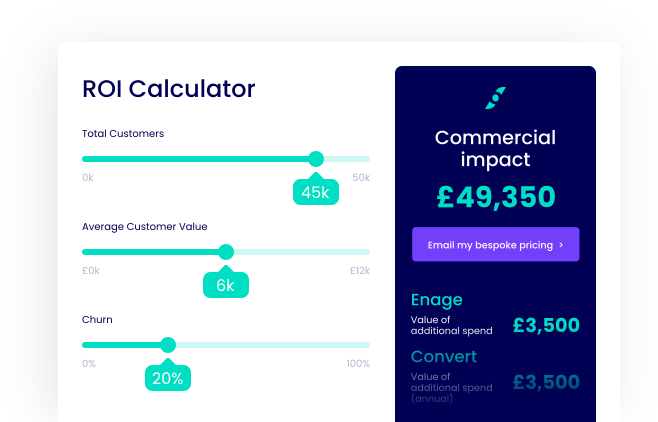
Use aloyalty ROI calculator to model the impact against your specific customer base, average customer value, and churn rate before committing to a platform. The numbers tend to be more compelling than most teams expect.
The Bottom Line
A customer acquisition strategy built on loyalty is not a long-term play anymore. It is a current competitive requirement. The enterprise brands investing in personalisation, strategic partnerships, and real-time rewards are not doing so as a differentiator; they are doing so because customers now expect it.
The decision is not whether to invest in loyalty. The decision is whether to build it yourself or partner with a specialist who can get you to market in weeks rather than years.
If you want to see what the commercial impact could look like for your business, use thePropello ROI calculator to model the numbers against your own customer base. Orbook a demo to see the platform in action.
Frequently Asked Questions
What is a customer acquisition strategy using loyalty programmes?
A customer acquisition strategy using loyalty programmes uses rewards, referrals, and brand partnerships to attract new customers at lower cost than paid advertising. According to Propello Cloud’s2025 Customer Loyalty State of the Industry Report, 84% of enterprise brands now treat personalisation and strategic partnerships as their primary acquisition and retention investment.
How do loyalty programmes reduce customer acquisition costs?
Loyalty programmes reduce acquisition costs by turning existing customers into a referral channel. Referred customers convert 30% better than leads from other marketing channels and have a 37% higher retention rate, meaning the cost of acquiring them is lower and the return is higher. A well-designedreferral marketing programme compounds this effect over time.
Should enterprise brands build or buy a loyalty platform?
According to Propello Cloud’s 2025 research, 69% of enterprise brands prefer outsourced loyalty solutions over in-house builds. The primary driver is speed to market, not cost. Brands that outsource to a specialist provider can launch in weeks rather than months and access ready-built partner networks immediately, without the resource burden of greenfield development.
What are the biggest challenges in running a loyalty programme?
The top challenges reported by enterprise brands in Propello Cloud’s 2025 research are customer engagement (83%), API integration complexity (81%), and churn management (80%). Critically, the top four challenges all carry near-identical critical ratings of 34 to 35%, meaning most organisations are managing several high-priority problems simultaneously rather than one dominant issue.
How do I choose the right loyalty platform partner?
Evaluate any loyalty platform partner across four dimensions: speed to market (can they launch in weeks?), personalisation at scale (do they have built-in data tools and a managed partner network?), API integration fit (plug-and-play or headless, depending on your infrastructure), and commercial impact. Use thePropello ROI calculator to model the numbers against your specific customer base before committing.
FAQs
What is a customer acquisition strategy?
Your customer acquisition strategy outlines your marketing efforts for acquiring new customers through various digital marketing channels. It guides your business model in attracting and converting prospects while optimising your customer acquisition cost (CAC). Traditional marketers focus on creating sustainable, measurable growth through targeted campaigns.
Why is understanding the target audience crucial for customer acquisition?
Understanding your target customer shapes every aspect of developing a successful customer acquisition strategy. Your marketing campaigns become more focused, content marketing resonates better, and customer acquisition methods improve. This high-level understanding ensures efficient resource allocation across all platforms.
How can businesses effectively identify their ideal customer profiles?
Start by analysing your current customer base, tracking the customer journey, and monitoring how each customer interacts with your brand. Use email marketing data, social media platforms engagement, and customer experience feedback. Send targeted email newsletters to gather insights about preferences.
What are the most effective channels for acquiring new customers?
Effective customer acquisition efforts combine digital marketing with traditional approaches. Content marketing, personal email outreach, and social media platforms work together. Pro tip: Focus on channels where your target customer spends time, measuring engagement across each platform.
How does content marketing contribute to customer acquisition?
Content marketing builds trust by providing value before asking for sales. It supports cross-selling opportunities and improves customer lifetime value (CLV). Through strategic content, you guide prospects through their customer journey while establishing authority in your field.
What role does social media play in attracting new customers?
Social media platforms enable direct customer interactions and showcase your brand personality. Your marketing efforts here should focus on engagement rather than constant promotion. Regular monitoring helps refine your approach to acquiring new customers effectively.
How can businesses measure the success of their customer acquisition strategies?
Track key metrics including customer acquisition cost (CAC), customer lifetime value (CLV), and conversion rates across marketing campaigns. Monitor how each customer interacts with your content, email marketing performance, and social media engagement to optimise strategies.
What are some common mistakes to avoid in customer acquisition efforts?
Avoid focusing solely on acquiring new customers without considering customer retention. Don’t ignore customer experience or overlook the importance of personal email communication. Remember that high-level strategy needs consistent implementation across all marketing efforts.
How can businesses balance customer acquisition with customer retention?
Balance acquisition and retention by creating a seamless customer journey. Use email newsletters and cross-selling opportunities to increase customer lifetime value. Your business model should support both acquiring new customers and nurturing existing relationships.
What are some examples of successful customer acquisition strategies in various industries?
Successful businesses combine digital marketing with traditional marketing methods. They prioritise customer experience throughout the customer journey, use targeted content marketing effectively, and maintain consistent communication across all marketing campaigns.
Mark Camp
Mark is the Founder and CEO of Propello Cloud, an innovative SaaS platform for loyalty and customer engagement. With over 20 years of marketing experience, he is passionate about helping brands boost retention and acquisition with scalable loyalty solutions.
Mark is an expert in loyalty and engagement strategy, having worked with major enterprise clients across industries to drive growth through rewards programmes. He leads Propello Cloud’s mission to deliver versatile platforms that help organisations attract, engage and retain customers.
Start your customised Propello Cloud journey today
Explore the platform’s scalability, features and customisation options and get answers to your unique questions.