The six different types of customer loyalty are: emotional loyalty, advocacy loyalty, transactional loyalty, social loyalty, engagement loyalty, and behavioural loyalty. Each type reflects a different reason why customers return to a brand. Understanding the distinction helps marketers design programmes that move customers beyond repeat purchases and into genuine, lasting commitment.
Mark Camp
CEO & Founder at PropelloCloud.com
Contents
Key Takeaways
Understanding the different types of loyalty allows you to design targeted strategies that resonate with customers at different stages of their relationship with your brand.
Emotional loyalty is built through consistent recognition, trust, and authentic engagement — not discounts. It is the most durable form of loyalty because it is not contingent on price or convenience.
Advocacy loyalty turns satisfied customers into voluntary brand ambassadors, delivering qualified new customers at near-zero acquisition cost through word-of-mouth referrals.
Transactional loyalty is the most common and easiest to implement, but the most fragile. Use it as an entry point, then build deeper loyalty through personalisation and emotional connection.
Social loyalty rewards customers for sharing and promoting your brand, turning their networks into a distribution channel — but only works when the underlying experience is worth talking about.
Engagement loyalty drives the habits that make customers hard to lose. Gamification, content, and non-purchase rewards create reasons to interact beyond the transaction.
Behavioural loyalty tells you what customers do. Understanding why they do it — and whether it reflects genuine preference or habit — is what determines the right retention strategy.
Customer loyalty is not a single thing. A customer who buys from you every month because you are the cheapest option is loyal in a very different way from one who recommends you to colleagues without being asked. Both matter, but only one is truly difficult for a competitor to take away.
In our work with enterprise brands, we see this misunderstood constantly. According to Propello Cloud’s 2025 Customer Loyalty Report, 80% of businesses cite churn management as a critical challenge, yet many still rely almost entirely on transactional mechanics to retain customers. The gap between what programmes offer and what customers actually value is where loyalty is lost.
This guide breaks down all six types of customer loyalty, explains what drives each one, and covers the loyalty programme mechanics most likely to build them.
What Are the Different Types of Customer Loyalty?
There are six widely recognised types of customer loyalty, and most customers will exhibit more than one at any given time. The goal of a well-designedcustomer loyalty programme is to move customers progressively from transactional loyalty, which is easy to lose, towards emotional and advocacy loyalty, which are far more durable.
Here is a quick overview before we go deeper into each one:
Loyalty Type
What drives it
Durability
Emotional
Personal connection and trust
Very high
Advocacy
Enthusiasm and belief in the brand
Very high
Transactional
Discounts, rewards, and incentives
Low to medium
Social
Peer influence and social sharing
Medium
Engagement
Active participation beyond purchases
Medium to high
Behavioural
Habit and routine
Medium
1. What Is Emotional Loyalty?
Emotional loyalty is a deep, personal connection between a customer and a brand, built through consistent recognition, trust, and authentic engagement. It is the most durable form of loyalty because it is not contingent on price or convenience. Emotionally loyal customers will continue to choose a brand even when a cheaper or more convenient alternative exists.
Customers who have formed strong emotional connections are 32% more likely to make repeat purchases and spend 46% more often. The act of being loyal is, at its core, more an expression of emotion than a transactional decision.
Building emotional loyalty requires brands to go beyond the mechanics of a points programme. It means consistently demonstrating your values, empowering your customer service team to engage meaningfully, and striking a balance between transactional and emotional incentives in every customer interaction.
What loyalty programme mechanics drive emotional loyalty?
Always-on reward programmes are the most effective tool here. Unlike traditional earn-and-burn models where customers accumulate points over time, always-on programmes provide immediate, personalised value without requiring a purchase threshold. This instant gratification reinforces the emotional bond at every touchpoint.
Personalised rewards that reflect individual customer preferences signal that a brand understands and values them as a person, not just a buyer. According to Propello Cloud’s 2025 report, 84% of enterprise brands now rate personalisation as a critical investment priority, recognising that data-driven, personalised experiences are the foundation of emotional connection.
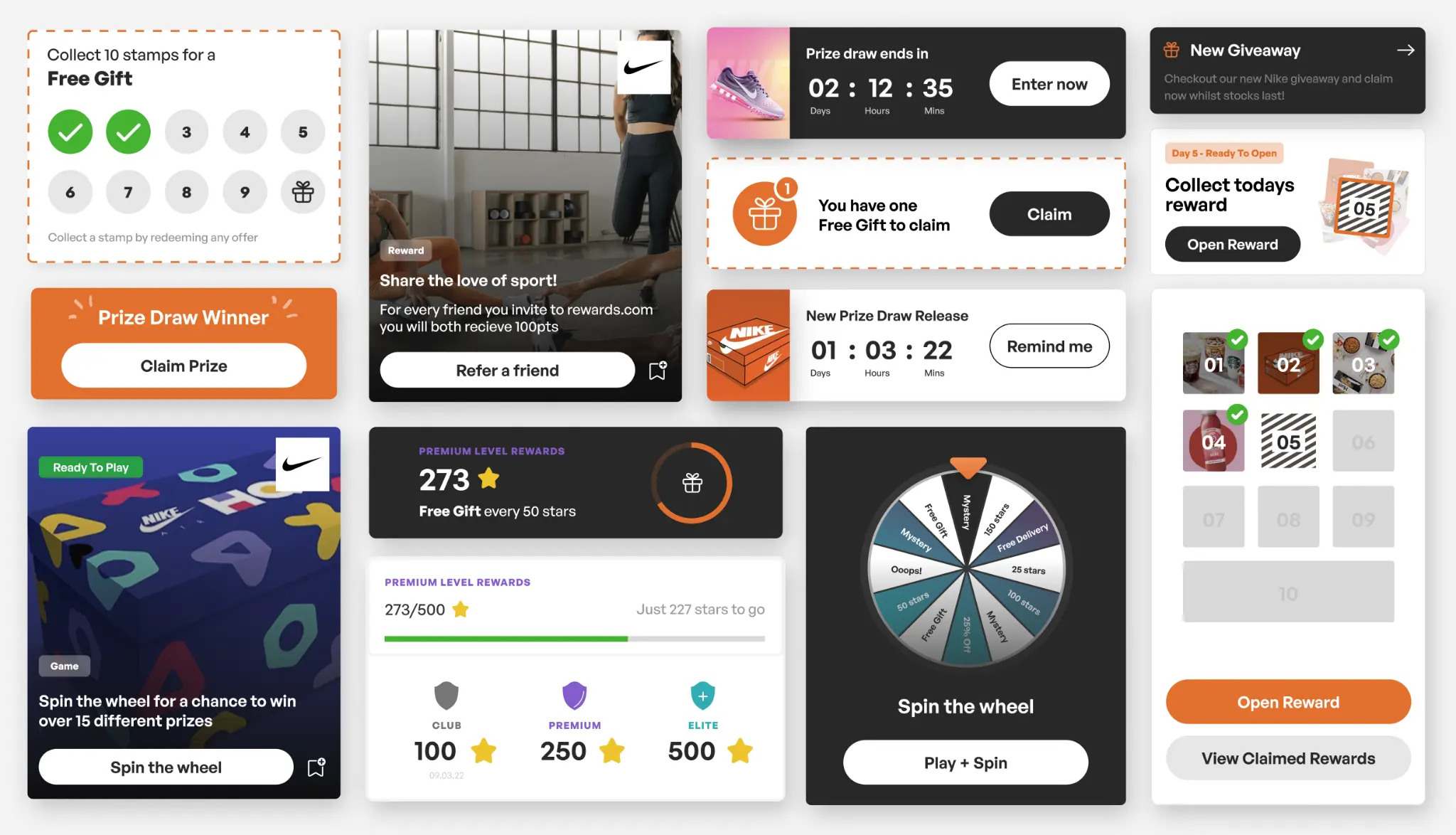
Key takeaway: Transactional rewards start the relationship. Emotional loyalty is what makes customers stay when a competitor offers a better deal.
2. What Is Advocacy Loyalty?
Advocacy loyalty occurs when satisfied customers actively recommend a brand to others, becoming voluntary ambassadors who drive acquisition through word-of-mouth. It is the highest-value form of loyalty because advocates deliver qualified new customers at near-zero acquisition cost, while simultaneously deepening their own relationship with the brand.
Over 84% of customers trust referrals from friends and family over traditional advertising. When a customer advocates for your brand, they are not just repeating a message; they are staking their own credibility on your product. That is a fundamentally different level of endorsement.
Many brands make the mistake of treating advocacy as something that happens organically. In reality, it needs to be planned for and actively encouraged through your loyalty strategy.
What loyalty programme mechanics drive advocacy loyalty?
Referral programmes are the most direct mechanism. When customers receive meaningful rewards for introducing others to your brand, such as exclusive discounts, early access to new products, or bonus points, they have a clear incentive to advocate.
The key is that incentives must feel proportionate to the ask. Offering a token reward for a referral that delivers a high-value customer signals that you do not understand what the advocate is worth to you. Structure your referral rewards accordingly.
Bonus points for every successful referral
Tiered referral rewards that increase with each new customer introduced
Exclusive access to products, events, or content as a recognition of advocate status
Key takeaway: Advocacy loyalty is word-of-mouth made systematic. Build a referral programme that reflects the real value an advocate delivers to your business.
3. What Is Transactional Loyalty?
Transactional loyalty is repeat purchasing behaviour driven by discounts, rewards, and financial incentives rather than emotional connection. It is the most common and most straightforward form of loyalty to implement, and it forms the foundation of most traditional loyalty programmes.
Transactional loyalty is valuable, but it is also the most fragile. A customer who returns solely because of a discount will leave the moment a competitor offers a better one. Our 2025 report found that 83% of consumers want personalised promotions, yet only 44% find the offers they receive relevant. That gap represents a significant risk for brands relying on transactional mechanics alone.
Used well, transactional loyalty is a powerful entry point. It gets customers engaged with your programme and creates the conditions for deeper loyalty to develop. The mistake is treating it as the destination rather than the starting point.
What loyalty programme mechanics drive transactional loyalty?
Earn-and-burn points programmes are the classic mechanic. Customers accumulate points with each purchase and redeem them for rewards, discounts, or free products. The key to making this work is ensuring rewards escalate in value as customers spend more, giving them a reason to keep returning.
Effective transactional loyalty programmes also incorporate:
Tiered reward structures that increase benefits as customers reach spending milestones
Conditional rewards triggered by specific purchase behaviours
Personalised discount offers based on individual purchase history
The bridge from transactional to emotional loyalty is personalisation. When a discount feels chosen for a specific customer rather than broadcast to all, it begins to carry emotional weight.
Key takeaway: Transactional loyalty is the entry point, not the end goal. Use it to earn attention, then use personalisation to earn trust.
4. What Is Social Loyalty?
Social loyalty is built when customers engage with and promote a brand through their social networks, earning recognition or rewards in return for sharing, reviewing, or recommending. It sits at the intersection of advocacy and engagement, using the reach of social media to amplify brand affinity beyond the individual customer relationship.
Customers who have a positive social media experience with a brand will recommend it to others. Social loyalty programmes capture that intent and give it structure, turning organic sharing into a repeatable, rewarded behaviour.
The distinction between social loyalty and advocacy loyalty is subtle but important. Advocacy is driven by genuine belief; social loyalty is driven by the act of sharing itself, which may or may not reflect deep commitment. Both are valuable, but brands should not mistake high social activity for high emotional loyalty.
What loyalty programme mechanics drive social loyalty?
Referral programmes with social sharing components are the most effective tool. Rewarding customers for posting reviews, tagging the brand on social media, or sharing referral links creates a feedback loop between social activity and programme engagement.
Effective social loyalty mechanics include:
Points for verified reviews on third-party platforms
VIP tokens or exclusive discounts for social sharing milestones
Influencer partnerships that extend reach to aligned audiences
The most important design principle is authenticity. Incentivised sharing only works when the customer genuinely values the brand. If the underlying product or service experience is weak, social loyalty mechanics will generate noise rather than trust.
Key takeaway: Social loyalty turns your customers’ networks into a distribution channel. Reward sharing behaviour, but make sure the experience behind the share is worth talking about.
5. What Is Engagement Loyalty?
Engagement loyalty is a customer’s active participation with a brand beyond their purchasing behaviour, including consuming content, attending events, completing surveys, and interacting with the programme itself. It is a strong predictor of long-term retention because engaged customers have more touchpoints with a brand, which deepens familiarity and trust over time.
According to Propello Cloud’s 2025 report, 83% of businesses identify customer engagement as their top loyalty challenge. This is not surprising. Engagement is harder to engineer than a discount, and it requires understanding what your customers actually care about rather than what is easiest to offer.
The commercial case for engagement loyalty is clear. Engaged customers are more likely to become advocates, more resistant to competitor approaches, and more likely to respond positively to cross-sell and upsell opportunities.
What loyalty programme mechanics drive engagement loyalty?
Gamified loyalty programmes are the most effective engagement tool. By introducing leaderboards, badges, prize draws, challenges, and streak-based rewards, brands give customers a reason to interact with the programme that goes beyond earning points for purchases.
Gamification works because it taps into intrinsic motivation. Customers engage because they want to, not because they have to. This is a fundamentally different relationship from one driven purely by discounts.
Other engagement mechanics that work well:
Engagement rewards for non-purchase actions such as completing a profile, watching a video, or attending an event
Personalised content delivered through the programme based on individual behaviour
Loyalty software analytics to monitor which engagement techniques are working and which are not, so the programme stays relevant
Key takeaway: Engagement loyalty builds the habits that make customers hard to lose. Use gamification and personalised content to create reasons to interact beyond the purchase.
6. What Is Behavioural Loyalty?
Behavioural loyalty is the pattern of repeated purchasing or brand usage that is driven by habit, convenience, or circumstance rather than active preference. It is the easiest type of loyalty to measure and the hardest to interpret, because consistent behaviour does not always reflect genuine commitment to a brand.
A customer may return to the same brand repeatedly for any number of reasons, and understanding which reason applies has a significant impact on the right retention strategy.
There are three common drivers of behavioural loyalty:
Positive brand preference (attitudinal loyalty): the customer actively chooses the brand because it meets their needs better than alternatives
Habitual or apathetic loyalty: the customer continues purchasing because switching feels like more effort than it is worth
Captive loyalty: the customer has no viable alternative, or switching costs are prohibitively high
Only the first of these represents a strong commercial foundation. Habitual and captive loyalty are vulnerable to disruption. The moment a competitor removes the friction of switching, these customers are at risk.
What loyalty programme mechanics drive behavioural loyalty?
The challenge with behavioural loyalty is that the motivations behind it are often unclear. The most effective approach is to use data to understand what is actually driving repeat behaviour, then design the programme to reinforce the right motivations.
Always-on programmes with gamified surveys are particularly useful here. They gather behavioural data while simultaneously fostering engagement and emotional loyalty. The better your insight into what drives a customer’s behaviour, the better your ability to influence it.
Loyalty platforms that integrate with CRM data allow brands to identify early signs of disengagement, such as declining purchase frequency or reduced reward redemption, before a customer churns.
Key takeaway: Behavioural loyalty tells you what customers do. Understanding why they do it is what allows you to keep them.
Summary: Types of Loyalty, Key Strategies, and Programme Mechanics
Data analysis, CRM integration, early churn detection
Always-on programmes, gamified surveys, behavioural data tools
How to Build a Loyalty Programme That Develops All Six Types
The most effective loyalty programmes do not focus on a single loyalty type. They are designed as a progression: transactional mechanics attract and retain customers in the short term, while engagement, social, and behavioural tools deepen the relationship over time, creating the conditions for emotional loyalty and advocacy to develop.
This is the strategic shift we see the most successful enterprise brands making. According to Propello Cloud’s 2025 report, brand partnerships and personalisation both scored 84% as top investment priorities among loyalty leaders, reflecting a recognition that modern programmes must deliver more than points.
The practical framework looks like this:
Attract with transactional rewards that offer clear, immediate value
Engage with gamification and content that builds habit and familiarity
Personalise using behavioural data to make every interaction feel relevant
Connect emotionally through consistent values, exceptional service, and recognition
Activate advocates with referral mechanics that reward customers for sharing their loyalty
A well-designed loyalty platform supports all five stages without requiring separate systems for each. If you are evaluating how to build or improve your programme, explore Propello’s customer loyalty solutions orbook a demo to see how the platform supports each loyalty type in practice.
FAQs
What is emotional loyalty?
Emotional loyalty is a deep connection between a customer and a brand. Brands create emotional connections by building trust, offering exceptional service, and engaging meaningfully with their target audience. It leads to a loyal customer base that continues to support the brand, even when presented with alternatives.
How does advocacy loyalty work?
Advocacy loyalty occurs when satisfied customers actively recommend a brand to others, helping the brand attract new customers through word-of-mouth. These brand advocates share their positive experiences, influencing their social circles and ultimately contributing to the company’s bottom line.
What is transactional loyalty?
Transactional loyalty is based on a customer’s repeat purchases. This type of loyalty is often incentivised by rewards, discounts, or access to new products. It focuses on encouraging customer spending through a loyalty programme, but it may not necessarily create a deep emotional connection.
What strategies drive social loyalty?
Cultivating social loyalty involves leveraging the influence of your customers’ social networks. Strategies include encouraging customers to share their experiences in real-time, offering incentives for referrals, and partnering with influencers to expand the brand’s reach and acquire new customers.
What defines engagement loyalty?
Engagement loyalty is a reflection of a customer’s active participation and interaction with a brand beyond transactions. It involves consuming content, attending events, and providing feedback. Engaged customers are more likely to become brand advocates, contributing to a loyal customer base.
How is Behavioural Loyalty measured?
Behavioural loyalty is measured by analysing customer actions, such as purchase frequency, average order value, and customer lifetime value. Data science and machine learning help identify patterns and insights into customer-purchased items, enabling targeted strategies to improve customer retention.
Can rewards create lasting loyalty?
Rewards can contribute to loyalty, but they must be meaningful, relevant, and part of a well-designed loyalty programme. While incentives may initially attract customers, building trust and fostering emotional connections are essential for creating lasting loyalty that goes beyond transactional benefits.
What's the role of a loyalty programme in customer retention?
A loyalty programme plays a crucial role in customer retention by offering rewards, personalised experiences, and exclusive benefits. It helps build trust, encourages repeat purchases, and fosters a sense of community among the customer base, ultimately leading to improved customer retention rates.
How can a loyalty programme be customised?
A loyalty programme can be customised by segmenting the target audience based on their preferences, behaviour, and position in the customer journey. Tailoring rewards, communication, and experiences to each segment creates a more personalised approach that resonates with individual customers, enhancing their loyalty.
What are the benefits of loyal customers?
Loyal customers provide numerous benefits, including higher retention rates, increased customer spends, and a willingness to pay premium prices. Happy customers also act as brand advocates, helping acquire new customers through referrals. A loyal customer base gives companies a competitive advantage.
Mark Camp
Mark is the Founder and CEO of Propello Cloud, an innovative SaaS platform for loyalty and customer engagement. With over 20 years of marketing experience, he is passionate about helping brands boost retention and acquisition with scalable loyalty solutions.
Mark is an expert in loyalty and engagement strategy, having worked with major enterprise clients across industries to drive growth through rewards programmes. He leads Propello Cloud’s mission to deliver versatile platforms that help organisations attract, engage and retain customers.
Start your customised Propello Cloud journey today
Explore the platform’s scalability, features and customisation options and get answers to your unique questions.