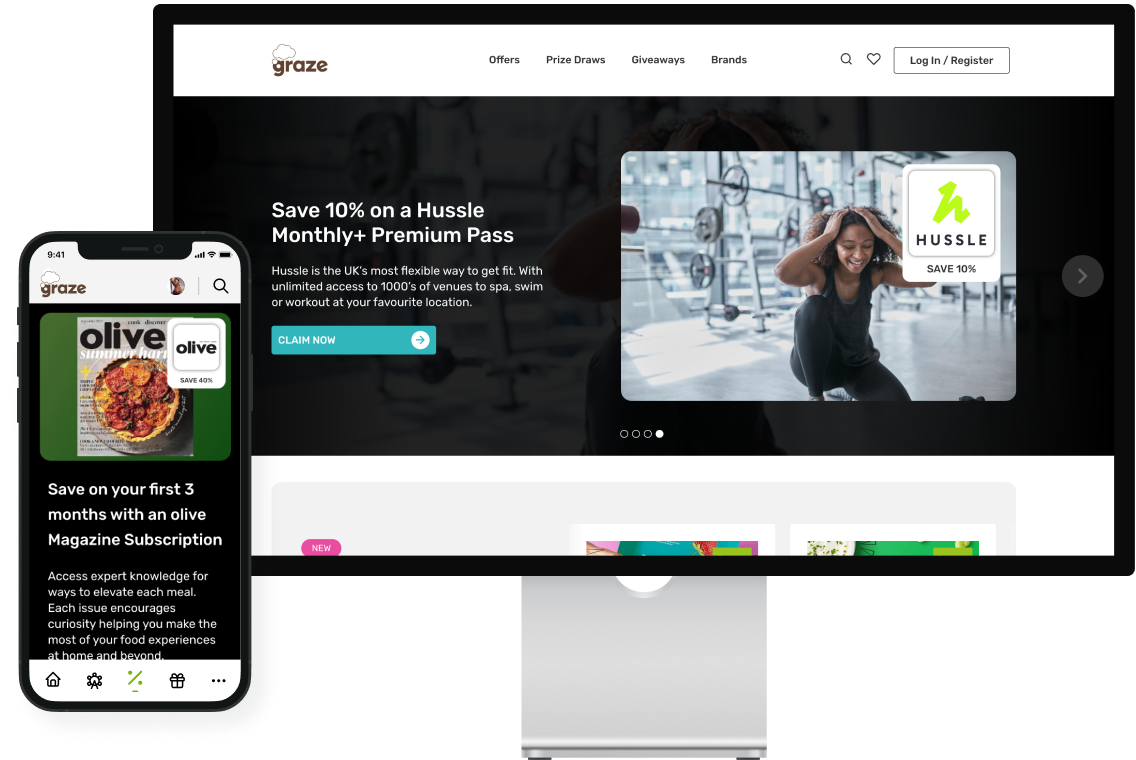
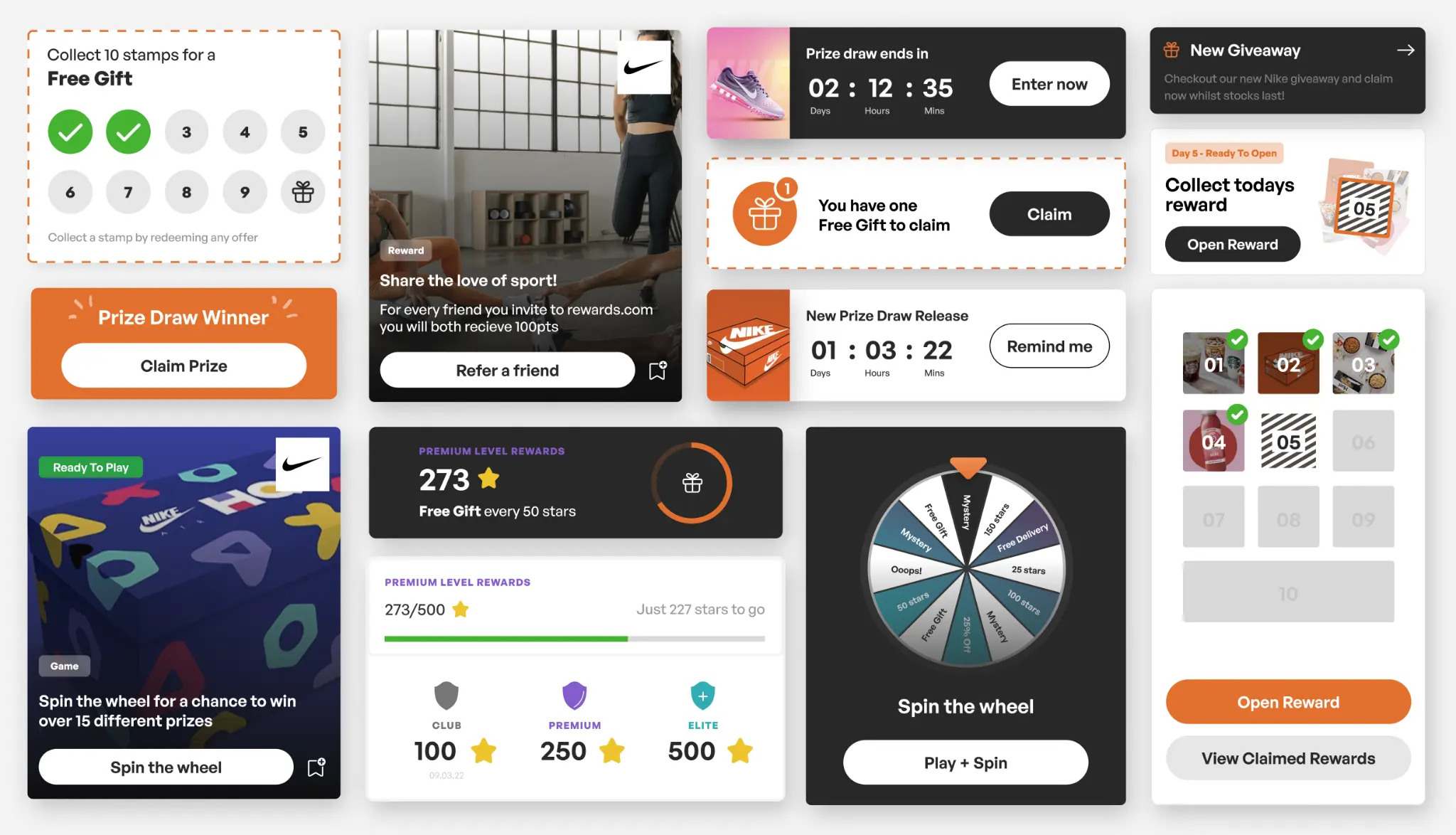
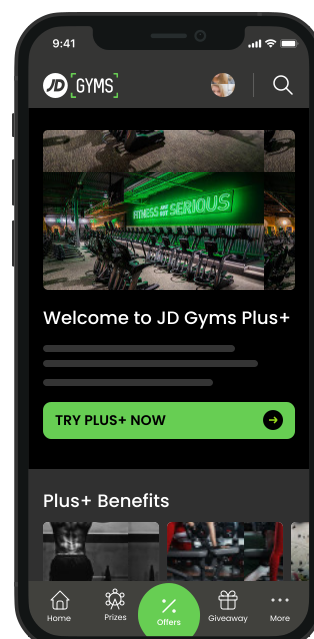
Incentive marketing is the practice of rewarding customers for taking an action you care about: a purchase, a referral, a renewal, an upgrade. The reward can be a discount, gift card, prize draw or loyalty perk. Underneath it sits reciprocity, the oldest rule in selling: people give back to brands that give to them first.
Mark Camp
CEO & Founder at PropelloCloud.com
Contents
Key Takeaways
Incentive marketing rewards a specific action, a purchase, referral, renewal or upgrade, rather than simply cutting your price.
A reward matched to what the customer actually wants creates a stronger emotional response and is far more memorable than a generic discount.
Digital reward delivery and a mobile-first, low-friction redemption process keep enthusiasm high and cut support headaches.
Keep campaigns cost-effective by buying rewards at wholesale and recovering incentives that go unclaimed, both lower the real cost of every customer acquired.
Referral and loyalty programmes turn existing customers into a source of new ones: trusted recommendations and repeat custom at a lower acquisition cost than cold channels.
Measure every campaign on cost per acquisition, revenue and ROI, and keep what works. Incrementality, the sales you would not have made otherwise, is the number that matters most.
What Is Incentive Marketing?
Incentive marketing trades a reward for a behaviour. You give the customer something of value, a discount, a gift card, a prize, a points balance, and in return they do the thing you need them to do.
Examples of the reward side include:
Reward programmes
Gift cards
Competitions
Vouchers
Discounts
The behaviour side is yours to set. It might be a first purchase, a referral, a social post, a tier upgrade or a contract renewal. Whatever moves the number you care about.
It works because of reciprocity, the first of Robert Cialdini’s six principles of influence. Hand someone a free sample or a surprise perk, no strings, and they feel a quiet pull to return the favour. That pull is doing the real work behind every reward you give.
What Are the Benefits of Incentive Marketing?
The main benefits of incentive marketing are stronger customer loyalty, lower-cost acquisition, better brand recall and higher revenue. A well-chosen reward does more than move one sale: it tells customers you value them, pulls them back, and grows the brand while it does it.
Brand promotion
Hand a customer a reward they actually wanted and you have done more than close a transaction. You have left a memory. Next time they need what you sell, your brand usually comes to mind first.
Customer acquisition
Incentives give a first-time buyer a reason to pick you over the name they already know.
A sign-up bonus, a discount on the first order, a free gift at the point of decision, each one lowers the cost of saying yes. It is the reason you have switched a bank account for a cash bonus at least once in your life.
Stronger customer relationships
An incentive is also a conversation starter. People want to be surprised, not just transacted with.
In Merkle’s 2024 Loyalty Barometer Report, 61% of consumers said what they most want from a brand is to be surprised with an offer or gift simply for being a customer. More than they want personalised recommendations. More than almost anything else on the list.
Add these up and they point at one outcome: revenue.
Research by Frederick Reichheld of Bain & Company found that lifting customer retention by just 5% raises profits by anywhere from 25% to 95%. Incentives are one of the cleaner ways to move that retention number.
Then there is the pull of free itself. Google’s Decoding Decisions research names the “power of free” as one of six biases steering how people buy. A free gift with a purchase, even an unrelated one, tilts the decision. People do not weigh it rationally. They just want the free thing.
There is no arguing with exclusive offers, digital gift cards and a bit of free stuff. You have been persuaded by every one of them at some point, and so has your customer.
How Can You Optimise Customer Acquisition and Loyalty with Incentive Marketing?
You optimise acquisition and loyalty by matching the incentive to the job: loyalty and reward programmes to keep existing customers, referral programmes to win new ones, and early access, premium-tier perks and prize draws to deepen engagement. Each format pulls a different lever, and the best campaigns combine them.
Customer loyalty & reward programmes
Customer loyalty programmes exist to keep the customers you already have. They hand out exclusive offers, discounts and points, a percentage off the next order, merchandise to redeem, in exchange for staying.
The signal matters as much as the reward: you are telling the customer their business is worth keeping.
And the maths holds up. The Incentive Marketing Association found that a well-designed incentive or loyalty programme returns between two and four times what you put in, and a third of the programmes it studied beat 4:1. Few marketing channels can show their working like that.
Referral programmes
Referral marketing, referral rewards programmes included, turns your happy customers into your sales force. They recommend you to friends and family and pick up a reward for every new customer they bring in. Often the newcomer gets something too, a sign-up bonus to lower the barrier.
It works because of who is doing the talking.
Nielsen’s 2021 Trust in Advertising Study found that 88% of people trust recommendations from friends and family above any other form of advertising. You cannot buy that kind of credibility. You can only earn it, then give people a reason to pass it on.
Early access
Exclusivity is its own incentive. Offer your most loyal customers first look at a new product and two things happen: they feel rewarded, and everyone else has a reason to join the programme to get the same treatment.
You can point early access at other goals too. Give it to newsletter sign-ups and you open a direct line to a warm lead. Extend it to a partner brand’s launch and you reward your customers while building a relationship with another business, as long as you share an audience without competing for the same sale.
Exclusive offers for premium subscribers
If you run subscription tiers, upselling the customers you already have is one of the quickest ways to lift lifetime value. But nobody trades up for the sake of it. The higher tier has to be visibly worth the higher price.
Give it weight. Bonus content behind the top tier, exclusive discounts, a closed community, early or exclusive products, whatever your customers would actually cross the line for. The incentive only works if it is aimed at what they want, not what is easiest to offer.
Prize draws and contests
A contest or giveaway is a cheap way to buy attention. Add a social sharing step, entry in return for a tag or a share, and the reach widens fast, pulling in new followers and leads who had never heard of you.
The prize gets people in. What you keep is the upside: engagement, a bigger social following, and a pile of first-party customer data you can actually use.
How Can You Create Attractive Incentives for Your Customers?
Creating attractive incentives comes down to four steps: make the reward valuable and relevant to the person receiving it, make it instant and easy to claim, keep it cost-effective, and measure and optimise the results.
Step 1: Make them valuable, relevant and memorable to the audience
A valuable incentive is one that means something to the specific person receiving it. The more a reward lines up with what someone actually wants, the stronger the emotional response, and that response is what turns a one-off reward into something they remember.
Start with the obvious option and its limits. Everyone likes cash, and money saved is money earned, which is why the cash discount is the most common incentive going. But unless it is a genuinely large discount, north of 25% as a rough rule, it rarely registers as memorable. It gets absorbed and forgotten.
Gift cards do more of the emotional work. They hand the recipient the enjoyable part, picking something they actually want, and your brand gets the credit for making it happen.
The strongest incentives go further and match the reward to the person:
Sportswear or health supplements for a new gym membership
A smartwatch for a new phone or broadband contract
Discounted car insurance alongside a new car lease deal
The difficulty is obvious: you cannot always know which reward will spark that response before you commit budget to it, and working it out by guesswork eats time you may not have.
So do not guess. Let the customer tell you.
Offer a wide range of branded rewards, let people choose for themselves, and use what they pick to sharpen the next campaign. The data does the targeting that guessing cannot.
Step 2: Ensure that they are instantly available and easy to claim
The faster and simpler a reward is to claim, the more attractive it stays. Every extra step between earning the incentive and holding it is a chance for the customer to lose interest.
Three things keep that friction low: go digital, make the journey obvious, and build it mobile-first.
Use digital gift cards
A physical card makes the customer wait, and waiting cools enthusiasm fast. The cost of that delay can outweigh the cost of the card itself. It is more work for you, too: sourcing from a provider, the admin, the postage.
A digital gift card skips all of it. Automated through the right platform, it reaches the customer in minutes, not days.
Consider user experience (UX)
Redeeming a reward should not need a manual. If it is confusing, you get two bad outcomes: a poor first impression, and a wave of support queries from people who cannot claim what they were promised.
Make the process obvious, and make the terms obvious too. Spell out what the customer gets and when, ideally in a short FAQ, so nobody feels misled.
Mobile is king
Build all of this for a phone first. Mobile now drives almost 59% of global web traffic (StatCounter, 2026), and the share climbs higher once social media is in the mix, since that is a mobile-first habit almost by definition.
If the claim journey breaks on a small screen, you have lost most of your audience before they start. Keep the experience clean the whole way through, checkout and reward delivery included.
Step 3: Make them cost-effective
Cost-effective incentive marketing rests on two levers: buy your rewards for less than face value through bulk discounts, and stop paying for incentives nobody claims. Pull both to lower the real cost of every customer you bring in.
Utilising wholesale discounts
Buy in bulk and you can expect a discount, and gift cards are no exception. Depending on volume, Propello Cloud secures wholesale rates of up to 25% off face value. A £100 voucher bought for £75 is £25 of margin on a reward the customer still values at the full £100.
The saving scales fast:
Order size
At face value
At wholesale (25% off)
You save
One £100 voucher
£100
£75
£25
2,000 £100 vouchers
£200,000
£150,000
£50,000
That last row is £50,000 straight off your average acquisition cost.
Digital gift cards attract the best rates. Most brands treat them as revenue they did not have to sell for, so they discount wholesale orders readily, and you will get a similar response if you buy a large volume of their product outright. The exact discount tracks margin: a jeweller has far more room to give than a supermarket.
The hard part is not the discounts. It is the relationships.
Sourcing dozens of brands, negotiating rates and renewals, managing inventory and delivery, and fronting a bulk order with no guaranteed return, that becomes a full-time job on its own.
This is the problem Propello Cloud was built to remove. We have already done the work: relationships with a growing network of top brands and a pool of discounts your customers can draw on.
No inventory to manage, no wholesale commitment to gamble on. We carry that side so you do not have to.
Recovering incentives that haven’t been claimed
The second lever is waste. Some customers will never claim their reward, and every unclaimed incentive you have prepaid for is money gone.
Add-ons, physical gift cards and bundles are the worst offenders, because once they are committed there is rarely a way to claw the cost back. In our experience, wastage on incentive campaigns runs high, often 20% to 25% of the budget set aside.
That is exactly what our recovery service is built to reclaim. Across a full campaign, that recovered spend can be the difference between a thin ROI and a strong one.
Step 4: Analyse and optimise your conversion rates and ROI
Every incentive campaign is a data set you can learn from, as long as you track the right numbers and attribute the revenue correctly. Do that and each campaign sharpens the next.
At a minimum, measure:
Cost per customer acquisition
Revenue generated
Return on investment (ROI)
Those three tell you whether the campaign paid. A handful of others tell you why, and where to push next:
Reach: impressions, sessions and views on your offer page
Engagement: click-through rates by channel, time on page, shares
Conversion rate: redemptions divided by the traffic you drove
Popular incentives: which rewards get redeemed most
Unclaimed incentives: which rewards fall flat with your audience
Read together, they tell you what to scale and what to cut, and that is where the real gains in conversion and ROI come from. Propello Cloud’s built-in analytics pull all of it into one view, so you can see what is working and adjust without stitching the data together yourself.
How Do You Get the Most From an Incentive Marketing Campaign?
Two factors decide whether a well-built incentive actually lands: how loudly you promote it, and when you run it. A reward nobody hears about does nothing, and the same reward timed for a quiet sales period works harder than it would at your peak.
Start with promotion
The best incentive in the world is wasted if customers do not know it exists. Push it through every channel they actually use: email, the monthly newsletter, in-store posters, social, wherever their attention already sits.
Then leverage timing
Map your sales across the year and find the slow stretches. An incentive offered in a quiet period gives people a reason to buy when they otherwise would not, smoothing demand rather than discounting sales you would have made anyway. Duration and timing work together, so decide both before you launch.
None of this guarantees a result, the customer’s response always has the final say, but getting promotion and timing right tilts the odds in your favour.
Make Incentive Marketing Work for Your Business, with Propello Cloud
Incentive marketing used to belong to the big players, the brands with the budgets to source rewards, strike brand deals and absorb the waste. Propello Cloud takes that barrier away. It is a tactic any business can run now, whatever its size.
You get a curated catalogue of incentives from some of the most recognised brands in the UK, ready to put in front of your prospects and customers faster than you would expect. No inventory, no wholesale gamble, no full-time job chasing brand relationships. We handle that part.
The platform is built to be simple and cost-effective, so you can grow at a pace that suits you rather than one dictated by overheads.
Book a no-obligation demo and talk to our team about what you need. We will show you how Propello Cloud can open up the next stage of lead generation and customer acquisition for your business.
FAQs
What is the difference between incentive marketing and discounting?
A discount simply lowers your price, often with no strings attached. Incentive marketing ties a reward to a specific action, a purchase, referral, sign-up or renewal, so you only pay out when the customer does what you wanted. Discounts can erode margin; a well-designed incentive is built to earn its cost back.
What is an example of incentive marketing?
Common examples include a loyalty programme that awards points per purchase, a referral scheme that rewards customers for introducing friends, a prize draw entered by signing up, or a gift card for switching provider. Each offers something of value in return for an action the business wants to encourage.
Is incentive marketing the same as a loyalty programme?
No. A loyalty programme is one type of incentive marketing, focused on rewarding repeat custom over time. Incentive marketing is the wider practice: it also covers referrals, early access, prize draws and one-off rewards aimed at acquisition or a single action, not just long-term retention.
What are the disadvantages of incentive marketing?
Poorly targeted incentives can train customers to expect a reward before they buy, eroding margin and devaluing the product. Rewards that are hard to claim frustrate people, and unclaimed incentives still cost money. The fix is to target carefully, keep redemption simple, and measure whether each campaign genuinely added sales.
How do you measure the ROI of an incentive marketing campaign?
Track cost per acquisition, revenue generated and overall ROI, but the figure that matters most is incrementality: the sales a campaign produced that would not have happened anyway. Comparing customers who received the incentive against a similar group who did not shows what the incentive truly added, rather than what it simply rewarded.
Does incentive marketing work for small businesses?
Yes. It once favoured large brands with the budgets to source rewards and strike brand deals, but digital gift cards and managed reward platforms have lowered that barrier. A small business can now run a referral scheme or a points programme affordably, and compete for loyalty with much larger rivals.
What is the most effective type of incentive?
There is no single winner; the most effective incentive is the one that matches the recipient. Monetary rewards like gift cards are popular because they are flexible and easy to redeem. Personalised rewards tied to a customer’s interests tend to create a stronger emotional response, which makes them more memorable.
Can incentive marketing work for B2B companies?
Yes. B2B incentive marketing rewards actions like contract renewals, upsells, referrals or distributor sales, often through channel and partner programmes rather than consumer promotions. Sales cycles are longer and rewards tend to be higher in value, but the principle is identical: tie a reward to the behaviour you want to encourage.
Which industries benefit most from incentive marketing?
Incentive marketing suits any sector with repeat custom or competitive switching, so it is widely used in telecoms, insurance, financial services, memberships, retail and health and fitness. Industries where customers renew contracts, compare providers or buy regularly tend to see the strongest returns, because there is a clear action worth rewarding.
How do you stop customers from gaming an incentive scheme?
Build safeguards in from the start. Cap the number of rewards per customer, verify that referrals are genuine new customers rather than duplicate or self-referrals, and track redemptions for unusual patterns. Clear, upfront terms and conditions also deter abuse while protecting you if you need to withhold a reward.
Mark Camp
Mark is the Founder and CEO of Propello Cloud, an innovative SaaS platform for loyalty and customer engagement. With over 20 years of marketing experience, he is passionate about helping brands boost retention and acquisition with scalable loyalty solutions.
Mark is an expert in loyalty and engagement strategy, having worked with major enterprise clients across industries to drive growth through rewards programmes. He leads Propello Cloud’s mission to deliver versatile platforms that help organisations attract, engage and retain customers.
Start your customised Propello Cloud journey today
Explore the platform’s scalability, features and customisation options and get answers to your unique questions.