Loyalty programme integration gives you a clearer view of behaviour and more opportunities to engage customers with relevant rewards, offers and communications. From CRM and marketing automation to your loyalty platform, here’s how integration turns disconnected data into more meaningful customer experiences.
Mark Camp
CEO & Founder at PropelloCloud.com
Contents
Key Takeaways
Loyalty programme integration links your rewards system to your existing tech stack for a seamless customer experience.
Integrated programmes drive customer retention and lifetime value by eliminating friction points that frustrate customers.
API integration enables data synchronisation in real time, so customers get instant programme updates on all channels.
Personalised rewards resonate better and generally deliver higher redemption rates than generic discounts.
Now, most brands outsource loyalty solutions rather than building a programme in-house due to faster deployment and improved capabilities.
What Is Loyalty Program Integration?
Loyalty program integration is the process of connecting your customer loyalty platform with your existing tech stack, including your website, mobile app, point-of-sale system and Customer Relationship Management system (CRM).
A standalone programme runs in its own corner, blind to everything else you know about the customer. An integrated one works everywhere the customer meets your brand, and behaves the same way each time. One experience, not five disconnected ones.
How have loyalty programmes evolved from standalone to fully integrated solutions?
Early loyalty programmes were islands. A separate database, usually run by a third party, barely speaking to the systems that actually ran the business. Loyalty meant repeat purchases inside that one walled garden, and nothing beyond it.
That model is finished. The programmes that work now feed straight into the rest of the operation. Loyalty data lands in your CRM. Your email platform knows exactly what each customer has earned. Your service team sees loyalty status the moment a customer gets in touch.
So the job has changed. A loyalty programme stopped being a scheme for collecting points and became the engine that feeds every part of your marketing.
What Is API Integration and Why Is It Critical for Loyalty Success?
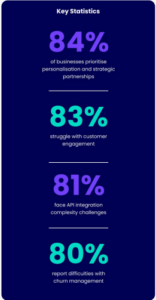
API (Application Programming Interfaces) integration is the technical framework that seamlessly integrates your loyalty programme with your main business systems. They help different software to exchange information in real time. But according to our Loyalty Uncovered Report 2025, 81% of enterprise organisations name API integration complexity as a major challenge, and 35% rate it critical.
Done properly, it’s the opposite of dramatic. A customer buys something and their points total updates across every device at once. Data moves between platforms on its own. No manual uploads, no downtime, no disjointed experience.
Picture it in practice. Someone buys in your store, points hit their app on the spot, an email lands telling them they’ve cleared a new reward tier, and when they browse your site that evening the offers have already updated. That’s integration doing its job.
Why Integrate a Loyalty Programme With Your Existing Tech Stack?
Integrate the programme and four things follow. Not eventually. Structurally, because the data finally moves the way it should:
Higher rates of customer retention and lower cost of customer acquisition
Higher repeat purchases and customer lifetime value
Robust customer insights and behaviour analytics
Transparent ROI tracking and optimisation of programme performance
Let’s break down each of these benefits.
How does integration improve customer retention and reduce acquisition costs?
Integration creates smooth customer experiences that inspire loyalty, reducing the need to constantly invest in expensive acquisition campaigns. When customers are unable to engage with your loyalty programme through multiple channels, it becomes much more challenging to maintain their interest.
It’s a common problem. Our 2025 Loyalty Uncovered Report shows that 83% of businesses face difficulty when trying to engage customers in their loyalty programmes.
If your customers have a hard time checking their rewards or notice that they have different point balances across your platforms, they won’t remain customers for long. By integrating your loyalty programme, you remove these friction points which would normally steer potential customers away.
How does a seamless loyalty experience boost repeat purchases and lifetime value?
A cohesive experience takes the friction out of buying again. When a customer can earn and spend rewards however they deal with you, they deal with you more often. That’s the whole mechanism.
And when the programme does what they expect every time, something quieter happens. They stop shopping around. You don’t win that with the cleverest rewards. You win it by never making the customer think about the machinery.
What customer insights and analytics does integration unlock?
Integrated solutions provide valuable customer information on actual shopping habits and preferences. You get to view full customer journeys, not the disjointed snapshots that individual platform vendors might send your way.
You’ll see which incentives lead to higher customer engagement with your brand and which channels your top-tier customers favour. These insights become actionable intelligence on which you can base the entirety of your marketing strategy.
How does it support better ROI tracking and programme optimisation?
Integration shows you where the returns actually are. You can watch everything from redemption rates to the effect on retention, and see it move.
Building that tracking yourself is another matter. It’s why 69% of enterprise brands in our Loyalty Uncovered Report 2025 would rather outsource their loyalty solution than build one in-house, with speed-to-market the reason they name most. Less technical overhead, integrations already built, live sooner.
The payoff is decisions grounded in what the programme actually did, not what you assumed it would do. Better tracking is what gives you the confidence to double down on what works and cut what doesn’t.
What Are the Main Integration Points for a Loyalty Programme?
The primary integration points for connecting your loyalty programme to your existing tech stack are as follows.
Integration Point
Integration Benefit
Customer Impact
In-store POS
Combines in-store and online purchase data for a single customer view. Links offline and online rewards and redemptions seamlessly
Enables more accurate personalisation and targeted offers. Customers feel recognised and rewarded regardless of channel
Ecommerce Platform
Account-linked rewards
Seamless online shopping
CRM System
Centralised customer data for personalisation
More relevant rewards and communications
Customer Service Platform
Agents access loyalty status and history
Faster, personalised support
Email Marketing / Automation
Automated reward reminders and offers
Timely, personalised communications
Payment Gateway
Automatically link purchases to loyalty account
Effortless point earning without manual claims
Analytics Platform / Data Warehouse
Unified data for insights and segmentation
Better targeting and more personalised experiences
Partner Systems (e.g. affiliate marketing networks)
Track affiliate partner transactions and commissions
New revenue stream through partner monetisation
Referral Programmes
Capture and reward customer referrals; integrate data into CRM and loyalty system
Encourages word-of-mouth growth; customers earn rewards for successful referrals
Some of the most common integration requirements we see are:
Point-of-sale (POS) and ecommerce platform integrations
POS integration is native to your physical store systems, allowing your customers to earn points instantly at the time of purchase. There’s no need for staff to juggle loyalty terminals or for customers to use different cards or apps for different locations.
Your ecommerce platform integration is no different. The customer logs in to their account, makes a purchase, and points appear straight away. The overall customer experience is seamless because the loyalty programme behaves as it should.
Integration of CRM system in personalised marketing
CRM integration pulls customer data straight into your marketing campaigns, allowing you to send special offers that reflect personal shopping behaviour. Instead of irrelevant discounts, you provide high-value rewards to customers.
Your CRM has information about who shops frequently, what they like, and when they typically shop. With the help of this data, standard loyalty communications can become far less mass-market focused and far more engaging and personalised.
For example, a frequent coffee buyer may receive early access to seasonal drink promotions, while a skincare product buyer may receive bonus points on beauty category purchases.
API-controlled real-time data synchronisation
With the help of APIs, you can exchange real-time data between your loyalty platform and all of its linked systems. Their mobile apps instantly display the points that customers accrue while they are in-store. When they redeem rewards online, your POS register also updates instantly.
Real-time integration creates opportunities for triggered rewards based on customer actions. So someone browsing or purchasing from a certain category can unlock related discounts or extra points there and then.
This programme integration means customers no longer have to deal with frustrating delays and contradictions. The technical synchronisation carries on in the background; your clients only notice consistent interactions across all of their touchpoints.
Omnichannel experience management
When a loyalty programme seamlessly integrates across platforms, customers have a frictionless experience regardless of whether they’re shopping online, in-store or through a mobile app.
Your loyalty programme becomes invisible in the best way possible: it runs without customers even needing to think about it. Points appear automatically, rewards are always accessible, and the customer experience is seamless rather than fragmented.
Unified Customer Recognition
Single sign-in for customers across all platforms
Points and rewards are immediately synchronised online and in-store
The purchase history looks the same irrespective of where transactions take place
Reward tiers and perks stay the same on all channels
Special deals are instantly accessible across all platforms
This consistency creates trust and encourages your customers to interact with your brand on more than just a single channel.
How Do You Plan and Implement Loyalty Programme Integration?
There are five key stages of implementation:
Establishing clear retention and engagement goals
Understanding what platform aligns with your integration capabilities and business processes
Developing integration touchpoint maps across the customer journey
Navigating technical setup and system connections
Setting success KPIs and ongoing optimisation
And now I’ll walk you through each step to ensure that your integration delivers results.
Stage 1: How to set clear goals for retention and engagement
Set clear, measurable goals before you start integrating your loyalty programme. Vague goals like “increasing customer loyalty” won’t allow you to make effective decisions or properly measure success.
Track metrics that matter to your business:
Retention Targets
Generate 15% more repeat purchases in six months
Decrease customer churn rate by 20% for programme members.
25% increase in average customer lifetime value
Engagement Objectives
Maintain 40% active participation in the programme in year 1
Generate 30% of your revenue from loyalty programme members.
Double the number of monthly interactions with customers to increase the frequency of customer engagement
Those concrete goals also help you select the right approach for integration and measure real impact.
Determine your technical capabilities early to avoid expensive surprises during implementation. Loyalty programme solutions should handle several integration approaches, each with its own benefits and restrictions.
Programme Integration Method
Best For
Complexity Level
Real-time Sync
Direct API
Large businesses
High
Yes
Middleware (e.g. Zapier)
Small-medium businesses
Medium
Limited
Native integrations
Specific platforms
Low
Varies
Manual exports
Basic needs
Very low
No
The most powerful but also the most technical is direct APIs. Middleware software like Zapier integrates with several popular business tools without the effort and expense of custom development.
Your decision will depend on your technical resources, your budget, and how much real-time functionality your target audience expects.
Stage 3: How to map integration points along the customer journey
Track every touchpoint at which a customer comes into contact with your brand to ensure seamless integration. Gaps in the customer’s experience, caused by key connections being missed, can hinder the success of your programme.
Pre-Purchase Integration Points
Website visit and account creation
Email marketing and advertising campaigns
Social media advertising and engagement
Product research and in-store visits
Purchase Integration Points
Online checkout and transaction processing
Point-of-sale systems in physical locations
Mobile app purchases and in-app transactions
Customer service and support interactions
After-sale Touch Points
Order confirmation and shipping updates
Product reviews and feedback collection
Synchronisation of customer data on all platforms
Loyalty communications and reward alerts
Create a schema of how you pass data between these touchpoints and highlight your integration needs so that your programme fully captures any relevant customer activity.
Stage 4: How to handle technical setup, including APIs and POS connections
From a technical standpoint, you need to ensure that your loyalty platform works in sync with your existing systems and any third-party integrations. Plan for testing stages that verify real-time data syncing before going live.
API Connection Checklist
Verify the mapping of the data fields across systems
Test real-time synchronisation in several scenarios
Develop error handling and recovery processes
Monitor the connection stability
POS Integration Requirements
Train staff on new loyalty features
Validate hardware compatibility
Establish backups for system outages and downtime
Provide prompt customer messaging on programme changes
Programme integration is most effective through incremental technical deployment, not by doing everything at once. Release base functionality first and advanced features later, once the basics are solid.
Stage 5: Take Action That Actually Retains Customers
Define baseline success metrics before launch to accurately track improvement. Measure both programme and business impact metrics to understand true value.
Programme Performance Metrics
Redemption rate and frequency of use
Patterns behind point earning across various channels
Programme membership acquisition and retention rates
Business Impact Metrics
Customer retention rates compared to non-members
Returns per customer and average order value changes
Improves CLV calculations for customers
You should review these figures monthly to begin, then quarterly once trends stabilise. Leverage insights to refine reward structures, timing of communication and integration touchpoints to improve performance.
What’s Next for Loyalty Programme Integration?
The future belongs to flexible programmes that adjust according to customer expectations. Success lies in your ability to adopt new technologies and still focus on genuine customer experience enhancements.
How can brands stay agile as customer expectations evolve?
Create flexible systems that adjust to new channels; no need to start from scratch. Tomorrow’s touchpoints (be it social commerce, voice assistants, or shopping with augmented reality) should seamlessly fit into your loyalty programme.
Ongoing feedback helps to detect trends as they begin to surface rather than when they become ubiquitous customer engagement standards. Finally, observe how your customers truly behave; don’t be guilty of treating preferences as static.
How are AI tools going to impact loyalty integration?
AI-driven loyalty integration is set to play an even more prominent role in customer engagement. It allows static point systems to become dynamic, predictive platforms that predict what customers want.
Here is how integration and AI work together in loyalty programmes:
All data sources (POS, ecommerce, CRM, payment, referral) are connected to the loyalty platform via APIs and integrations
Integrated data feeds AI models so they can learn customer behaviour and forecast trends
AI takes this data and automates actions like recommending dynamic offers and personalised rewards or preventing churn.
APIs push AI-powered decisions back out to customer touchpoints (POS, app, email, website) in real time
The performance of APIs can be monitored and optimised by AI, detecting problems or anomalies in data flows
The real shift is this: AI-driven programmes track which loyalty activity actually drives revenue. Not which one looks busiest. Which one moves money. You see the exact rewards that trigger a purchase, the timing that lifts engagement, and the customers most likely to walk.
Put simply, integrations and APIs serve up the real-time data, and AI turns that connected data into a smarter, more personal programme.
The Bottom Line
The programmes that win from here are the ones that turn connected data into an experience the customer actually values. Everything above points the same way: integration decides whether you’re building a relationship or just another points scheme nobody thinks about.
The technology is here. Customers have already told you what they expect. The only open question is whether you move fast enough to meet them before a competitor does.
That’s the part we can help with. Propello Cloud is built to slot into the stack you already run, so if you want to talk through where to start, let’s walk you through it.
FAQs
What are the risks of poor loyalty programme integration?
Poor integration can lead to a fragmented customer experience due to siloed data or inconsistent customer data between systems. This can mean customers not receiving a personalised rewards experience causing confusion, frustration, and ultimately programme abandonment.
How long does it typically take to fully integrate a loyalty programme?
Timelines vary based on complexity, but full integration including API setup, data sync and testing usually takes between 4 to 12 weeks. This can be the case for enterprise environments with multiple systems.
Can a loyalty programme be integrated gradually, or does it require a full launch?
Yes, integration can be phased. Many brands start with core systems (e.g. POS and CRM) and add channels like referral systems over time to reduce risk.
How can third-party loyalty providers assist with integration?
Outsourced loyalty tech providers often offer pre-built integrations, expert implementation and technical support. This helps to minimise internal resource strain.
What KPIs should you monitor post-integration to ensure success?
Track engagement rates, reward redemption frequency, cross-channel activity, programme ROI, and NPS scores to assess whether integration is delivering the intended impact.
Is loyalty integration possible for legacy systems or older tech stacks?
Yes, but it may require middleware or custom API connectors. In some cases, replacing legacy systems or integrating only essential components is more cost-effective.
What are the most common integration failures, and how can they be avoided?
Typical failures include mismatched data fields, delayed syncs and broken reward logic. These can be avoided with robust API documentation, sandbox testing and error-monitoring tools.
How much does loyalty programme integration cost?
Cost depends on your integration method, the number of systems involved, and whether you need real-time data syncing. Direct API integration across multiple systems sits at the higher end, while middleware or native connectors cost less to set up. Outsourcing to a provider with pre-built integrations often works out cheaper than building and maintaining connections in-house.
How do you keep customer data secure during loyalty programme integration?
Secure integration relies on encrypted data transfers, strict access controls, and a provider that meets data protection standards such as GDPR. Map exactly which customer fields move between systems, give each system access only to the data it needs, and confirm your loyalty platform holds the right security certifications before you connect it.
Do you need an in-house development team to integrate a loyalty programme?
Not always. Direct API integration usually needs developer input, but middleware tools and native connectors let smaller teams integrate with little or no custom code. Many brands skip the technical overhead entirely by choosing a provider that handles implementation and maintains the integrations for them.
Mark Camp
Mark is the Founder and CEO of Propello Cloud, an innovative SaaS platform for loyalty and customer engagement. With over 20 years of marketing experience, he is passionate about helping brands boost retention and acquisition with scalable loyalty solutions.
Mark is an expert in loyalty and engagement strategy, having worked with major enterprise clients across industries to drive growth through rewards programmes. He leads Propello Cloud’s mission to deliver versatile platforms that help organisations attract, engage and retain customers.
Start your customised Propello Cloud journey today
Explore the platform’s scalability, features and customisation options and get answers to your unique questions.