
A structured way of rewarding existing customers for recommending you to people they know. It turns word of mouth from something that happens to you into something you can prompt, track and reward.
Everyone agrees referral marketing works. Far fewer can say by how much. The numbers below cover what referred customers do differently, what they’re worth over time, and why they bring others with them. Enough to build a programme on, or to sharpen the one you’ve got.

You’ve read a hundred times that consumer trust is collapsing and nobody believes businesses any more.
But according to Edelman’s 2026 Trust Barometer, which surveyed nearly 34,000 people across 28 countries, business is the most trusted institution. 64% trust business, against 53% for government. Globally, it’s now the only institution people rate as both ethical and competent.
So trust in business is fine. That isn’t the problem. The problem is where the trust went.
The same report found seven in ten people are unwilling or hesitant to trust anyone with different values, a different background, or different sources of information.
Trust hasn’t collapsed. It’s narrowed. People have pulled the drawbridge up and kept a few familiar faces inside.
That changes the job. You’re not fighting scepticism about business. You’re standing outside a circle you weren’t invited into, and no amount of budget gets you through the wall.
One thing does.
Edelman asked people who trust an influencer whether they’d reconsider a company they currently distrust if that influencer vouched for it. 62% said they would, or would consider it. Distrust, reversed, by one recommendation from the right person.
A recommendation isn’t information. It’s permission.
Reviews prove the point by falling short of it. BrightLocal found 97% of consumers read reviews when evaluating a business, so the habit is universal. But only 49% trust a review as much as they would trust a personal recommendation, down from a peak of 84% in 2016.
Strangers get you considered. People you know get you chosen. A referral marketing programme is how you stop leaving that to chance.
One referred customer is never just one customer.
Writing in the Journal of Marketing Research, Rachel Gershon and Zhenling Jiang tracked 41.2 million customers over ten years and found referred customers make 31% to 57% more referrals than non-referred ones, even after controlling for how much they buy.
You don’t acquire a customer. You acquire their address book.
What this means:
Being referred makes referring feel normal. Someone vouched for you, so vouching is what people like you do. Which means every referral you win is also a referrer you’ve made.
That’s the multiplier most programmes never count.
Yes, and the gap doesn’t close.
Schmitt, Skiera and Van den Bulte tracked around 10,000 customers of a German bank for almost three years and published the results in the Journal of Marketing. Referred customers retained better than everyone else, and the advantage held for years.
The interesting part is what didn’t hold. Referred customers also start out more profitable, but that lead narrows over the years. The retention lead never does.
What this means:
The reason is fit. Nobody refers people to something they’ll hate, so your referrers are filtering candidates before you ever meet them. That’s why the advantage lasts rather than fading like the margin does.
You’re not buying a cheaper customer. You’re being handed a better-matched one, and better-matched customers stay.
More businesses than ever are now implementing referral marketing software. The referral market is projected to grow at a CAGR of 13.51% to USD 11.15 billion by 2032, according to Verified Market Research.
Treat that as a forecast rather than a fact.
As businesses in competitive markets vie for the attention of customers, it should come as no surprise that many rely on a referral marketing programme.
Mass adoption of referral marketing software coincides with businesses recognising that their hard work of building brands worth sharing requires a tool to leverage brand advocacy.
What this means:
Referral has stopped being a favour you ask for and has become a channel you run. That shift is what the spend buys.
The hard part was never the asking. It’s the timing.
People vouch when the experience is fresh and go quiet once the feeling cools, and catching that window across thousands of customers is a data problem rather than a goodwill one. That’s what referral automation is for, and it’s why the spend follows.
Yes, and the gap is measurable.
Motista studied more than 100,000 customers across over 100 retailers and found emotionally connected customers recommend a brand 71% of the time. Merely satisfied customers recommend it 45% of the time.
Satisfaction isn’t a weaker form of connection. It’s a different thing entirely, and it under-refers by 26 points.
What this means:
Satisfaction is the absence of a complaint. Nobody tells their social circle about the absence of a complaint.
Connection is what gets talked about, and Harvard Business Review named the motivator doing most of the work: the desire to feel a sense of belonging. It’s the only one on their list of ten you can’t satisfy alone.
A group of one isn’t a group, so belonging brings more people with it.
Around a fifth of it. Engagement Labs’ 2017 study, working with Northeastern professor Koen Pauwels, linked weekly conversation data to weekly sales across 170 US brands and found social conversations drove 19% of consumer sales.
The split is the surprise. Offline talk accounted for about 10% and social media for 9%. Half of word of mouth’s impact never touches a screen.
What this means:
That half moves where you can’t see it. Listening tools catch the online nine percent and miss the ten percent happening in kitchens and car parks.
You can’t monitor a conversation you’re not in. You can only give people a reason to have it, and a way to prove they did.
More than on anything else. Wynter surveyed 101 B2B SaaS CMOs in January 2026 and asked what gets a vendor into consideration. Word of mouth came first, ranked number one by 42%. Cold outreach came last, at 2%.
Where it happens has moved. 65% now start their vendor search inside peer communities: private Slacks, forums, rooms you can’t buy your way into.
What this means:
Twenty-one times. That’s the gap between the channel you control and the one you don’t.
Your buyers are asking a room you’re not in whether you’re any good, and the answer was decided months ago by how you treated whoever’s now in that room.
You don’t market your way into that conversation. You earn your way in, or you don’t come up.
More than anything a brand makes itself.
Stackla surveyed 2,000 adults across the US, UK and Australia and found 60% rated user-generated content the most authentic type of content, three times more authentic than anything brands produced themselves.
The same survey asked what actually shifts a purchase. Content from friends and family: 60%. Content from celebrity influencers: 23%.
What this means:
UGC is a referral that got left out in public. Same voice, same credibility, except it keeps working after the conversation ends.
Which is why the gap between friends and celebrities is so important.
People don’t trust content because it’s on the internet. They trust it because they know who made it and what they had to gain.
Reminding them that they were referred.
The same Gershon and Jiang study ran a field experiment across more than 10 million referred customers. Half got the standard prompt: “Refer your friends!” Half got “You were referred in, now refer your friends!”
Six extra words. Referral rate up 21%.
What this means:
It works because of what it says about the room, not what it says about the reward.
People don’t hold back from referring because they’re unmotivated. They hold back because recommending things to people feels pushy, like you’re on the take.
That’s the whole difference between affiliate and referral, and your customers feel it even when they can’t name it.
The reminder answers the worry. If a friend did this for you, it isn’t pushy when you do it for someone else. It’s just what people here do.
No discount, no budget, no reward inflation. Just telling a customer something true about how they got here.
Both, and almost everyone forgets the second.
Garnefeld, Eggert, Helm and Tax published a study in the Journal of Marketing using data from a global mobile network, tracking customers who made referrals against a matched control group for a year.
The recommenders’ defection rate fell from 19% to 7%. Their average monthly revenue rose 11.4%. Not the customers they referred. The customers who did the referring.
What this means:
Referral gets filed under acquisition. The budget comes from acquisition, the targets are acquisition targets, and success gets counted in new names.
That’s the mistake, because the act of recommending you changes the person doing it.
Say out loud that you rate something and you commit to rating it. Get rewarded for saying it and the belief sets even harder.
The paper calls this commitment-consistency and positive reinforcement. Everyone else calls it putting your money where your mouth is.
Two details worth keeping.
Cheap rewards buy the action. They don’t buy the belief. Which is where the shape of a reward starts to matter as much as its size.
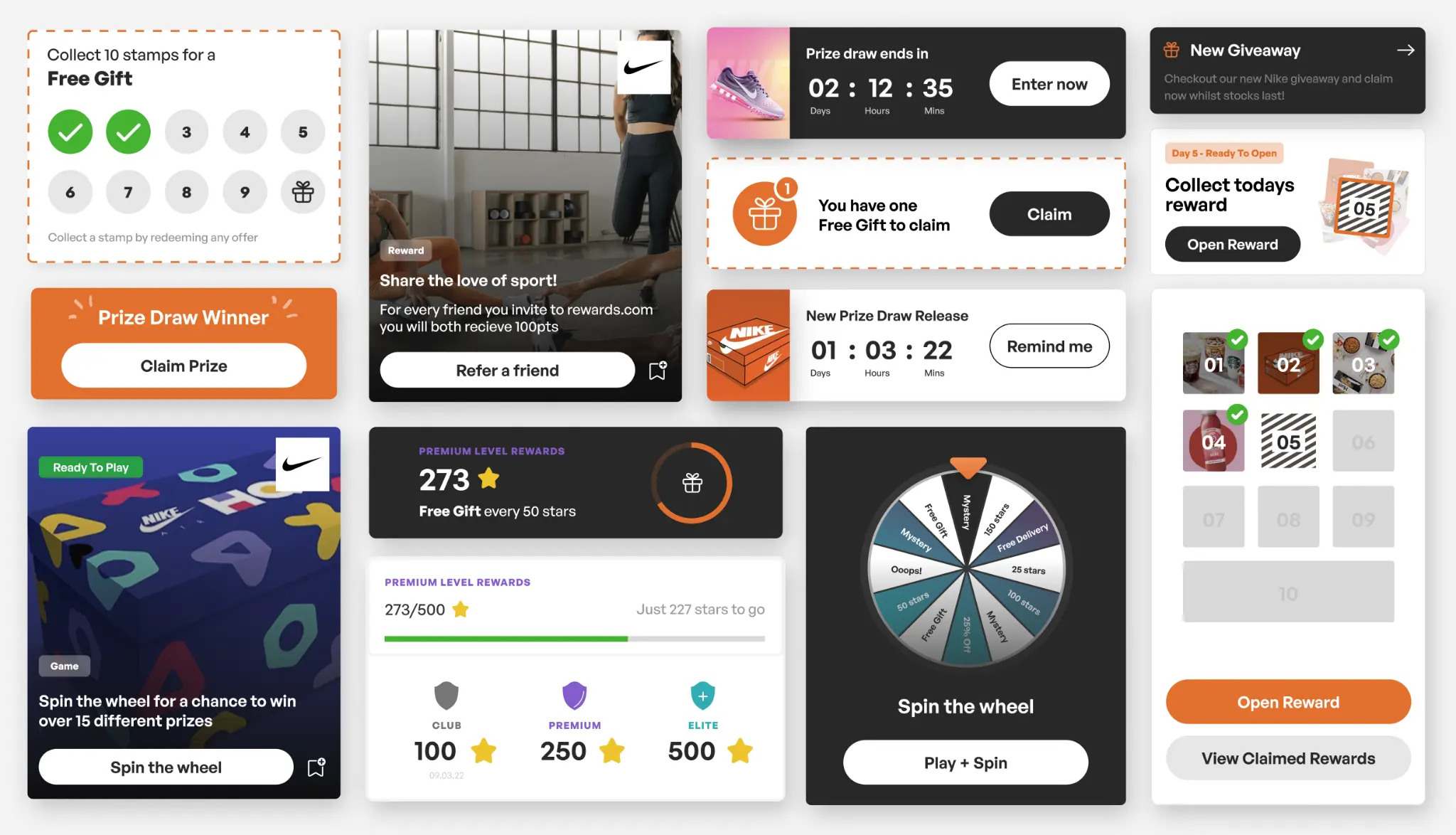
Tiers, streaks, status, progress: the mechanics people file under gamification are all attempts to make a reward mean something past its cash value.
Yes, and the famous number is the floor rather than the finding.
The same 2011 study, tracking those 10,000 German bank customers, found a referred customer was worth at least 16% more than a non-referred one, matched for demographics and time of acquisition.
At least. The 16% is where the gap starts.
What this means:
The authors attached a caveat worth more than the headline.
The value difference varied a lot between customer segments, so they concluded firms should be selective about who they run referral programmes for.
That’s a more useful instruction than the number alone. “Referred customers are worth 16% more” invites you to bolt a refer-a-friend widget onto everything and wait.
What the research found is that the gap is real, uneven, and worth measuring before you spend against it. Which is the better argument anyway.
An average tells you the channel works. Knowing which segments carry the gap tells you where to spend.
Not yet. It’s replacing Google.
The same Wynter survey found 84% of B2B SaaS CMOs now use ChatGPT, Claude or Perplexity to discover vendors. In 2025 that was 24%. In 2024 it was zero. 68% now start there before a search engine.
That’s the fastest shift in the whole survey. And word of mouth still ranked first. AI recommendations came fourth, ahead of Google research, vendor content and vendor ads.
What this means:
The machine took the top of the funnel. It didn’t take the trust.
People ask AI to map a category. They ask a person whether you’re any good. The tool changed. The question it can’t answer didn’t. And there’s a loop worth sitting with.
An AI recommending you has no opinion of its own. It assembles one from what other people wrote about you: reviews, forum threads, the posts your customers made without being asked.
Word of mouth didn’t get replaced. It got a bigger mouth.
Most of these numbers describe what a referred customer does. The sharper finding is what happens to the person who did the referring: their defection rate falls, their spending rises, and they go again.
That makes referral a loyalty mechanic, not an acquisition tactic wearing a loyalty badge. Which is why the cheapest wins on this page cost nothing.
Do that on purpose rather than by accident and you’ve got a referral loyalty programme instead of a widget and a hope.
A structured way of rewarding existing customers for recommending you to people they know. It turns word of mouth from something that happens to you into something you can prompt, track and reward.
The relationship. A referrer recommends you to people they know, and has nothing to gain but a reward you set. An affiliate promotes you to an audience for commission. Both work, but only one carries the trust of a personal relationship.
Yes. They’re worth more than comparable customers acquired another way, though the size of the gap varies between segments. Worth measuring rather than assuming.
In many cases, yes. Referred customers often have higher trust in a brand from the outset because they were introduced by someone they know. As a result, they tend to be more engaged, have higher lifetime value and are more likely to remain customers for longer than those acquired through other marketing channels.
Yes. Customers who refer others often become more loyal because recommending a brand reinforces their relationship with it. Referral programmes also encourage repeat engagement by rewarding advocacy, helping to increase customer lifetime value while turning satisfied customers into long-term brand advocates.
The best time to ask for a referral is immediately after a positive customer experience, such as a purchase, successful onboarding, positive review or support interaction. At these moments, customers are most engaged and more likely to recommend your business. Timely, well-placed referral prompts typically generate higher participation than generic requests.
Remind people that they were referred. Customers who know they arrived through a friend find referring more socially acceptable, and go on to refer more.
There’s no reliable public benchmark. Rates vary widely between companies, and between customer segments inside the same company. Track your own over time and against your other channels rather than against someone else’s average.
The best referral programmes reward both the referrer and the new customer. Popular incentives include discounts, account credit, cashback or exclusive perks. Choose a reward that’s valuable enough to encourage referrals while remaining sustainable for your business, and only issue rewards once a qualifying action, such as a first purchase, has been completed.
No. AI is changing how people discover products and services, but it isn’t replacing word of mouth. Personal recommendations from friends, family and colleagues remain one of the most trusted forms of marketing. Instead, AI is complementing word of mouth by helping people research, compare and validate recommendations before making a purchase.
Explore the platform’s scalability, features and customisation options and get answers to your unique questions.