Sustainability and Customer Loyalty: Aligning Business with Customer Values
25 min to read
Published: March 6, 2023
Updated: July 6, 2026
Could sustainability be the missing piece in your loyalty strategy? This blog will explain the relationship between sustainability and customer loyalty, exploring how sustainable practices can enhance your brand purpose and drive customer retention.
Mark Camp
CEO & Founder at PropelloCloud.com
Contents
Key Takeaways
Customers actively favour brands whose values mirror their own, making sustainability a genuine loyalty driver rather than a nice-to-have.
Green loyalty programmes create a commercial and ethical win by rewarding behaviours that benefit both the customer and the planet.
Greenwashing has made consumers deeply sceptical, so only verifiable, transparent sustainability efforts will build lasting trust.
Ethical practices like green deliveries, PUDOs, and employee training turn sustainability commitments into everyday customer experiences.
The brands that treat sustainability as a long-term strategy rather than a short-term trend will earn lasting loyalty.
What Is the Relationship Between Sustainability and Customer Loyalty?
Sustainability and customer loyalty are connected because modern customers want the brands they patronise to share their values and support the causes they are passionate about. Environmental responsibility ranks high on that list of values.
Businesses now have the opportunity to differentiate themselves in crowded markets by promoting sustainable initiatives such as eco-friendly product design and responsible supply chain management.
This approach creates rich, resilient customer relationships and a sense of shared purpose that turns customers into brand advocates.
What Are the Benefits of Embracing Sustainability for Businesses?
The primary benefit is doing the right thing for the environment and being socially and economically responsible. Beyond that, implementing sustainable practices also enhances brand purpose, improves customer lifetime value, and attracts new customers.
Here’s how each of those benefits plays out.
How Does Sustainability Drive Meaningful Change?
Perhaps the most important benefit of embracing sustainability is the opportunity to make a real difference in the world. You’re contributing to a broader movement towards a more sustainable, secure future.
Whether it’s through implementing eco-friendly packaging, reducing carbon emissions in your supply chain, or partnering with environmental organisations, there are countless ways to make a positive impact.
And by setting ambitious sustainability goals and reporting on your progress, you can even inspire other businesses to follow in your footsteps and drive meaningful change at scale.
Aligning your business practices with these pillars sends a powerful message to your customers, employees, and stakeholders about what your brand stands for.
And that matters more than ever today. As we’ve already seen, consumers continue to prioritise brands that share their values about making a positive impact on the world. By embracing sustainability, you’re tapping into that desire for purpose-driven brands.
How Do Sustainable Practices Improve Customer Lifetime Value?
Sustainable practices boost customer lifetime value by building the kind of emotional connection that drives long-term trust and repeat purchases.
When customers see that you’re committed to reducing your environmental impact and promoting sustainability goals, they’re more likely to feel good about purchasing from you. That kind of emotional connection is key to building loyalty and driving growth over time.
How Does Sustainability Attract New Customers?
Sustainability brings in new customers by positioning your brand where eco-conscious consumers are already looking. Demonstrating a commitment to sustainable business practices draws in buyers who are actively seeking brands that align with their values.
And by offering sustainable products and experiences, you can create a unique value proposition that sets you apart.
How Can Brands Incorporate Sustainability and Build Customer Loyalty?
Brands can build customer loyalty through sustainability by creating experiences that genuinely resonate with their customers’ values, not just jumping on the eco-friendly bandwagon.
Here are five practical ways to do it:
Differentiate your loyalty programme rewards with sustainable incentives
Communicate your brand’s sustainability mission
Offer green deliveries
Introduce pick up and drop off points (PUDOs)
Invest in sustainability training
Now let’s look at each in more detail.
1) How Can Sustainable Incentives Differentiate Your Loyalty Programme?
Sustainable incentives differentiate your loyalty programme by rewarding customers for eco-friendly behaviours and purchases, creating a unique value proposition that sets you apart from competitors.
This could include offering bonus points for returning reusable packaging, discounts on your most sustainable products, or partnering with eco-friendly brands to create exclusive rewards for your members. The possibilities are endless, and the payoff can be huge.
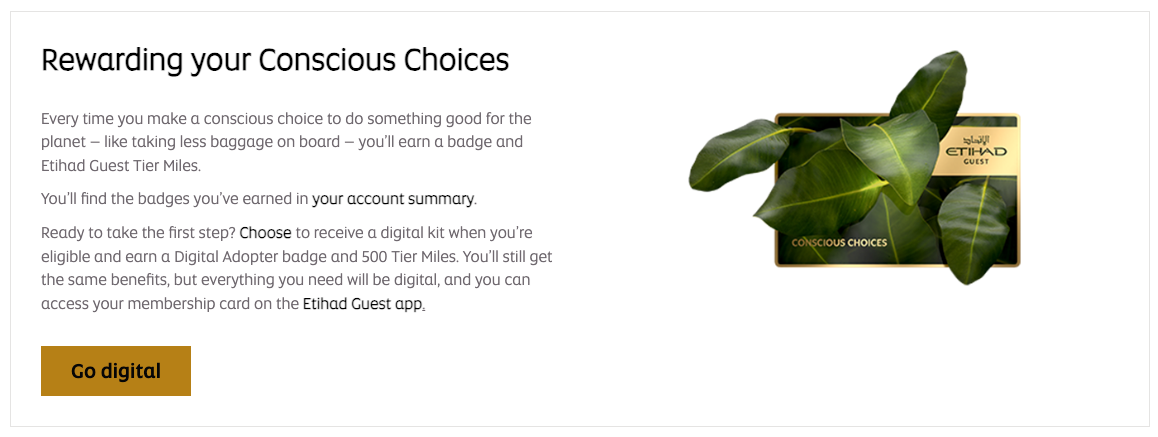
Etihad Guest, for example, lets members earn and spend miles on sustainability-focused initiatives.
Because at the end of the day, sustainability isn’t just a trend or a tactic. Climate change affects us all. For that simple fact alone, we should see a fundamental shift in how we do business and how we engage with our customers.
The brands that get it right, the ones creating authentic, emotionally resonant experiences that align with customer values, will thrive in the years to come.
2) Why Does Communicating Your Sustainability Mission Build Loyalty?
A strong, purpose-driven mission statement can be the foundation for an emotional connection that lasts a lifetime.
When your customers know that you share their values and are committed to making a positive impact, they’re more likely to stick with you through thick and thin. In fact, studies have shown that a positive brand image can convert loyal customers to high-value brand advocates.
Of course, the cost-of-living crisis has made sustainability a tougher sell for some consumers. But that doesn’t mean you should stop being eco-friendly; you just need to be creative in how you provide value. Case in point, offering rewards to customers who opt for PUDOs over home deliveries.
3) How Do Green Deliveries Support Sustainability and Customer Loyalty?
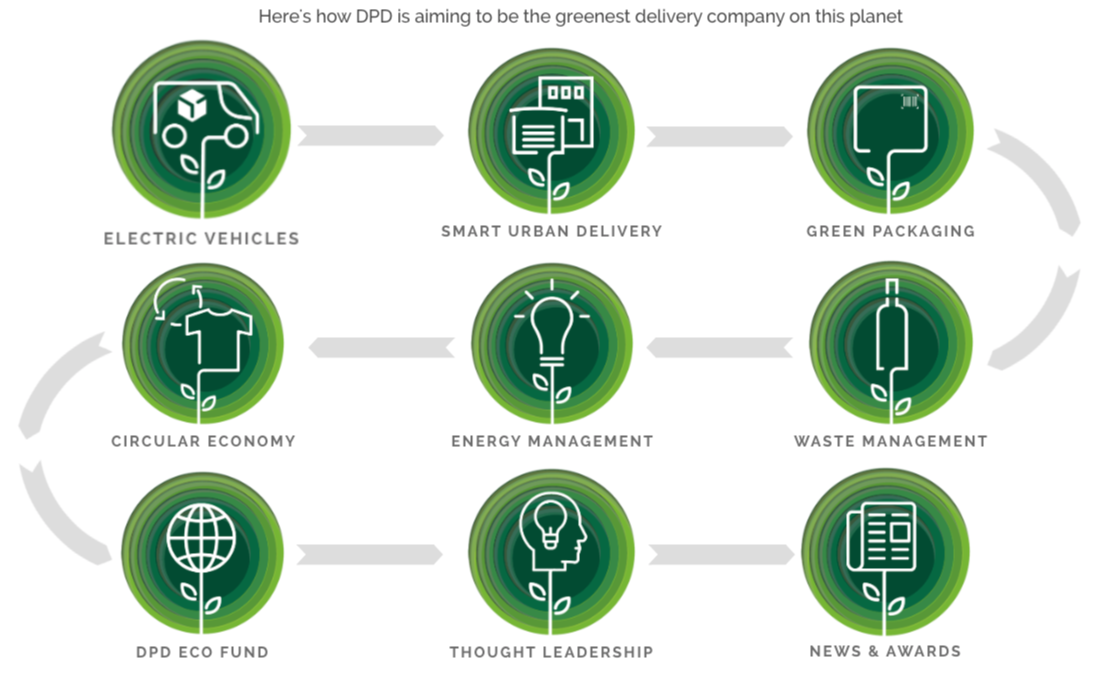
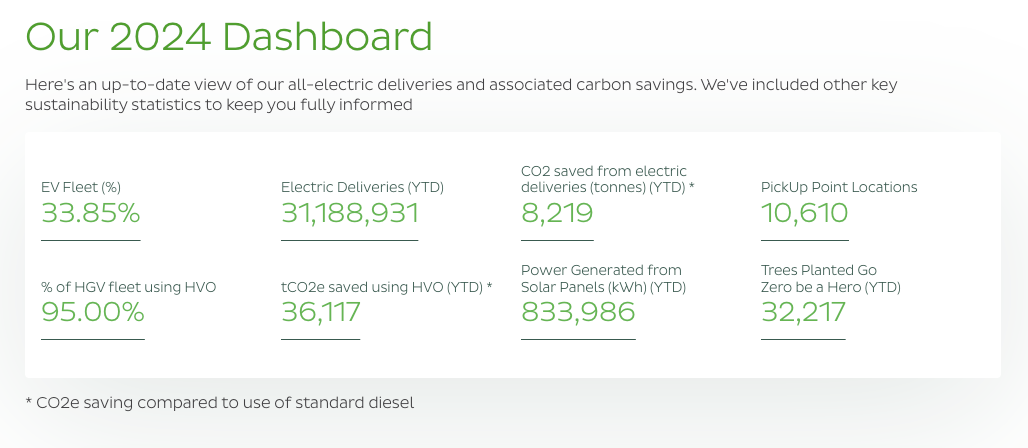
Green deliveries support sustainability and customer loyalty by reducing carbon emissions through consolidated shipments and optimised routes, while also cutting fuel costs and boosting efficiency for your business. It’s a win-win for your brand and the planet.
“Green delivery” simply means adopting sustainable practices for your shipping: lowering carbon emissions, using eco-friendly packaging, and streamlining routes.
And customers are on board. A Descartes study of over 8,000 shoppers shows that:
54% are happy to wait longer for an order if it means a greener delivery, and
20% would even pay more to support the effort.
That willingness is the whole point. When people are willing to wait a little longer or spend a little extra, going green clearly matters to them. But the real beauty of green deliveries is that customers still get a service that fits their values without the wait or the added cost.
4) How Can Pick Up Points and Drop Offs Reduce Environmental Impact?
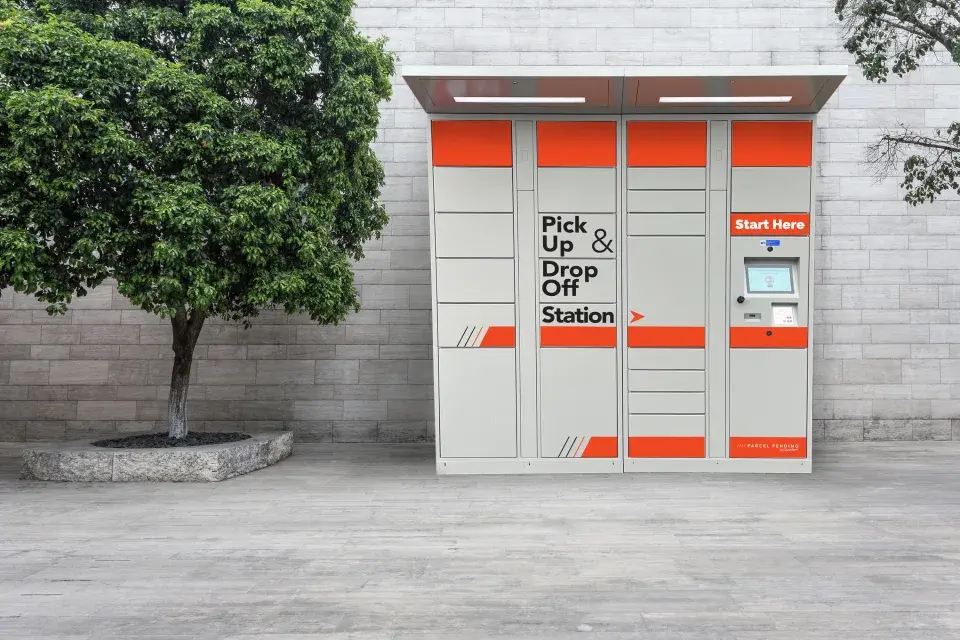
Pick up and drop off (PUDO) points reduce environmental impact by replacing dozens of separate doorstep stops with a single drop to one shared location.
One van serving 50 parcels at a corner shop beats 50 vans crisscrossing a neighbourhood, slashing the carbon footprint of last-mile delivery. In the UK alone, there are over 45,000 pick up and drop off points, and adoption is only growing as attitudes shift.
While home delivery may still be king for some customers, studies show that the majority of consumers are open to alternatives, especially if they add flexibility and convenience.
One Belgian report found 72.2% of consumers used PUDO points because they missed a home delivery, compared to just 24.4% who actively preferred to order online and collect.
Quadient’s Sustainable and Convenient Parcel Locker Delivery and Pickup Solution Available in Over 20,000 Locations Worldwide
The key is to place your pick up points well and keep them easy to use. When PUDOs slot into customers’ daily routines, you’ll start to convince them that they are a viable alternative.
But here is the real opportunity: reward customers for using PUDOs. Offer extra points or benefits, and you stop merely offering a fallback for missed deliveries. You actively encourage the greener choice.
5) Why Is Sustainability Training Important for Customer Loyalty?
Educating your employees on eco-friendly practices creates a powerful ripple effect that extends to your customers.
Remember, your employees are customers too. When they feel proud to work for a company that commits to its values, that pride shows in every interaction. It is the kind of genuine advocacy money simply cannot buy.
What Are the Challenges of Implementing Sustainable Practices?
Eco-friendly strategies come with their fair share of challenges, but those challenges are also opportunities to differentiate your brand and adapt to a changing world. Here are the three main hurdles to be aware of:
Addressing concerns about sustainable product quality
Avoiding greenwashing and ensuring authentic claims
Balancing sustainability goals with business objectives
Let’s break each one down.
How Can Brands Address Concerns About Sustainable Product Quality?
Brands can address quality concerns by educating customers about how far sustainable products have come. One of the biggest hurdles many businesses face when going green is the perception that eco-friendly alternatives won’t perform as well or last as long as their conventional counterparts.
But with advances in technology and materials science, it’s now possible to create products that are both environmentally friendly and high-performing.
The key is to proactively demonstrate that quality through product demos, customer testimonials, or offering a free sample alongside the product the customer purchased.
How Can Brands Avoid Greenwashing and Ensure Authentic Sustainability Claims?
You can avoid greenwashing by making sure your outward claims reflect your internal culture and governance. In the age of heightened consumer scrutiny, it’s more important than ever to ensure that sustainability claims are authentic and transparent.
Fabricating or exaggerating sustainability policies is so commonplace now that there’s even a word for it: greenwashing.
Here’s what the numbers say:
A Harris Poll for Google Cloud found that 58% of executivesadmitted their companies were guilty of greenwashing.
In the same survey, 65% of businesses across various industries agreed that they didn’t know how to implement sustainability efforts which had a positive environmental impact.
The fallout:9 in 10 consumers say they distrust brands that claim to be sustainable.
Distrust and low loyalty go hand in hand. You cannot build an emotional connection without trust, and you cannot build loyalty without that connection. Publishing your sustainability policies and the certifications that prove compliance is one solid way to back your claims.
How Do You Balance Sustainability Goals with Business Objectives and Customer Expectations?
You balance them by implementing customer loyalty programmes that incentivise green behaviours, promote a sustainable culture both inside and outside of the company, and avoid incurring extra costs that might undermine confidence among stakeholders.
The tension is real. On one side sits your responsibility to cut environmental impact and drive change across your industry. On the other side sit your shareholders, your employees, and your bottom line.
Then there are your customers, the people who ultimately decide whether your sustainability efforts are worth their loyalty and their money. The goal is to find the sweet spot where all three line up.
How Can Brands Improve Sustainability Adoption Among Customers?
Not all customers find it easy to embrace green practices straight away. For many, it’s simply a case of getting used to a new way of thinking. But by applying the right strategies, you’ll be in a much better position to convince sceptical consumers to join the green movement.
Here are four approaches that work:
Educating customers on sustainable products and practices
Harnessing purpose-driven marketing and green messaging
Let’s look at how these strategies work and why each one is important.
How Does Educating Customers Drive Sustainable Behaviour Change?
When customers understand the real, tangible benefits of sustainable products and practices, they start to buy into a shared purpose.Pair that understanding with tangible incentives and you turn quiet interest into active motivation.
Education might mean creating content that highlights the environmental impact of different lifestyle choices or showcasing the ways that your sustainable products can help customers live healthier, more fulfilling lives. It could even mean partnering with influencers or experts in the sustainability space to add credibility and authority to your message.
Focus on making sustainability feel accessible, achievable, and desirable for your customers. Break complex issues into simple, actionable steps, and celebrate the positive impact of every eco-friendly choice.
Rewarding customers for sustainable behaviour also empowers them to make a real difference.
How Can Brand Purpose and Values Build Trust Around Sustainability?
Brand purpose and values build trust by giving customers a reason to believe your sustainability commitment is genuine, not performative. Education alone isn’t enough to change hearts and minds.
To truly connect with your customers on a deep, emotional level, you need to tap into the power of your brand’s purpose and values.
Share stories about your company’s sustainability journey, including both your successes and your challenges. Partner with environmentally conscious brands or advocacy groups that align with your values, or invest in sustainable infrastructure and practices that go beyond surface-level claims.
How Do Engaging Customer Experiences Promote Eco-Friendly Choices?
Engaging experiences bring your sustainability message to life in ways that feel exciting. Create interactive displays or pop-up shops that showcase your sustainable products in action, or host events and workshops that educate customers about sustainability in a fun, hands-on way.
With a loyalty programme in place, you could even gamify your sustainability initiatives through challenges, rewards, and other incentives that encourage customers to make more environmentally friendly choices.
Make sustainability feel like a rewarding part of your customers’ lives, not just a chore or a sacrifice. Experiences that are both educational and entertaining let customers see the joy and satisfaction that come from living a more sustainable lifestyle.
How Can Purpose-Driven Marketing and Green Messaging Drive Loyalty?
Purpose-driven marketing and green messaging drive loyalty by weaving your sustainability commitment into every customer touchpoint. That means infusing your marketing campaigns, social media presence, and customer communications with a clear, compelling message about your brand’s commitment to sustainability.
You can do this by showing how your products and practices positively impact the planet and celebrating customers who join your mission.
Which Brands Are Leading the Way with Sustainable Loyalty Programmes?
Brands like Etihad Airways, Costa Coffee, and Liight are embedding sustainability directly into their loyalty programmes, rewarding customers for making eco-friendly choices.
Now is the perfect time to double down on your sustainability efforts and outpace your competitors. And launching a green loyalty programme that incentivises and rewards customers for making environmentally friendly choices is a great place to start.
Let’s take a look at a few standout examples of brands doing exactly that.
I know what you’re thinking: an airline linked to sustainability? Easy to be sceptical, but hear me out, because Etihad is doing genuinely impressive things with its loyalty programme, Etihad Guest.
First of all, the programme boasts an incredible roster of partner brands, from luxury names like Montblanc and Joyalukkas to premium lifestyle brands like Live Free and ASMALLWORLD.
But what really sets Etihad Guest apart is its commitment to sustainability.
Members earn Tier Miles by offsetting emissions from everyday activities like driving, cooking, and cooling their homes. They can donate miles to green causes and earn rewards for eco-friendly behaviours, such as packing lighter or switching to a digital membership card.
And the wider impact is no token gesture.
Etihad is bringing in sustainable fuel options, expanding its use of electric vehicles, and working with other airlines to promote cleaner skies. The airline has committed to net zero emissions by 2050 and to halving its 2019 emissions by 2035.
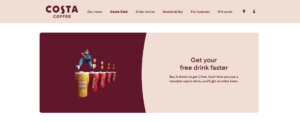
Sometimes the most effective sustainability incentive is also the simplest. Costa Coffee builds waste reduction straight into its Costa Club rewards scheme, and it does so with one neat mechanic.
Every barista-made drink earns you one Bean, with a free drink waiting at the end. Bring a reusable cup, though, and you earn an extra Bean per drink. That means a free drink after just five reusable-cup visits instead of the usual ten.
It is a small nudge with a daily impact. Costa rewards the greener choice without asking customers to pay more or wait longer.
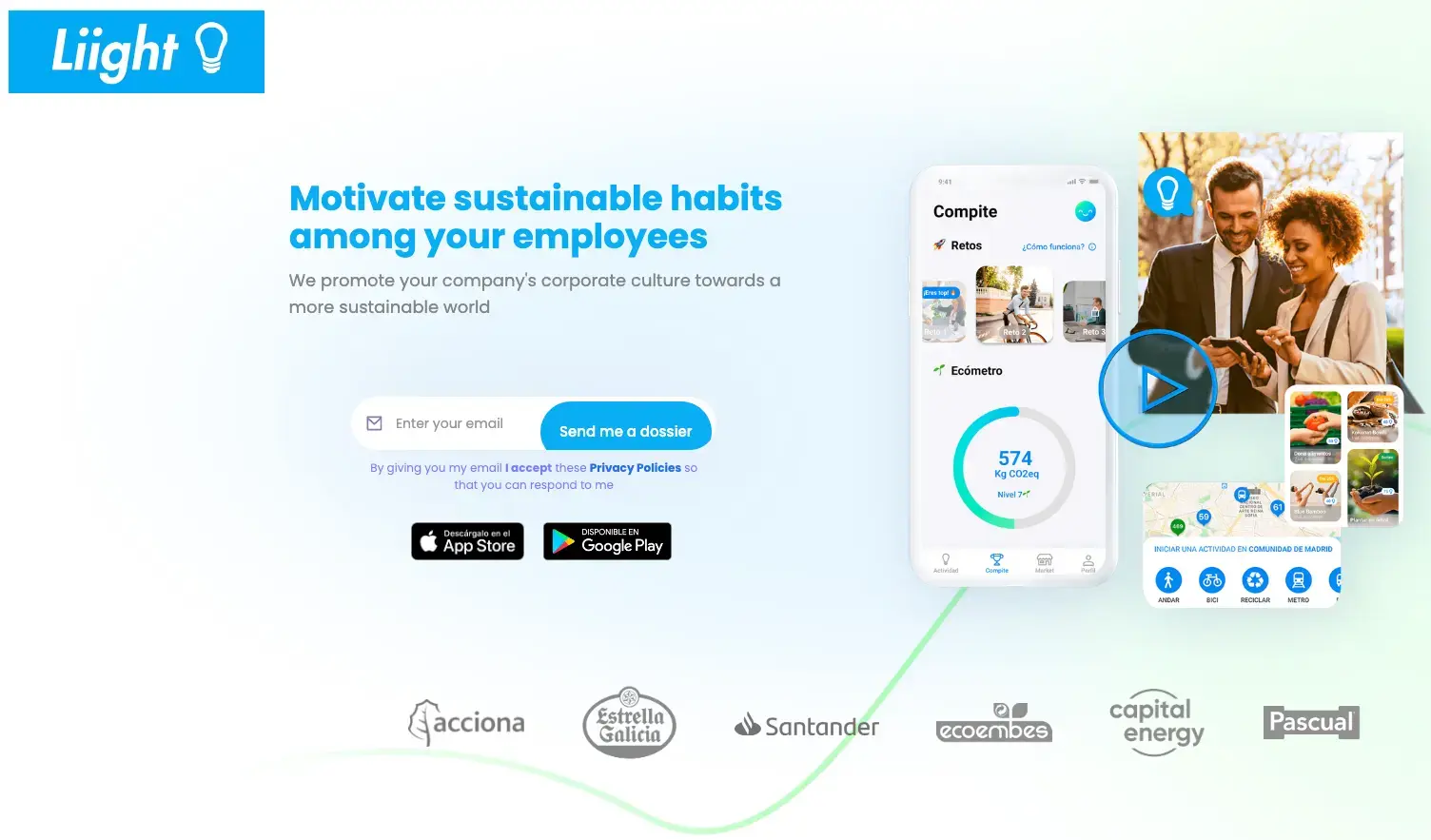
Finally, let’s look at a company that is taking sustainable loyalty to the next level by gamifying eco-friendly behaviour. Liight, a Spanish startup founded in 2017, has built a platform that rewards employees for making sustainable choices in their daily lives.
The app offers rewards across sustainable fashion, tech, and leisure, alongside gamified challenges and rankings that promote a greener lifestyle.
But what really sets Liight apart is its tracking and measurement. By analysing daily habits like transport choices, recycling, and energy use, it calculates the tangible carbon impact of those efforts and feeds it straight into an employer’s sustainability reporting.
Major employers including HP, Santander, and Diageo already run Liight challenges, with Santander’s programme alone logging over 338,000 sustainable kilometres.
Why Should Sustainability Be Central to Your Customer Loyalty Strategy?
Sustainability should sit at the heart of your loyalty strategy because it builds the kind of connection price and convenience never can. Today’s customers actively seek brands making a real difference, and an authentic commitment to environmental and social responsibility earns trust, credibility, and loyalty that runs deep.
A rewards programme is one of the most powerful ways to show that commitment. Rewarding customers for eco-friendly choices drives retention and advocacy and builds a community of people who genuinely share your mission.
So make sustainability a core part of your brand strategy, and let loyalty do the rest. Your customers, and the planet, will thank you for it.
Sustainability drives customer loyalty by aligning with consumers’ values and demonstrating a genuine commitment to eco-friendly practices. Brands that embrace sustainability can build trust, credibility, and emotional connections with customers, leading to increased retention and advocacy.
What are the benefits of embracing sustainability for businesses?
Embracing sustainability can enhance brand purpose, improve customer lifetime value, attract new customers in the eco-conscious consumer market, and reduce environmental impact. Sustainable practices can also drive innovation and differentiate a brand from competitors.
How can businesses integrate sustainability into their loyalty programmes?
Businesses can integrate sustainability into loyalty programmes through green deliveries, pick up points & drop offs, sustainability training for employees, communicating the brand’s mission, and differentiating rewards with sustainable incentives like eco-friendly products or experiences.
What are some challenges businesses face when implementing sustainable strategies?
Common challenges include addressing concerns about product quality, ensuring authentic sustainability claims and avoiding greenwashing, and balancing sustainability goals with business objectives and customer expectations. Overcoming these challenges requires transparency, education, and strategic planning.
How can businesses change customers' minds and behaviours around sustainability?
Effective strategies include educating customers about sustainable products and practices, leveraging brand purpose and values to build trust and credibility, creating engaging customer experiences that promote eco-friendly choices, and harnessing the power of purpose-driven marketing and green messaging.
What role do loyalty programmes play in promoting sustainable consumer behaviour?
Loyalty programmes can incentivise and reward customers for making eco-friendly choices, such as choosing sustainable products or participating in recycling initiatives. By integrating sustainability into rewards and benefits, businesses can encourage long term sustainable behaviour change.
How can businesses ensure the authenticity of their sustainability claims?
To ensure authenticity, businesses should be transparent about their sustainability journey, back up claims with measurable data, and integrate sustainable practices into their operations and culture. Partnering with environmental organisations and seeking third-party certifications can also build credibility.
What are some examples of successful sustainable loyalty programmes?
Etihad Airways’ Etihad Guest programme rewards members for offsetting emissions and eco-friendly behaviours. H&M’s garment collection programme offers vouchers for recycling clothes, and Liight’s app gamifies sustainable choices for employees, offering rewards for reducing environmental impact.
How can businesses balance sustainability goals with customer expectations and business objectives?
Finding the sweet spot where sustainability, customer expectations, and business objectives intersect requires strategic planning and innovation. This may involve partnering with sustainable suppliers, or finding creative ways to incentivise sustainable behaviours through loyalty programmes.
Why is it important for businesses to prioritise sustainability in their loyalty strategies?
Prioritising sustainability in loyalty strategies is crucial for building long term customer relationships, as consumers increasingly seek out brands that align with their values. With an authentic commitment to sustainability, businesses can create a powerful competitive advantage and drive retention and advocacy.
Mark Camp
Mark is the Founder and CEO of Propello Cloud, an innovative SaaS platform for loyalty and customer engagement. With over 20 years of marketing experience, he is passionate about helping brands boost retention and acquisition with scalable loyalty solutions.
Mark is an expert in loyalty and engagement strategy, having worked with major enterprise clients across industries to drive growth through rewards programmes. He leads Propello Cloud’s mission to deliver versatile platforms that help organisations attract, engage and retain customers.
Start your customised Propello Cloud journey today
Explore the platform’s scalability, features and customisation options and get answers to your unique questions.


.webp)
 Source: