How to Improve Customer Engagement in Financial Services
25 min to read
Published: May 5, 2023
Updated: June 11, 2024
Better efficiency, more revenue opportunities, and increased customer lifetime value are just some of the benefits that financial services businesses can gain from investing in customer engagement. We’ll explore the current state of customer engagement in financial services and proven strategies for creating a customer-first approach that boosts your profits.
Mark Camp
CEO & Founder at PropelloCloud.com
Contents
Key Takeaways
Customer engagement directly impacts retention, loyalty, and revenue growth in financial services. Engaged customers stay loyal and refer others.
To stand out, financial businesses must deliver personalised experiences, proactive engagement, and value beyond just transactions.
Understanding the customer journey allows for optimising engagement at each touchpoint. Personalising experiences based on customer needs is crucial.
Providing cross-channel support (phone, email, chat, social media, etc.) lets customers get help how and when they prefer.
Leveraging multiple marketing channels (email, social, and mobile ads) improves brand awareness and campaign effectiveness through targeted communications.
A mobile-first engagement strategy using push notifications, in-app messaging, and mobile wallets meets growing customer expectations.
Real-time data enables segmentation for timely, personalised engagement based on customer behaviours and needs.
Strategic brand partnerships through loyalty programmes add value beyond core financial services to drive memorable experiences and emotional connections.
According to our2025 Customer Loyalty State of the Industry Report, 84% of enterprise brands are prioritising personalisation and strategic partnerships, yet 83% still cite customer engagement as one of their biggest challenges.
Financial services brands face the specific problem that their products are often low-frequency and hard to differentiate on features alone. That makes the experience around the product the real battleground for retention.
This article covers:
Why is customer engagement harder to sustain in financial services than in most other sectors
The biggest barriers enterprises are actually facing right now
Why loyalty programmes are one of the most effective engagement levers available
Which loyalty-led strategies deliver the most impact, and how to prioritise them
Why does customer engagement matter more in financial services?
In financial services, engagement is not just a marketing metric. It is a direct driver of revenue, retention, and lifetime value. Products like current accounts, insurance policies, and lending products have low natural interaction frequency. Without deliberate engagement, customers drift.
According to Propello Cloud’s 2025 Loyalty Uncovered Report, 80% of enterprise financial services brands report difficulties with churn management. That figure reflects a sector where customers are easy to lose and hard to win back.
The brands pulling ahead are not simply improving their service delivery. They are building structured, ongoing reasons for customers to stay engaged between essential touchpoints. That is a loyalty design problem, not a communications problem.
What are the biggest barriers to customer engagement in financial services?
Most financial services brands know they need better engagement. The harder problem is operationalising it. For the 100 enterprise brands that we spoke to, they identified the following obstacles that consistently get in their way:
Customer engagement itself – 83% of businesses highlight it as an active challenge, with 37% rating it critical. Keeping customers engaged between transactions remains the fundamental unsolved problem.
API integration complexity – 81% struggle to connect loyalty and engagement tools with their existing tech stack, including CRM systems. Technical debt slows delivery.
Data privacy and compliance – 78% cite this as a concern. In a regulated sector, the tension between personalisation and data governance is real and ongoing.
Multi-channel consistency – 77% find it difficult to deliver a unified experience across mobile, web, and in-branch touchpoints.
Churn management – 80% report difficulties retaining customers, driven by intensified competition, inconsistent experiences, and loyalty programmes that fail to differentiate.
These are not isolated problems. They compound. API complexity makes personalisation harder. Inconsistent channels undermine trust. Churn accelerates when engagement is weak.
Why are loyalty programmes one of the strongest engagement levers in financial services?
Loyalty programmes give financial services brands a structured mechanism for staying relevant between essential customer interactions. Rather than waiting for a renewal, a payment, or a complaint to prompt contact, a well-designed programme creates ongoing reasons to engage.
The business case is equally clear from our enterprise research. In our report, strategic brand partnerships and personalisation both ranked at 84% for future investment priority among financial services and insurance brands. These are not aspirational investments. They are the top-ranked commitments from organisations actively planning their loyalty roadmaps.
What loyalty programmes do that service improvements alone cannot:
Create emotional and practical value outside core financial interactions
Give customers visible, ongoing reasons to remain active with the brand
Enable data collection that improves personalisation over time
Extend the brand relationship into everyday spending and lifestyle moments
Provide a platform for strategic partner rewards that price cuts cannot replicate
Which loyalty-led strategies improve customer engagement most?
Not all loyalty investments deliver equal returns on engagement. Based on our 2025 research, here is how the key strategies rank by enterprise investment priority, implementation effort, and engagement impact:
Strategy
Investment Priority
Effort
Engagement Impact
Personalisation
84%
High
High
Strategic brand partnerships
84%
High
High
API integration (plug and play)
77%
Low
High
Mobile-first delivery
77%
Low-Medium
High
Real-time rewards
75%
Medium
High
Outsourced loyalty solutions
69%
Low
Medium-High
How to read this table: Personalisation and strategic partnerships sit at the top for both priority and impact but require the most time and resource to execute well. Mobile-first delivery and plug-and-play API integration are the fastest routes to visible improvement. Outsourcing loyalty infrastructure accelerates all of the above by removing the build burden entirely.
The key insight from our data: 69% of enterprise brands prefer outsourced loyalty solutions specifically because they launch faster and scale more easily. Speed-to-market is not a secondary consideration. For financial services brands under churn pressure, it is often the decisive factor.
How can financial services brands use partnerships to build more engaging loyalty programmes?
Strategic brand partnerships let financial services brands add visible, everyday value without expanding their core product set. The right partner mix makes a loyalty programme feel relevant to how customers actually live, not just how they bank or insure.
As Nathan Armstrong, Loyalty and Brand Partnerships Consultant at Propello, puts it: “The key isn’t about offering more choices but about offering the right choices.” Audience fit and value clarity matter more than the size of a partner catalogue.
What good partnership-led engagement looks like in financial services:
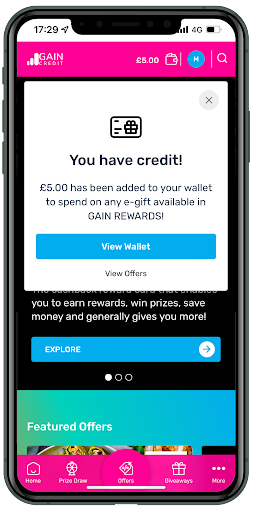
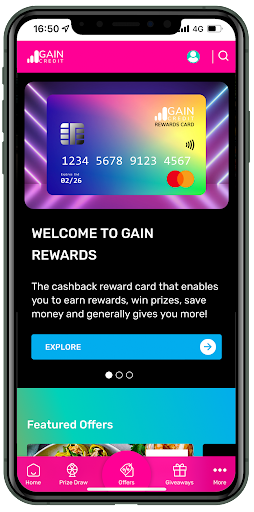
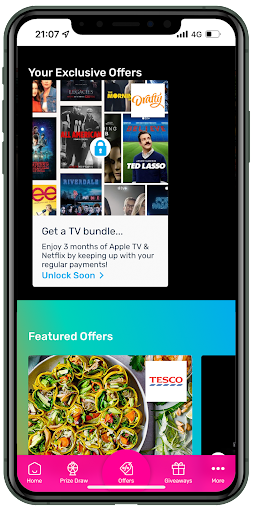
Gain Credit, a Propello Cloud client, built a network ofmore than 200 brand partners to provide customers with incentives, rewards, and prize draws, adding value well beyond the core lending product
Insurance brands are using partnerships to reward responsible behaviours, such as careful driving or home security improvements, linking loyalty to outcomes that benefit both customer and brand
Lee Metters, partnerships expert at AWIN, notes that exclusive, well-aligned partner offers drive stronger engagement outcomes than broad, generic reward catalogues. The programme should feel curated, not crowded.
What does personalisation look like in a modern financial services loyalty strategy?
Personalisation in loyalty is not segmentation by age bracket or product type. It is behaviour-based, timely, and tied to what a specific customer is actually doing with your brand right now.
According to our 2025 research, 84% of enterprise brands rank personalisation as a top investment priority. The gap between ambition and execution is where most financial services brands struggle.
Three components that make loyalty personalisation work:
1. Behavioural data, not demographic assumptions
Real-time data and dynamic segmentation allow brands to respond to what customers are actually doing, rather than what a static profile suggests they might want. As Nathan Armstrong explains, personalised rewards “make sense to the individual and are relevant to their customer journey with the business.”
2. Timely triggers, not batch communications
Modern programmes recognise meaningful customer actions in real time and respond immediately with relevant rewards or messages. That timing is what makes the interaction feel considered rather than automated.
3. Predictive churn intervention
AI and machine learning can identify disengagement signals early. Mark Camp, CEO at Propello Cloud, notes that AI can “spot patterns, like customers shopping less often or redeeming fewer rewards” and trigger personalised offers before a customer is lost.
Why do mobile-first delivery and real-time rewards matter for financial services engagement?
Loyalty strategy only works when delivery is convenient and immediate. According to our 2025 research, 77% of enterprise brands prioritise mobile-first strategies and API integration, and 75% are focused on real-time rewards and instant gratification.
The reason is straightforward. Customers increasingly manage their finances on mobile. A loyalty programme that requires desktop access or delayed reward fulfilment loses the engagement moment entirely.
Mobile-first tactics that drive engagement in financial services:
Push notifications for reward availability, payment reminders, and personalised offers
In-app reward redemption with no friction or waiting periods
Mobile wallet integration for instant value delivery
Start with the quick wins to demonstrate value fast. Build toward personalisation and partnerships as the long-term differentiation layer. The 69% of brands favouring outsourced solutions are choosing this path because it compresses the timeline on both.
Start building loyalty-led engagement today
Customer engagement in financial services improves when brands stop treating it as a messaging challenge and start treating it as a loyalty design challenge. The goal is not more communications. It is more meaningful reasons for customers to return, interact, and stay.
The evidence from our 2025 research is consistent: personalisation, strategic partnerships, mobile-first delivery, and real-time rewards are the investments with the highest enterprise priority and the strongest engagement returns. The brands that combine these elements with the right infrastructure, whether built or outsourced, are the ones pulling ahead on retention.
What is customer engagement in financial services, and why does it matter?
Customer engagement in financial services refers to the ongoing interactions that build loyalty, trust, and retention beyond the initial transaction. Engaged customers generate more revenue, refer others, and are significantly less likely to churn. According to Gallup, banks earn 37% more annual income from engaged customers than from disengaged ones.
How do loyalty programmes improve customer engagement in financial services?
Loyalty programmes create structured, ongoing reasons for customers to interact with a financial brand between essential touchpoints. They deliver value through personalised rewards, strategic brand partnerships, and real-time incentives that price cuts and service improvements alone cannot replicate. Over 84% of consumers say they will stay with a brand that offers a loyalty programme.
What are the most effective loyalty strategies for financial services brands?
According to Propello Cloud’s 2025 Loyalty Uncovered Report, the highest-priority strategies are personalisation (84%), strategic brand partnerships (84%), mobile-first delivery (77%), and real-time rewards (75%). Outsourced loyalty solutions (69%) are increasingly preferred because they accelerate time-to-market without requiring in-house development.
How can financial services brands personalise loyalty without breaching data privacy rules?
Effective personalisation uses behavioural data, such as transaction patterns and engagement signals, rather than sensitive personal data. Dynamic segmentation allows brands to respond to real-time customer actions within compliant frameworks. Working with a specialist loyalty platform can help manage this balance, as 78% of enterprise brands cite data privacy and compliance as an active challenge.
What challenges do financial services companies face when improving customer engagement?
The main barriers identified in our 2025 research are: customer engagement difficulty (83%), API integration complexity (81%), churn management (80%), data privacy and compliance (78%), and multi-channel consistency (77%). These challenges compound each other, which is why a joined-up loyalty strategy, rather than isolated tactical fixes, tends to deliver more durable results.
FAQs
What is customer engagement in financial services, and why is it important?
Customer engagement in financial services refers to interactions that build loyalty and retention, impacting customer satisfaction and your bottom line. Effective engagement keeps the customer happy and drives growth through word-of-mouth referrals and meaningful relationships with potential customers.
How can financial institutions leverage personalisation to improve customer engagement?
Financial institutions can use data analytics to offer personalised experiences, enhancing customer satisfaction and increasing customer retention. This helps deliver targeted marketing campaigns, ensuring the customer feels valued and understood, benefiting the business goals and bottom lines.
What role does technology play in enhancing customer engagement in the financial sector?
Technology enables digital engagement and automation in financial services, improving customer service and satisfaction. Mobile apps and data analytics provide real-time insights, enhancing the customer-centric approach. These tools offer a competitive advantage and optimise customer service teams’ efforts.
How can financial services companies use data to create more personalised customer experiences?
Financial institutions can use data analytics to personalise customer experiences, increasing engagement and satisfaction. By understanding customer behaviour and preferences, they tailor their services, creating experiences that meet specific needs and drive higher retention rates and customer loyalty.
What are some best practices for implementing cross-channel customer support in financial services?
Effective cross-channel support can improve customer retention. Best practices include integrating communication channels like phone, email, chat, and social media. Customer support teams should use a knowledge base to provide consistent service, ensuring customer satisfaction and nurturing loyalty.
How can mobile-first engagement strategies benefit financial service providers and their customers?
Mobile-first strategies enhance engagement by meeting customer expectations for convenience. Banks and credit unions use mobile banking apps for real-time interactions and personalised experiences. This approach improves customer satisfaction and retention through seamless digital engagement.
What are the most effective ways to measure customer engagement in financial services?
Measuring customer engagement in financial services involves tracking metrics like net promoter score (NPS), customer satisfaction, and retention rates. Analysing data from customer service interactions and marketing campaigns reveals customer engagement levels and informs decisions to improve.
How can strategic partnerships enhance customer engagement for financial institutions?
Strategic partnerships enhance customer engagement by offering additional value and perks. Case studies show banks and credit unions partnering with retailers for loyalty programmes. Such collaborations give customers more reasons to engage via memorable experiences and unique offers from top brands.
What challenges do financial services companies face in improving customer engagement, and how can they overcome them?
Evolving customer expectations and the nature of financial products make it tricky for financial institutions to engage customers. The key to solving these challenges lies in strategies like loyalty programmes, which offer ongoing value and engagement via personalised offers and gamification.
How can financial institutions use gamification to increase customer engagement?
Gamification increases engagement by making financial interactions more enjoyable. Mobile apps can incorporate gamified elements, encouraging customers to use services frequently. Loyalty programmes can also offer gamified rewards via contests and prize draws to drive digital engagement and brand loyalty.
Mark Camp
Mark is the Founder and CEO of Propello Cloud, an innovative SaaS platform for loyalty and customer engagement. With over 20 years of marketing experience, he is passionate about helping brands boost retention and acquisition with scalable loyalty solutions.
Mark is an expert in loyalty and engagement strategy, having worked with major enterprise clients across industries to drive growth through rewards programmes. He leads Propello Cloud’s mission to deliver versatile platforms that help organisations attract, engage and retain customers.
Start your customised Propello Cloud journey today
Explore the platform’s scalability, features and customisation options and get answers to your unique questions.