Helping Your Customers Climb the Customer Loyalty Ladder
24 min to read
Published: May 9, 2024
Updated: September 28, 2026
The customer loyalty ladder maps the journey from stranger to advocate across six rungs: suspect, lead, prospect, customer, client, advocate. You move people up it by matching the right strategy to the right rung, reading the emotion behind each step rather than the transaction. Get that right and retention, lifetime value and word of mouth all climb with them.
Mark Camp
CEO & Founder at PropelloCloud.com
Contents
Key Takeaways
The customer loyalty ladder maps six rungs of loyalty, from suspect through to advocate, so you can see where every customer stands.
Each rung has an emotional state behind it, and reading that mindset rather than just the action is what lets you move customers up.
Segmenting customers by how engaged and loyal they already are turns a one-size-fits-all approach into targeted, relevant experiences.
Six rungs mean five moves to engineer, and each move needs its own strategy matched to the mindset it targets.
The ladder shows you where to spend your effort, so you nudge the client who is ready for advocacy and leave alone the one who is not.
Handled well, the ladder lifts retention, creates advocates, raises lifetime value and lowers acquisition costs.
Loyalty is never finished, and continuously acting on customer feedback is what keeps clients climbing rather than slipping back.
The true value of the loyalty ladder is knowing where to spend your effort. I have watched brands ask a happy client for a referral too early and irritate them, then miss the one who was ready to advocate and leave real growth on the table.
Place each customer on the right rung and you apply the right nudge at the right time.
What follows walks every rung in turn: the mindset that defines it and the move that carries a customer up to the next.
What Is a Customer Loyalty Ladder?
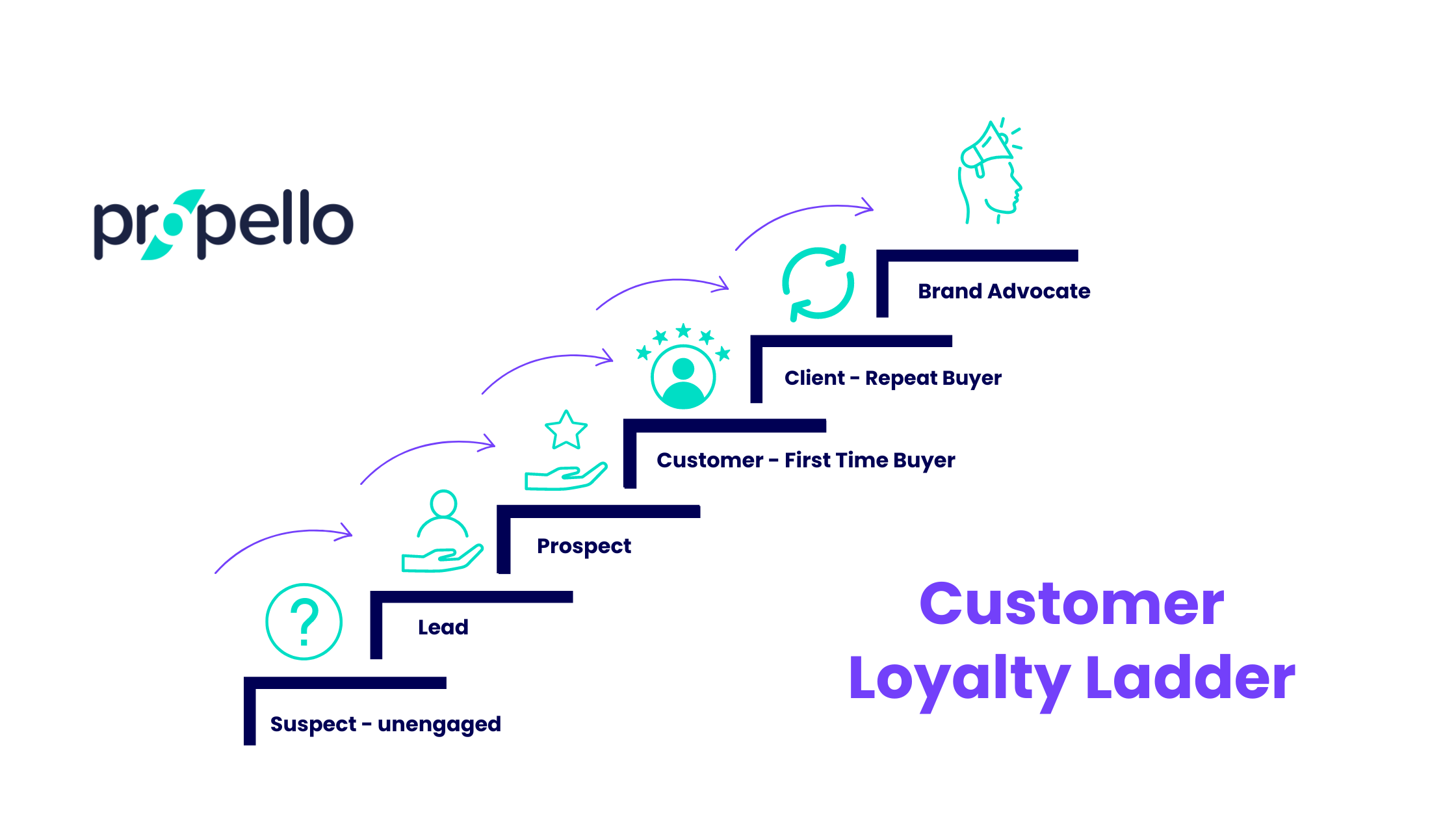
A customer loyalty ladder is a framework that sorts your customers by how loyal they are, from strangers who have never heard of you to advocates who recommend you to their friends.
Picture a ladder with six rungs, each representing a different level of customer loyalty. Customers climb the levels or slip back down, depending on how well you meet their needs at each stage.
The rung names vary. Some marketers say suspects, leads, prospects, customers, clients and advocates. Others prefer supporters or brand ambassadors. What matters is that you can define each level clearly and tell them apart, because you cannot move a customer up a ladder you have not mapped.
What Are the Different Loyalty Levels and Their Actions?
Here’s how I like to break them down, from the bottom rung up:
Consumer (Suspect): At the bottom sits the suspect, a potential customer who fits your target profile but has never interacted with you. They might genuinely benefit from what you sell, judging by their demographics or behaviour, but they do not yet know you exist.
Lead: A lead has shown a flicker of interest. They have visited your site, joined your email list or followed you on social, so they are aware of you. They have not started seriously weighing you up yet.
Prospect: A prospect is actively considering whether to buy from you or a competitor. They are researching, comparing options and weighing the pros and cons. They are in the buying process but have not committed.
Customer (first time): A customer has made that first purchase and taken a chance on you. They are judging the experience and deciding whether to come back or look elsewhere, often still eyeing competitors. It is your job to make an impression that lasts.
Client (repeat buyer): A client buys from you regularly and trusts you enough to try new offerings. That trust makes them far more receptive to an upsell or a cross-sell. This is where a transaction has become a relationship.
Brand advocate: At the top sit your advocates, the champions who recommend you to friends, family and followers through word of mouth, reviews and referrals. They do your marketing for you, and they do it because they mean it.
The goal is simple: guide every person who meets your brand up the ladder, turning suspects into leads, leads into prospects, and on up to advocates.
Deliver personalised experiences, anticipate what customers need, and consistently exceed their expectations, and they will keep climbing. Each rung is a stage in your relationship marketing.
Why Is a Customer Loyalty Ladder Important?
A customer loyalty ladder matters because it puts an end to guesswork. A great product alone no longer wins people over. They have too many alternatives, and they hand their loyalty to the brands that recognise where they are in the relationship and treat them accordingly.
That is what the ladder gives you. Segment customers by how engaged and loyal they already are, and you can match the message, the content and the reward to each group.
A targeted approach beats firing one campaign at everyone and hoping it lands. You meet people where they stand, then move them up.
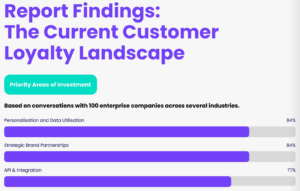
This is where the market is already moving. Propello Cloud’s Loyalty Uncovered 2025 report, based on 100 enterprise brands, found personalisation the single biggest investment priority in loyalty, named by 84%. The ladder is what makes that personalisation deliberate rather than scattergun.
Picture the alternative. A one-size-fits-all approach to loyalty is a ladder with missing rungs. You make some progress, then someone reaches for a rung that is not there and slips straight back down.
A clearly defined ladder is the sturdy version. Every rung is in place, every customer has a next step, and you always know which one to offer.
That is the difference between hoping customers stay loyal and building the path that makes them.
What Are the Benefits of a Customer Loyalty Ladder?
A customer loyalty ladder pays off in four ways: it boosts retention, turns customers into advocates, raises lifetime value and cuts acquisition costs. None of it happens by accident. It happens because you stop treating every customer the same and start matching your effort to the rung they stand on.
1) Boosts Customer Retention
Give customers experiences and rewards that fit where they are, and they keep coming back. Retention is not a one-off campaign. It is what you earn by getting the small things right at every rung.
2) Drives Brand Advocacy
Move a customer far enough up the ladder and they stop being a buyer and start being a voice for you. That voice carries.
No ad you pay for will outperform a client who recommends a friend.
3) Increases Customer Lifetime Value
A loyal customer is worth far more than the sum of their first order. They buy more often, they spend more when they do, they cost less to serve, and they bring others with them.
The longer they stay, the wider the gap grows between what they cost you and what they return.
4) Reduces Acquisition Costs
Winning a new customer costs more than keeping one you already have. Shift the focus from chasing cold leads to nurturing the customers already on the ladder, and you slow churn and lean less on expensive acquisition campaigns to hit the same numbers.
What Mindset Drives Each Stage of the Loyalty Ladder?
Every rung on the loyalty ladder has an emotional state behind it. A lead is observant. A prospect is apprehensive and determined at the same time. A client is delighted and trusting. The action tells you where a customer sits. The emotion tells you why, and the emotion is what you can actually move.
At a glance, this can look like the old buying journey: awareness, consideration, purchase, retention, and advocacy. It is not the same thing. The buying journey tracks what a customer does. The ladder tracks what they feel while doing it.
Here is the full picture, rung by rung:
Loyalty Stage
Condition
Situational Trait
Action
Consumer (Suspect)
Potential need
Brand unaware
Unengaged, unaware of your brand
Lead
Desirous
Observant
Engaged with your brand
Prospect
Apprehensive
Determined
Interacted with your brand
Customer
Curious
Confident
Purchased your product
Client
Delighted
Trusting
Made repeat purchases and bought other products
Advocate
Motivated
Loyal
Referred another customer to you
Read down the emotion column and a pattern shows up. Early on, the feelings are unsettled: a prospect is torn between wanting the thing and fearing the wrong call. Higher up they steady into trust, then into conviction.
Talk to a nervous prospect the way you’d talk to a loyal advocate and you will lose them.
That is the real value of mapping the ladder this way. It stops you strategising to a job title and starts you strategising to a state of mind. The next question is where that effort earns its keep: which rungs are worth pushing on, and which look after themselves.
Where Should You Focus Your Loyalty Ladder Strategies?
Focus where the effort actually changes something. Every rung above prospect involves a transaction of some kind: customers and clients buy, and advocates go one better and transact referrals. Those are the moments worth engineering. Spread the same effort evenly across the whole ladder and you waste most of it.
Low on the ladder, much of your acquisition comes down to the quality of your marketing, the strength of your sales and how well you qualify leads. Higher up, the job changes. Now it is about reading who is ready to move and who is not.
Getting the timing wrong is costly
That reading is what a ladder buys you, because effort aimed at the wrong rung is wasted in two directions:
Too much, too low, and you pour marketing spend into suspects who were never going to convert while your ready-to-climb clients get ignored.
Too little, too high, and you leave value on the table. A client one nudge from advocacy who never gets that nudge simply stays put, and your warmest growth channel stays cold.
So the order matters: work out where to apply a strategy before you settle on which one. The ladder is that map. Sort the where first, and the right strategy for each rung follows. Here is how they work, starting at the bottom.
What Strategies Move Customers Up Each Rung of the Loyalty Ladder?
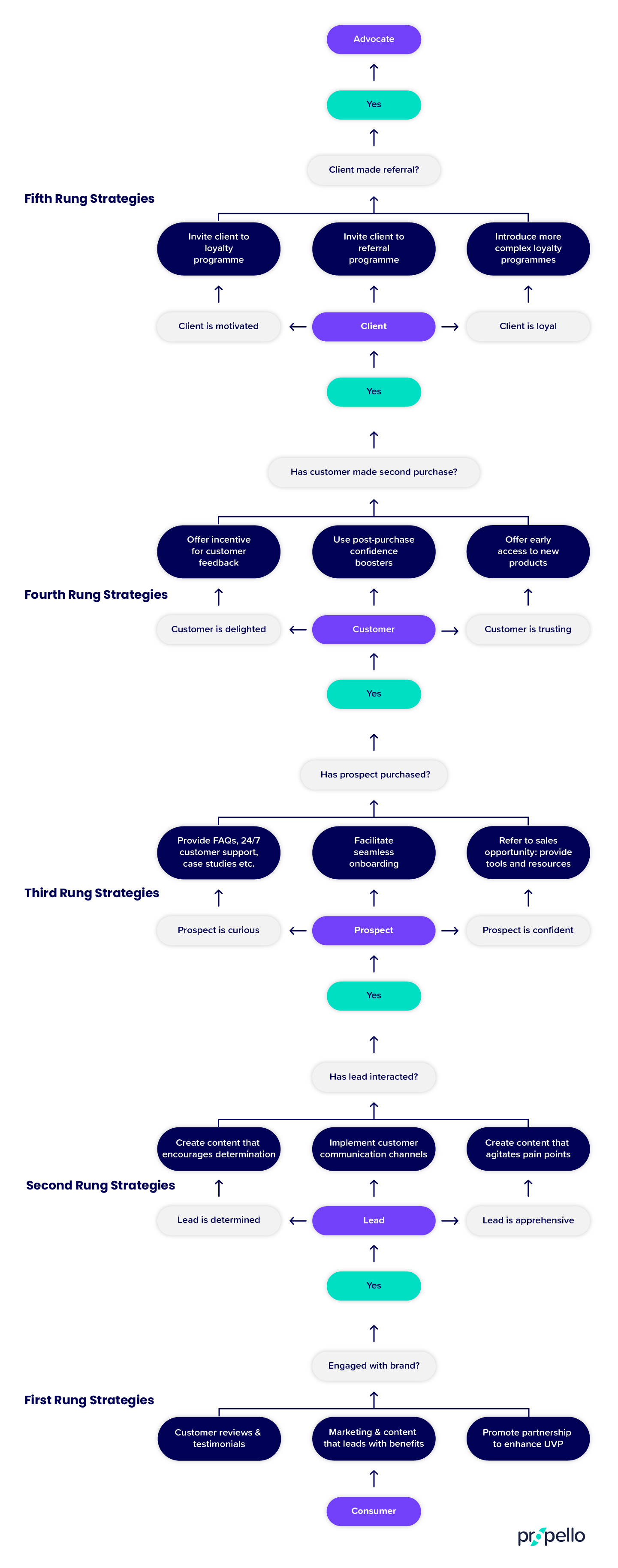
Each move up the ladder needs its own play. Six rungs means five moves to engineer, from suspect to lead, lead to prospect, and on up to advocate. The tactic that turns a wary suspect into a lead will do nothing for a client sitting one nudge below advocacy. Match the move to the mindset behind it, and every rung gets the push it actually responds to.
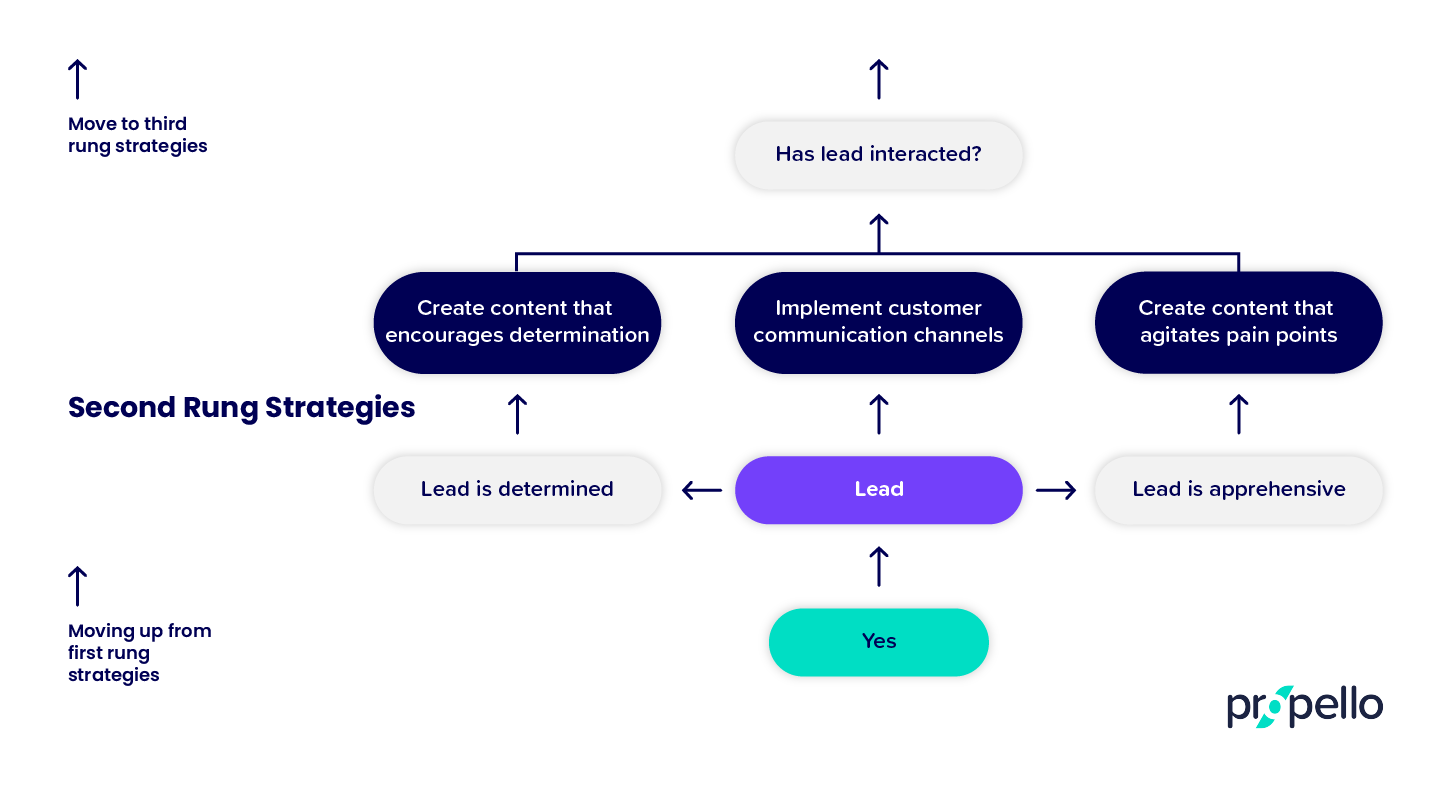
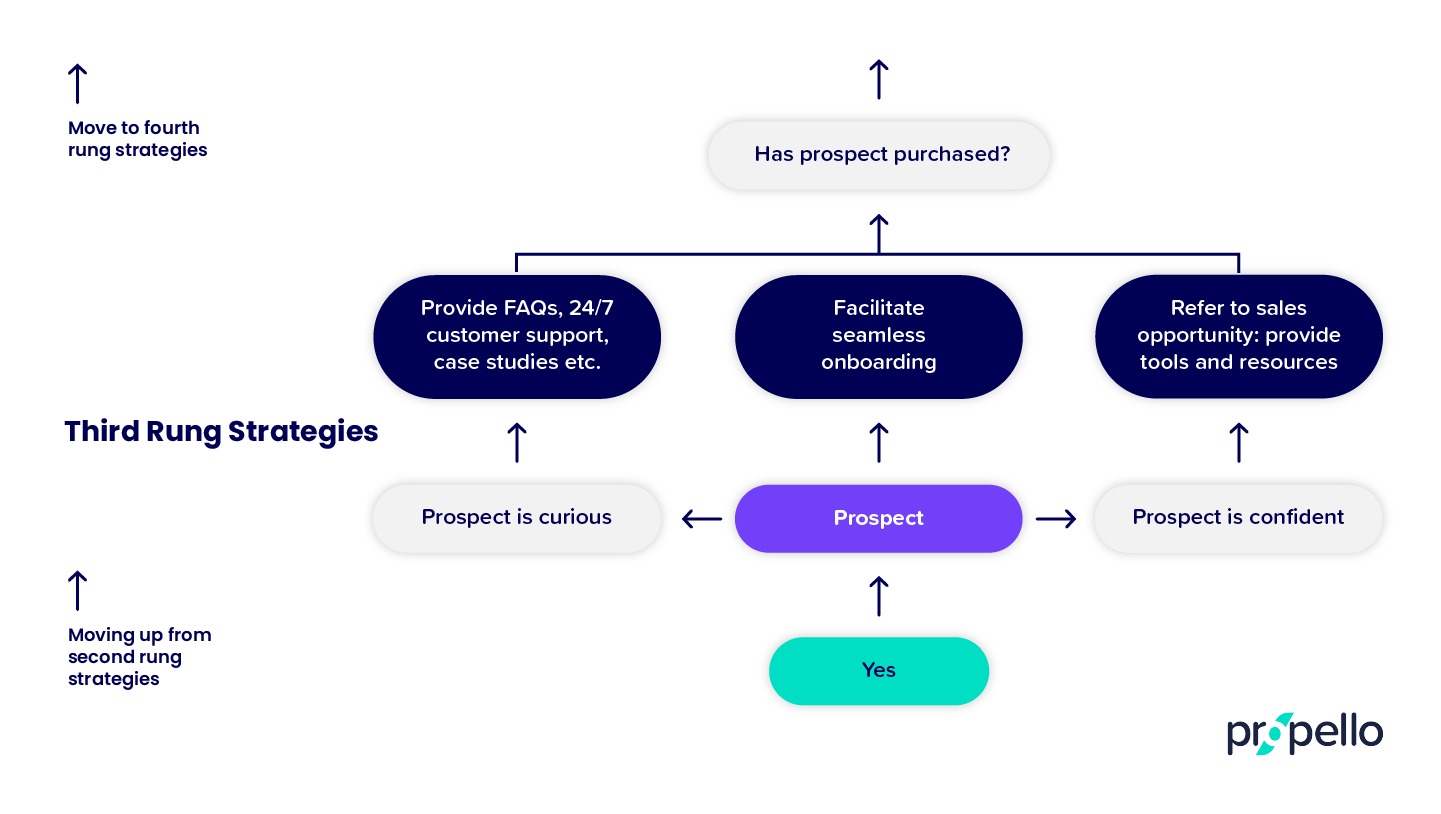
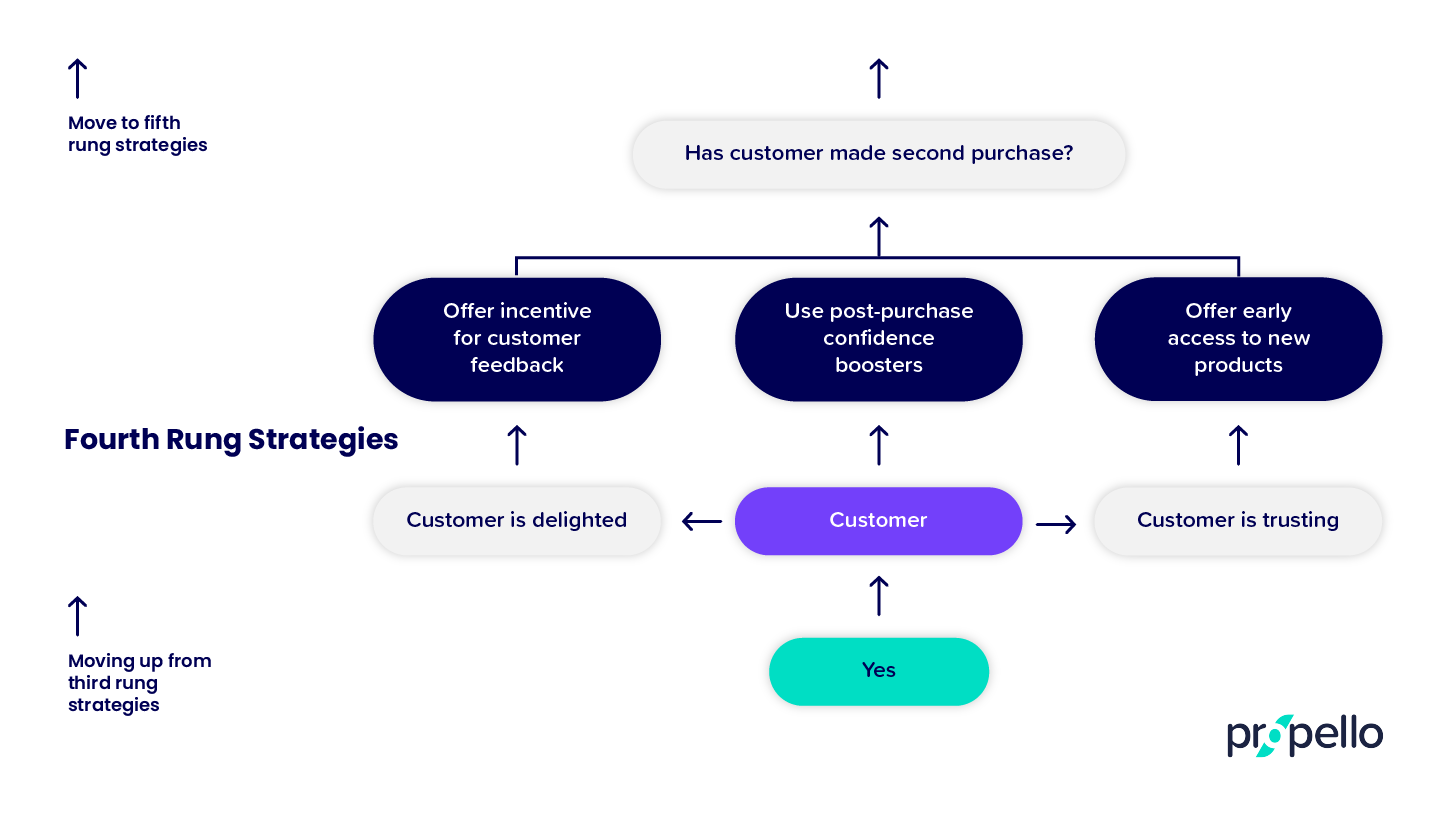
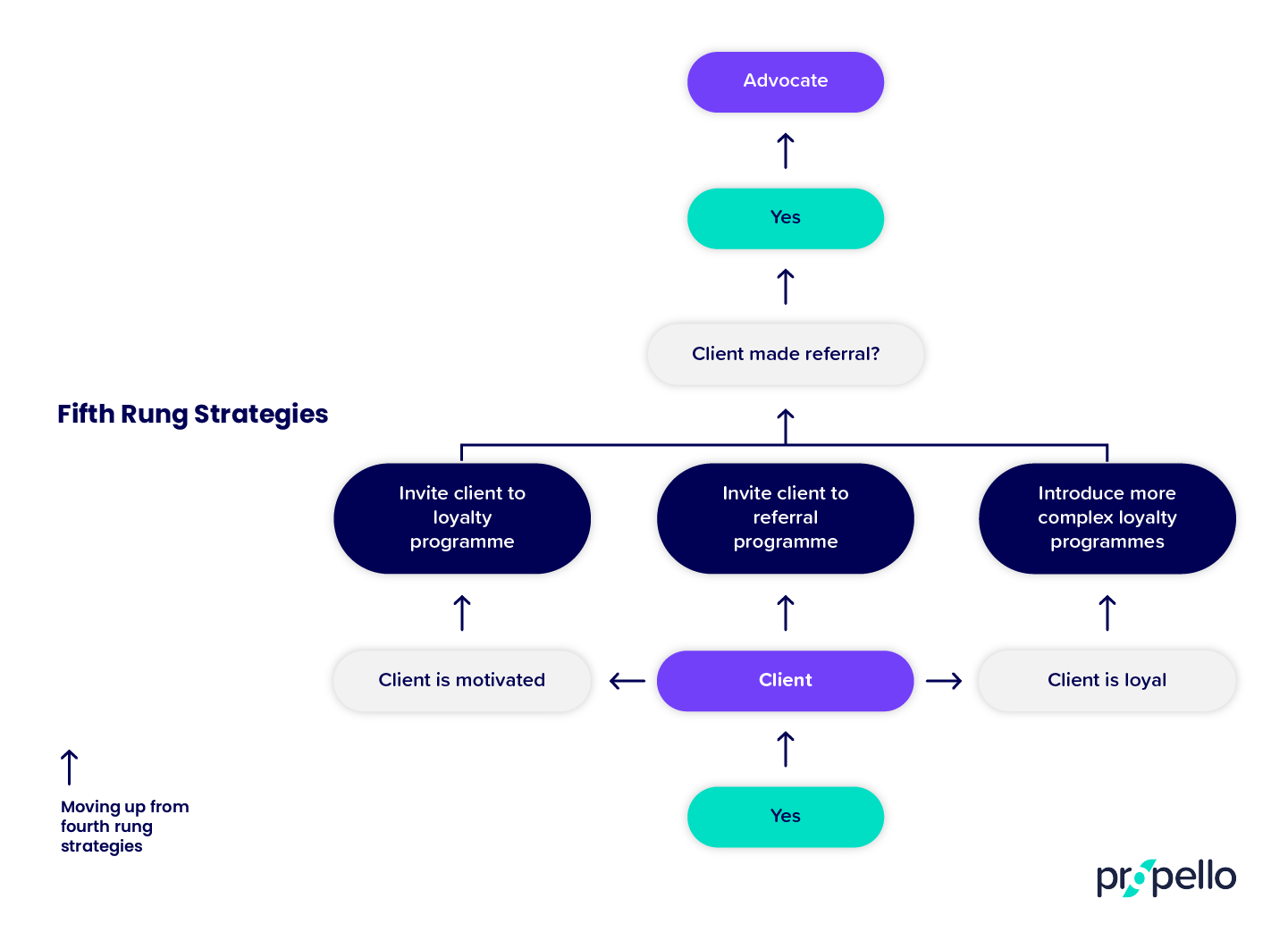
The flowchart below maps the full climb: each rung, the emotional state that defines it, and the three strategies that carry a customer up to the next.
We’ll take them one move at a time, from the bottom rung up.
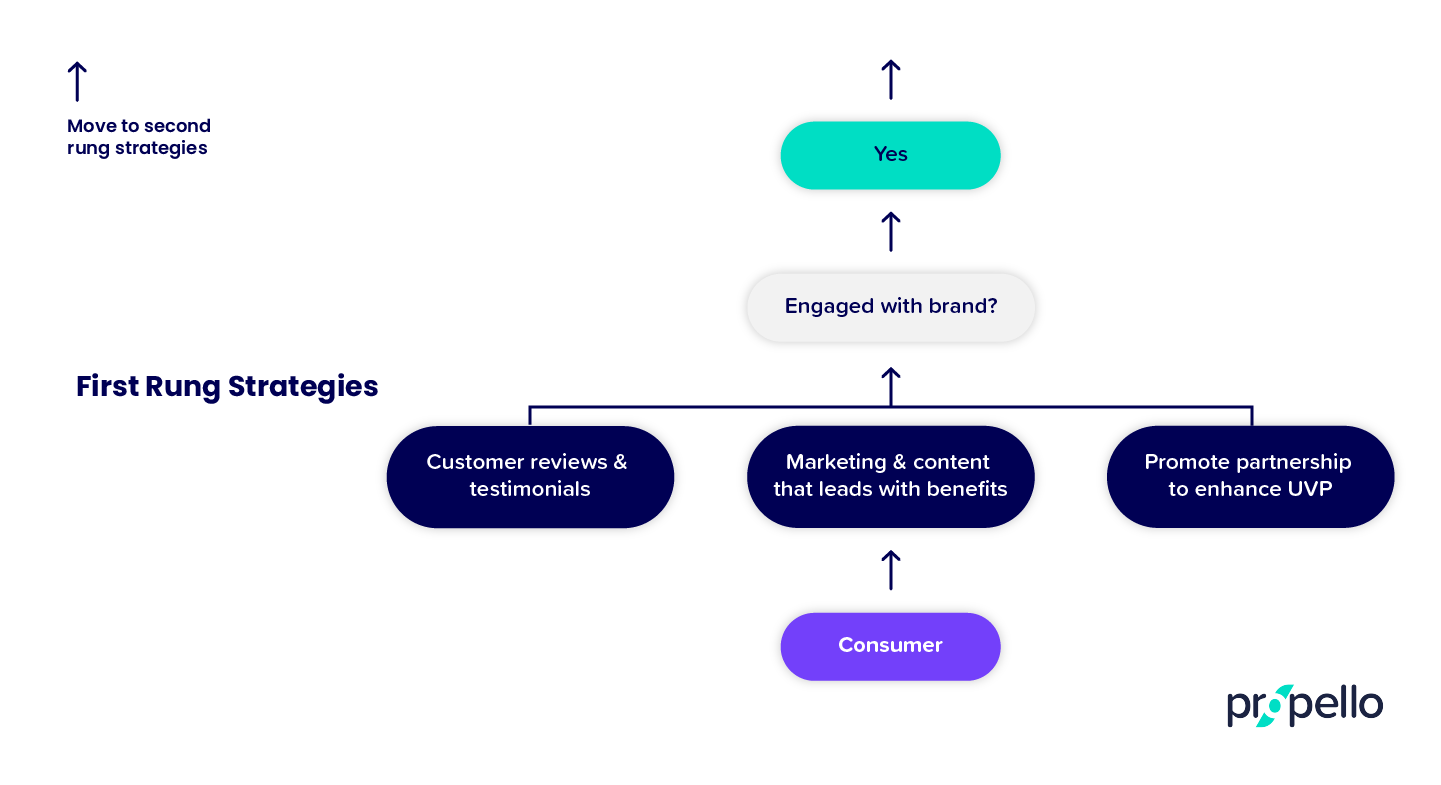
First Rung: Moving Consumers (Suspects) to Leads
The first move is the hardest, because a suspect does not yet know you exist. The job here is to win a first flicker of attention and turn it into engagement.
Lead with proof, not promises. Reviews, testimonials and recognised partners pull a stranger in far better than anything you say about yourself, because just one in three consumers trust most of the brands they buy (Edelman, 2019). Show the evidence before you ask for anything.
Targeted advertising: reach your ideal profile where they already are, across social, display and search, matched to their demographics and behaviour.
Content marketing: build genuinely useful content around their needs and pain points, then distribute it through blogs, video and more to attract and educate.
Social media engagement: show up consistently where your audience does, share relevant content and join the conversations that build awareness and credibility.
Partnerships and collaborations: team up with brands that share your audience and cross-promote, so you borrow reach you would otherwise pay for.
Second Rung: Moving Leads to Prospects
A lead has noticed you. A prospect is actively weighing you up against the alternatives. The move between the two is about turning mild interest into real consideration, and it hinges on how the lead feels.
Some arrive determined, some apprehensive, and the same content has to steady the nervous ones while pushing the keen ones towards a decision.
Make it easy to engage, and easy to ask questions. Live chat, social channels and quick replies remove the small frictions that stall a decision. From there, the tactics that move leads into genuine consideration are:
Lead nurturing with targeted content: run email campaigns that deliver useful content, product detail and timely offers, segmented by interest, behaviour and stage so every message lands as relevant.
Free trials or samples: let leads experience the value first-hand. A trial, sample or demo lowers the perceived risk and gives an apprehensive lead a reason to lean in.
Third Rung: Moving Prospects to Customers
A prospect becomes a customer at the moment of purchase, so the whole job of this rung is to make that moment effortless and make the decision feel right.
Friction loses sales. A prospect who is 90% decided can still walk over a clunky checkout or one unanswered question.
Answer every question before it is asked: FAQs, responsive support and real case studies clear the doubts that stall a first purchase. A curious prospect wants proof; a confident one wants reassurance they are right.
Make onboarding seamless: the smoother the path from decision to first use, the less room a prospect has to second-guess and walk.
Give sales the tools to close: where a person is in the loop, arm them with the resources and answers that turn a considering prospect into a buyer.
Then reinforce the decision the moment it is made. A post-purchase confidence booster, a clear next step and a genuine thank-you all tell a new customer they chose well. A customer who feels good about that first purchase is already leaning towards a second.
Fourth Rung: Moving Customers to Clients
A customer becomes a client when they buy a second time, and then keep buying. This is the rung where a transaction turns into a relationship, and you win it by making a customer feel known rather than processed.
Anticipate what they need, solve problems before they escalate, and treat them as part of something rather than a line on an invoice.
Ask for feedback, then act on it in the open: invite their input, listen properly, and show them what changed because they spoke up. A client who sees their feedback matter has a reason to stay.
Give them access others do not get: early looks at new products, exclusive content or events that fit their interests. Exclusivity tells a client their loyalty is noticed.
Join up the experience across every channel: a client should get the same recognition whether they reach you by app, email, phone or in person. A seamless, omnichannel experience strips out the friction that sends people shopping around.
Reward repeat business with a loyalty programme: a tiered programme that rewards repeat purchases gives clients a clear reason to keep climbing, and gamification makes that programme more interactive and engaging. It works: when JD Gyms built a paid, tiered membership with gamified mechanics, premium subscription uptake rose 5700% (Loyalty Uncovered Report, 2025).
Make the rewards feel personal: personalised discounts, exclusive experiences or donations to causes they value land harder than generic points. Hyper-relevant rewards from closely aligned partner brands add value without adding cost to you.
Get this rung right and clients do not just stay, they start to feel something for your brand. That feeling is the raw material of advocacy, which is where the climb ends.
Fifth Rung: Moving Clients to Advocates
Advocacy is the top of the ladder, the point where a loyal client starts selling you to other people for free. You cannot buy that. You earn it by giving your best clients experiences worth raving about, then making it effortless for them to do the raving.
Start by making them insiders with a behind-the-scenes look, a beta invite, a say in what you build next. Clients who feel part of the brand talk about it like it is theirs.
Once you have advocates, the job shifts from inspiring them to enabling them. Spot them through your CRM or loyalty programme, then clear every barrier to sharing.
Reward the referral: a referral programme that pays advocates for bringing in new business is the obvious place to start.
Make sharing a two-tap job: prompt reviews, social posts and user-generated content, and remove the friction that turns a willing advocate into a busy one who never gets round to it.
Thank them like you mean it: personalised thank-yous and perks that acknowledge their loyalty keep advocates advocating.
Reach this rung and the ladder starts paying you back. Every advocate becomes a new way in at the bottom of someone else’s ladder, and the climb begins again, this time powered by your own customers.
The Climb Is Never Finished
A customer loyalty ladder is not a chart you draw once and pin to the wall. It is a way of seeing your customers: where each one stands, what they feel, and what would move them one rung higher. Get that right and the payoff runs all the way up, stronger engagement, higher lifetime value, and a base of advocates who grow the business for you.
The brands that win at loyalty are rarely the ones with the biggest rewards budget. They are the ones who read the ladder well and act on what they see, matching the move to the mindset every time.
So how are other brands tackling loyalty right now?
Download our report, Loyalty Uncovered 2025. It digs into the trends, strategies and ideas shaping customer loyalty today. See what top performers are doing to retain, engage and convert, and walk away with insights you can put straight to work on your own ladder.
FAQs
Where did the customer loyalty ladder concept come from?
The loyalty ladder grew out of relationship marketing, with early versions often credited to academics such as Christopher, Payne and Ballantyne, and popularised by Murray Raphael’s work on moving buyers up the ladder. The core idea has held ever since: loyalty builds in stages, not in a single leap.
How many rungs does a customer loyalty ladder have?
There is no fixed number. Different models use anywhere from three to seven rungs, and the labels vary too. This guide uses six: suspect, lead, prospect, customer, client and advocate. What matters is not the count but that each stage is clearly defined and easy to act on.
How is the customer loyalty ladder different from the sales funnel?
The sales funnel ends at the purchase. The loyalty ladder begins there and keeps going. A funnel is built to convert a stranger into a buyer, while the ladder is built to turn that buyer into a repeat client and, eventually, an advocate who brings others in.
What is the difference between the customer loyalty ladder and a loyalty programme?
The ladder is the map; the loyalty programme is one of the vehicles. The ladder describes the stages a customer moves through, from suspect to advocate. A loyalty programme is a specific tactic, usually points or tiers, that you deploy at particular rungs to encourage repeat purchases and reward advocacy.
Can customers move back down the loyalty ladder?
Yes. Movement runs both ways. A poor experience, a better competitor offer or simple neglect can send a loyal client back down to an occasional buyer. That is why the ladder is something you maintain continuously, not a position a customer reaches once and holds forever.
What tools help you manage a customer loyalty ladder?
Most brands combine a CRM to hold customer data with a loyalty or rewards platform to run the incentives, plus analytics to track movement between rungs. Together these let you segment customers, spot who is ready to move up and deliver the right reward at the right stage.
Does the customer loyalty ladder work for B2B and small businesses?
Yes. The ladder is not tied to a sector or company size. B2B relationships often map to it especially well, since deals are relationship led and repeat business matters more than volume. Smaller businesses can apply the same stages with simpler tools and more personal contact.
What are the most common mistakes when using a customer loyalty ladder?
The usual ones are treating every customer the same, asking for referrals before trust is built, and assuming movement is always upward. Brands also forget the lower rungs once someone has bought. Matching the strategy to the customer’s actual stage avoids most of these errors.
How long does it take to move a customer up the loyalty ladder?
There is no set timeline. It depends on your product, purchase frequency and how consistent the experience is. A repeat-purchase coffee brand may climb quickly, while a considered, high-value purchase can take months. Consistency matters more than speed: steady, positive interactions move people up faster than one grand gesture.
What signals show a customer is ready to move up the ladder?
Watch for behaviour that goes beyond a single purchase: repeat orders, growing basket size, positive reviews, referrals and active engagement with your emails or programme. These signals tell you a customer is receptive to the next step, whether that is an upsell, a reward or a nudge towards advocacy.
Mark Camp
Mark is the Founder and CEO of Propello Cloud, an innovative SaaS platform for loyalty and customer engagement. With over 20 years of marketing experience, he is passionate about helping brands boost retention and acquisition with scalable loyalty solutions.
Mark is an expert in loyalty and engagement strategy, having worked with major enterprise clients across industries to drive growth through rewards programmes. He leads Propello Cloud’s mission to deliver versatile platforms that help organisations attract, engage and retain customers.
Start your customised Propello Cloud journey today
Explore the platform’s scalability, features and customisation options and get answers to your unique questions.