Building a Loyalty Programme Business Case: Getting Stakeholder Buy-In
25 min to read
Published: January 22, 2024
Updated: November 14, 2024
In this article, I’ll share my perspective on crafting an effective loyalty programme business case, from highlighting core benefits to aligning your loyalty initiative with broader business objectives. While the commercial benefits of customer loyalty are clear, securing stakeholder buy-in requires strategic thinking and robust planning.
We’ll explore how to leverage customer insights and market analysis to strengthen your pitch, and I’ll offer proven presentation strategies to help with your loyalty programme business case.
Mark Camp
CEO & Founder at PropelloCloud.com
Contents
Key Takeaways
Demonstrate commercial impact through metrics like 5x higher customer value and increased purchase frequency. Include financial modelling and ROI projections.
Link programme objectives to business growth, customer retention, and revenue targets. Show how loyalty initiatives support broader organisational goals.
Select models (points, tiers, hybrid) based on industry needs and customer behaviour patterns. Ensure structure supports both engagement and profitability.
Address integration requirements, data management, and security upfront. Consider build vs. buy implications for timeline and resources.
Customise presentations for different stakeholders - ROI for CFOs, engagement for CMOs. Use data and case studies for validation.
Mix hard benefits (points, cashback) with soft benefits (priority service, experiences) to optimise programme economics and engagement.
Leverage customer insights and market analysis to validate programme design and demonstrate potential impact.
Plan for scalability, ongoing optimisation, and continuous improvement to maintain programme value.
Address data security, fraud prevention, and operational challenges proactively to build stakeholder confidence.
Show how loyalty programmes strengthen existing customer relationships through hyper-relevant rewards and reciprocal brand partnerships.
Understanding the Value of Loyalty Programmes
The popularity of loyalty programmes has significantly increased, and I’ve seen this firsthand across both consumers and businesses. Today’s customers want to feel valued and appreciated by the brands they choose to engage with. Their expectations have shifted dramatically – more customers than ever now rely on brands that offer tangible benefits, ancillary value, perks and rewards for their business.
I’m seeing forward-thinking organisations continue to reap huge commercial benefits from customer loyalty programmes.
A benchmark study by Harvard Business Review validates what I’ve observed in the market – companies with effective loyalty programmes can increase profits from 25% to 95%.
And there’s a lot more where that came from.
Benefits of Loyalty Programmes
Having worked with enterprise clients across sectors, I’ve seen loyalty programmes deliver multiple commercial benefits. From increased customer retention and lifetime value to revenue growth and enhanced engagement, the impact is significant. Let me share the key benefits I’ve observed that strengthen your business case.
Improves Customer Acquisition
Customer acquisition remains one of the most expensive components in marketing strategy. Through our experience at Propello, I’ve seen how loyalty programmes with hyper-relevant rewards naturally attract consumers, especially as competition intensifies across industries.
A loyalty programme creates a compelling point of difference for your brand.
The data is clear – less than 8% of consumers say rewards don’t factor in their purchase decisions, meaning rewards influence 92% of customers.
Without a rewards strategy, you risk alienating the majority of your potential customer base.
Increases Customer Retention
I’ve consistently observed how loyalty programmes drive customer retention – a critical metric for sustainable growth.
When presenting to your board, emphasise how rewarding loyalty with intrinsic benefits and memorable experiences drives long-term value. Enhanced CLTV can subsidise future acquisition efforts or enable a shift toward a retention-focused acquisition model built on referrals.
Loyalty programmes enhance customer experiences through two key mechanisms: rewarding loyalty and driving engagement through gamification. At Propello Cloud, we’ve built our platform with features designed specifically for engagement – combining gamification and streamlined self-service with hyper-relevant, tailored rewards into a cohesive ecosystem.
According to Hubspot’s Sales Strategy Report, upselling and cross-selling generates 11-30% of revenue for nearly half (42%) of companies.
This makes a compelling addition to your business case – wider revenue margins from your existing customer base demonstrate how loyalty programmes optimise commercial outcomes. This becomes particularly valuable when expanding your product or service range.
Improves Brand Advocacy
Brand advocacy represents the ultimate success in customer loyalty nurturing. Through our platform, we’ve seen how referrals become a powerful growth driver. It’s the most trusted and cost-effective form of advertising. When customers consistently experience value from your brand, they naturally share with their networks.
These warm leads come with built-in trust, backed by authentic recommendations from satisfied customers. By incentivising brand advocates, you create a sustainable cycle of warm lead generation while reducing acquisition costs.
Understanding Programme Types & Models
Choosing the right model directly impacts your customer loyalty programme’s success. Aligning your programme objectives with the wider business goals will influence what programme is best suited.
Here are some insights on different programme structures that I think you should consider before you make your case:
Point-based Loyalty
Points-based systems remain popular for good reason as long as they are implemented correctly with clear goals in mind. Traditional points-based systems, which offer little value and take a long time before rewards can be redeemed, are becoming obsolete, in my view. However, they can drive significant engagement when clear earning and redemption mechanisms are in place that align with customer behaviour and business goals.
Most effective points programmes share common elements:
Engagement features to motivate actions and point accumulation, such as tiers, gamification and progress challenges
A good ratio of reward value against points required
Strategic bonus point opportunities
Most commonly used by retail businesses that have high purchase frequency and low order value.
Tiered Programmes
Tiered programmes excel at driving progressive engagement. Through our platform, we’ve observed that well-designed tier structures can increase customer lifetime value through strategic member segmentation.
Effective tier design requires:
Clear qualification thresholds
Meaningful benefits at each level
Achievable progression paths
Hybrid Models
When implementing enterprise loyalty solutions, I find hybrid models deliver optimal customer engagement. By integrating points mechanisms with tiered rewards and instant benefits, these programmes create multiple touchpoints throughout the customer journey.
The flexibility allows for targeted customer segmentation while driving both immediate and long-term engagement.
Best Practices for Model Selection Based on Industry
Programme selection should align with your industry dynamics and customer behaviour patterns. For subscription businesses, engagement-driven models often work best. Retail typically benefits from points-based systems with clear redemption paths. Financial services excel with tiered programmes that reward relationship depth.
For more information on the types of loyalty programmes, their pros and cons, use cases and examples, download our Types of Loyalty Programme Comparison Guide.
Crafting the Business Case
When building a compelling business case for a loyalty programme, my experience has taught me that success hinges on aligning commercial objectives with customer needs. Let me share the key elements I’ve found essential through implementing programmes for enterprise clients.
Align with Business Goals
Your loyalty programme must integrate seamlessly with broader business objectives for true strategic cohesion. At Propello Cloud, we help clients align their programmes with core goals:
Customer retention optimisation
Strategic customer acquisition
Enhanced customer lifetime value
Reciprocal brand partnerships
Partner monetisation opportunities
This alignment creates a clear roadmap showing how enhanced customer loyalty directly contributes to business success – crucial for securing board support.
Customer Insights
Loyalty programmes provide invaluable insights into customer behaviour. Through our platform, we see how purchasing patterns, engagement metrics, and customer preferences shape effective programme design. This data enables hyper-relevant experiences that resonate with your customer base while aligning with business objectives.
Competitor Analysis
From my perspective, thorough competitive analysis is non-negotiable. Through implementing programmes across sectors, I’ve observed both successes and failures. This intelligence helps:
Identify proven strategies to adapt for your business
Our experience shows that competitive insights directly inform programme design, driving improved acquisition and retention outcomes.
Cost of Implementation
Your financial projections must account for two paths: building in-house or licensing a platform. Based on our enterprise implementations, critical cost considerations include:
Strategic planning
Technical infrastructure, including API integration with other systems (such as CRM software)
Ongoing maintenance and development of new features
Customer support resources
Marketing support – programme and campaign promotion
Outsourcing your platform and programme management to a specialist loyalty provider is typically more cost-effective as the technology, support and marketing are rolled up into a single monthly fee. A no-code approach means a ready-made network of reward partners, which means time to market for your programme is significantly reduced.
For an illustrative breakdown of costs and a Build v Buy comparison, check out our guide below.
ROI Projections
ROI analysis should focus on measurable metrics: increased repeat business, referral rates, and enhanced customer spending. At Propello, we typically see members become 5x more valuable than non-members. This long-term value proposition, backed by detailed financial analysis, provides compelling evidence for stakeholders of the programme’s commercial viability.
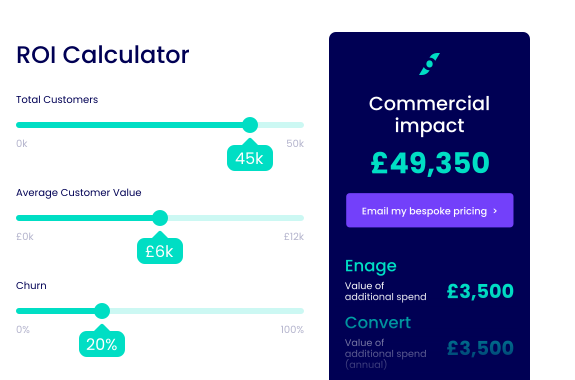
ROI Calculator
See How A Customer Loyalty Programme Can Impact Your Business
Enter the size of your audience, average customer value and programme type to see how much you can gain.
Reward Mechanisms
Understanding reward mechanisms is crucial for financial projections and ROI calculations in your business case.
Types of Rewards: Hard vs. Soft Benefits
Different reward types impact programme costs and returns. Hard benefits (points, cashback) require direct financial investment. Soft benefits (priority service, partnerships) often deliver higher margins. Your business case should demonstrate how this mix optimises both customer value and programme economics.
Redemption Structures and Timing
Redemption patterns affect financial modelling and liability management. Instant rewards offer predictable costs, while points programmes require liability forecasting. This impacts cash flow projections and resource allocation plans.
Points Calculation and Valuation
Point valuation directly influences programme costs and perceived value. Your business case should detail:
Progression strategies impact long-term programme economics. Show stakeholders how member advancement drives incremental revenue while managing programme costs.
Technical & Operational Considerations
Your business case must demonstrate comprehensive operational readiness. From my experience implementing enterprise loyalty solutions, technical and operational planning significantly impacts stakeholder confidence and programme success.
Integration Requirements
Technical integration forms a crucial part of your business case. When presenting to stakeholders, outline how your loyalty programme will integrate with existing systems. CRM compatibility ensures seamless customer data flow, while POS integration enables real-time reward redemption. API requirements determine development scope and timeline.
These integration considerations directly impact your build versus buy decision. In-house development typically requires significant upfront investment and longer implementation times. Platform solutions often offer pre-built integrations, reducing technical complexity and accelerating deployment.
Data Analytics
Analytics capabilities demonstrate programme value to stakeholders. Show how you’ll track key performance indicators, measure customer lifetime value, and optimise programme performance. Include reporting frameworks that provide actionable insights for continuous improvement.
Security Protocols
Security planning demonstrates risk management to stakeholders. Your business case must address data protection, fraud prevention, and compliance frameworks. Stakeholders need assurance that customer data remains protected and programme abuse is minimised. This impacts ongoing operational costs and risk assessment.
Team Structure & Roles
Resource requirements directly affect programme costs and implementation timeline. Detail the operational team needed: programme managers for strategy, technical support for platform maintenance, and customer service for member engagement. Outline how existing teams integrate with new programme responsibilities. This helps stakeholders understand staffing costs and organisational impact.
Process Documentation
Clear processes validate operational feasibility. Show stakeholders how standard procedures, training requirements, and change management plans support smooth implementation. Documentation demonstrates programme sustainability and helps calculate training costs and implementation timelines.
Quality Control Measures
Quality control frameworks justify long-term programme viability. Outline performance monitoring systems and issue resolution processes that protect programme value. Show how member satisfaction tracking informs programme optimisation. This demonstrates ongoing ROI potential and risk mitigation to stakeholders.
Stakeholder Buy-In and Presentation Strategies
Securing stakeholder support requires strategic communication and robust evidence. Let me share proven approaches from working with enterprise clients.
Stakeholder Buy-in and Gaining Support
Success hinges on aligning loyalty programme goals with stakeholder priorities while demonstrating clear commercial value. This needs a collaborative approach backed by data.
Understanding Stakeholder Priorities
Each stakeholder has distinct concerns. CFOs focus on ROI and implementation costs. CMOs prioritise customer engagement and brand value. Tailor your pitch to address these specific priorities.
Emphasising Strategic Advantages
Lead with quantifiable benefits. Our data shows loyalty members are typically 5x more valuable than non-members. Highlight how programme features like reciprocal brand partnerships drive commercial outcomes.
Utilising Data and Case Studies
Use case studies showcasing successful examples of well-designed programmes. Emphasise the realities of modern markets too. Use stats that show the sentiments of modern consumers. Link this to your loyalty programme’s ability to increase customer satisfaction and, of course, enhance brand loyalty.
Promote Open Communication
Foster dialogue throughout the process. We encourage stakeholders to interact with our platform directly, addressing concerns through hands-on experience rather than theoretical discussion.
Effective Presentation of the Business Case
Your presentation must secure resources and build consensus. Focus on:
Clear commercial outcomes
Implementation roadmap
Risk mitigation strategies
Setting the Market Landscape
Frame the opportunity within current market dynamics. Highlight how customer expectations have evolved and why loyalty programmes are now essential for competitive advantage.
Detailing Programme Analysis
Present your technical and operational approach. We provide interactive demonstrations showing both back-end management and user experience.
Articulating Unique Selling Points
Emphasise distinctive features – whether that’s gamification, Always On rewards, Referrals, or brand partnerships. Show how each element drives specific commercial objectives.
Addressing Concerns and Contingency Plans
Proactively address common concerns about implementation costs, technical integration, and resource requirements. Present clear mitigation strategies.
Tailoring Presentation to Audience
Tailor your presentation to the specific interests of your audience. Engage them through interactive elements. Or maybe give them a preview of what the programme would look like.
From Strategy to Stakeholder Buy-In
A compelling loyalty programme business case hinges on demonstrating clear commercial value. Through my experience at Propello, I’ve seen how well-structured programmes drive significant returns – from 5x higher customer value to 75% increases in new customer spending.
Success requires strategic alignment with business objectives, robust financial modelling, and stakeholder buy-in. Whether you choose to build in-house or partner with a platform provider, focus on demonstrating how your programme will deliver tangible outcomes through hyper-relevant rewards and reciprocal brand partnerships.
For a detailed implementation framework and actionable checklist to build your business case, read our guide “Why Launch a Loyalty Programme?” It provides step-by-step guidance on financial modelling, stakeholder presentations, and ROI calculations to help you put these insights into practice.
FAQs
How do you build a compelling business case for a loyalty programme?
A compelling business case combines clear commercial benefits, data-driven ROI projections, technical feasibility assessment, and stakeholder-specific value propositions. Focus on metrics like customer lifetime value, retention rates, and revenue growth potential.
What are the main types of loyalty programmes and how do you choose between them?
Key types include points-based, tiered, hybrid, and value-based programmes. Selection depends on industry dynamics, customer behaviour patterns, and business objectives. Consider factors like implementation costs and operational complexity.
How do you calculate the ROI of a loyalty programme?
Calculate ROI by measuring increased customer lifetime value, repeat purchase rates, member vs. non-member spending, referral revenue, and engagement metrics against implementation and operational costs. Include both direct and indirect benefits.
What are the key technical considerations when implementing a loyalty programme?
Focus on CRM integration, POS compatibility, data management capabilities, security protocols, and API requirements. Consider scalability, maintenance needs, and whether to build in-house or license a platform.
How do you manage programme costs and financial projections?
Account for implementation costs, ongoing operational expenses, reward liabilities, and technical infrastructure. Balance these against projected revenue increases, enhanced customer value, and operational efficiencies.
What metrics should you track to demonstrate programme success?
Track customer lifetime value, retention rates, engagement levels, redemption patterns, referral rates, and average member spending. Compare member vs. non-member metrics to demonstrate programme impact.
How do you secure stakeholder buy-in across different departments?
Tailor presentations to stakeholder priorities – ROI for finance, engagement for marketing, technical feasibility for IT. Use case studies and data-driven evidence to address specific concerns.
What’s the difference between hard and soft benefits in loyalty programmes?
Hard benefits include points and monetary rewards, requiring direct financial investment. Soft benefits like priority service and exclusive experiences often deliver higher margins and emotional engagement.
How do you ensure long-term programme sustainability?
Focus on scalable technology, clear operational processes, continuous optimisation, and regular performance monitoring. Plan for programme evolution based on customer feedback and market changes.
What role do brand partnerships play in loyalty programmes?
Reciprocal brand partnerships enhance programme value through expanded reward options, shared customer acquisition, and reduced programme costs. They create distinctive value propositions and engagement opportunities.
Mark Camp
Mark is the Founder and CEO of Propello Cloud, an innovative SaaS platform for loyalty and customer engagement. With over 20 years of marketing experience, he is passionate about helping brands boost retention and acquisition with scalable loyalty solutions.
Mark is an expert in loyalty and engagement strategy, having worked with major enterprise clients across industries to drive growth through rewards programmes. He leads Propello Cloud’s mission to deliver versatile platforms that help organisations attract, engage and retain customers.
Start your customised Propello Cloud journey today
Explore the platform’s scalability, features and customisation options and get answers to your unique questions.