13 Proven Tactics for Building a Successful Membership Engagement Strategy
25 min to read
Published: October 13, 2023
Updated: July 13, 2026
We’ve compiled a list of 13 tactics to help formulate your membership engagement strategy. We’ll help you turn those passive observers into active contributors who see your organisation as crucial to their professional success.
Mark Camp
CEO & Founder at PropelloCloud.com
Contents
Key Takeaways
Gamification boosts engagement with visible progress tracking and rewards for member achievements
Tiers drive sustained engagement via natural progression paths that reward deeper participation
Loyalty rewards sustain ongoing engagement by making continued participation feel genuinely worthwhile
Referral programmes drive engagement by rewarding satisfied members for recommending friends and colleagues
Strategic partnerships scale member value and participation with exclusive partner benefits outside your core offerings
Better use of data creates personalised touchpoints that align with actual member behaviours and preferences
Personalised member journeys and onboarding set the stage for successful relationships with members
Value-driven content encourages community discussions and participation, which makes members feel seen, heard, and motivated to engage
Seamless multi-channel communication fosters member trust via meaningful interactions on preferred channels
An integrated ecosystem connects your website, core systems, and mobile apps for a unified membership experience
Hybrid events and micro-communities create year-round engagement touchpoints that deliver targeted experiences
Systematic feedback allows organisations to improve service delivery and better address real member needs
Advocacy initiatives create a sense of ownership and belonging for members through causes that matter to them
You’ve built an organisation that attracts quality members and maintains strong renewal rates. But renewals don’t tell the whole story about your membership engagement strategy.
Some members renew out of habit rather than genuine involvement. They read your communications but rarely take action. These silent subscribers are drifting toward the sidelines when they could be driving your mission forward.
Propello Cloud is proud to be a MemberWise Recognised Supplier, trusted by leading membership organisations including NASUWT, The Ivors Academy, ISM, and the Royal College of Surgeons of Edinburgh.
Our white-label loyalty and reward platforms help membership bodies drive retention, boost member engagement, and deliver added value through personalised, benefit-led experiences.
What is Member Engagement?
Member engagement is how actively your members participate in your organisation’s community, events, and mission. It covers everything from daily interactions to event participation and their relationship with your resources.
Genuine member engagement is often a reflection of members’ alignment with an organisation’s mission and values. Engaged members actively contribute to community events and discussions, refer new members, and build relationships that strengthen your organisation.
What Is a Membership Engagement Strategy?
A member engagement strategy is a deliberate, structured plan that membership bodies use to encourage meaningful interactions with members. It usually involves creating touchpoints throughout the member lifecycle for continuous communication and participation.
According to Propello Cloud’s 2025 Membership Trends Report, member engagement is the #1 priority for 86% of organisations in 2026.
The goal is to deliver an experience that gives members a sense of pride, identity, and dedication to the organisation.
What Are the Benefits of a Member Engagement Strategy?
A membership engagement strategy directly improves retention, satisfaction, referrals, and community strength. Yet, according to the MemberWise Digital Excellence Report 2023-2024, only 27% of membership organisations have one, meaning the majority are leaving those gains on the table.
How can better engagement improve member retention?
Members who feel genuinely connected to your organisation are far less likely to leave quietly at renewal, which reduces your dependence on costly acquisition campaigns to replace them. Engagement initiatives can increase renewal rates by 11%, according to Dynamic Benchmarking LLC research.
How does engagement affect member satisfaction?
Acting on member feedback is one of the most direct ways to improve satisfaction. When members see that their input shapes how your organisation operates, their commitment deepens. Satisfaction and loyalty aren’t separate outcomes here; one drives the other.
Why does a strong sense of community matter for member loyalty?
A strong peer community gives members a reason to stay that goes beyond the value of your products or services. When members build relationships with others who share their professional goals and interests, leaving your organisation means losing those connections too. That social lock-in is one of the most durable forms of retention there is.
Can a member engagement strategy drive referrals?
Engaged members recommend your organisation to peers organically, without being prompted, because they genuinely believe in it. That word-of-mouth growth is both more cost-effective and better targeted than paid acquisition, because referred members tend to mirror the profile of the people who referred them.
What are the Core Components of a Successful Member Engagement Strategy?
A deep understanding of member needs, a strong value proposition, clear goals, personalised communication, and consistent value delivery are all necessary for success.
Let’s discuss how these six components make a difference.
Why does understanding your members come first?
You must understand members’ goals, challenges, and motivations to engage them meaningfully.
Use segmentation to build detailed member personas based on interests and engagement patterns. Personalise everything from onboarding to content and recommendations, so members feel seen and valued.
What makes a member value proposition work?
Your value proposition only works if members can actually see it. According to studies in the association sector, 42% of associations report that clearly communicating their value proposition increases net membership rates.
Prominently display your member value proposition in your email campaigns, website, social media profiles, and onboarding kits. Members should easily understand the benefits of signing up. Include clear details of how they can access those perks and testimonials from existing members.
How do you set clear member engagement goals?
Set SMART engagement goals that are specific, measurable, achievable, relevant, and time-bound, and anchor them to your organisation’s wider mission.
For example: “Launch a personalised onboarding programme that boosts annual member retention by 10% before the end of the next fiscal year.”
That goal has a target, a mechanism, and a deadline. It gives your team something to build toward and something to report on.
How can you deliver consistent member value?
Engagement and value are inseparable. The benefits you offer, whether exclusive content, networking events, or member-only discounts, need to directly address the pain points your members brought through the door.
Consistent delivery means the value does not spike at onboarding and then fade. It shows up at renewal, mid-cycle, and at every interaction point in between.
How can you create an effective member communication plan?
Build it around multiple channels, direct messages, newsletters, social touchpoints, and automated emails, and segment your send lists so each group receives content relevant to them. An effective communication plan keeps members informed, engaged, and less likely to disengage.
Consistency matters as much as frequency. Members who hear from you regularly, with purpose rather than noise, stay connected to what the programme offers them.
Which technologies support member engagement at scale?
Digital tools like Association Management Software (AMS) or online platforms enable engagement at scale. This could be via personalised communication, automation, or data analytics to predict member behaviour.
Which Engagement Tactics Drive Member Retention and Loyalty?
These are the 13 engagement strategies that drive higher retention and loyalty for membership associations.
Gamification Elements
Tiers
Rewards & Loyalty Programmes
Strategic Partnerships
Better Use of Data
Community-Building Events
Personalised Member Journeys and Onboarding
Referral Programmes
Strategic Multi-Channel Communication
Interactive Digital Platforms
Systematic Feedback Collection
Advocacy and Social Impact Initiatives
Value-Driven Content Creation
Let’s discuss how you can implement each one of those strategies.
The top 7 engagement tactics from our research:
1) How Does Gamification Increase Member Participation?
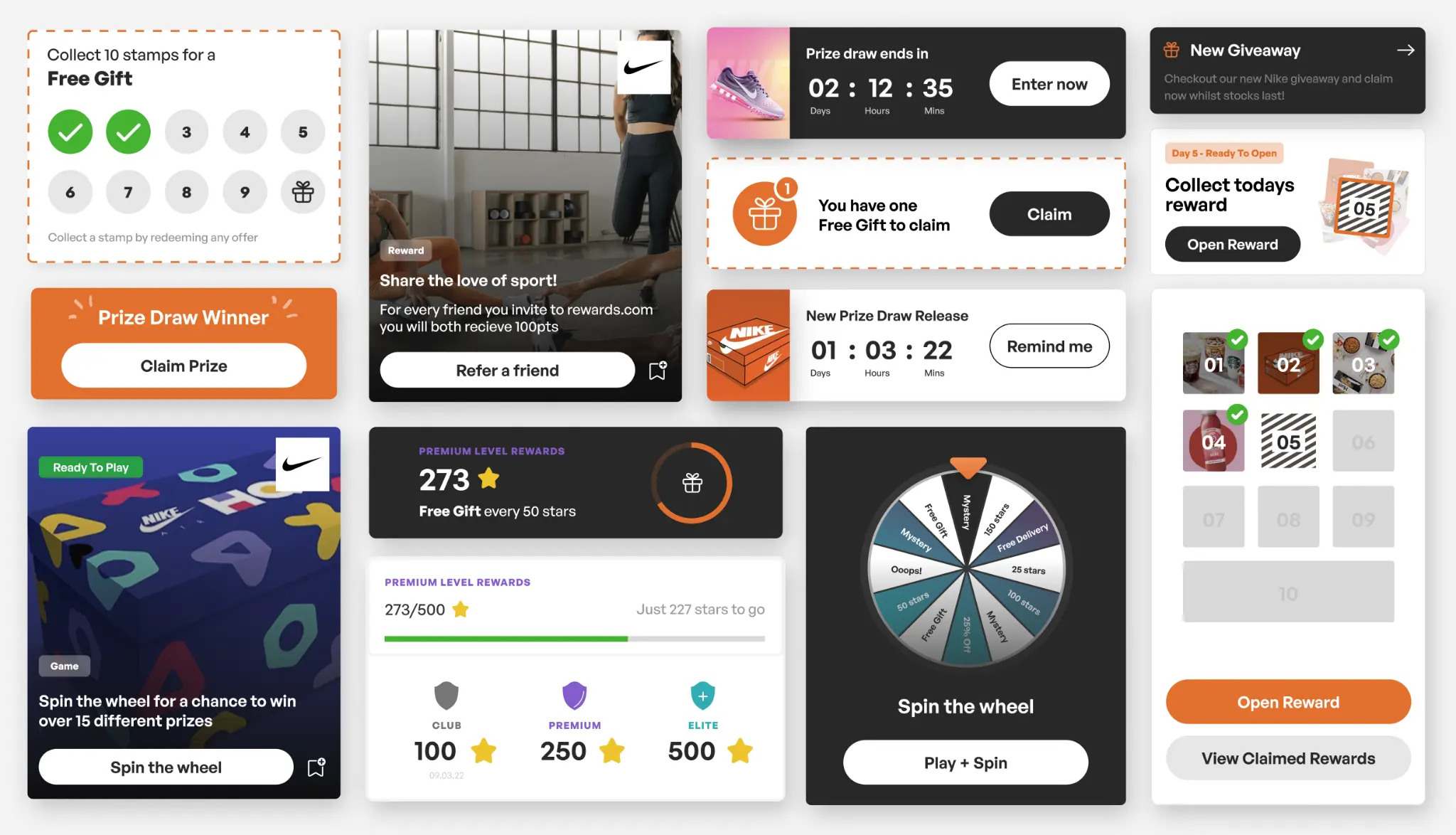
Gamification transforms routine membership activities into engaging experiences. By adding game elements like badges, leaderboards, and challenges to your platform, you tap into people’s natural desire for achievement and recognition. Studies have shown that gamification increases engagement by over 60%.
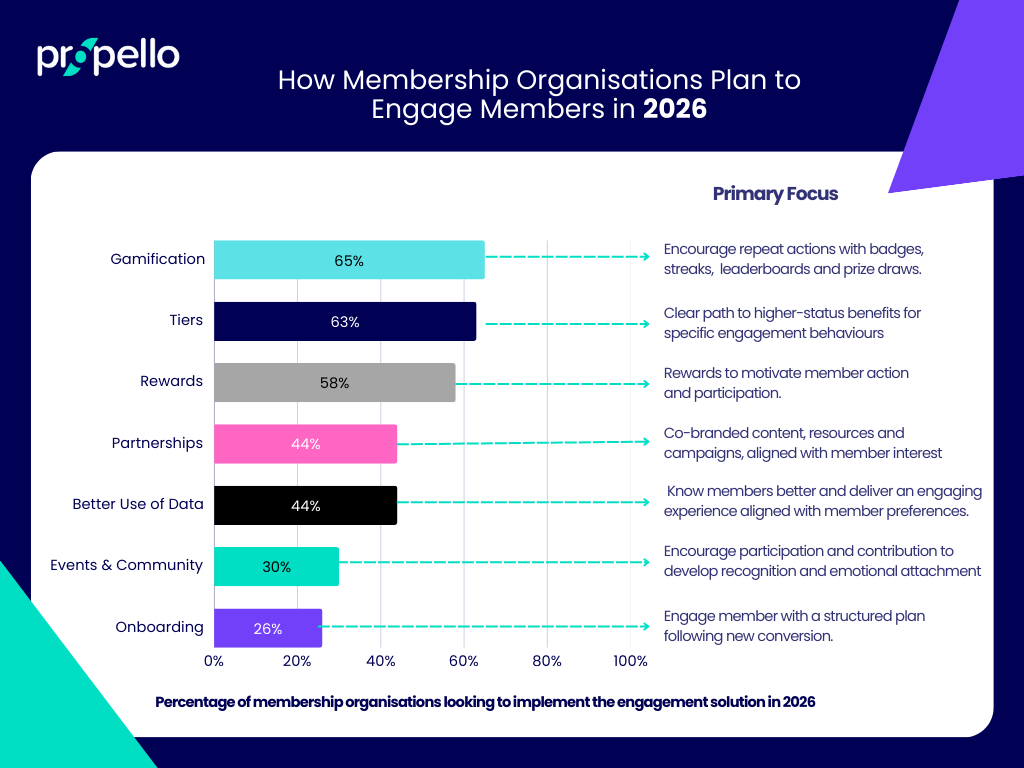
Research in our 2025 Membership Trends Report also reveals that 65% of organisations plan to test gamification using interactive game elements to encourage habit-building.
Where should you add gamification in the member journey?
Onboarding (new member experience): Progress bars, welcome badges
Online communities and forums: Leaderboards, member spotlights
Loyalty and reward programmes: Time-based challenges, prize draws (spin-to-win or scratch-to-win)
Events and conferences: Interactive quizzes, trivia and social sharing challenges
Educational and learning portals: Badges for skill mastery, team-based learning challenges
How do you keep your membership community motivated?
The rewards you offer should match the effort members put in to earn them. Use relevant rewards like exclusive access and skill development opportunities to encourage them to participate.
Also, competition works when most members feel they can win something. Beyond rewarding top performers, create categories like “Most Improved Member” or “Best New Contributor”. This approach keeps your entire community motivated rather than just the most active participants.
2) How Does a Tiered Structure Scale Member Engagement?
Membership tiers create natural progression paths that keep members actively participating. When someone can see a clear route from basic to premium status, they become more committed to engaging in activities that help them progress.
Members who start at the entry level actively participate in events, contribute to forums, and complete certifications to reach the next tier. This creates sustained engagement throughout the year rather than a single renewal decision.
The 2025Propello Cloud Membership Trends Report shows 63% of organisations expect to review their tiered membership structure, recognising its growing importance for engagement.
How should you design your membership tier structure?
Design tiers around behaviours, not just pricing. A practical three-tier model might look like this:
Bronze members access core resources and community forums.
Gold includes one-on-one mentorship, speaking platforms at flagship events, and advisory board participation.
Each tier rewards deeper participation with experiences that strengthen community connection and professional development. Your members get more compelling reasons to stay active between renewals, and your organisation benefits from a more engaged community that drives your mission forward.
3) How Can Loyalty Programmes and Rewards Improve Member Engagement?
Membership loyalty programmes create engagement habits by rewarding the behaviours you want to see more of. When members earn valuable rewards for renewing, participating in forums, or completing courses, they’re more likely to repeat these actions.
It’s no wonder that 58% of organisations are looking at rewards as a way to motivate specific behaviours, according to the 2025Propello Cloud Membership Trends Report. This provides ample opportunities to scale participation in membership communities.
The data you collect is equally valuable. Programme analytics reveal member preferences through reward consumption patterns, which help you refine your engagement strategies.
What makes membership loyalty programmes work?
Effective loyalty programmes combine progressive benefits, personalised rewards, and moments of genuine surprise.
Progressive benefits
Use tiered structures that encourage members to increase their engagement to earn more valuable rewards. Lower-level (bronze) members get basic resources, while higher-tier (gold/platinum) members get priority event booking and exclusive perks.
Members should get additional value that justifies their engagement at each tier. The anticipation of earning those rewards, coupled with the sense of status and recognition, becomes an incentive to engage.
Personalised rewards
Personalised rewards are a vital part of loyalty initiatives. Not all members find event discounts appealing, so tailor the rewards to the audience.
Members who regularly attend webinars might opt for early access to speaker recordings. But those with networking interests could prefer invites to VIP sessions.
Surprise and delight rewards
Reward programmes also generate engagement through “surprise and delight” rewards. These perks could be spontaneous benefits for members who hit special milestones or certification streaks. These membership incentives create positive emotional connections with your organisation that reinforce loyalty.
4) Can Strategic Partnerships Help Membership Bodies Scale Engagement?
Strategic partnerships expand your reach and strengthen your value proposition by connecting you with organisations that share complementary missions or similar audiences. These alliances create engagement opportunities that would be difficult to achieve alone.
The 2025Propello Cloud Membership Trends Report found that 44% of organisations plan to strengthen partnerships to drive engagement, using partner resources and campaigns that align with varying member interests.
How do strategic alliances drive member engagement?
The four primary ways partnerships create engagement value:
Expanding your reach: Leverage the established authority, network, and demographic segments of partner organisations to open up previously untapped markets.
Enhancing your value proposition: Deliver new benefits, services, and resources outside your core offerings. Partner rewards (technology, content, or expertise) enhance membership value, satisfaction, and retention.
Attracting new members: A stronger value proposition makes your organisation more discoverable and appealing to potential members browsing their options.
Increasing innovation: Combining strengths and expertise leads to new programmes, tools, or opportunities to meet changing member needs.
However, you must carefully select your partners to succeed. All parties must be clearly aligned on goals, communication, and mutual benefit.
How do membership partnership agreements work?
The typical partnership follows an affiliate commission structure. You offer deals and discounts on partner offerings as member rewards. In return, you get a percentage when they claim each reward.
Commissions range anywhere from modest amounts to higher fees for premium offers like insurance or mortgages.
Real-world examples
ISM (Independent Society of Musicians) partners with lifestyle retailers for everyday savings and musical equipment companies for professional needs. This dual approach serves both personal and career development.
NASWUT (National Association of Schoolmasters Union of Women Teachers) uses similar brand partnerships to provide practical value that complements their core union services. Offering relevant and valuable rewards increases redemption rates and encourages members to engage with the organisation.
5) How Does Better Use of Data Improve Member Engagement?
Data transforms guesswork into precision. When you understand what members actually do (not only what they say they want), you can create engagement touchpoints that feel personally relevant rather than generic.
Most organisations recognise the gap…
44% want better use of data, as accurate data allows for refined segments, aligning experiences, rewards, and wider value propositions to member preferences, according to the Propello Cloud Membership Trends Report (2025).
But a crucial challenge remains: using collected data strategically.
How can data insights inform membership interventions?
Track engagement patterns to identify members drifting toward inactivity before they decide to leave. Segment by behaviour: early-career professionals engaging with training content need different nudges than senior members who are seeking networking opportunities.
Use data to trigger timely interventions:
a personalised email when someone completes their first course,
reward unlocks after three event attendances, or
targeted re-engagement campaigns for members showing warning signs of churn.
The shift from intuition to evidence-based decisions means you’re investing resources where they’ll drive the strongest engagement outcomes and member satisfaction.
6) How Can Events Strengthen Member Communities?
Events strengthen communities through lasting human connections. They transform your membership from a list of contacts into a genuine community where people build lasting professional relationships.
In the Propello Cloud Membership Trends Report (2025), over 30% of associations are planning more events and community initiatives to drive deeper engagement.
How do micro-communities make member events more effective?
Micro-communities within events create opportunities for meaningful interactions by reducing scale and increasing relevance. There are three formats you should build into your event programme:
Interest-specific breakout sessions for specialities or career stages
Local chapter pods connecting those members located in the same state or area of the world
Peer mentoring circles allowing amateurs to learn from more experienced professionals
These intimate settings encourage deeper conversations than large plenary sessions.
How should you spread membership event engagement across the year?
Your annual conference shouldn’t carry the entire community-building load. Regular virtual coffee chats between major events maintain momentum. Quarterly regional meetups strengthen local connections. Your flagship event becomes the highlight, not the only touchpoint.
7) How Do You Personalise Member Journeys Starting With Onboarding?
Personalising member journeys starts with collecting the right data and using it to create experiences that reflect each member’s actual interests and behaviours. We’re now seeing membership trends where associations use this approach to engage their members.
58% of organisations rate personalisation as a high priority going into 2026. (Propello Cloud Membership Trends Report 2025).
42% of organisations now deliver personalised digital experiences, according to Memberwise.
What data do you need to personalise the member experience?
Gather member data points like demographics, interests, behaviours, and preferences from surveys, CRM systems, and analytics. Then use their shared characteristics to divide your member base into distinct groups and create tailored experiences for each one.
For example:
personalised onboarding plans for new signups, and
custom member journeys (ongoing communications, content, and recommendations) for existing members.
Why do static member profiles fail?
As member interests and career stages evolve, a profile that never updates delivers an experience that becomes increasingly irrelevant. But some organisations still use static member profiles that do not respond to dynamic behaviour.
Forward-thinking associations, however, use AI and machine learning to anticipate these behavioural changes and potential interest areas. When a member repeatedly engages with leadership content, the system automatically recommends mentorship programmes and leadership resources.
The proactive approach improves engagement with immediate and ongoing value. Members feel supported, and the targeted recommendations lead them on a journey of progressive disclosure based on real-time behaviour.
8) How do Referral Programmes Boost Member Acquisition and Engagement?
Referral programmes are successful because they build on trust. When your happiest members recommend your organisation, referred leads have a higher conversion rate (30%) and lifetime value (16%) when compared to leads you get from other marketing channels.
In the Propello Cloud Membership Trends Report(2025), 49% of membership organisations say they are considering building or reviewing their referral programmes.
Why are referred members more valuable than other leads?
Referred members arrive pre-qualified. A trusted peer has already communicated the value of the organisation, so referred leads enter with higher expectations, stronger intent, and a pre-existing connection to at least one existing member.
Double-sided rewards create win-win scenarios. Your referrer could earn conference discounts, and their referred friend could get a trial rate for the first year’s subscription.
Don’t treat referrals as isolated transactions either. Weave them into your gamification and loyalty systems. Members who successfully refer three people could unlock “Ambassador” status with exclusive networking access.
This integration turns one-off referrals into ongoing engagement opportunities that deepen member investment in your community.
Which metrics should you track to optimise your membership referral programme?
Track the metrics that reveal both the quality of referred members and the efficiency of your referral process, not just raw referral volume. Keep a close eye on these three metrics:
Referral conversion rates for each member segment
Time taken from accessing the website to completing the membership sign-up
Long-term retention rates for referred members
How can you create a membership referral culture?
The most effective referrals happen organically when members genuinely love what you offer. Focus on creating experiences worth sharing rather than pushing people to refer. When members feel excited about your value, sharing becomes a natural extension of their enthusiasm.
Modern referral software then automates the reward process, eliminating manual administration while ensuring referrers get recognised immediately when their contacts join.
9) How Do You Communicate Effectively With Members?
Adopt a multi-channel approach to reach members where they are. Executives might prefer short updates on LinkedIn, while your newer additions want in-depth guidance in an email. Some respond better to phone calls; others want self-service options.
Email remains your strongest channel. According to the MGI Benchmarking Report, all membership organisations (100%) use email as part of their renewals strategy, and 84% listed it as the most effective channel. But effectiveness falls sharply without trust.
Developing trust through consistent communication involves:
Frequency without fatigue: Regular touchpoints that add value rather than noise
Prompt responses: Quick responses to queries when members reach out
Clear and straightforward updates: Openly communicating your wins and struggles
It’s all in your feedback loops, which turn basic communication into meaningful conversation. Close the loop by demonstrating to members how their suggestions influenced key decisions.
When you show members their voices are making a real difference, they become part of a community dialogue that drives deeper engagement at every touchpoint.
10) How Can Digital Platforms Drive Member Engagement?
Your digital platforms need to work together, not operate in silos. When members share valuable insights on LinkedIn, pull those conversations into your community forums. Use social media activity to spark deeper discussions and inform your content strategy. This creates momentum where engagement on one platform amplifies participation across your entire digital ecosystem.
Data from the Propello Cloud Membership Trends Report reveals that 64% of organisations rate system integration as a high priority, and 56% are focusing on UX and mobile-first delivery.
How do disconnected platforms kill member engagement?
When members need separate logins for events, resources, and profile updates, they stop participating. They miss opportunities and start questioning whether your organisation understands modern user experience.
Every unnecessary barrier, a second login, a progress reset, and a preference that does not carry over is a reason to disengage.
What does a well-integrated digital membership ecosystem look like?
Connected digital ecosystems remove friction at every touchpoint through:
Universal sign-in across your site, learning platform, and mobile app
Live data synchronisation, meaning that member preferences update everywhere at the same time
Unified analytics to monitor member interaction at all touchpoints
When you remove integration barriers, members move fluidly between your platforms. They attend more events because registration is effortless. They complete more courses because progress syncs automatically. They participate in discussions because their preferences follow them everywhere.
11) How Can Feedback Improve Your Engagement Strategy?
Feedback improves engagement strategy by replacing assumptions with evidence. MemberWise data points out that 68% of organisations now use online survey tools to gauge engagement. But collecting feedback is only half the battle; acting on it creates the real value.
What is the most effective member feedback channel?
The most reliable insights come from combining multiple data sources rather than relying on any single method. Here’s how the most commonly used tools break down:
Method to Measure Engagement
%
Online Survey Tools
68%
Email Marketing Tools
67%
Website Content Management System Analytics
48%
Learning Management Scoring Tool
29%
Member Engagement Scoring Tool
26%
Online Community Analytics Platform
18%
Combine different feedback types for accurate insights:
Surveys tell you what members think they want
Analytics reveal what they actually do
Forum discussions expose unfiltered opinions about industry issues
Analytics frequently reveal patterns that surveys miss entirely. When members consistently drop out of online courses at the 15-minute mark, this behavioural signal is more actionable than asking them to rate course quality after the fact. Let behaviour guide your structural decisions. Use surveys to understand why.
When should you collect member feedback?
Boost engagement by collecting feedback throughout the member journey, not just annually. Quick two-question polls after webinars capture immediate reactions. Exit surveys from departing members reveal why people leave. Website analytics show what content truly resonates before you ask anyone.
Spreading feedback collection across the year gives you a continuous signal rather than a single annual snapshot that is already out of date by the time you act on it.
How do you acknowledge member feedback?
Members expect to see results when they share feedback. Show them their voices matter through:
Concrete examples of how recommendations shaped specific changes
Quick wins that demonstrate your responsiveness
Clear explanations when suggested ideas can’t be implemented
Visible action on feedback builds trust and increases the quality and volume of future responses.
12) How Do Advocacy and Social Impact Drive Member Engagement?
Advocacy and social impact transform your membership from a simple transaction into a shared mission. When members rally together for causes they believe in, they become active champions of professional change.
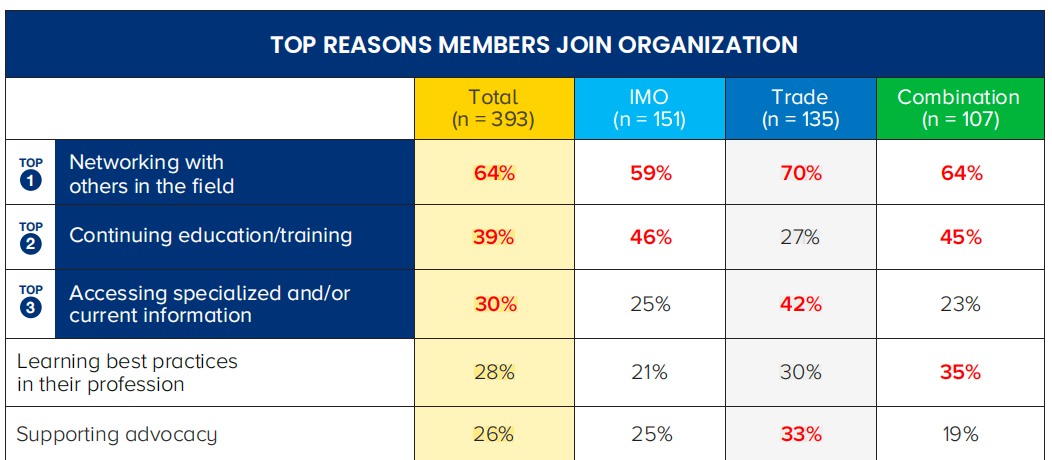
MGI’s 2025 data shows supporting advocacy ranks as a top reason professionals join associations, especially in trade groups where collective action creates industry-wide change.
Why does value alignment strengthen member participation?
Members who see their values reflected in your advocacy efforts participate more actively and stay longer. Shared purpose creates a sense of ownership in outcomes that purely transactional benefits cannot produce.
This is especially true for diversity, equity, and inclusion initiatives. Mentoring programmes that connect people across career stages and backgrounds develop relationships and careers simultaneously, generating community value that extends well beyond the event or programme itself.
How do you mobilise members for advocacy?
Effective grassroots strategies give members clear, achievable ways to make a difference through:
Specialist groups working in particular challenge areas
Legislative action alerts that describe exactly what members can do
Community impact projects that show collective impact
This advocacy-driven engagement sustains itself because members feel personally invested in outcomes they helped create.
13) How Does Content Creation Build Member Engagement?
Quality content creates ongoing touchpoints that bring members back to your organisation regularly. When you address real challenges with practical solutions, members see you as their go-to resource rather than just another membership subscription.
But your content strategy must address real member issues.
What content types work best for member engagement?
Different content types serve different purposes. Timely guidance videos deliver instant value when your audience is grappling with new regulations. Write clear explainer articles that establish your expertise in complex industry topics.
Here are four formats worth prioritising:
Educational webinars develop expertise and offer a live interaction channel
Case studies generated by members from their own experience of peer successes and practical applications
Quick industry updates to keep pace with busy schedules
Troubleshooting discussion boards to compare notes on overcoming obstacles
Watch which articles create forum topics. Keep track of whether members who have read one or more pieces of content have attended an event around that topic. See if particular themes generate membership enquiries or renewal discussions.
Content that invites members to participate (whether through comments, shares, or discussion threads) creates long-term engagement beyond the initial moment of consumption.
How Should You Measure and Optimise Member Engagement?
Track metrics that show whether your engagement efforts actually drive the behaviours you want to see. Effective measurement connects member activities to meaningful outcomes.
Which member engagement metrics should you track?
Focus on four key areas: participation patterns, retention indicators, value perception, and growth metrics. Track at least one metric from each area to avoid blind spots.
Category
What it measures
Key metrics
Participation patterns
How actively members use your offerings
Login frequency, content consumption, event attendance, community activity
Retention indicators
Whether engagement translates to loyalty
Churn rate, renewal percentage, average membership duration, NPS
Review these metrics monthly and look for patterns that connect specific engagement activities to retention improvements.
How can you optimise member engagement?
Focus on understanding which activities create the strongest member relationships, then double down on those. Optimisation is about concentrating resources on the touchpoints that move members from passive to active, and from active to advocates.
When metrics reveal a weak spot, investigate quickly. A drop in event attendance could signal a scheduling issue, a content relevance problem, or early signs of broader disengagement. The metric flags the problem, but our response determines the outcome.
Start Building a Thriving Membership Community Today
Associations that invest in member engagement build a community that stands the test of time. Those that do not risk losing relevance gradually, then suddenly.
Your value proposition rests on something no free tool or AI platform can replicate: peer relationships, professional credibility, and the collective power to advocate for shared interests. That is worth protecting and worth investing in.
Where should you start?
The place to start is not with the most ambitious strategy on this list. It is with the biggest gap in your current one. If new member onboarding is chaotic, fix that first. A strong foundation makes every other tactic more effective.
Membership growth begins with the members you already have.
FAQs
What are the key components of a successful member engagement strategy?
Personalised experiences, loyalty programmes, integrated digital platforms, regular feedback, and community-based activities all contribute to success. Provide value at all touchpoints to create memorable interactions that promote positive member sentiment.
How can I measure the effectiveness of my membership engagement efforts?
Track renewal rates by engagement level, first-year retention, which platforms members are most active on, and satisfaction scores. Link activity metrics to the actual business results rather than just vanity metrics.
What are best practices for increasing member retention through engagement?
Segment by behaviour, personalise the member experience, react quickly to feedback, provide connections among peers, and make sure you constantly demonstrate value. Early engagement leads to long-term retention.
How do I personalise member engagement to target different segments?
Use behaviour data together with demographics. Track what content members are consuming, which events they go to, or which platform they use. Automatically provide suggestions that are related to what their interests have indicated.
What role does content play in member engagement?
Content creates regular points of contact which will bring members back. Create relevant content that resolves actual day-to-day problems, creates opportunities for peer discussions, and provides practical value rather than promotional content.
How can automation improve engagement without losing the human touch?
Automate tasks like welcome sequences and reminders for renewal, but keep all complicated interactions human. Use AI to personalise member experiences, not as an alternative to strategies that promote relationship-building with your members.
How can I re-engage inactive or at-risk members?
Find warning signals early through engagement scoring. Get in touch personally before they drop out. Provide different avenues for them to share their feedback and input and make changes to reflect their perspective of membership value.
How do events and community-building activities help increase engagement?
Mix formats – both virtual and in person. Create micro-communities around specific interests. Include active volunteer opportunities and engagement opportunities that occur throughout the year, not just during annual conferences.
What innovative technologies can improve engagement?
AI for predictive personalisation, integrated digital ecosystems, mobile apps with real functionality, and automated engagement scoring are excellent examples. But robust integration is crucial for success. These systems must communicate in real time to keep processes smooth.
How can member feedback be incorporated into engagement strategies?
Collect feedback via multiple channels continuously. Act on suggestions so that members can see that their opinions matter. And make use of both surveys and behaviour analytics for a full picture of your members’ true needs and preferences.
Mark Camp
Mark is the Founder and CEO of Propello Cloud, an innovative SaaS platform for loyalty and customer engagement. With over 20 years of marketing experience, he is passionate about helping brands boost retention and acquisition with scalable loyalty solutions.
Mark is an expert in loyalty and engagement strategy, having worked with major enterprise clients across industries to drive growth through rewards programmes. He leads Propello Cloud’s mission to deliver versatile platforms that help organisations attract, engage and retain customers.
Start your customised Propello Cloud journey today
Explore the platform’s scalability, features and customisation options and get answers to your unique questions.