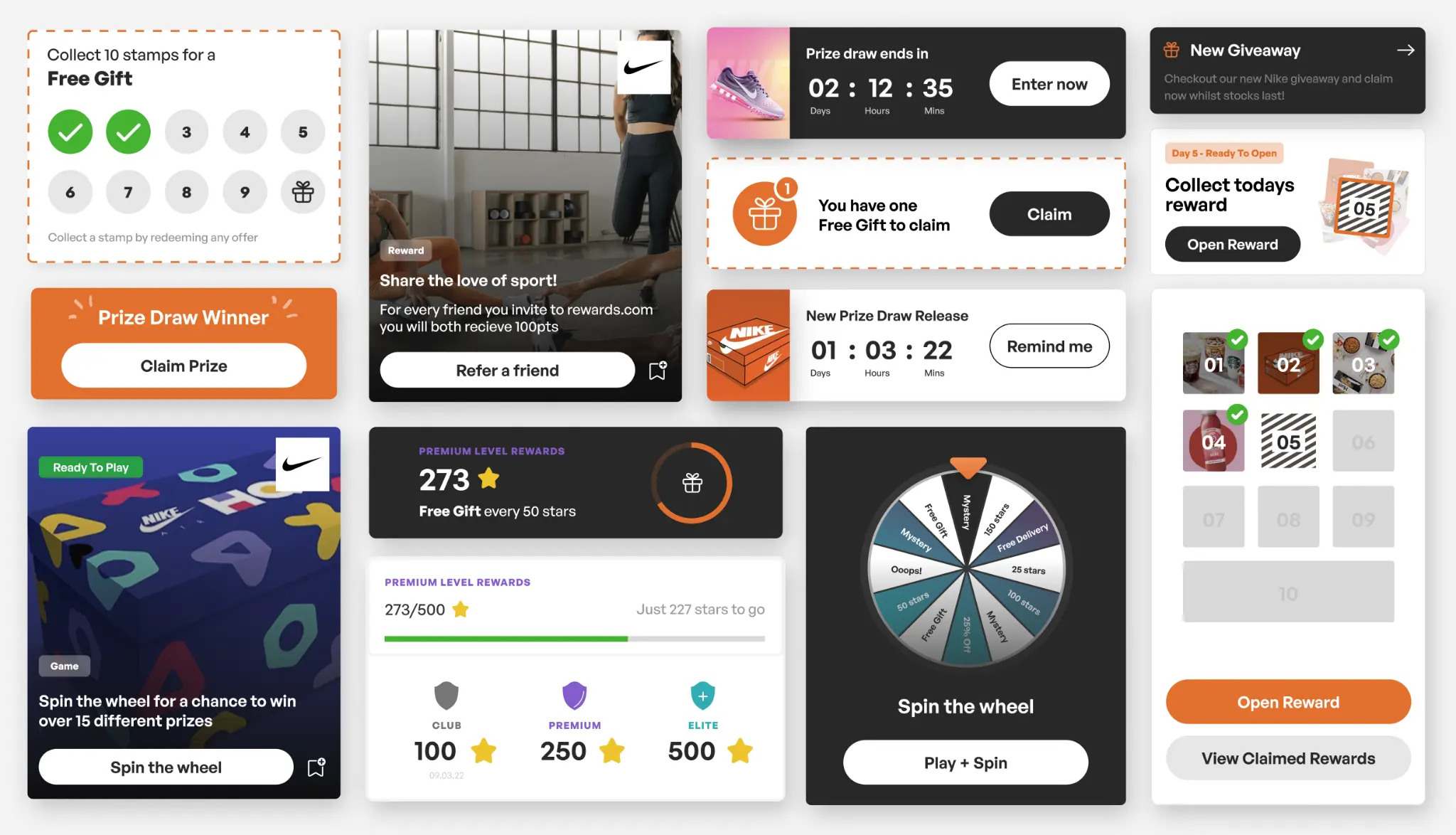
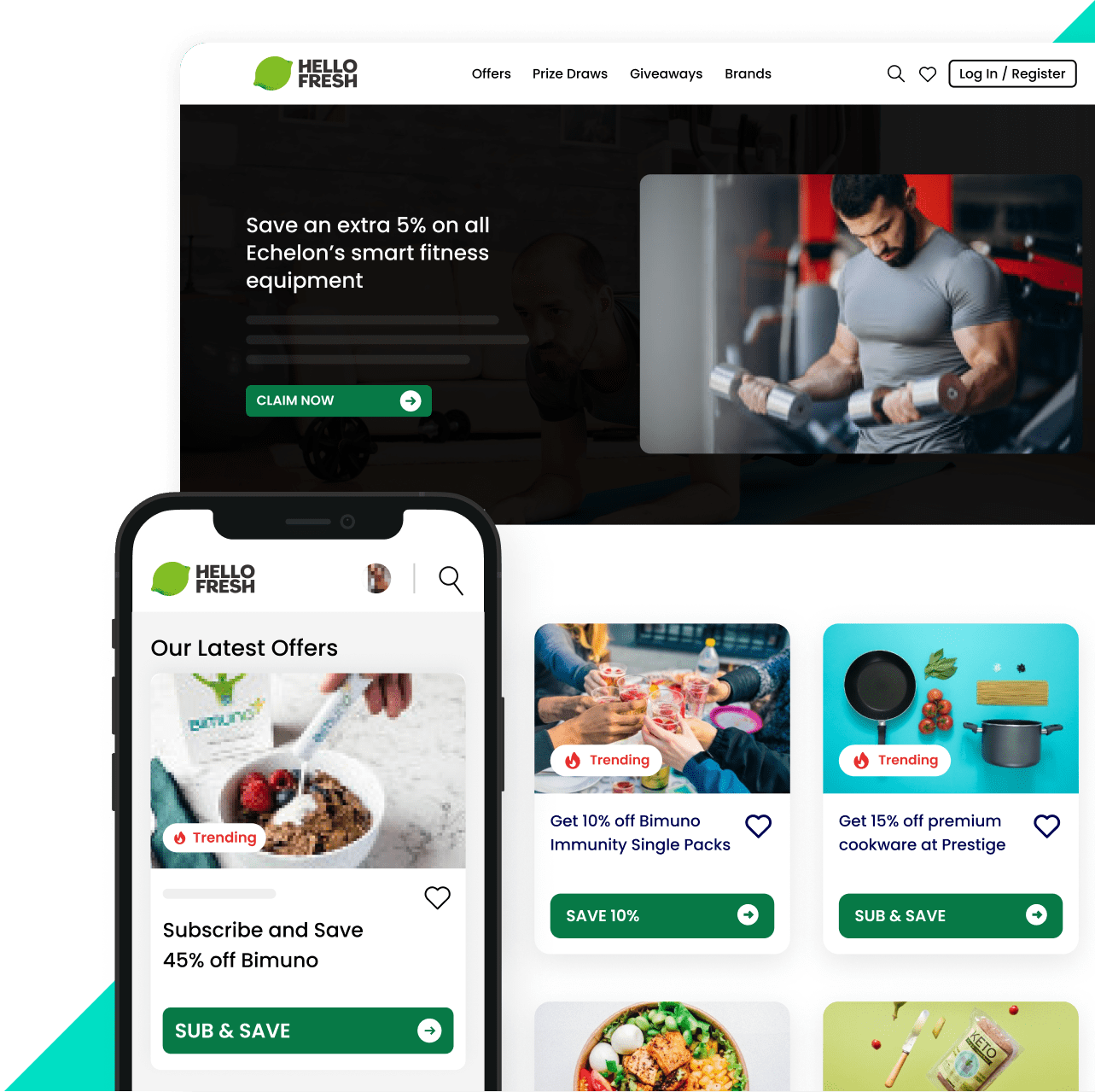
AI in loyalty programmes enables brands to move beyond one-size-fits-all rewards and deliver personalised experiences at scale. By analysing customer behaviour, preferences and purchasing habits in real time, AI helps businesses build stronger emotional connections with their customers and drive measurable improvements in retention, lifetime value and engagement.
Mark Camp
CEO & Founder at PropelloCloud.com
Contents
Key Takeaways
AI enables hyper-personalisation, predictive analytics and seamless omnichannel experiences in loyalty programmes.
AI-powered loyalty programmes increase customer engagement, retention and lifetime value through targeted, relevant rewards.
AI uncovers insights from large customer datasets, helping businesses optimise loyalty strategies in real time.
Successful AI adoption requires clean data, the right technology, and a balance between automation and human interaction.
The future of customer loyalty lies in AI platforms that build meaningful, emotional connections between brands and customers.
AI-powered loyalty programmes are not a future investment. According to Propello Cloud’s 2025 Loyalty Uncovered Report, 62% of enterprise brands are already investing in AI and machine learning capabilities for their loyalty programmes, with 84% prioritising personalisation as a critical investment area.
This guide covers everything businesses need to know about AI in loyalty programmes. From how AI personalises rewards and predicts customer needs to the practical challenges of adoption, fraud prevention and churn reduction, each section is designed to give you a clear, actionable understanding of what AI makes possible in loyalty today.
What role does AI play in transforming loyalty programmes?
AI transforms loyalty programmes by enabling businesses to collect, analyse and act on customer data at a scale and speed that traditional methods cannot match. The result is personalised experiences, seamless omnichannel journeys and the ability to turn raw behavioural data into an actionable loyalty strategy in real time.
At Propello Cloud, we have seen this impact firsthand across the clients we work with. Our AI-powered platform helps brands move beyond static programme rules and deliver experiences that adapt to each customer individually. Three capabilities underpin this transformation:
Hyper-personalised experiences: Targeted rewards and tailored offers based on individual behaviour and preferences.
Seamless omnichannel journeys: Consistent, connected experiences across every customer touchpoint.
Large-scale data analysis: Fast, accurate processing of complex datasets to surface insights that drive smarter loyalty decisions.
The defining capability of an AI-led programme is the ability to forge genuine emotional connections between customers and the brand faster than traditional approaches allow. Personalisation at this level is no longer a differentiator. According toMcKinsey, 71% of consumers now expect personalised interactions as standard.
What are the benefits of AI-enhanced loyalty programmes for businesses?
AI-enhanced loyalty programmes deliver higher engagement, stronger retention and increased advocacy, while introducing a layer of efficiency and competitive differentiation that traditional programmes cannot replicate. The benefits fall across four distinct areas.
How does AI increase customer loyalty and brand advocacy?
AI-powered loyalty programmes automate the identification of brand advocates with far greater accuracy than manual methods allow. Predictive analytics gives businesses a real-time view of engagement levels, customer behaviours and advocacy potential across their entire membership base, providing a clear, data-driven picture of who their most valuable advocates are at any given moment.
Those same predictive models go further than identification. By analysing which rewards are most likely to drive word-of-mouth referrals and long-term retention, AI helps businesses continuously optimise their loyalty and referral programmes. The difference between a reactive approach and a predictive one is what separates programmes that grow advocacy from those that merely measure it.
How does AI improve customer lifetime value and reduce churn?
AI-driven personalisation directly supports higher customer lifetime value and lower churn by making every interaction feel relevant rather than generic. Churn management is one of the most critical challenges in loyalty. In our Loyalty Uncovered Report, 80% of enterprise brands cite it as a concern, with 35% rating it critical.
When customers feel that a loyalty programme genuinely reflects their needs, they stay longer. AI excels at delivering tailored rewards and recommendations at the individual level, adjusting offers, promotions and communications to reflect both personal preferences and changing market conditions. Over time, that consistency builds the kind of trust that turns occasional buyers into long-term brand advocates.
How does AI improve efficiency and reduce operational costs?
AI automates several processes that would otherwise consume significant resources: data analysis, fraud detection and personalised customer interactions, among them. Freeing your team from these tasks allows them to focus on higher-value priorities rather than routine programme management.
The efficiency gains compound over time. Lebara Mobile achieved a 3x reduction in operational running costs after transitioning from an in-house solution to an outsourced, AI-capable platform. While upfront implementation costs can seem significant, the ROI from reduced operational spend, improved retention and better programme scalability makes AI a worthwhile investment.
How does AI give loyalty programmes a competitive advantage?
A personalised loyalty programme is one of the clearest ways a business can differentiate itself from competitors. AI-powered automation keeps experiences fresh and engaging, handling the complexity of modern programme features that traditional platforms struggle to support. Businesses that invest in AI now are building a loyalty capability that will be increasingly difficult for competitors to catch up to.
Beyond standard gamification elements such as challenges, badges and leaderboards, AI-powered programmes are better positioned to incorporate emerging technologies. Augmented reality, voice recognition and wearable tech integrations are all areas where AI-led platforms are better equipped to lead. As customer expectations continue to rise, having the infrastructure to support these experiences becomes a genuine competitive differentiator.
What are the limitations of traditional loyalty programmes?
Traditional loyalty programmes, specifically earn-and-burn models, have been a staple of customer retention strategies for decades. Their generic reward architecture places them firmly in the one-size-fits-all camp, and that approach no longer meets modern consumer expectations. According to industry research, 50% of consumers dislike how long it takes to redeem rewards.
The transactional nature of traditional programmes is another significant drawback. Many fail to engage customers at the touchpoints that matter most, missing opportunities to collect feedback, encourage social sharing or facilitate referrals. Without those interactions, businesses forfeit the chance to build deeper, more meaningful relationships with their customer base.
The core problem with traditional programmes:
Rewards are generic rather than individually relevant
Engagement is transactional rather than emotional
Data collection is limited, making personalisation difficult
Programme mechanics are static and slow to adapt to changing customer needs
Over 50% of consumers feel that most personalisation efforts miss the mark, according to a Deloitte Digital study. They are too generic, too broad and too focused on segments rather than individuals. Brands that get personalisation right, however, see a 1.5x increase in customer loyalty.
Why are AI-powered loyalty programmes becoming the new standard?
AI-powered loyalty programmes represent a fundamental shift in how businesses approach customer engagement and retention. Three converging forces have accelerated their rise: rapid advances in AI technology, an explosion of available customer data, and growing consumer demand for personalised experiences.
How have advances in AI technology changed loyalty programmes?
Progress in machine learning and natural language processing has opened up new possibilities for loyalty programme design. Businesses can now analyse vast amounts of customer data quickly and accurately, gaining insights not just into behaviour and preferences but also into customer sentiment.
These capabilities allow businesses to design programmes that anticipate how customer needs will evolve. Predictive models can detect when customers are satisfied, neutral or disengaged and trigger automated service recovery or retention strategies before the relationship deteriorates. That kind of proactive intervention is something a traditional loyalty programme will struggle to deliver as effectively.
How does data abundance enable better loyalty programmes?
Businesses today generate more customer data than ever before, from purchase behaviour and browsing history to social media interactions. Every touchpoint produces information that AI algorithms can use to uncover patterns and preferences that traditional analysis methods would likely miss.
That depth of data makes hyper-personalisation possible at scale.A McKinsey study found that hyper-personalisation lifts revenue by 5 to 15 per cent, reduces customer acquisition costs by 50 per cent, and generates 40 per cent of revenue in the fastest-growing companies compared to slower-growth peers.
How is the rise of the customer experience economy driving AI adoption?
Customer experience has become the primary battleground for businesses looking to differentiate themselves. As AI continues to shape how people live and work, consumer expectations will shift accordingly. Research fromPwC found that 86% of buyers will pay more for a better customer experience.
The business case for AI in loyalty is clear. Embedding AI into a loyalty programme strengthens the customer journey, adds value across the chain and raises the quality of experience at every interaction. Our own 2025 Loyalty Uncovered Report found that 84% of enterprise brands consider personalisation and strategic partnerships their top investment priority, reflecting how central the experience economy has become to loyalty strategy.
How are loyalty programmes shifting towards personalised experiences?
Personalisation is no longer a differentiator in loyalty. It is a baseline requirement. According to McKinsey, 71% of consumers expect personalised interactions, and programmes that fail to deliver them risk losing members to competitors who do.
Personalisation extends beyond tailored messaging. It means creating experiences that make customers feel genuinely valued and understood, drawing on purchase history, browsing behaviour and demographic data to build stronger relationships. When customers feel that connection, they spend more, stay longer and advocate more readily.
The direction of travel is clear. 84% of enterprise brands told us they identified personalisation as a critical investment priority. A Financial Brand study found that 29% of marketers expect a significant shift towards consumer personalisation, while 26% foresee growing adoption of AI. Together, those trends point to AI playing an increasingly central role in how businesses personalise loyalty experiences and drive growth.
How does AI personalise loyalty programme rewards?
AI personalises loyalty programme rewards by analysing customer data, preferences and behaviours in real time to deliver hyper-relevant offers tailored to each individual. Rather than applying broad segment rules, AI treats every customer as a segment of one. Brands that achieve this level of personalisation see a 1.5x increase in customer loyalty, according to Deloitte Digital research.
At Propello Cloud, our AI-powered platform is built to close the gap between generic and genuinely personal. The engine powers a four-step process that moves from raw data to real-time reward decisions:
Step
Strategy
What it does
1
Data Collection and Integration
Integrates with existing systems to collect real-time customer data from every touchpoint, creating a 360-degree view of each individual.
2
Advanced Segmentation
Uses machine learning to create dynamic micro-segments based on customer preferences, behaviours and contexts.
3
Predictive Modelling
AI models predict each customer’s likely actions, preferences and lifetime value to enable targeted rewards and experiences.
4
Real-time Decisioning
As customers interact with the brand, the platform makes real-time decisions about which rewards and offers to present for maximum relevance.
How does AI collect and use customer data to personalise rewards?
At the core of AI-powered personalisation is a machine learning engine that draws on a continuous stream of real-time data from every customer touchpoint. The result is rich, dynamic individual customer profiles that update automatically as behaviour changes.
Each customer profile feeds the predictive models that determine reward relevance. This is why AI-driven personalisation consistently outperforms traditional rules-based approaches: it responds to what a customer is doing now, not what they did six months ago.
What is hyper-personalisation in loyalty rewards?
Hyper-personalisation goes beyond traditional segmentation to create truly one-to-one experiences tailored to each customer’s unique preferences, behaviours and context. Rather than grouping customers into broad categories, AI enables loyalty programmes to treat every individual as a segment of one.
Four strategies drive this in practice:
Preference-based rewards: AI insights create rewards that align with each customer’s favourite products and preferred communication channels.
Behavioural triggers: Machine learning identifies key milestones, such as a first purchase or a birthday, and automatically fires personalised rewards and recognition.
Contextual offers: Real-time data, such as location, is used to present offers relevant to each customer’s current context.
Dynamic reward tiers:Tier structures adapt to each customer’s engagement level, offering progressively greater value as they move up the loyalty ladder.
What impact do personalised rewards have on engagement and retention?
Brands that have fully embraced personalisation are setting new standards for what loyalty can look like. The ability to deliver truly individual experiences is increasingly what separates programmes that retain customers from those that lose them.
Looking ahead, businesses will continue to allocate more budget towards digital offers and personalised loyalty initiatives. Programmes that fail to invest in this area risk falling behind competitors already delivering experiences at the individual level.
How do predictive insights elevate customer experience in loyalty programmes?
Predictive insights give businesses a deeper understanding of what customers want, sometimes before customers know it themselves. AI-led platforms identify opportunities for improvement and surface actionable recommendations in real time, rather than waiting for engagement to drop before reacting.
By suggesting a new loyalty tier, adjusting points thresholds or flagging underperforming campaigns, businesses can optimise programmes continuously. This proactive approach is one of the clearest ways AI separates modern loyalty from traditional programme management.
How does gamification improve loyalty programme engagement?
Gamification incorporates challenges, badges and leaderboards into loyalty programmes to make participation more interactive and rewarding. When designed well, it motivates customers to engage more actively, builds a deeper connection with the brand and encourages long-term commitment to the programme.
The opportunity to combine gamification with AI is significant. The gamification market isgrowing at 24.8% annually, projected to reach $37 billion by 2027. AI adds a further dimension by tailoring personalised challenges and quests to individual customers, making the experience far more relevant than a generic points race. According to Propello Cloud’s 2025 Loyalty Uncovered Report, 65% of enterprise brands are actively investing in gamification as part of their loyalty strategy.
How does AI enable reward redemption across multiple brands?
AI-powered platforms analyse customer behaviour and preferences to recommend personalised reward redemption options across a range of partner brands and services. This increases the perceived value of a loyalty programme by giving customers more meaningful ways to use their rewards across different areas of their lives.
Those recommendations also benefit partner brands directly, driving traffic and engagement through the loyalty network. AI improves the accuracy of brand alignment with individual customer interests, strengthening partnership value and informing future product, marketing and redemption decisions through rich behavioural data.
How do real-time offers improve loyalty programme performance?
Real-time offers are personalised discounts, gifts or incentives triggered by a customer’s behaviour. AI analyses browsing history, purchase patterns and contextual signals to determine the right offer for the right customer at the right moment, removing the guesswork from promotional strategy.
That level of precision increases the likelihood of a purchase and deepens customer engagement with the programme. In Propello Cloud’s 2025 Loyalty Uncovered Report, 75% of enterprise brands prioritise real-time rewards and instant gratification as a key investment area, recognising that immediate value delivery is what modern customers expect.
What insights can AI uncover that traditional analysis methods miss?
AI can process vast amounts of data, identify complex patterns and make predictions from diverse datasets in ways that traditional analytical methods cannot match. At Propello, we have seen firsthand how these capabilities surface valuable insights that would otherwise go unnoticed. Four areas stand out: micro-segmentation, temporal trends, unstructured data and anomaly detection.
What insights can AI uncover that traditional analysis methods miss?
AI can process vast amounts of data, identify complex patterns and make predictions from diverse datasets in ways that traditional analytical methods cannot match. At Propello Cloud, we have seen firsthand how these capabilities surface valuable insights that would otherwise go unnoticed. Four areas stand out.
How does AI enable micro-segmentation in loyalty programmes?
Micro-segmentation is the process of dividing customers into highly specific groups based on subtle differences in behaviour, preferences and context. While traditional methods group customers by broad demographics or purchase history, AI identifies far more granular patterns, such as customers who buy a specific product combination, engage on social media at a particular time or respond to certain message types.
That level of detail allows businesses to build hyper-targeted loyalty experiences based on data rather than assumptions. AI can even identify unusual correlations that no human analyst would think to look for, opening up new approaches to engagement that would otherwise remain undiscovered.
How does AI detect temporal trends in customer behaviour?
Temporal trends are patterns in customer behaviour that repeat over time, whether seasonally, weekly or at specific points in the calendar. Some are obvious, such as holiday shopping spikes, but others are too subtle for manual analysis to detect reliably and consistently.
AI-led platforms can identify a quiet uptick in purchases of a particular product category during a specific week each year. Armed with that insight, businesses can optimise the timing and targeting of loyalty initiatives to maximise impact.A study by MIT Sloan and BCG found that 70% of companies using AI report a significant business impact.
How does AI analyse unstructured data for loyalty insights?
Unstructured data refers to information that does not fit neatly into rows and columns. Customer reviews, social media posts and call transcripts are common examples. Natural language processing (NLP) techniques extract meaningful insights from these sources in a way that traditional analysis cannot.
An AI-driven platform might analyse thousands of reviews and identify a recurring theme around a specific aspect of a product or service that customers find frustrating. Businesses can act on that insight quickly, addressing issues before they affect retention and improving the overall customer experience at scale.
How does AI enhance customer engagement in loyalty programmes?
AI enhances customer engagement by proactively serving customer needs, predicting what individuals want before they express it, and delivering cross-sells and upsells with a level of relevance that feels almost intuitive.McKinsey has described AI as the next frontier of customer engagement, and the data supports that view. Two capabilities sit at the heart of this: dynamic content and intelligent virtual assistants.
How does AI-driven dynamic content improve loyalty communications?
Dynamic content refers to messaging and creative material that adapts automatically to the individual receiving it, rather than being fixed for a broad audience. Through natural language processing and machine learning, AI can generate and optimise content for specific customers, platforms and goals, adjusting language, tone and format to maximise relevance and readability.
The result is communication that feels genuinely tailored rather than mass-produced. AI can support content research and ideation too, generating ideas for emails and ad copy instantly. That combination of personalisation and production efficiency keeps loyalty programme communications fresh, varied and consistently engaging.
How do AI-powered chatbots improve loyalty programme customer service?
AI-powered chatbots are virtual assistants that use natural language processing and machine learning to understand and respond to customer enquiries in a conversational, human-like way. In a loyalty context, they can handle programme queries, deliver personalised product recommendations and assist with reward redemptions around the clock.
The always-on nature of chatbots means customers receive faster, more consistent support regardless of when they interact with the programme. That reliability strengthens trust in the loyalty experience and frees up human customer service teams to focus on more complex issues that genuinely benefit from a personal touch.
How does AI predict and prevent customer churn in loyalty programmes?
AI predicts and prevents customer churn by analysing loyalty programme member data to assign each member a churn risk score, enabling businesses to intervene with personalised retention offers before disengagement occurs. This makes proactive retention a realistic and scalable strategy rather than a reactive one.
Customer churn is one of the most persistent challenges facing loyalty programmes, with 80% of enterprise brands in our Loyalty Uncovered Report experiencing difficulties with churn management, and 35% rating it a critical concern.
AI algorithms analyse member data across three key dimensions:
Transaction history: Frequency, recency and value of purchases and reward redemptions.
Engagement levels: Interaction with programme communications, app activity and offer click-through rates.
Demographic information: Contextual factors that help predict behavioural patterns across customer segments.
By identifying patterns associated with disengagement, the platform automatically assigns each member a churn risk score. Armed with that risk data, businesses can reach out proactively with personalised offers, targeted incentives and tailored communications designed to re-engage at-risk customers before they disengage entirely.
The difference between reacting to churn and anticipating it is often what determines whether a customer stays or walks away for good. AI makes the proactive approach not just possible, but scalable across an entire membership base.
How does AI prevent fraud and improve loyalty programme security?
AI prevents loyalty programme fraud by analysing vast amounts of transactional data and customer behaviour in real time, identifying the unusual patterns and anomalies that indicate fraudulent activity before it causes lasting damage. Fraud erodes customer trust, damages brand reputation and drains valuable resources, making early detection essential.
Why is safeguarding loyalty programmes against fraud so important?
When customers engage with a loyalty programme, they expect a secure and seamless experience. Fraud undermines that expectation. Beyond the financial cost, a breach of trust is one of the hardest things to recover from in a loyalty context. Trust is the foundation on which lasting loyalty is built.
AI acts as a continuous layer of protection, monitoring for red flags such as high volumes of point collections, transactions in unexpected locations and activity at unusual times. Automatic alerts trigger swift investigation when anomalies are detected, supported by additional tools like multi-factor authentication, transaction limits and enhanced verification for high-value redemptions.
How does AI-powered fraud detection learn and adapt over time?
AI-powered fraud detection is not a static system. It uses machine learning to analyse patterns and anomalies in real time, identifying new and sophisticated fraud tactics as they emerge. Detection models continuously update and improve, keeping loyalty programmes protected against evolving threats rather than only the ones they were originally trained on.
Predictive analytics adds a further layer of defence by identifying potential fraud before it occurs. By analysing historical data and recognised fraud patterns, the system can flag high-risk transactions and alert businesses to suspicious activity early. AI enables faster response times to threats and can patch breaches faster than traditional security methods.
What are the challenges of adopting AI in loyalty programmes?
The potential benefits of AI in loyalty are significant, but implementation is not without complexity. Having worked with numerous businesses through the process, we have identified four challenges that consistently require careful consideration.
Why is data quality critical for AI-powered loyalty programmes?
AI systems require access to clean, comprehensive and up-to-date data from across all customer touchpoints to deliver genuinely personalised experiences. Many businesses struggle with data silos and inconsistencies that lead to inaccurate insights and suboptimal personalisation, often without realising the root cause.
Investing in robust data management and integration infrastructure is essential. Working closely with your loyalty team to assess existing data quality and develop tailored solutions ensures that AI systems have access to the right information at the right time, unlocking the full value of personalisation.
How do businesses choose the right AI technology for loyalty?
With a growing number of AI-powered platforms and tools available, selecting the right technology for your specific needs is a genuine challenge. Before implementing any solution, businesses should assess their goals, existing systems and future growth plans. Any AI technology adopted should align with business objectives, integrate with current infrastructure and scale as the business grows.
If licensing a third-party loyalty platform with built-in AI capabilities, the quality of the team behind it matters as much as the technology itself. The right platform with the wrong support structure will make it significantly harder to achieve your loyalty objectives over time.
How do you balance automation with human interaction in loyalty programmes?
Automation handles a growing share of loyalty programme management, but customer loyalty is built on emotional connections that go beyond transactional efficiency. The risk of over-automating is real: programmes that feel entirely machine-driven can lose the warmth that makes customers feel genuinely valued.
The right approach is to use AI as a tool that enhances human interaction rather than replaces it. AI-powered chatbots can handle routine enquiries, freeing customer service teams to focus on complex issues where a personal touch makes a meaningful difference to the customer experience.
How do you build customer trust when implementing AI in loyalty programmes?
Even the most sophisticated AI will underperform if customers do not trust how it is being used. Transparency is essential. Businesses should be clear about how AI is used within their loyalty programme, what benefits it delivers and how customer data is protected and managed.
Giving customers control over their data and preferences helps them feel empowered rather than monitored. A brief explanation in the loyalty programme FAQ is often sufficient. Businesses do not need to lead with AI as a selling point, but they should be prepared to explain it clearly when customers ask.
Redefine customer loyalty with AI-powered platforms
The integration of AI in loyalty programmes is not a passing trend. It represents a fundamental shift in how brands approach customer engagement and retention. From dynamic rewards and targeted offers to personalised content and seamless omnichannel experiences, AI is raising the bar for what loyalty programmes can deliver.
Brands that embrace AI within their loyalty strategies are better positioned to build lasting emotional connections and compete in an increasingly crowded market. Success depends on a clear understanding of AI’s capabilities, a commitment to data quality, the right platform partner and a balance between automation and genuine human interaction.
Ready to explore what AI-powered loyalty could look like for your brand?Get in touch with the Propello Cloud team to find out how our platform can help you build more personalised, more profitable loyalty experiences.
FAQs
How does AI personalise loyalty programme rewards?
AI analyses customer data, preferences and behaviours to deliver hyper-personalised rewards tailored to each individual. This includes preference-based rewards, behavioural triggers, contextual offers and dynamic reward tiers that adapt as a customer’s engagement level changes.
What are the benefits of AI-enhanced loyalty programmes for businesses?
AI-enhanced loyalty programmes increase customer loyalty and advocacy, improve lifetime value, reduce churn, lower operational costs and give businesses a competitive advantage by delivering personalised experiences that traditional programmes cannot replicate.
How does AI elevate customer experience in loyalty programmes?
AI elevates customer experience through predictive insights that anticipate customer needs, personalised gamification, tailored reward redemption across partner brands and real-time offers based on individual behaviour and context.
What insights can AI uncover in loyalty programmes?
AI can uncover micro-segments based on subtle behavioural differences, temporal trends and seasonal patterns, customer sentiment from unstructured data sources like reviews and social media, and anomalies that indicate potential fraud or emerging market opportunities.
How does AI enhance customer engagement in loyalty programmes?
AI enhances engagement through dynamic content and communications that adapt to the individual, and through intelligent chatbots that provide personalised support and recommendations around the clock — creating meaningful interactions at every stage of the customer journey.
Can AI predict and prevent customer churn in loyalty programmes?
Yes. AI algorithms analyse transaction history, engagement levels and demographic data to assign each member a churn risk score. Businesses can then reach out proactively with personalised retention offers and targeted communications before disengagement occurs.
How does AI help prevent fraud in loyalty programmes?
AI uses machine learning and predictive analytics to identify unusual patterns in customer behaviour and transactions in real time. When anomalies are detected, automatic alerts enable swift investigation and mitigation, keeping loyalty programmes secure against both known and emerging fraud tactics.
What challenges do businesses face when adopting AI in loyalty programmes?
The key challenges include ensuring data quality and integration across touchpoints, selecting AI technology that aligns with business goals and existing infrastructure, striking the right balance between automation and human interaction, and building customer trust through transparency.
How can businesses build trust with customers when implementing AI in loyalty programmes?
Businesses should be transparent about how AI is used, clearly communicate the benefits it delivers and give customers control over their data and preferences. A concise explanation in the loyalty programme FAQ is a practical and effective starting point.
What is the future of customer loyalty with AI-powered platforms?
The future lies in AI platforms that create meaningful, individual connections between brands and customers. Through hyper-personalisation, predictive engagement and seamless omnichannel experiences, AI will continue to redefine what loyalty programmes can achieve and what customers expect from them.
Mark Camp
Mark is the Founder and CEO of Propello Cloud, an innovative SaaS platform for loyalty and customer engagement. With over 20 years of marketing experience, he is passionate about helping brands boost retention and acquisition with scalable loyalty solutions.
Mark is an expert in loyalty and engagement strategy, having worked with major enterprise clients across industries to drive growth through rewards programmes. He leads Propello Cloud’s mission to deliver versatile platforms that help organisations attract, engage and retain customers.
Start your customised Propello Cloud journey today
Explore the platform’s scalability, features and customisation options and get answers to your unique questions.