B2B Loyalty Programmes in 2025: Unlock Success with Your Expert Guide
26 min to read
Published: January 21, 2025
Updated: September 29, 2026
B2B loyalty programmes reward and retain your highest-value business customers, nurturing one-off buyers into long-term partners. They also drive repeat purchases, protect margins, and generate warm referrals. Most B2B firms still treat loyalty as a B2C game. The ones that get it right build a measurable growth engine.
Mark Camp
CEO & Founder at PropelloCloud.com
Contents
Key Takeaways
B2B loyalty programmes work differently to consumer schemes because they need to serve buying committees.
B2B buyers expect the same level of personalisation as consumers, even though the purchasing process looks nothing alike.
A well-designed loyalty programme strengthens retention by rewarding the behaviours that actually drive repeat business.
The clearest strategic benefit is turning customer relationships into a predictable source of revenue rather than a one-off transaction.
Most programmes struggle with the same handful of problems: proving engagement, integrating with existing systems, and protecting customer data.
The best B2B loyalty programmes are built around a specific business outcome first, then designed backwards from there.
Real results come from programmes that make participation genuinely easy, not from reward catalogues stacked with options nobody redeems.
Most B2B companies could run a loyalty programme that moves real numbers. Few do. The reason is rarely budget; it’s design. The programme gets grafted onto sales as an afterthought instead of being built around how businesses actually buy.
This guide is the practical version. I’ll walk through the reward structures that fit long procurement cycles, the ten challenges that sink most launches, and the build steps that give a B2B loyalty programme the legs to hold up your best accounts.
What Are B2B Loyalty Programmes?
A business-to-business (B2B) loyalty programme rewards other businesses for the behaviour you want to see more of: repeat orders, bigger contracts, referrals and long-term commitment.
Where business-to-consumer (B2C) loyalty programmes chase one shopper with points and instant perks, B2B loyalty has to work across a buying committee, a procurement cycle and a much longer relationship. Securing that loyalty is a huge step towards shaping real business outcomes.
I’ve seen it across enterprise programmes: the ones that deliver share a single trait. They strengthen the entire business relationship rather than rewarding a transaction, which shows up as stronger retention, higher repeat spend, and referrals that arrive pre-qualified.
What Rewards Do B2B Loyalty Programmes Offer?
B2B rewards work when they map to business value, not consumer treats. That means volume-based pricing that protects margin, free or priority shipping, and flexible payment terms that ease cash flow. The rewards that build the deepest loyalty go further: access to exclusive product lines, partner-network benefits, and early entry to new services that help the customer grow.
The test is simple. Does the reward make the customer’s business measurably better off? Points for the sake of points rarely move a procurement decision. A pricing tier that improves their margin, or a partner discount that cuts their overheads, absolutely does.
Do B2B Buyers Expect Personalisation Too?
Increasingly, yes. The people making B2B decisions get B2C-grade personalisation everywhere else, and their expectations travel with them. McKinsey found that 71% of consumers expect personalised interactions from brands, and 76% are frustrated when they don’t. That standard doesn’t switch off when someone logs into a supplier portal.
Brands have clocked it. Propello Cloud’s Loyalty Uncovered 2025 report found personalisation to be the joint top investment priority among enterprise brands, named by 84%.
B2B loyalty still runs on rational value: margin, better terms, clear ROI. But the programmes pulling ahead layer emotional loyalty on top, and personalised rewards are fast becoming the differentiator. It’s a theme I’ll come back to, because it’s where most B2B programmes still under-perform.
Do B2B Loyalty Programmes Work?
Yes, when they’re built for B2B and not borrowed from B2C. A well-designed programme boosts retention, grows repeat spend and turns satisfied accounts into referrers. A programme copied from a consumer scheme, all points and instant perks, tends to stall the moment it meets a procurement team. Design is the difference between the two.
I’ve watched this play out across enterprise programmes. The ones that work share a discipline: every reward ties back to a business outcome the customer actually cares about, and the programme strengthens the whole relationship rather than bribing a single transaction.
When done right, the scheme becomes a retention engine, freeing you to pour resources into your highest-value partnerships.
That’s not theory. Further down, I break down two programmes in detail, one in wholesale distribution, one in financial services, with the results they delivered in their own sectors.
What Is the Difference Between B2C and B2B Loyalty Programmes?
B2C and B2B loyalty look similar on the surface and behave nothing alike underneath. The differences below are the ones that actually shape how you design, sell and run a programme.
Criteria (Typical examples only – not actual customer info)
B2B Loyalty Programmes
B2C Loyalty Programmes
Decision-Making Process
(Buying a Programme)
A committee decision. Procurement, finance and operations all weigh in, often over a 6- to 12-month cycle and sometimes via formal RFP.
Focus falls on integration, scalability and total cost of ownership.
Depending on programme complexity and business size, it can be similar to B2B with a 6-12 month evaluation window.
Focus on consumer experience, engagement features, and mobile/digital capabilities.
Enrolment Process
Multiple stakeholders review the benefits. Expect contract negotiation, alignment with existing supplier agreements, ROI analysis and legal review of terms.
Quick self-service sign-up, often on mobile, with immediate access to benefits once simple terms are accepted.
Rewards Strategy
Tied to business value and ROI at account level: volume-based discounts, pricing advantages and operational benefits.
Increasingly paired with personalised rewards to build emotional loyalty, not just rational loyalty.
Focused on individual gratification: points, discounts, cashback and always-on savings on everyday purchases.
Programme Structure
Often points or tiers based on account spend, and can layer in always-on discounts on business services such as utilities through partner offers.
Tiers, points or both, based on spend or subscription level. Paid loyalty is growing as consumers seek higher-value rewards.
Engagement Cycle
Longer cycles with fewer but larger transactions, built around long-term partnership.
Shorter cycles with frequent, repeat purchases, built around ongoing engagement.
Data & Analytics
Tracked at the account or business-unit level, with performance measured per account.
Tracked at individual level, focused on personal purchase patterns and redemption preferences.
Contract renewal rates, account profitability, account growth, and average order value uplift versus non-members.
Retention rate, customer lifetime value, share of wallet, enrolment numbers and reward redemptions.
What Are the Strategic Benefits of B2B Loyalty Programmes?
A B2B loyalty programme does four things at once: it holds onto your best accounts, grows what they spend, turns them into referrers, and shows you which relationships are cooling before they leave.
Those are the benefits of loyalty that actually move a business, and each one strengthens the next.
Customer Retention and Repeat Purchases
Retention is the foundation everything else sits on. Forrester’s 2022 Planning Assumptions put average B2B retention rates around 76%-81%, and with recurring-revenue models now the norm, protecting that base matters more than chasing the next logo.
A structured loyalty programme is how you hold the top of that range instead of slipping down it.
The knock-on effects are the real prize. I’ve watched accounts that stay longer steadily lift their average order value, lower their switching risk, and hold up better when budgets tighten.
Retention is often the clearest read you have on how much value a relationship is really creating.
Stronger Business Partnerships
The strongest signal of a healthy B2B relationship is a referral. When a partner introduces you to another business, they’re lending you their credibility, and that warm introduction arrives pre-qualified. The trust is already there, so the deal tends to move faster and the account tends to stay longer.
A programme that rewards the whole relationship, not just the last order, turns ordinary supplier arrangements into genuine partnerships.
Executive networking, shared industry insight, joint innovation, and access to a partner ecosystem: these are the things that move you from a line item in a budget to a relationship the customer would fight to keep.
Harnessing Data Intelligence
A loyalty platform is also your best early-warning system. Every interaction it captures builds a fuller picture of each account: what they buy, how often, how engaged they are, and crucially, when that engagement starts to slip.
That last part is where the value sits. Spot a drop in order frequency or reward redemption early and you can step in before a renewal is at risk.
Feed those patterns into product decisions, account management and the customer experience, and you’ll be retaining clients but also getting measurably better at keeping them.
Competitive Advantage
True differentiation in B2B requires moving beyond traditional reward structures. Anyone can cut price, and a race to the bottom helps no one. The durable advantage comes from value your competitors can’t easily copy.
That means priority support that takes friction out of the customer’s operations. Early access to new products and beta programmes that keep them ahead of their market. Training and industry expertise that make you a source of knowledge, not just another supplier. Co-marketing and market-expansion support that grows their business alongside yours.
Stack those up and switching away starts to look expensive, which is exactly where you want a high-value account to be.
What Are the Common Challenges to Consider when Creating a B2B Loyalty Programme?
Every worthwhile programme has to clear a few hurdles first, and they rarely arrive one at a time. The brands we spoke to for our Loyalty Uncovered 2025 research were usually managing several at once: getting customers engaged, integrating the tech, keeping churn down, staying on the right side of data rules.
Here are the ten that come up most often, and how to approach each.
1) Budgeting for the Programme
A loyalty programme is an investment in technology and rewards, and it has to pay for itself through retention and repeat spend.
Part of the decision is build versus buy: weigh the cost and effort of running it in-house against outsourcing to a specialist platform with the technology, marketing and support already in place.
2) Identifying the Right Rewards
The fastest way to waste a budget is to reward the wrong things. B2B buyers value different things from consumers, so rewards have to reflect what genuinely helps their business: better margins, easier operations, useful partner offers.
Discounts on utilities and other business services, whether from your own partners or an outsourced network, often deliver more real value than points ever will.
3) Keeping the Programme Simple
Complexity kills participation. Automate reward tracking and redemption and integrate with the systems your customers already use.
You also need to keep the earning logic obvious; rewards tied to spend beat intricate point calculations every time. If a customer has to work out how the programme works, they won’t use it.
4) Driving Programme Adoption and Sign-up
This is the big one, and it was the single most-cited challenge in our research: 83% of enterprise brands named customer engagement as their hardest problem.
Adoption stalls when the benefit isn’t obvious to the people who matter, so make the ROI explicit and show each stakeholder the savings or value they’ll get. Early-adopter incentives and proof from existing members carry the rest.
5) Navigating a Complex Buying Process
B2B purchases run through multiple decision-makers, each with different priorities. A programme that appeals to only one of them won’t clear procurement.
Build in value for every stakeholder in the chain, from the finance lead to the end user, so the case for joining holds up wherever it’s scrutinised.
6) Matching Rewards to High Transaction Values
B2B deals are large and infrequent, which changes the maths of a reward. A token incentive that works in retail won’t move a business spending six figures a year. Rewards have to be significant enough, and tied closely enough to account value, to genuinely influence the next purchase.
7) Working With a Smaller Customer Base
B2B serves far fewer customers than B2C, so every account carries weight and generic rewards don’t cut it.
A smaller base is actually an advantage: it makes deep personalisation feasible. Learn each account’s specific challenges and tailor to them, whether that’s bespoke training, co-marketing, or rewards built around their goals.
8) Integrating with Existing Systems
Your loyalty platform has to talk to your CRM, your finance software and the rest of your stack without breaking data integrity. It’s a common sticking point, and it’s where an API-first platform earns its place, connecting cleanly to the infrastructure you already run without forcing a rebuild.
9) Measuring ROI
Long sales cycles and multi-stakeholder decisions make it hard to attribute results cleanly to the programme.
Track the hard metrics (retention, share of wallet) alongside the softer ones (relationship strength, competitive position), and build in regular reviews so you adjust on evidence rather than instinct.
What you can’t measure, you can’t defend at budget time.
10) Moving Beyond Discounts to Emotional Loyalty
Discounts buy rational loyalty, the kind that lasts exactly until a competitor undercuts you. That’s a fragile place to compete from. The programmes that hold accounts through a price war have built something deeper: a sense of partnership.
Exclusive insight, early access, VIP events, dedicated support, and recognition that makes a customer feel valued beyond the transaction all turn a supplier into a partner the customer actively wants to keep.
What Are the Essential Steps to Launch a Successful B2B Loyalty Programme?
Launching a B2B loyalty programme comes down to eight steps: set clear objectives, understand your accounts, design the rewards, build the rules, choose the platform, wire it into sales, roll it out in phases, then optimise. Here’s how I’d work through them.
Step #1: Set Clear Objectives
Start with what success looks like, in numbers. Set specific targets for retention, revenue growth and repeat-purchase frequency, and decide how you’ll track lifetime value over time.
Vague goals produce vague programmes. If an objective isn’t measurable and time-bound, it won’t survive its first budget review.
Step #2: Understand Your Accounts
You can’t reward behaviour you haven’t mapped. Profile your best B2B customers using real data: purchase history, industry, growth potential, annual spend, strategic fit.
Look at the decision-making unit inside each target organisation. This is the analysis that tells you which behaviours to reward and which accounts are worth the effort.
Step #3: Design the Reward Architecture
Now build rewards that drive strategic value, not just goodwill. Layer them, from immediate wins like priority shipping and exclusive product access through to long-term partnership benefits that deepen over time.
Structure any tiers to reward progression while keeping the programme profitable. Every reward should earn its cost in behaviour changed.
Step #4: Build the Programme Framework
Set the rules that govern how it all works: earning thresholds, eligibility, when benefits activate. Anchor those thresholds to real buying patterns so they’re achievable without giving value away.
The rules need to support your goals and stay simple enough that a customer never has to think twice about how to take part.
Step #5: Choose the Right Platform
Your platform decides what’s possible, so evaluate it hard on integration, data security and scalability. It has to work for two audiences at once: the team running the programme and the customers using it.
This is where many businesses opt for a white-label, API-first platform rather than building from scratch, so the technology connects to their existing stack and grows with the programme instead of capping it.
Step #6: Wire It Into Sales
Align programme mechanics with existing sales processes. Train your sales team on the benefits and how to enrol accounts, and connect the tracking to your CRM so nothing falls through the gap.
The handover from a sales conversation to programme membership should be seamless, because that’s the moment adoption is won or lost.
Step #7: Launch in Phases
Don’t switch it on for everyone at once. Start with key accounts, learn what works, then widen the roll-out.
Tailor the communication to each stakeholder group, give them materials that explain the value plainly, and use the launch itself to show the programme is worth their attention.
Step #8: Optimise Continuously
Watch engagement, redemption and satisfaction rates, and ask members directly what’s working through surveys and interviews. Then act on what you learn.
The best programmes are never quite finished. They’re refined on evidence, cycle after cycle.
What Are Some B2B Loyalty Programme Best Practices?
The best B2B loyalty programmes get four things right: they personalise the rewards, they’re transparent about the rules, they’re effortless to use, and they deliver what they promise every time. None of it is complicated. But all of it is easy to neglect once a programme is live.
Here’s what “done properly” looks like.
Personalised Rewards Experience
Start from the account, not the average. Segment your customers on real behaviour and buying patterns, then tailor rewards to the operational challenges and growth goals each segment actually has.
A reward that solves a specific problem for a specific customer is worth ten generic perks. Keep reading the data and keep refining, because what a customer values shifts as their business does.
Transparent Programme Structure
Confusion erodes trust, so spell out exactly how customers earn and redeem, and what qualifies them for each benefit level. Write the rules in language a busy stakeholder understands on first read, not legalese they have to decode.
When people can see precisely what they get and how, they engage. When they can’t, they assume the worst and disengage.
Intuitive Platform Design
A programme is only as good as the experience of taking part in it. The platform should make participation and reward tracking obvious, resolve issues fast when they arise, and let members see their status and benefits at a glance.
Friction is the quiet killer of loyalty programmes. Every extra click between a customer and their reward is a reason to stop bothering.
Operational Excellence
Deliver every promised reward accurately, audit regularly to catch the gaps, and build reliable processes for tracking behaviour and fulfilling benefits.
Communicate changes clearly and early. A programme that runs like clockwork becomes something customers rely on, and reliability is its own form of loyalty.
What Do Successful B2B Loyalty Programmes Look Like in Practice?
Two of our B2B programmes show what happens when the design fits the way businesses actually buy: one rewarding a dealer network in the warranty sector, one rewarding trade customers in commercial print. Different sectors, same lesson, structure the rewards around real business value and the numbers follow.
Warrantywise
Warrantywise sells vehicle warranties through a network of independent dealers. The problem was a familiar one: dealers had no structured reason to push Warrantywise products over a competitor’s. A performance-based B2B loyalty programme changed that.
Propello Cloud built a tiered dealer incentive platform with conditional rewards triggering on every fourth sale, giving dealers a clear, visible goal and a concrete reason to sell. Manual monthly data uploads were replaced by automated processing; complex redemptions were eliminated.
The results in the first six months: 23,000 warranty sales, £200,000 in dealer rewards issued, and an eight-figure revenue boost for the business.
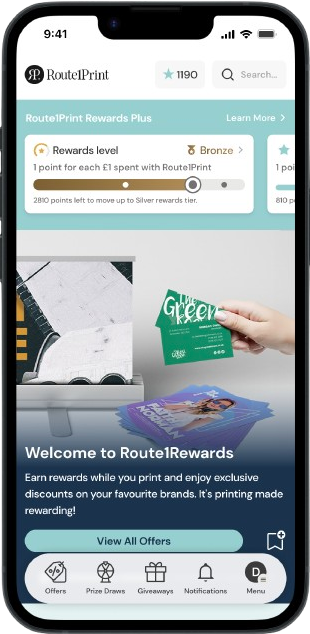
Route 1 Print launched its Propello Cloud-powered rewards programme in August 2024. Within months it was producing engagement figures that sit well outside B2B norms.
Platform adoption reached 80% of active users. The repeat redemption rate hit 72%. Active users averaged 5.5 redemptions each, saving £204.71 on average per redeeming user. For context: 25% of users redeemed e-gifts against a 3–4% industry average.
API integration removed manual point processing entirely. Weekly credit summary emails cut customer complaints about expired credit. Programme data now feeds directly into quarterly business reviews.
Most B2B Loyalty Programmes Fail Before They Launch
Not because the technology is wrong. Because nobody defined what success looks like before building the tiers, the rewards catalogue, the redemption flow.
The programmes that work, like the ones we’ve built with Warrantywise and Route 1 Print, start from the business outcome and design backwards. Dealer rewards tied to sales performance. Redemption made simple enough that people actually use it. Data that feeds straight into the reviews that matter.
That’s the difference between a loyalty scheme nobody logs into and one that changes how customers behave.
If you’re weighing up whether a B2B loyalty programme makes sense for your business, I’d rather talk through the specifics than sell you on generalities. Propello Cloud builds white-label loyalty platforms for B2B companies who need this done properly.
Contact us to discuss your specific needs and discover how we can help strengthen your customer relationships through proven loyalty solutions.
FAQs
How long does it take to launch a B2B loyalty programme?
It depends on complexity, but most well-scoped programmes move from planning to live within a few months. The biggest variable is integration: connecting the programme to your existing CRM, ERP or ordering systems usually takes longer than designing the rewards themselves. Starting with a clear, contained first phase is faster than trying to launch everything at once.
What types of B2B loyalty programmes are there?
The common models are points-based, tiered, and performance or volume-based. Points programmes reward spend or activity; tiered programmes unlock better benefits as customers move up levels; performance programmes reward specific behaviours like hitting sales targets. Many B2B programmes blend these rather than picking one.
How is a B2B loyalty programme different from a channel incentive scheme?
A channel incentive scheme typically rewards partners or resellers for short-term sales pushes, often around a specific product or quarter. A loyalty programme is built for the long term and rewards the ongoing relationship, not just the next deal. The two can overlap, but loyalty programmes are designed to change behaviour over time rather than spike it once.
Who in a B2B business should own the loyalty programme?
Ownership usually sits with marketing or customer success, but it works best when sales, operations and finance all have a stake in it. Because a B2B programme touches revenue, customer relationships and internal systems, a single isolated owner tends to struggle. Clear accountability with cross-team input is the practical middle ground.
Do B2B loyalty programmes work for small businesses, or only large enterprises?
They work for both, though the design differs. Smaller businesses often benefit from simpler, relationship-led programmes that reward repeat ordering, while larger organisations need more structure to manage tiers, multiple buyer types and complex integrations. The principle is the same; the scale and machinery behind it change.
What rewards actually motivate business customers?
Business buyers tend to value rewards that make their working life easier or their business perform better, rather than purely personal perks. That can mean priority service, early access to stock, training, account credit, or benefits they can pass on to their own customers. The most effective rewards connect to the reason they buy from you in the first place.
How do you measure whether a B2B loyalty programme is succeeding?
The clearest signals are retention, repeat order frequency and how actively customers use the programme. Adoption matters more than sign-ups: a programme people log into and redeem from is working, one they joined and forgot is not. Tying programme data back to actual account revenue is what separates a nice-to-have from a genuine business tool.
Can small B2B companies benefit from loyalty programmes?
Yes, smaller B2B companies can leverage loyalty solutions effectively. Programmes should scale appropriately, focusing on core benefits that drive customer retention and strengthen key partnerships.
Can a loyalty programme work alongside existing contracts and pricing agreements?
Yes, and it usually should. A loyalty programme is meant to sit on top of your commercial terms, not replace them, rewarding behaviour that negotiated pricing alone does not influence. The key is designing it so rewards do not quietly undercut margins already agreed in contracts.
How do you keep a B2B loyalty programme engaging over time?
Programmes lose momentum when they never change after launch. Refreshing rewards, adding new tiers or benefits, and communicating regularly keep customers paying attention. Reviewing the data to see what people actually redeem, then adjusting accordingly, is what stops a programme going stale.
Mark Camp
Mark is the Founder and CEO of Propello Cloud, an innovative SaaS platform for loyalty and customer engagement. With over 20 years of marketing experience, he is passionate about helping brands boost retention and acquisition with scalable loyalty solutions.
Mark is an expert in loyalty and engagement strategy, having worked with major enterprise clients across industries to drive growth through rewards programmes. He leads Propello Cloud’s mission to deliver versatile platforms that help organisations attract, engage and retain customers.
Start your customised Propello Cloud journey today
Explore the platform’s scalability, features and customisation options and get answers to your unique questions.