What Is a Hybrid Loyalty Program and How Does It Work?
27 min to read
Published: January 13, 2025
Updated: September 22, 2026
Hybrid loyalty programs combine multiple loyalty mechanics, most commonly points and tiers: points reward everyday spend instantly, while tiers unlock bigger benefits as members climb. The same approach can also fold in perks, referrals or gamification.
Mark Camp
CEO & Founder at PropelloCloud.com
Contents
Key Takeaways
A hybrid loyalty programme combines two or more reward mechanics, such as points, tiers, perks, referrals or gamification, into one connected system.
Combining mechanics lets one programme reward everyday shoppers and high-value members at once, stretching to fit the customer.
The best programmes blend digital reach with physical touchpoints, so members are recognised and rewarded consistently.
Members gain real choice in how they earn and redeem, while the business gains more touchpoints, richer data and stronger retention.
The main challenge is integration, getting clean data flowing between CRM, POS and the loyalty engine so the mechanics feel like one programme to the member.
Start with clear programme objectives and success measures first, then design the mechanics and roll them out in phases to protect adoption.
Treat the hybrid programme as a living product, tying the mechanics together, refreshing rewards before fatigue sets in, and monitoring engagement.
The real problem in building loyalty schemes was never which mechanic to pick. It’s that one mechanic rewards one kind of behaviour, from one kind of customer, at one moment in their journey. A hybrid loyalty program drops that ceiling. Combine mechanics and the programme stretches to fit the customer, not the other way round.
What Is a Hybrid Loyalty Program?
Hybrid loyalty programs run two or more reward mechanics as one connected system. That lets a single programme reward different customers for different things at once. Points might sit alongside tiers, perks, referrals or gamification, all sharing one member profile and one balance rather than running in separate silos.
I’ve seen brands set up a points scheme, a referral scheme and a VIP tier as three separate projects, owned by three separate teams, none of them talking to the other. The customer feels the seams every time.
A hybrid programme closes those seams. The mechanics stop competing for the same member and start feeding each other: the points balance nudges the next tier, the tier unlocks the better referral reward, the referral brings in a member who starts the loop again.
That’s the difference between a stack of different loyalty programme types and a loyalty ecosystem.
What Are the Key Components of a Hybrid Loyalty Program?
Every hybrid programme is built from three layers: digital mechanics, physical touchpoints, and the features that tie them together.
Digital handles reach and speed: points, apps, instant redemption. Physical handles what a screen can’t give: recognition, samples, and in-store treatment. The features decide how the two combine, through tiers, benefits and VIP perks.
Digital:
Points-Based Systems
A points system is easy to write off as a transaction counter. That’s a mistake. Points have earned their place over decades, and they keep it as long as they reward the individual rather than the average.
The moment every member earns the same for the same spend, whoever they are, the mechanic goes flat.
Mobile-First Design
Members reach for their phones first. In EY’s 2025 loyalty study, 64% of consumers said they would rather engage with a programme through an app than through email.
That makes the mobile experience the front door, not a feature you add later. If earning, checking a balance or redeeming takes more than a tap or two, most members won’t bother.
Digital Reward Redemption
This is where hybrid removes the oldest friction in loyalty: the wait to claim a reward. Members view, choose and redeem from their phone, at home, in a queue, or in the shop.
Earn in-store, redeem in the app, and enjoy it on the next visit. The loop never breaks, and an unbroken loop is what brings people back.
Personalisation Technology
This is the part single-channel programmes can’t copy. AI reads behaviour across the app and the shop floor at once, so a member who browses online then buys in-store is treated as one person, not two strangers. The right reward at the right moment, because the programme actually knows who it’s talking to.
Physical:
Physical Rewards and In-Store Recognition
A digital perk is convenient, but a physical one is memorable. A sample in the hand, an exclusive product, or a reward waiting at the till makes membership something a member can hold.
The shop floor adds the other half, recognition. A member walks in, their tier flashes up, and staff greet them with an offer that fits. Online can personalise, but only the store makes someone feel known in person, and that is what digital-only programmes miss.
The members-only offer hasn’t gone anywhere; hybrid just gives it a better route. The app flags an in-store exclusive, the member walks in to claim it, and a discount that once sat unread in an email now drives a visit.
Programme Features:
Reward Tiers & Levels
Points and tiers do different jobs at the same time. Think of a game: you collect coins to spend now, and you level up to unlock things you couldn’t reach before.
In practice that looks like earning 2 points per pound to spend on rewards today, while the same spending nudges you from Bronze to Silver and opens up priority service or exclusive access. Points reward the next purchase. Tiers reward the long haul.
Day-One Value
Not every reward should be locked behind a tier. The strongest hybrid programmes hand every member something from day one, a digital perk, a small tangible reward, a welcome that makes the app worth downloading.
That early value is what turns a sign-up into a habit before the tier climb even starts.
Exclusive VIP Offerings
The top tier has to feel like a premium experience, not just a bigger discount.
Early access to a product drop, an invite to a members-only event, a service that skips the queue: the mix of digital exclusivity and real-world treatment is what makes the climb worth it.
If the summit looks like base camp with a badge, nobody climbs.
Non-Transactional Rewards
Don’t stop at rewarding transactions alone. A member who shares your brand, joins the community, or picks the sustainable option is showing a kind of commitment a purchase never captures.
Reward those actions and you widen what loyalty means, from what someone spends to how they show up. It also happens to be where the deepest emotional connections get built.
What Are the Benefits of a Hybrid Loyalty Program?
Hybrid programmes pay off on both sides of the counter. Members get choice: instant rewards, status perks or experiences, earned through whatever channel suits them. Businesses get the follow-on: more touchpoints, higher engagement, richer data and stronger retention.
One programme doing several jobs beats several programmes each doing one.
For members:
Enhanced Engagement Opportunities
A single-channel programme only works where it lives. Hybrid meets members on whatever channel they already use, the app, the website, the shop floor, a social feed, so taking part never means going out of their way.
Flexible Reward Options
Choice is the whole point. One member wants the instant discount, another is saving for the experience, a third just likes free delivery. A hybrid programme lets each of them redeem the way they want, instead of forcing one reward on everyone and hoping it lands.
Personalised Experience
Recognition that follows the member. Online or in store, the programme knows who they are and what they tend to want, so the offers feel picked for them rather than blasted at everyone.
Value-Added Services
The best programmes stop being a rewards scheme and start being a reason to stay. Priority service, early event access, small removals of everyday friction: perks that make membership feel like a status, not a loyalty card in a drawer.
For the business:
Increased Customer Retention
More mechanics mean more reasons to come back. Every points balance, tier and perk is another thread tying the member to the brand, and the more threads there are, the harder it is to walk away.
Retention stops being something you chase and becomes something the structure produces.
Higher Engagement Rates
Give people more ways to earn than just spending and they show up more often. That matters commercially, not just cosmetically.
Gallup puts a number on it: a fully engaged customer is worth a 23% premium over the average one across share of wallet, profitability, revenue and relationship growth. Engagement isn’t a soft metric. It’s the one that moves the others.
Improved Brand Loyalty
Convenience earns the habit; human touch earns the feeling. Put both in one programme and the relationship stops being purely transactional. People stay with brands they’d miss, not just brands they’re enrolled in.
Enhanced Customer Insights
One programme across every channel means one clean view of the member, the whole pattern in one place instead of fragments scattered across a points system here and an app there. That single view is what makes the personalisation above actually possible.
What Are the Challenges of Implementing a Hybrid Loyalty Program?
Most hybrid programmes fail on the integration, not the idea. The hard part is making two sets of mechanics behave as one: clean data flowing between CRM, POS and the loyalty engine, a platform that runs points and tiers together, and a team that can explain both to a member without missing a beat.
Programme Integration
This is the foundation, and the place most programmes crack. Points earned at the till, in the app and online all have to land in one member record, which means clean data moving between your CRM, POS and loyalty engine.
Most brands are already there: Deloitte found 64% have built loyalty into the point of sale. Getting it to work end to end is the real test.
Platform Selection
The wrong platform reveals itself a year in, when you try to add a mechanic it was never built to carry. Pick one that runs points, tiers and whatever comes next side by side, and bends to your business rather than boxing you in.
Data Management
Every channel is a data source: online browsing, in-store purchases, app activity and more. Pulling it into one view is what powers personalisation, but it also raises the stakes on security. Handle it in line with data regulations, or you lose the trust the programme was built to earn.
System Requirements
Real-time is not optional here. Redemptions, tier updates and cross-channel recognition all have to happen in the moment, at whatever volume a busy day throws at them. A programme that lags when it matters teaches members to stop bothering.
Cost Management
Platform fees are the part everyone budgets for. The rewards, the staff time, the training and the ongoing tuning are the part that catches people out. The real question isn’t the full cost of a loyalty programme; it’s whether the retention it buys is worth more than the spend.
Resource Allocation
A hybrid programme is not a set-and-forget campaign. It needs owners across IT, customer service and marketing, each clear on what they’re responsible for. Leave it as everyone’s job and it quietly becomes no one’s.
Staff Training
Front-line staff are where the programme meets the member. If they can’t explain how points convert or why a tier matters, the best-designed scheme stalls at the counter. Train for both sides: the mechanics and the conversation.
Communication Strategy
Members can’t use what they don’t understand. Tell them plainly how to earn, how to redeem and where they stand, then keep telling them as things change. Adoption lives and dies on how well the programme explains itself.
How Do You Build a Hybrid Loyalty Program?
Build it in order: decide what the programme is for, how you’ll measure it, then design the mechanics to match. Objectives tied to a real business problem, metrics that prove progress, the people and budget to deliver, then the tiers, rewards and touchpoints built around all three.
Skip the planning and you design in the dark. A fuller build guide covers the whole sequence step by step.
Set Programme Objectives
Start with the business problem, not the mechanic. Retention? Higher spend? Reactivation? The answer decides everything downstream, so make the objective specific, measurable and time-bound rather than “more loyalty”. Vague goals produce vague programmes.
Define Success Metrics
Decide how you’ll know it’s working before launch, not after. Track both sides of the programme: points activity and redemption on the instant side, tier progression and retention on the long-game side. One without the other hides half the picture.
Allocate Resources
Map the teams, tech and budget the programme will actually need, digital capability and physical touchpoints both. A loyalty ladder helps here: it plots how members move from first purchase to advocate, which tells you what to reward at each rung.
Develop a Timeline
Create a phased roll-out plan to test and refine before the whole thing is live, and it’s usually smartest to launch the instant rewards first to build momentum, then add tiers once members are engaged. Rushing the full programme to market is a reliable way to kill adoption.
Decide on Your Programme Structure
Give the tier system a clear progression path. Blend points or Always On rewards with tier progression so both feel worth chasing: the points for the quick win, the tiers for the status. Members should always know where they stand and what’s next.
Set up Reward Mechanics
Balance the reward mix. Some rewards should land instantly, others should be worth saving for. Instant gratification keeps daily engagement up; bigger, slower rewards give members a reason to stay in it. A programme that only does one runs out of pull.
Add Engagement Features
Build in more than one way to take part. Interactive touchpoints across app, web and store, challenges, streaks, progress bars, keep members doing something between purchases, which is where most programmes go quiet.
How Do You Launch a Hybrid Loyalty Program?
Getting started comes down to two decisions: who you build with and how you switch it on. Choose a technology partner that fits your industry and your stack, not just the one with the longest feature list. Then launch in stages: prove the foundations, brief the people running it, and watch the early numbers closely.
Choose a Technology Partner
The platform matters, but the partner behind it matters more. Brands that rush this hit integration headaches a year later.
Look past the feature list for a supplier that knows your industry, has launched programmes like yours, and grasps the strategy as well as the software.
And weigh what happens after go-live: maintenance, guidance and fast issue resolution are part of the deal, not an afterthought.
Map Integration Requirements
Before you sign, map how the platform will sit in your stack. It has to talk to your CRM, your e-commerce platform and your in-store systems, run points and tiers together, and scale as you grow.
A strong API and proven scalability are the difference between a platform you extend and one you replace.
Design Programme Roll-out
Define the technical and operational roadmap before anything goes live. Validate the foundations first, earning, redemption and data flow, and only layer on the more complex mechanics once each stage has proven itself in the real world.
A launch that skips validation just moves the bugs closer to your members.
Optimise Stakeholder & Member Communication
Launch has two audiences: the stakeholders signing it off and the members you want using it.
Stakeholders need the business case, the USPs and the numbers. Members, especially in B2B, respond to a live walk-through far better than a leaflet, show them the instant rewards and the tiers they can unlock rather than describing them.
Ensure Team Readiness
Your team goes live too. Beyond knowing the mechanics, whoever runs the programme needs the operational scaffolding: documented procedures, a clear route for resolving issues, and a change-management plan for when things shift.
Day-one confidence comes from preparation, not improvisation.
What Are the Best Practices for Running a Hybrid Loyalty Program?
The best hybrid programmes get managed like products, with a roadmap and a standing to-do list. Keep the mechanics pulling together: tie your points, tiers, referrals and gamification to each other so climbing one lifts the others.
Scale service with status, refresh rewards before fatigue sets in, and give members reasons to engage between purchases.
Align the Mechanics
The value is in the flow between them. A points balance nudges the next tier, a tier unlocks a better referral reward, a referral challenge feeds the points balance, gamified streaks keep all three ticking over.
Tie each mechanic to the behaviours that advance the others and they reinforce each other instead of competing. However, watch the signals: members claiming instant rewards but never climbing is a sign a tier benefit isn’t pulling its weight.
Scale Service With Status
As members progress, the service should advance with them. Set clear response standards, give higher tiers their own channels, and let the platform flag members as they near a threshold so the next tier feels within reach.
Status that comes with better treatment is status worth chasing.
Build Community
Members who feel part of something stay longer than members who don’t. Tier-specific events, forums, or early-access groups give people a room to be in, not just a balance to watch. Belonging is the reward points can’t buy.
Keep It Fresh
Programme fatigue is real and preventable. Refresh instant rewards often and evolve tier benefits gradually so you’re raising the member value proposition over time.
Additionally, run seasonal challenges that combine several mechanics: a gamified streak that earns bonus points or a referral window with a limited-time reward. The trick is changing enough to keep interest high and members participating.
Encourage Participation
Most members won’t engage unprompted. The nudge that works is personal and timely: tier progress, a reward about to expire, a referral bonus worth more this week, a challenge that fits their habits.
Each reminder turns a passive member into an active one. Every prompt should feel worth opening, or it trains people to ignore the next.
How Do You Measure the Success of a Hybrid Loyalty Program?
Measure both halves of the programme, and go past sign-ups. The numbers that matter are engagement depth (are members using both instant rewards and tiers?), retention over time, and the commercial return: revenue, purchase frequency and order value against what the programme costs.
Track those, feed in member feedback, and adjust on what you see.
Engagement Depth
Participation counts tell you people joined, not that the programme works. Look at how members engage across both elements: redemption patterns on the instant side and tier progression on the long side.
A member claiming rewards weekly but never climbing engages differently from one steadily working up the tiers, and the mix tells you which features pull and which need work.
Customer Retention
Long-term loyalty shows up as sustained activity, not just a login count. Track how long members stay active and how their behaviour shifts over time: rising tiers, more frequent interaction, deeper engagement.
Those trends are what real programme stickiness looks like, and where you catch drift before it becomes churn.
Programme Adoption
Sign-ups are the start of the story. Watch how fast new members begin participating and which features draw them in first, because that tells you where onboarding is working and where it’s leaking.
A strong early experience is the difference between a member who sticks and one who lapses in month one.
ROI Analysis
Revenue alone doesn’t prove a programme pays.
Set programme cost against member value, and count the indirect returns too: higher purchase frequency, bigger average order, and longer lifetimes. A programme that looks expensive on rewards can still win handily once you price in what retained members are worth.
Turning Data Into Changes
Measurement only earns its keep when it changes something. Review the performance indicators on a regular cycle and pair them with member feedback so you catch what the numbers miss.
Use the data you collect to make small, informed adjustments: reward values, tier thresholds, or a feature that isn’t landing. The programmes that last tend to keep evolving with their members.
What Do Successful Hybrid Loyalty Programs Look Like?
Across the programmes that last, three things show up every time: digital and physical working as one, instant rewards actually worth claiming, and a clear path to better status. The examples below all do these three well, and each adds something of its own.
Sephora’s Beauty Insider
Beauty Insider works on every level of the ladder. Entry members earn points and sampling straight away; as they climb to VIB (Very Important Beauty Insider) and Rouge, the benefits get richer.
The clever part is how the digital and physical halves meet: members track progress and redeem in the app, then get personalised consultations in-store. The tier you hold follows you across both.
Nordstrom’s Nordy Club
Here’s what caught my attention about Nordstrom’s approach: they’ve mastered the art of blending transactional and experiential rewards.
Membership starts with points on spend, but climbing unlocks the experiential side: priority access to sales, and styling services that turn a shop into a personal appointment. Mobile features sit alongside personal shopping, so digital convenience adds to the relationship rather than flattening it.
Astrid & Miyu’s Club A&M
The jewellery brand’s Club A&M is the clearest proof that hybrid runs past points and tiers. Members earn on spend and climb tiers for early access and event invites, but the programme also rewards what happens away from the till: points for recycling old jewellery through Astrid & Renew, points for following the brand socially.
Earn online, redeem in-store, and back again. It’s loyalty built around the whole relationship, and it skews younger for exactly that reason.
What’s Next for Hybrid Loyalty Programs?
Two forces are shaping the future of hybrid loyalty: better technology and higher expectations. Here’s where things are heading.
Emerging Technologies
AI and machine learning are changing how programmes read and predict member behaviour, pushing personalisation past basic segmentation into something that adapts in real time.
The caution worth keeping: these tools should sharpen the human side of loyalty rather than replace it. The brands that win will automate the admin and protect the moments that actually make a member feel recognised.
Customer Behaviour Changes
Today’s consumers expect a seamless experience across every channel, and they increasingly want more than a transaction.
The pull is toward rewards that align with what people care about: their values, their interests, how they want to live. Reading those preferences and moving with them is fast becoming the difference between a programme people keep and one they forget.
Industry Developments
The market is shifting toward engagement-led models, and interest in partnerships is growing as brands widen what a single membership is worth.
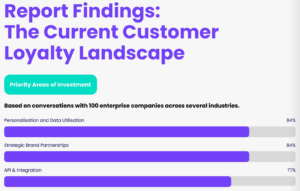
In our 2025 Loyalty Uncovered report, 84% of the 100 enterprise brands we spoke to ranked strategic brand partnerships among their priority areas for investment.
The logic is simple: one membership that reaches across brands is worth more than one that stops at your own tills. Tier structures are getting simpler too, with clearer paths to benefits that mean something.
Where the smart money is going next:
Zero-party data gathered through interactions members actually enjoy
Sustainable reward options that match how people want to spend
Community features that connect members to each other, and to the brand
Predictive analytics that meet a need before the member raises it
The through-line is the one running under this whole guide: loyalty is becoming an ecosystem of value that grows with its members. The brands that lead will pair new technology with a stubborn focus on being genuinely worth joining.
The Real Power of a Hybrid Loyalty Program
Hybrid loyalty is where customer engagement is heading, because it stops forcing a single mechanic to do a job that takes several.
Points, tiers, perks, referrals and gamification, woven into one programme, consistently outperform the single-mechanism schemes they replace. I’ve watched it happen across enterprise brands: give members more than one reason to stay, and more of them do.
The win is in the balance. Immediate rewards against long-term status, digital convenience against human connection, operational efficiency against genuine member value. Get those balances right and the programme flexes to fit real people, instead of the other way round.
Expectations will keep shifting. Hybrid gives you the room to move with them, and the results follow.
FAQs
What is the difference between a points-based and a tiered loyalty programme?
Points programmes reward customers in proportion to what they spend, and everyone earns at the same rate. Tiered programmes reward status: members climb levels based on spending or engagement and unlock better benefits at each one. Points drive frequent, everyday activity; tiers give members something to work towards over time. A hybrid programme runs both, so it captures each without choosing between them.
Is Starbucks Rewards a hybrid loyalty programme?
Yes, it layers three mechanics into one scheme: Stars earned on spend (points), status levels (tiers), and personalised challenges (gamification). Members collect and redeem Stars for everyday rewards while working towards higher status and completing time-limited challenges that keep them active between visits. It’s a clear illustration of several mechanics reinforcing each other in a single programme.
Which industries are best suited to a hybrid loyalty programme?
Hybrid programmes fit brands with a mixed customer base, where some people buy often and others spend occasionally but at higher value. Retail, beauty, fashion, hospitality, telecoms and membership businesses all tend to benefit, because a single mechanic rarely satisfies every segment. Any sector where customer needs and spending patterns vary widely is a strong candidate.
Can a small business run a hybrid loyalty programme, or do you need an enterprise budget?
You don’t need an enterprise budget. Most hybrid mechanics can be layered gradually, often starting with points and adding a simple tier or a referral reward as the programme grows. The bigger requirement is a platform flexible enough to run more than one mechanic and connect to your existing systems. Starting small and expanding is usually the smarter path anyway.
Can you turn an existing points programme into a hybrid one?
Yes, and it’s a common route. Many brands begin with points, then add a tier structure, referrals or gamification once they understand how members behave. The key is keeping the earning and balances your members already recognise intact, so the shift feels like an upgrade rather than a reset. Introduce the new mechanic in stages and be clear about what has changed.
How do you keep a hybrid loyalty programme from becoming too complicated for customers?
Simplicity is a design choice. Members should be able to explain how the programme works in a sentence: how they earn, what tiers mean, and what they get. Keep the number of mechanics manageable, make progress visible, and lead with the reward rather than the rules. If members can’t see what’s in it for them at a glance, engagement drops, no matter how clever the design.
What reward mechanics can you combine besides points and tiers?
Plenty. Alongside points and tiers, hybrid programmes often fold in perks and members-only benefits, referral rewards, gamified challenges and streaks, paid membership options, and value-based rewards for actions like sustainability or community involvement. The aim is to pick the two or three that match how your customers actually want to engage, rather than using every mechanic at once.
Can you include a paid membership tier in a hybrid loyalty programme?
Yes. A paid tier can sit alongside free earning, giving members the choice to pay for enhanced benefits such as faster shipping, exclusive access or premium rewards. It works best when the free programme already delivers clear value, so the paid option feels like a genuine upgrade rather than a paywall on the basics. Many brands run a free points-and-tiers core with an optional paid membership on top.
How is a hybrid loyalty programme different from an omnichannel loyalty programme?
They describe different things. Hybrid refers to the reward mechanics you combine, such as points, tiers and referrals. Omnichannel refers to where members can use the programme, online, in-app and in-store, as one connected experience. A programme can be one, the other, or both, though the strongest hybrid programmes are usually omnichannel too, because a single member profile across every channel is what lets the mechanics work together.
How long does it take to launch a hybrid loyalty programme?
It depends on how much you build at once. A phased launch, starting with a single mechanic like points and adding tiers or referrals later, can go live relatively quickly and lets you test the foundations before scaling. A full programme with several mechanics and deep integration takes longer, mostly because of the technical work connecting your CRM, POS and loyalty platform. Planning and integration, rather than the reward design, usually set the timeline.
Mark Camp
Mark is the Founder and CEO of Propello Cloud, an innovative SaaS platform for loyalty and customer engagement. With over 20 years of marketing experience, he is passionate about helping brands boost retention and acquisition with scalable loyalty solutions.
Mark is an expert in loyalty and engagement strategy, having worked with major enterprise clients across industries to drive growth through rewards programmes. He leads Propello Cloud’s mission to deliver versatile platforms that help organisations attract, engage and retain customers.
Start your customised Propello Cloud journey today
Explore the platform’s scalability, features and customisation options and get answers to your unique questions.