Customer Loyalty Trends: 12 Game-Changers for 2026
25 min to read
Published: December 6, 2022
Updated: April 1, 2026
Every year, new advancements in the field of customer loyalty are brought about by changes in consumer behaviour, technological advancements, and outside influences like the economic climate and socially conscious initiatives, which compel businesses to reconsider their approaches to building brand loyalty. Here, we’ve compiled a list of top customer loyalty trends.
Mark Camp
CEO & Founder at PropelloCloud.com
Contents
Key Takeaways
Focus on creating personalised moments that make each customer feel truly understood.
Choose technology solutions that can grow and adapt with your programme's evolving needs.
Create seamless experiences across all channels to maintain consistent engagement.
Make your programme mobile-friendly to meet customers where they already spend their time
Rewards need to be instantly accessible and easy to use.
Strategic partnerships help you create unique value propositions that set your programme apart.
Use tiered programmes to motivate customer progression while recognising their achievements.
Build sustainability into your core loyalty strategy rather than treating it as an add-on feature.
Customer loyalty is undergoing a fundamental shift. According to Propello Cloud’s Loyalty Uncovered Report, based on conversations with 100 enterprise brands, 83% of businesses are struggling with customer engagement and 80% are grappling with churn management. Traditional points-based programmes are no longer enough to keep customers loyal.
The trends shaping loyalty in 2026 reflect a market in transition. Brands are moving away from transactional mechanics toward personalised, experience-led programmes that build genuine emotional connections. The data is clear: 84% of businesses now prioritise personalisation and strategic partnerships as their top investment areas.
This article explores the 12 customer loyalty trends defining success in 2026, what the data says about each one, and what they mean for your programme strategy.
The 12 customer loyalty trends covered in this article:
Always-on rewards and instant gratification
Strategic brand partnerships
Personalised customer experience
Tiered loyalty programmes
Gamification
AI and machine learning
Mobile-first strategies
Sustainability and green loyalty
System integration and API strategy
Experiential rewards
The build or buy decision
Hybrid loyalty programmes
What Does the Current Customer Loyalty Landscape Look Like?
Loyalty is undergoing a fundamental shift as we continue through 2026. Our Loyalty Uncovered Report, an analysis of conversations with 100 enterprise brands, reveals a market in transition. Traditional loyalty approaches are changing to meet rapidly evolving consumer expectations.
Where Does Customer Loyalty Stand Right Now?
Today’s loyalty programmes face unprecedented challenges in customer retention, with 83% of businesses struggling with engagement and 80% grappling with churn management. You simply cannot afford to rely solely on purchase points and rewards.
Earning customers’ loyalty now requires building meaningful connections that transcend basic transactional relationships.
The numbers speak for themselves: 84% of businesses now prioritise personalisation and strategic partnerships, understanding that modern loyalty needs a delicate balance of value, emotion and execution. Traditional point-based systems now give way to innovative solutions that reflect a greater understanding of what keeps customers loyal.
How Has Modern Consumer Behaviour Changed?
Customer loyalty programmes face unprecedented pressure in 2026. Engagement has become the number one challenge, cited by 83% of businesses in Propello Cloud’s Loyalty Uncovered Report, with 37% rating it a critical concern. Churn management follows closely, affecting 80% of businesses.
The market’s response is clear: investment priorities have shifted decisively toward personalisation, partnerships, and technology-enabled engagement.
Where are businesses investing in loyalty right now?
According to the Loyalty Uncovered Report, the top investment areas by adoption rate are:
Investment Area
Adoption Rate
Personalisation and strategic partnerships
84%
API integration and mobile-first strategies
77%
Real-time rewards and instant gratification
75%
Experiential rewards
74%
Build vs buy (preference for outsourcing)
69%
Gamification
65%
AI and machine learning
62%
Sustainability
52%
The data points to a clear strategic direction: modern loyalty programmes must balance immediate transactional value with longer-term emotional engagement, underpinned by robust technical infrastructure.
How has modern consumer behaviour changed?
Today’s consumers expect three things from loyalty programmes: digital-first experiences, value beyond transactions, and genuine personalisation. These are no longer differentiators. They are baseline expectations.
84% of businesses are investing in personalisation capabilities in direct response to consumers who increasingly view tailored experiences as a minimum standard, not a premium feature. Meanwhile, 74% are focusing on experiential rewards, recognising that emotional connections drive long-term retention in ways that discounts alone cannot.
Which Customer Loyalty Trends Will Define Success in 2026?
The following 12 trends reflect how enterprise brands are reforming their loyalty strategies. Each is drawn from the Loyalty Uncovered Report’s analysis of 100 enterprise brands across retail, B2C SaaS, leisure and travel, utilities and telecoms, financial services, and insurance.
Always-on rewards are a loyalty programme model that delivers continuous, immediate benefits to members without requiring them to reach spending thresholds. According to the Loyalty Uncovered Report, 75% of businesses now prioritise real-time rewards and instant gratification in their investment strategies.
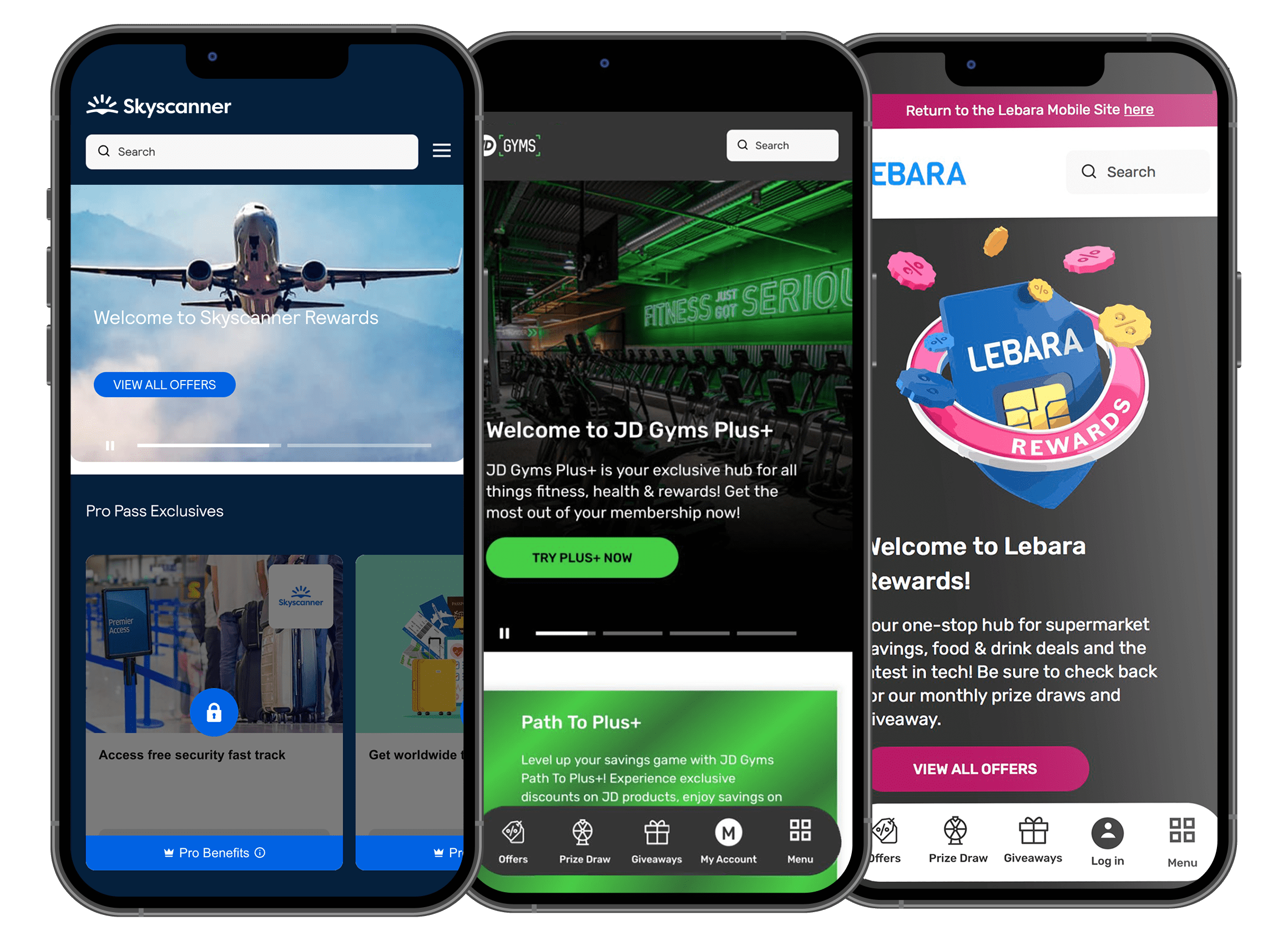
Modern technology has conditioned consumers to expect immediacy. Immediate discounts, sign-up bonuses, and always-available perks give members a reason to stay engaged between purchase cycles. Lebara Mobile, for example, expanded its rewards catalogue from 15 to over 100 brand partnerships after moving to a specialist platform, giving members 24/7 access to benefits with no earning thresholds.
Key takeaway: Customers who receive immediate value are more likely to remain engaged. Always-on rewards remove the friction of “earning” before benefiting, which directly addresses the engagement challenge faced by 83% of businesses.
2) How Can Strategic Brand Partnerships Strengthen Loyalty?
Strategic brand partnerships allow businesses to extend their loyalty value proposition beyond their own product range by co-creating rewards with complementary brands. This is now the joint top investment priority, alongside personalisation, for 84% of businesses.
The strongest partnerships are those with natural audience alignment. When a telecoms brand partners with a tech retailer, or a fitness brand aligns with a nutrition provider, the rewards feel relevant rather than generic. According to Lee Metters, partnerships expert at AWIN, well-aligned partnerships create multiple meaningful touchpoints that strengthen loyalty over time, rather than generating one-off transactions.
For programme operators: partnerships diversify the rewards experience and drive engagement between purchase cycles
For partner brands: access to highly engaged, premium audiences through trusted platforms
For members: exclusive offers that feel personally relevant
Outsourced loyalty platforms with established partner networks can significantly reduce the time and cost of building these relationships from scratch.
3) Why Is a Personalised Customer Experience So Important?
Personalisation is the top investment priority for enterprise loyalty programmes in 2026, tied with strategic partnerships at 84% adoption. Personalisation means using customer data to deliver rewards, communications, and experiences that are relevant to each individual, not broad customer segments.
Today’s personalisation goes far beyond adding a customer’s name to an email. Businesses that excel at loyalty use behavioural data to recommend relevant products, trigger timely rewards, and anticipate needs before they arise. According to Nathan Armstrong, Loyalty Consultant at Propello, dynamic segmentation based on real-time behavioural data is far more effective than static demographic profiles, which “don’t tell us much.”
The critical priority rating for personalisation sits at 36% among the businesses surveyed, reflecting how deeply embedded it has become in loyalty strategy. Customers who feel understood are more likely to engage, share preferences, and become brand advocates.
4) How Do Tiered Loyalty Programmes Drive Engagement?
A tiered loyalty programme is a structured rewards system that offers increasing benefits as customers reach higher levels of engagement or spend. According to the Loyalty Uncovered Report, 67% of businesses have implemented tiered reward systems.
Tiered programmes tap into customers’ natural desire for achievement and status. The incentive to progress creates a compelling reason to choose your brand over competitors. Vitality’s insurance loyalty programme demonstrates this well: by linking tier progression to healthy behaviours and integrating with wearables, they created a virtuous cycle of engagement that simultaneously improves their risk profile.
Effective tiered programmes also enable better customer segmentation. By categorising members into tiers based on purchase history, businesses can deliver personalised promotions at each level and use milestone communications to keep members motivated.
5) What Role Does Gamification Play in Customer Loyalty?
Gamification is the application of game-design mechanics, such as challenges, progress tracking, and reward reveals, to loyalty programmes to drive active participation. 65% of brands now prioritise gamification as a way to build stronger emotional connections with their audience.
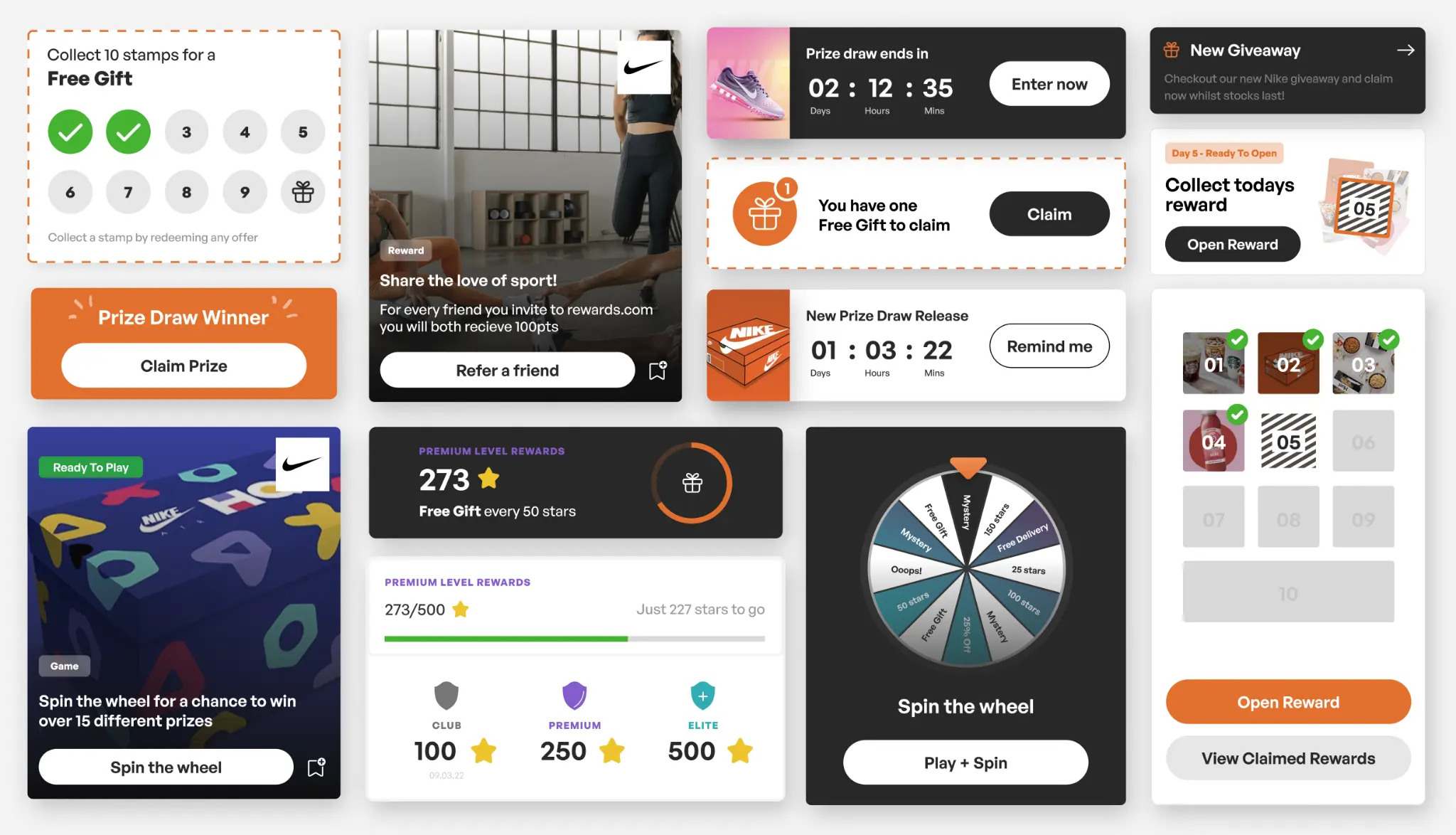
Signing a customer up to a loyalty programme does not guarantee they will use it. Points and discounts alone rarely sustain engagement. Gamification solves this by making participation feel rewarding in itself. Mechanics like scratch-to-win, reward calendars, and streak-based challenges create moments of excitement that keep members returning.
According to Mark Camp, CEO at Propello Cloud, AI is now enabling real-time personalisation of gamified experiences. Instead of one-size-fits-all challenges, AI can adapt difficulty levels and recommend challenges based on individual behaviour, making gamification significantly more effective.
6) How is AI Changing Customer Loyalty Programmes?
AI and machine learning in loyalty programmes refers to the use of predictive algorithms and behavioural data to automate personalisation, identify churn risk, and dynamically serve rewards. 62% of businesses now invest in AI and machine learning capabilities to elevate the customer experience.
The most impactful applications include:
Churn prediction: AI analyses patterns such as reduced purchase frequency or lower reward redemption to flag at-risk customers before they leave
Hyper-personalisation: instead of broad segments, AI creates millions of unique customer journeys simultaneously
Dynamic gamification: AI adapts engagement mechanics in real time based on individual behaviour
AI does not replace human interaction. It enables businesses to understand customers more deeply and deliver experiences that feel natural and relevant. The B2C SaaS and Technology sector leads adoption here, with 66% of businesses in that sector investing in AI capabilities.
7) Why Should Businesses Adopt Mobile-First Strategies?
A mobile-first loyalty strategy means designing the entire customer experience, from rewards access to support, primarily for mobile devices. 77% of businesses are prioritising mobile experiences in their loyalty investment, with approximately one-third rating this investment as critical to their roadmap.
Mobile devices are the dominant touchpoint for customer interactions. Consumers expect seamless, app-like experiences when engaging with a loyalty programme, whether through a mobile website, dedicated app, or digital wallet. A mobile-first approach is not simply about responsive design. It requires rethinking navigation, load times, push notifications, and omnichannel consistency.
Plug-and-play loyalty platforms with built-in mobile-first capabilities allow businesses to implement mobile-optimised solutions with minimal development effort, making this a relatively accessible investment despite its high strategic value.
8) How Do Sustainability and Green Loyalty Build Trust?
Sustainable loyalty programmes embed environmental responsibility into reward mechanics, encouraging members to adopt eco-friendly behaviours in exchange for benefits. 52% of businesses plan to incorporate sustainability into their loyalty strategies in 2026.
Consumer demand is driving this shift. According to a Mando-Connect and YouGov study, over 71% of British citizens agree that loyalty programmes should encourage or directly promote environmentally friendly behaviour. Costa Coffee’s loyalty programme illustrates the practical approach: offering extra points to customers who bring reusable cups makes sustainability a habit rather than a statement.
Sustainability initiatives in loyalty programmes carry a relatively low implementation cost and timeline, making them an accessible differentiator for brands seeking to build emotional connections around shared values.
9) Why are System Integration and API Strategy Critical?
API integration in loyalty refers to the technical connections between a loyalty platform and other business systems, including CRMs, payment platforms, and e-commerce tools. 77% of businesses prioritise API and integration investments, yet 81% still identify API integration as one of their biggest challenges.
This gap between intent and execution is significant. Technical hurdles directly impact the ability to deliver seamless experiences, which explains why 77% of the same businesses also struggle with multi-channel consistency. When loyalty data cannot communicate with CRM or analytics systems, businesses lose visibility of customer behaviour and cannot respond with relevant rewards.
There are two primary approaches:
Headless API solutions: high flexibility, higher cost and implementation time, suitable for businesses requiring a bespoke loyalty ecosystem
Experiential rewards are non-transactional benefits, such as VIP event access, behind-the-scenes tours, or early product launches, that create memorable moments rather than financial discounts. 74% of businesses now incorporate experience-based rewards into their loyalty strategies.
Experiential rewards work because they create memories, and memories are harder to replace than a discount code. The key to effectiveness is relevance: a reward that aligns with an individual customer’s interests creates a moment they associate with your brand long after the experience ends.
The strongest programmes blend headline experiences with smaller everyday perks, maintaining consistent engagement rather than spiking around a single annual event. This approach also caters to diverse member preferences across the full membership base.
11) Should You Build or Buy Your Loyalty Platform?
The build vs buy decision in loyalty refers to whether a business develops its loyalty platform in-house or partners with a specialist outsourced provider. According to the Loyalty Uncovered Report, 69% of businesses prefer outsourced solutions, with speed-to-market identified as the decisive factor.
Building in-house offers total control but comes with significant costs: longer development timelines, dedicated technical resources, and ongoing responsibility for maintenance, updates, and security. Outsourced platforms have already been built, tested, and refined across multiple clients. Businesses that go this route launch faster and scale more easily.
Lebara Mobile’s experience is instructive. After moving to an outsourced specialist platform, Lebara launched within 12 weeks, acquired 100,000 members in two months, expanded from 15 to over 100 brand partnerships, and achieved a 3x reduction in operational running costs.
The cost argument: an in-house build may appear cheaper upfront, but the true cost includes ongoing updates, security maintenance, and the opportunity cost of tying up internal teams. Outsourced platforms spread these costs across their client base.
12) What are Hybrid Loyalty Programmes and Why Do They Work?
A hybrid loyalty programme combines digital and physical reward mechanics into a single, unified customer experience. 68% of businesses now use this approach, making it one of the most widely adopted programme structures.
Hybrid programmes work because they remove friction from the customer journey. Rather than separate online and offline reward systems, customers get one cohesive experience across every touchpoint. A member can earn points through a mobile app and redeem them in-store, or browse rewards online and collect them in person.
The real strength of hybrid programmes is flexibility. Not every customer interacts with a brand the same way, and their preferences can change depending on the occasion. A hybrid model accommodates this without fragmenting the loyalty strategy into multiple disconnected schemes. It also future-proofs the programme: as new channels emerge, the structure can adapt without a full rebuild.
What Are the Key Challenges Businesses Face with Loyalty Programmes?
Understanding the investment trends is only half the picture. The Loyalty Uncovered Report also reveals the challenges that are preventing businesses from executing on their loyalty ambitions.
The top challenges, ranked by overall concern level, are:
Challenge
% of businesses affected
% rating it critical
Customer engagement
83%
37%
API integration complexity
81%
35%
Churn management
80%
35%
Data privacy and compliance
78%
34%
Multi-channel consistency
77%
34%
Resource constraints
76%
33%
Market competition
75%
33%
The pattern matters: customer engagement, API integration, and churn management all show remarkably similar critical ratings (34-35%). Businesses are not facing one dominant problem. They are grappling with multiple high-priority challenges simultaneously.
This is precisely why 69% of businesses prefer outsourced loyalty solutions. Speed-to-market is the decisive factor: outsourced platforms allow businesses to launch faster, scale more easily, and avoid the resource drain of in-house development, freeing internal teams to focus on strategy rather than maintenance.
What Do These Customer Loyalty Trends Mean for Your Strategy?
The 2026 loyalty landscape rewards businesses that move beyond transactional mechanics and invest in experiences, personalisation, and technical infrastructure. The data from the Loyalty Uncovered Report points to a clear set of strategic priorities.
The most successful programmes share common characteristics: they deliver immediate value, they personalise at scale, they operate seamlessly across channels, and they use partnerships to extend their reward proposition beyond what any single brand could offer alone.
For businesses still evaluating their approach, the build vs buy question is largely settled. 69% of enterprise brands now prefer outsourced solutions because they launch faster, scale more reliably, and cost less over the lifetime of the programme than in-house development.
Ready to explore what a modern loyalty programme looks like in practice? Download the Propello Cloud Loyalty Uncovered Report for the full data, expert Q&As, and case studies from JD Gyms, HelloFresh, Lebara, Vitality, and American Express.
FAQs
What are the emerging customer loyalty trends anticipated for 2026?
Loyal customers expect instant gratification and personalised offers in 2026. Businesses are focusing on micro-targeting through AI, sustainable practices, and premium loyalty programmes. The emphasis is on creating tailored experiences across multiple communications channels to build trust and increase engagement.
How will AI-driven personalisation impact customer loyalty programmes in 2026?
AI will enable support teams to deliver hyper-personalised experiences by analysing individual preferences and behaviour patterns. This technology helps predict customer needs, automate communications channels, and create targeted offers that increase conversion rates while maintaining genuine human connections.
What role will emotional and experiential loyalty play in customer retention strategies?
Customer experience (CX) is shifting from transactional to emotional connections. Businesses are offering exclusive events, early access, and meaningful experiences to satisfied customers. These tailored experiences create stronger bonds than traditional points-based systems, leading to authentic brand advocacy.
How are sustainability and purpose-driven initiatives influencing customer loyalty?
Sustainability initiatives help build trust with environmentally conscious customers. Programmes that reward eco-friendly choices and support meaningful causes attract new customers while retaining existing ones. Purpose-driven loyalty creates deeper connections through shared values.
What is the significance of subscription-based loyalty programmes in the coming years?
Premium loyalty programmes offering immediate, high-value benefits are gaining traction. While traditional programmes remain free, subscription models provide enhanced experiences and exclusive rewards. This approach increases ROI by converting satisfied customers into brand advocates.
How can businesses enhance data security and fraud controls within loyalty programmes?
Omnichannel security measures protect customer data across all touchpoints. Support teams need robust systems to prevent fraud while maintaining seamless experiences. Regular security audits and transparent communication help build trust with loyal customers.
What are the benefits of implementing tiered loyalty programmes for customer engagement?
Tiered programmes motivate customers through status-based rewards and recognising individual preferences. They help customer service teams identify and reward top spenders while encouraging others to increase engagement. Friends and family referrals often flourish within these structures.
How will omnichannel experiences shape customer loyalty in 2026?
Successful omnichannel experiences connect all communications channels seamlessly. Customer service teams can access unified data to provide consistent support. This integration helps build trust and ensures tailored experiences, whether online, in-app, or in-store.
What are the key metrics for measuring the success of loyalty programmes in the future?
Beyond conversion rates, future metrics focus on emotional loyalty indicators. ROI measurements include customer advocacy, engagement across communications channels, and lifetime value. Micro-targeting effectiveness and satisfied customers’ feedback guide programme improvements.
Mark Camp
Mark is the Founder and CEO of Propello Cloud, an innovative SaaS platform for loyalty and customer engagement. With over 20 years of marketing experience, he is passionate about helping brands boost retention and acquisition with scalable loyalty solutions.
Mark is an expert in loyalty and engagement strategy, having worked with major enterprise clients across industries to drive growth through rewards programmes. He leads Propello Cloud’s mission to deliver versatile platforms that help organisations attract, engage and retain customers.
Start your customised Propello Cloud journey today
Explore the platform’s scalability, features and customisation options and get answers to your unique questions.