Best Practice for Building a Customer Referral Programme
27 min to read
Published: October 1, 2024
Updated: October 12, 2026
Setting a clear objective, rewarding both the referrer and the new customer, simplifying the sharing process, and automating tracking and payouts are all best practices for developing a customer referral programme. Programmes built this way turn satisfied customers into a steady, low-cost acquisition channel that outperforms most paid advertising.
Mark Camp
CEO & Founder at PropelloCloud.com
Contents
Key Takeaways
A customer referral programme turns the recommendations your happiest customers already make into a structured, repeatable channel for new business.
Referred customers arrive warm and tend to stay loyal, which makes referral one of the cheapest and most reliable sources of growth you have.
Rewarding both the referrer and the new customer usually drives far higher participation than rewarding just one side.
An effortless, easy-to-share referral link removes friction and turns more customers into active advocates.
Dedicated referral software streamlines the whole process and tracks the metrics that show whether it is working.
Linking your referral programme to your loyalty programme creates one connected customer journey that deepens trust and advocacy.
Automating reward payouts and communications is what lets a referral programme scale without constant manual effort.
What Are Customer Referrals?
A customer referral is a recommendation for your product or service, made by a satisfied customer to the people they know: friends, family, colleagues. No ad spend, no cold outreach, just one person telling another that you are worth trying.
What makes it valuable is the trust already baked in. A prospect who arrives through a friend has skipped the part where they decide whether to believe you. Someone they rate has vouched for you, so they walk in warm.
What Is a Customer Referral Programme?
A customer referral programme is a structured way to turn those recommendations into a repeatable channel. It gives existing customers an incentive, usually a discount, credit or cash reward, to introduce the people they know.
Each customer gets a unique referral link or code to share. When someone they invite buys or signs up through it, the reward triggers automatically, and referral software tracks who brought whom.
How Do Customer Referral Programmes Work?
A customer referral programme works through a simple funnel. You invite existing customers to refer others, they share a personal link, and when someone buys through it, both sides get rewarded. Five stages carry a customer from first hearing about the programme to becoming the advocate who brings in the next one.
Awareness. You launch the programme and promote it where customers already are: email, in-app, social.
Consideration. The customer weighs it up and thinks about who in their circle would actually want what you offer.
Action. They share their personal referral link or code with the people they think will bite.
Reward. The referred person buys or signs up, and both sides receive the promised reward, whether a discount, credit or bonus.
Retention and repeat. The new customer sticks around, then becomes a referrer themselves, and the funnel starts again.
What Are the Types of Referral Programmes?
Referral programmes come in four main types: basic, tiered, multi-step and gamified. Which one fits depends on your goals, your customers and your budget. Basic rewards a single referral, tiered and multi-step reward escalating effort, and gamified adds competition to drive volume.
Type
How it works
Typical reward
Best for
Basic
Referrer earns a reward when their referral makes a purchase.
Single flat reward, often matched on both sides.
Simple programmes and first launches.
Tiered
Rewards grow as a customer refers more people.
Rising value by referral count (e.g. £100 at 10 referrals, £20 after).
Driving volume from your keenest advocates.
Multi-step
Rewards unlock as the referred person completes set actions.
Staged payouts along the funnel (demo, consultation, purchase).
Considered or high-value sales with longer journeys.
Gamified
Competition and time-limited events drive referrals.
Contest or high-value rewards for top referrers.
Short bursts of engagement and social reach.
What are the Benefits of Customer Referral Programmes?
Referral programmes deliver on four fronts. They bring in customers who convert more easily, they produce more loyal customers, they lend your brand the credibility of a personal recommendation, and they do it at a lower cost than most paid channels.
Better customer acquisition and higher sales
Referral programmes turn your current customers into a source of warm, high-intent leads.
Word of mouth is the primary factor behind 20% to 50% of all purchasing decisions, according to McKinsey, and marketing-driven word of mouth generates more than twice the sales of paid advertising.
You are tapping the most persuasive channel there is, and your customers run it for you.
Increased brand loyalty and retention
Customers who actively recommend you are already among your most committed, and the customers they bring in tend to be the same.
A Wharton study tracking roughly 10,000 customers over three years (Schmitt, Skiera and Van den Bulte, Journal of Marketing) found that referred customers churn more slowly and stay loyal longer than customers won through other channels.
Loyalty, it turns out, is inherited.
Enhanced brand credibility
A referral is a personal endorsement, and that lends your brand something advertising cannot buy: borrowed trust. When a prospect hears about you from someone they already rate, your credibility is established before the first interaction.
Positive word from existing customers is one of the fastest ways to earn the confidence of new ones.
Cost-effective marketing
Referral is one of the cheapest channels you have, because the people doing the marketing are your own customers.
Your only real costs are the incentives and whatever you spend promoting the programme, so the acquisition cost lands well below most paid digital channels.
The customers you win are worth more, too. The same Wharton study from earlier found referred customers deliver around 25% higher profit margins than non-referred ones. Cheaper to acquire, more profitable to keep.
How Do You Build and Launch an Effective Customer Referral Programme?
Building an effective customer referral programme comes down to six steps: set clear goals, choose the right incentives, design a programme that converts, make the referral process effortless, put the right software behind it, and promote it everywhere your customers are. Work through them in order and you get a programme that runs itself.
1. Set clear programme goals and objectives
Start by deciding what the programme is actually for: growth, retention, a new revenue line, or credibility in a market where trust is the deciding factor. Define the objective clearly and every later decision, from rewards to channels, gets easier.
Some typical objectives include:
Achieving a target quantity of leads or impressions.
Increasing your email subscriber base or amount of social media followers
Increasing sales or lead conversion.
2. Identify incentives and rewards for referrers
To get new consumers through your referral programme, you must first identify rewards that will encourage your existing customers to recommend your brand.
Before choosing these rewards, study your customers and their preferences. The more you understand their needs, the better your choice of rewards.
Some of these rewards could include:
Discounts
Coupons
Cashback or redeemable referral points
Giveaways or complimentary service upgrades
Free monthly trials
Brand merchandise
Gift cards (Amazon, eBay, or Apple)
Contributions to preferred charities
Decide who gets the reward
Once you have chosen the reward, decide who receives it. You have two options.
A one-sided programme rewards only the referrer. It lets you offer a single high-value incentive to encourage existing customers to spread the word, but it gives the new customer little reason to act.
A two-sided programme rewards both. This is the dominant structure in referral marketing, and for good reason: when the referrer and the new customer both have something to gain, participation on both sides climbs. You can give each the same reward or tailor it to each group.
3. Design a referral programme that converts
After selecting incentives, you can move on to creating your referral programme.
Your brand’s approach to customer service and the tone of your campaign go hand in hand. That’s because these recommendations are often a new customer’s first impression of your business.
Make sure the message behind your referral programme is crystal clear and that the programme’s aesthetics, including how it looks and works, are consistent with your brand.
Attention-grabbing headlines are a great way to create a referral programme that converts. The first step in getting customers to refer others is to get their attention. This holds true for all forms of marketing. Headlines play a significant role in convincing customers to sign up for referral programmes.
A compelling headline should sum up the entire programme in a few words. It must describe how it works and its advantages.
Here are some examples of catchy headlines:
Invite a friend and earn £20
Get £15 for every friend you recommend!
Invite a friend and get free delivery for a year
4. Create a seamless referral process
Design a simple and straightforward referral process that encourages customers to make referrals.
They are less likely to engage in the referral programme if it’s too complicated or doesn’t consider their preferences. Ensure that customers have several options available to spread the word about your brand.
Several channels, including email, social media, and text messaging, are viable choices to consider.
Choose an option that reflects your customers’ preference for sharing information within their social circles. For example, if younger generations make up the bulk of your customer base, social media might be the ideal option.
5. Consider the software and tools required
Referral marketing software streamlines the referral process and boosts brand advocacy. With the right tools, you can easily keep tabs on who referred your brand and reward these devoted customers appropriately.
Track referral activities and programme performance by monitoring key metrics like customer LTV and conversion rates. This will help you optimise your referral programme and identify potential areas for improvement.
Keep in mind that not all programmes that reward repeat customers are the same. Other strategies, like affiliate and partnership programmes (more on these later), also help maintain a strong customer base.
However, referral programmes are unique among marketing strategies since they reward existing consumers for bringing in new ones. So, ensure that the software you choose was developed specifically for monitoring referrals.
6. Promote your referral programme
Once your referral programme is operational, advertise it through all contact channels your business has with its target audience.
Promote the referral programme on your website’s homepage and other “high-traffic” landing pages. The referral programme should also have a dedicated page. You can also write a blog article about it and promote it across your network.
Leverage social channels to promote your referral programme. Direct traffic to its landing page by posting about it on Facebook, Instagram, TikTok, Twitter, and LinkedIn.
You can also design an email campaign outlining the programme’s benefits and how people can participate.
What Are Some Additional Strategies for Promoting and Amplifying Referrals?
Beyond the core programme, a handful of tactics amplify referrals further: giveaways that turn spare stock into rewards, competitions that tap your customers’ competitive streak, and affiliate programmes that extend your reach through publishers and influencers. Each one widens the pool of people spreading the word.
Giveaways
Free things work. Turn overstocked or unsold stock into referral rewards and you clear inventory while driving word of mouth.
Service businesses can do the same with a surprise upgrade or add-on, giving customers a reason to bring a friend.
Competitions
People are competitive, and a referral programme can put that to work.
Run a contest or sweepstake, say a cash prize for whoever generates the most referrals in a month, and you turn sharing into a game. It boosts engagement, raises your profile, and brings in new customers at the same time.
Affiliate programmes
Launching an affiliate programme is another way to push referrals further. It is not the same as a referral programme, but it runs on the same principle: other people vouching for you.
Affiliate marketing enlists publishers, marketers and influencers to generate leads, using the trust they have already built with their audiences to send qualified traffic your way. You skip the hard work of reaching a cold audience and borrow one that already listens.
What Are the Best Practices and Tips for Maximising Referral Programme Success?
Most businesses run basic referral tactics and leave the real gains on the table. The programmes that pull ahead do five things well: they focus on their most valuable customers, recruit the advocates they already have, wire referrals into their loyalty programme, automate the mechanics, and add partnerships to widen reach.
Prioritise your most valuable customers
Point your programme at your best customers first. They care most about your brand, so they are the most likely to get involved and actually spread the word.
Look for the signals: frequent purchases, active social accounts, good reviews left on third-party sites. A quick NPS (Net Promoter Score) survey is a simple way to find out who rates you highly enough to recommend you.
Encourage self-motivated advocates
Some customers already promote you for nothing. Since they are recommending you anyway, invite them straight into the programme and reward what they were doing for free.
If one of them has an engaged following and knows their way around social, go further and make them a brand ambassador.
A single, unified rewards system turns one-off purchases and referrals into a continuous customer journey, one that builds trust and long-term loyalty rather than rewarding isolated actions.
Cross-promote between the two: point your loyalty emails at the referral programme, and your referral comms back at loyalty. Customers then see every way they can engage with your brand, and take more of them.
Automate referral processes for scale
As the programme grows, automation keeps it running smoothly for everyone involved. Set up automated emails that guide people through the process, from the welcome when they join to nudges for referrers who have gone quiet, so the programme stays front of mind without constant manual effort.
Automate the payouts too. Whether you reward cash or freebies, a good platform verifies each successful referral and releases the reward promptly, which keeps advocates happy and reinforces the behaviour you want.
Integrate partnerships
A partnership programme drives advocacy alongside your referrals. Where a referral programme leans on your own customers, a partner programme uses strategic alliances with established brands to put you in front of audiences you would not otherwise reach.
Like referrals, partnerships run on incentives, and they are a powerful way to encourage advocacy and growth.
Here is how a partnership programme feeds customer advocacy:
Partnering with other companies exposes your brand to a wider audience and taps their existing customer base, lifting awareness and bringing in new customers.
Alliances let you offer customers a broader range of services and bundles, improving the experience and giving them more to talk about.
You multiply your marketing impact by using your partners’ existing channels and touchpoints, from cross-promotion to joint campaigns.
How Can You Measure and Optimise Referral Programme Success?
To measure a referral programme, track three core metrics: the lifetime value of referred customers, the rate at which referrals convert, and the cost of acquiring them. Compare each against your other channels, then optimise with regular reporting, A/B testing and steady iteration.
Which key referral programme metrics should you track?
Track these against your non-referred customers and your other channels:
Customer lifetime value (CLV). The total value a customer brings over the life of the relationship. Compare referred against non-referred to see the long-term payoff. Schmitt, Skiera and Van den Bulte’s Wharton study found referred customers at least 16% more valuable than non-referred ones.
Referral conversion rate. The share of referrals that become customers, calculated as new referred customers divided by total referrals. A high rate means your advocates are targeting the right people and your offer lands.
Customer acquisition cost (CAC). What it costs to win a new customer. Set the CAC of referred customers against your other channels, and referral usually comes out lower, which is much of its appeal.
Referral analytics and reporting
Make sure you have a robust analytics platform in place so you can report on your referral programme performance. Consider:
Using referral software or sync with your current analytics tools.
Creating dashboards to visualise important metrics and patterns over time.
Producing monthly reports to present to stakeholders and drive decision-making.
A/B testing and referral optimisation
Continuously test and refine your referral programme elements by:
Experimenting with different rewards (cash or product discounts)
Trying out different messaging and CTA placements.
Experimenting with different referral mechanisms (for example, one-sided vs. two-sided incentives)
Using statistical significance to validate test outcomes before you make changes.
Continuous improvement of your referral marketing strategy
Adopt an iterative approach to refine your referral programme. Use the following tips:
Review the success of your programme against measurable objectives at regular intervals
Collect customer feedback from your successful referrers and people who haven’t participated
Learn about the latest industry developments and competitor offerings
Be ready to adjust your approach according to data and changing market conditions.
What Are Real-World Examples of Successful Customer Referral Programmes?
Three referral programmes show the range of what works. Revolut turned its own customers into the UK’s largest referral partner network, Google pays cash for every business a user brings to Workspace, and T-Mobile once handed out company stock before settling on a prepaid-card reward.
Different mechanics, same principle: make advocacy worth your customers’ while.
Revolut ran one-off, time-limited referral offers and backed them with email and in-app reminders, triggering a fear-of-missing-out response. Both sides won: referrers earned a cash bonus (up to around £50 at the time) and new customers earned their own reward once they activated and started using the card.
Google
Google runs a referral programme for Google Workspace that rewards users in cash. Sign up, get a unique referral link, and share it with friends or colleagues. When someone you refer becomes a paying Workspace customer, Google pays you a cash reward for each eligible user, while the business you referred gets a discount on its first year.
Straightforward, and aimed squarely at the people who already champion the product.
T-Mobile
T-Mobile, the self-styled “un-carrier”, once rewarded referrals with company stock. Under its “Stock Up” scheme, customers could earn T-Mobile shares for bringing in friends, up to 100 shares a year, with long-standing customers earning two shares per referral. It was unusual enough to win the programme heavy media coverage as an original model for the sector.
T-Mobile has since retired the stock reward for a more conventional structure: its Refer-a-Friend programme now pays both the referrer and the new customer a Virtual Prepaid Mastercard, up to $500 a year. The headline reward has changed, but the lesson holds: a distinctive incentive gets people talking.
Start Attracting New Customers Today
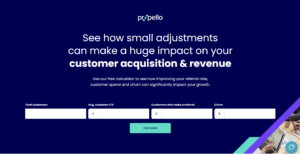
You have the playbook. The next step is knowing what a referral programme is actually worth to your business.
Enter your audience size, average customer value and programme type, and in a few clicks you will see the growth a referral and loyalty programme could unlock.
No guesswork, just your numbers.
FAQs
How much should I offer as a referral reward?
There is no fixed figure. Set the reward high enough to motivate action but comfortably below the lifetime value of a new customer, so the programme stays profitable. Base it on your margins, your average customer value and what your audience genuinely finds appealing, then test and adjust as results come in.
When is the best time to ask a customer for a referral?
Ask when satisfaction is highest. Good moments include just after a positive first experience, a repeat purchase, a renewal, or a five-star review or support resolution. Tying the request to these milestones means you are asking when goodwill is strongest, which lifts both participation and the quality of the referrals you receive.
How do I prevent referral fraud?
Only release rewards once a referral becomes a genuine paying customer, not just a sign-up. Add safeguards such as self-referral detection, duplicate checks and reward caps, and spell out in your terms that abuse voids rewards. Referral software handles most of this automatically by verifying each referral before any payout.
Do referral programmes work for B2B companies?
Yes. B2B buyers rely heavily on peer recommendations, so a structured referral programme can produce high-quality, high-intent leads. B2B programmes usually suit longer sales cycles and larger rewards, often paid in stages as the referred prospect books a demo, becomes an opportunity, then converts. Gift cards and account credit are common reward choices.
Are referral programmes worth it for small businesses?
Very much so. Referrals are one of the most affordable ways for a small business to grow, because your existing customers do the promotion and you only reward results. You do not need a big budget or complex tools to start, a simple refer-a-friend offer and a clear sharing link are enough.
Are referral rewards taxable?
It depends on your jurisdiction and the reward. Cash and cash-equivalent rewards such as gift cards are often treated as taxable income or a benefit, while a discount on a customer’s own purchase usually is not. Rules vary by country, so check local tax guidance or speak to an accountant before launching.
What is the difference between a referral programme and a loyalty programme?
A referral programme rewards existing customers for bringing in new ones, so it focuses on acquisition. A loyalty programme rewards customers for their own repeat purchases, so it focuses on retention. They work best together: loyalty keeps customers engaged, and referral turns that engagement into new business.
How long does it take for a referral programme to start working?
Expect early referrals within the first few weeks, but meaningful, steady results usually take a few months as awareness builds and more customers join. Promotion, reward appeal and how easy the programme is to share all affect the pace. Treat the first quarter as a period to test and refine.
What is a good referral conversion rate?
There is no single benchmark, as it varies widely by industry and offer. The useful comparison is your own: measure how referred leads convert against leads from your other channels. Referrals typically convert better because they arrive with built-in trust, so a healthy programme should outperform your cold acquisition channels.
What is the difference between referral marketing and affiliate marketing?
Referral marketing rewards your existing customers for recommending you to people they know, usually with discounts or credit. Affiliate marketing pays external partners, such as publishers and influencers, a commission for driving sales to audiences they do not personally know. Referrals run on personal trust, affiliates on reach and performance-based payment.
Mark Camp
Mark is the Founder and CEO of Propello Cloud, an innovative SaaS platform for loyalty and customer engagement. With over 20 years of marketing experience, he is passionate about helping brands boost retention and acquisition with scalable loyalty solutions.
Mark is an expert in loyalty and engagement strategy, having worked with major enterprise clients across industries to drive growth through rewards programmes. He leads Propello Cloud’s mission to deliver versatile platforms that help organisations attract, engage and retain customers.
Start your customised Propello Cloud journey today
Explore the platform’s scalability, features and customisation options and get answers to your unique questions.