Across the insurance industry, there are trends that are shaping the way companies secure long-term customer loyalty. Many of these trends we’re about to discuss are direct responses to the rapidly changing expectations of insurance customers, risk models impacted by climate change, and new, disruptive players challenging traditional insurance models. The status quo is quickly shifting.
Mark Camp
CEO & Founder at PropelloCloud.com
Contents
Key Takeaways
The insurance industry is currently facing challenges from changing customer expectations, macroeconomic pressures, and new regulations.
Insurers must navigate emerging risks and losses, macroeconomic factors, changing customer preferences, regulatory pressures, and the growing importance of sustainability.
Key trends shaping the industry include the shift to customer-centric business models, growth through strategic loyalty partnerships, adoption of advanced technologies, AI advancements, and workforce transformation.
Strategies for success include personalising customer experiences through data analytics, harnessing data and AI for operational efficiency, and embedding sustainability into business strategies.
Examples of companies implementing these trends include Lemonade, Toffee Insurance, Inclusivity Solutions, MicroEnsure, and Smile, demonstrating the power of innovation and customer-centricity.
Amidst the challenges, there’s a golden opportunity, one that intelligent insurance leaders could use to reset relationships with their customers built on trust, empathy, and shared value.
In this article, we’re giving you the fundamental trends that, if implemented today, could beckon a new era of unprecedented customer loyalty for your insurance company.
What Are the Challenges Facing the Insurance Industry?
Most, if not all, companies in the insurance sector will be familiar with several challenges around customer loyalty and retention.
Many of these are the result of a constantly evolving landscape, as well as the shifting expectations of modern customers. The sector has also seen an increase in regulations that have disrupted acquisition-led models.
Let’s take a look at these in greater detail:
Macroeconomic Factors
Today’s economic climate of rising inflation and interest rates forces many insurance companies to pass the extra cost onto customers. As a result, customers upset with an increase in their premiums look elsewhere for a better deal.
It’s a catch-22 scenario.
Insurance companies can’t be expected to retain the customers who they pass the extra cost on to. And there lies the problem. Instead of securing retention, insurers secure the opposite: annual churn.
We all know that customers tend to switch insurance providers the second their coverage ends. It’s a trend firmly embedded in the insurance sector, and one that, as insurance customers ourselves, has become the standard practice.
But who can blame customers for wanting better deals?
Similarly, who can blame insurance companies for negative macroeconomic factors that push them toward higher churn? It’s a vicious cycle of prices going up and customers switching.
That said, there is a solution. Insurance companies can offer a suite of tailored rewards, exclusive perks, and seamless digital experiences. All of these are proven methods of inspiring customer loyalty in spite of rising costs.
Changing Customer Preferences
Gone are the days of a product or service fully satisfying customers. In this digital era, customers have grown accustomed to a world of personalisation, convenience and seamless experiences.
What they receive in one sector, they have come to expect in other sectors, including the insurance industry. To stay competitive, insurers must adapt.
From conversations with insurance companies, we’ve learned there’s growing consumer demand for omnichannel experiences. Contrary to what the sector at large may think, customers do actually want to hear from their insurers.
They want to be engaged with across multiple touchpoints and channels, whether that’s on mobile apps, social media, chatbots or virtual assistants.
Every insurer we speak to is a testament that the industry is waking up to changing customer preferences. They recognise the importance of possessing engagement tools that can deliver experiences customers demand.
What they may not realise about these tools is that, with the right solution, they are simply a launchpad towards even more effective strategies.
We’re talking gamification, personalised rewards content, and targeted offers focused on different points in the customer journey.
Regulatory Changes and Compliance Pressures
In the UK, we saw the introduction of the FCA’s 2022 Consumer Duty. This was mainly a crackdown on pricewalking.
At first glance, these stricter regulations may be perceived as an extra hurdle to jump, given that they disrupt governance and potentially lead to high compliance costs. Which would only serve to further exacerbate the challenge of delivering competitively priced products.
Whilst these regulations address internal governance, aimed to stamp out deceptive practices around products and services, and increase transparency around data and cybersecurity, there’s an opportunity to deliver extra value whilst adhering to industry regulations.
Full disclosure of products and services could be an excellent educational event where the customer is incentivised with rewards to learn the most important terms and conditions of their insurance policy.
More responsible risk management could be achieved through offering discounts on complementary products from partnered brands.
Finally, a loyalty programme could reward long-term engagement and responsible behaviour, reducing the frequency of claims, leading to smoother claims handling and quicker dispute resolutions.
What Are the Key Trends Shaping the Insurance Industry?
With the full context of the challenges the industry is facing, we can begin to understand the reason why certain trends are emerging. Below are 8 industry trends that are shaping the insurance industry in 2025.
1) Shift to Customer-Centric Business Models
The majority of customers still resort to cancelling policies.
In the UK, 1.3 million car insurance policies are cancelled each year. As higher interest rates hit, this staggering number is set to increase. Inflation is hitting vehicle insurance more acutely than other sub-sectors.
As a result, there’s a sharp rise in more flexible and accessible products and services on the market, a trend that’s set to continue during current economic headwinds.
Some insurers are now offering pay-as-you-go models (or usage-based insurance models) that allow customers to pay only for the coverage options they need, when they need it.
2) Leveraging Data and Insights to Deliver Personalisation
In our 2025 Loyalty Uncovered Report, 83% of the insurers we spoke to said they were actively investing in data-gathering and improved personalisation.
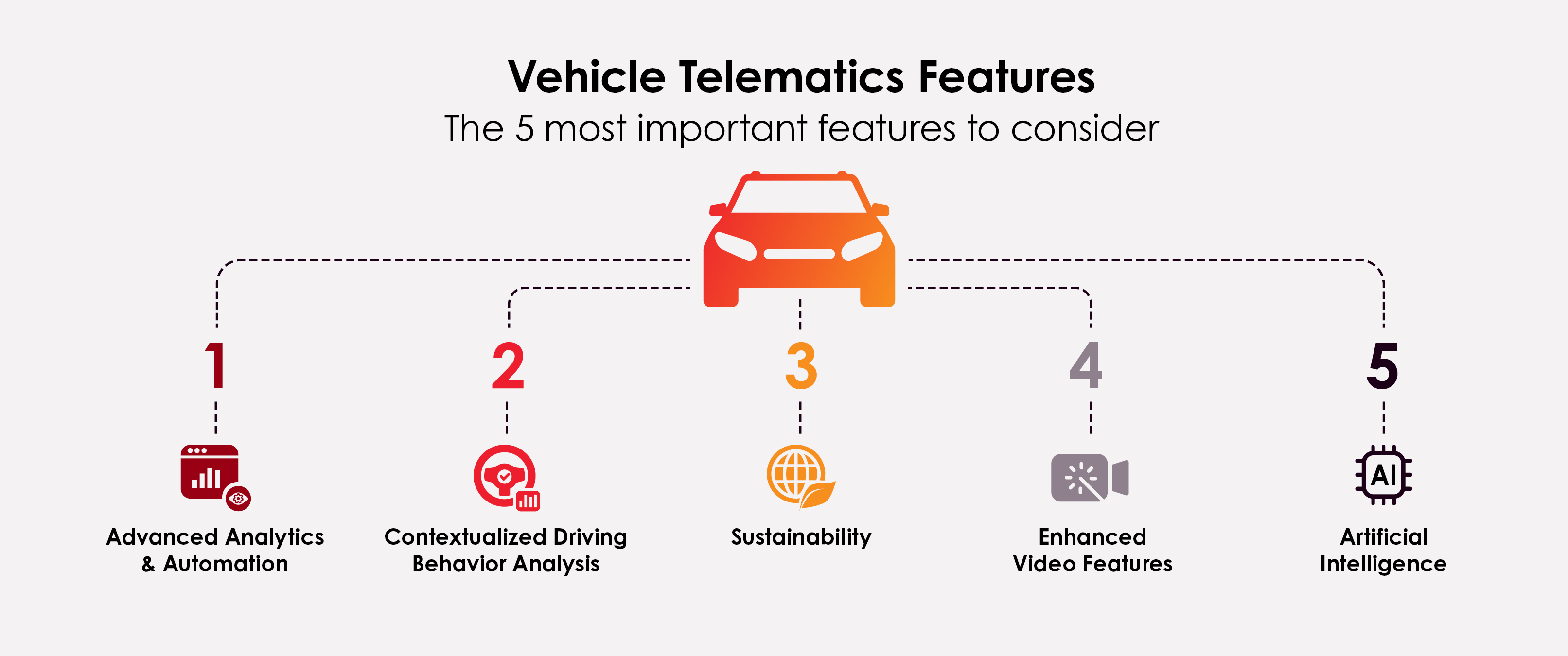
Telematics plays a major role in this. They allow insurers to track customer behaviour. Originally, this was to ensure customers adhered to their policy terms and demonstrated safe behaviours like driving responsibly.
However, in recent years, following the development of advanced software for data-gathering, the use case of telematics has expanded, widening the implications of personalisation.
For example, a wearable may track the running sessions of a health insurance policyholder, transfer that data to the insurer’s loyalty app, and reward them with an eGift for running shoes after reaching a jogging milestone.
Not only is the reward relevant to the policyholder, it also encourages healthy behaviours that reduce their risk profile.
This advanced level of personalisation can also be extended across other important parts of the experience, such as customer service. Insurers can flag coverage gaps, alert policyholders of unusual activity, and tailor communications and self-service tools to customer preferences.
3) Rise in Telematics & Tech Wearables
Most consumers are familiar with telematics. Insurers use it to personalise rewards using live data from black boxes. But what if it goes beyond personal driving behaviours?
The advent of smartwatches and other wearable devices has revolutionised the way insurers assess risks and track their customers to gain and enrich customer data.
Insurers can use driving behaviour analysis to reward customers for responsible behaviour while keeping insurance premiums fair. This also encourages retention and increases lifetime value for the insurer.
4) Investment in Strategic Partnerships
One of the most exciting opportunities we’ve identified is the potential for strategic loyalty partnerships to create unique, highly relevant rewards that resonate with insurance customers.
In fact, in our 2025 Loyalty Uncovered Report, the insurance industry was the second-highest investor in brand partnerships after retail. An overwhelming 86% of insurers have or are planning to invest in brand partnerships.
Aside from prospects that we’ve spoken to, some of our insurance clients rely on brand partnerships right now. They’re able to access extensive networks of suitable brand partners. There, they can tailor co-created rewards with complementary brands.
Referring back to our health insurer example from earlier, our clients could partner with a fitness brand to offer exclusive discounts on gym memberships. Why? Because:
The gym gets new members.
The insurer improves their value proposition with rewards for the customer that promote positive, healthy behaviours and long-term satisfaction.
We’ve already seen some insurers drive growth and innovation by embracing industry convergence and embedded insurance.
Bundling insurance products with other complementary services helps insurers reach new customers and create integrated experiences. Innovative partnerships are the next natural step.
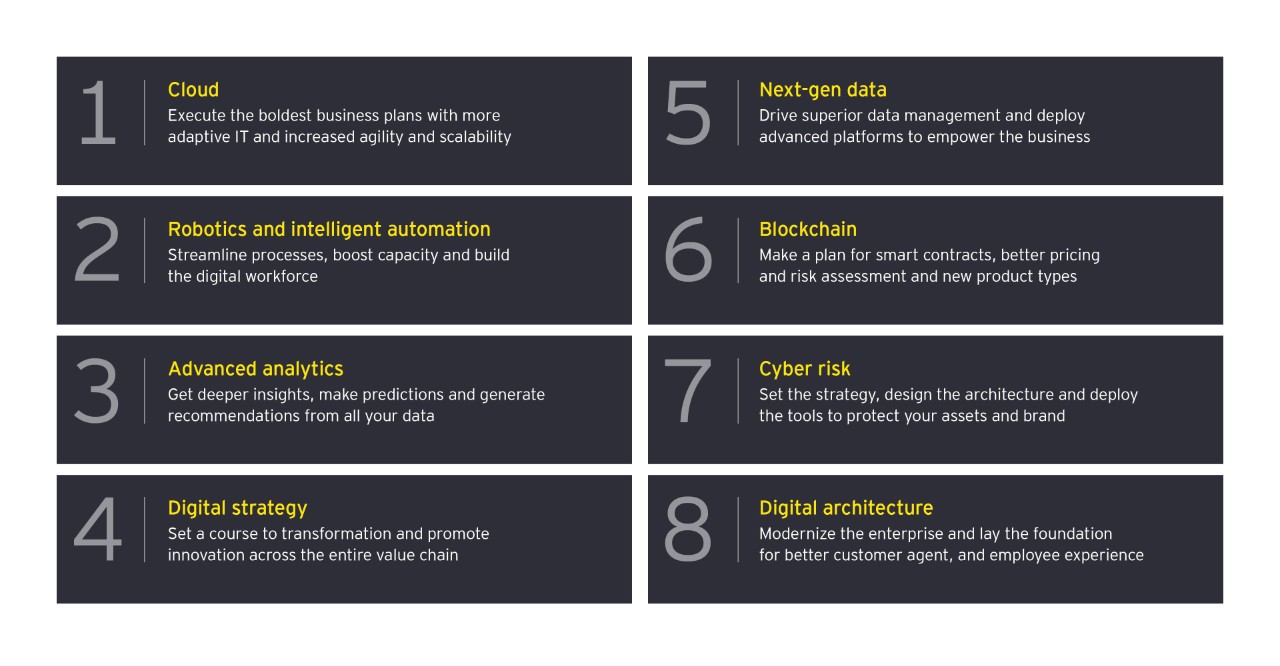
5) Increased Digitalisation and Connected Technology
With greater personalisation and omnichannel support in play, it’s natural to see further progression towards digitalisation and connective technology.
To meet the expectations of the modern consumer, insurers need the right digital tools and platforms for streamlining operations, reducing their costs, and enhancing the overall customer experience.
Take the development of low-code or no-code enterprise IT, for instance. Whilst the majority of the sector continues to rely on legacy systems, tools and processes, there’s a shift occurring as more options of no-code tools enter insurance markets.
Typically, these zero-code software solutions are developed with a focus on security and regulatory compliance, allowing for seamless integration with internal resources.
In fact, no-code solutions:
Ease the burden on internal resources whilst enhancing customer experiences.
Reduce time-to-market of new digital applications.
Let’s not forget the role of APIs that allow for seamless integrations.
APIs have paved the way to leverage real-time customer data between platforms, in order to deliver cohesive personalised experiences. Reward programmes use CRM data and the customer insights it reveals to shape hyper-relevant reward offers that incentivise policy renewals.
No wonder, from the insurers that we spoke to, 77% are currently investing in this area.
Mobile-First
There’s also a case for adopting digital channels like online portals and mobile apps. They are a great fit for giving insurance customers exactly what they want: self-service.
These channels allow customers to:
Generate their own quotes online.
Resolve queries with chatbots.
Even resolve claims in some cases.
Self-service tools build on the positive impact that no-code solutions and API applications have on businesses. They free up agents from having to deal with queries or generating quotes. And for the customer, it delivers a quick and convenient experience.
Data Security
With larger datasets comes the need for robust cybersecurity measures.
Insurers who collect, store and share vast volumes of sensitive data in third-party platforms must invest in capable security solutions. These safeguard customer data against cyber threats, which is essential for a trustworthy brand reputation.
Artificial Intelligence
As digitalisation and connected technologies reshape insurance, artificial intelligence is becoming a key solution for many companies. This is due mainly to its capabilities in automating routine processes and analysing real-time data from wearables and telematics.
AI also speeds up decision-making and adds depth to personalisation efforts. Its growing role will be explored in more detail in the following section.
6) Artificial Intelligence (AI) Advancements
Whilst part of ongoing digitalisation, artificial intelligence remains unprecedented in terms of its innovation. For that reason alone, it deserves its own section.
It has revolutionised most sectors, the insurance sector included, enhancing underwriting, claims management and customer service. Generative AI even informs product development, assists with marketing efforts and gives personalisation that extra edge.
Machine learning algorithms also impact underwriting trends and claims management.
By using predictive analytics, ML reduces operational costs and improves risk exposure accuracy. In addition, insurers continue to use technologies like the Internet of Things (IoT) for real-time data gathering and risk assessment.
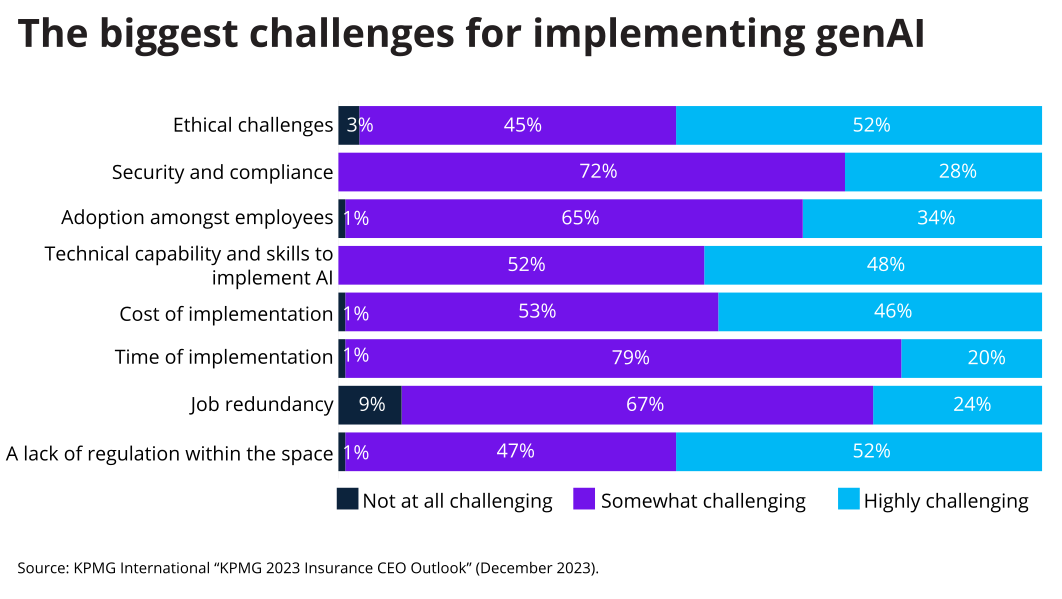
Even blockchain technology plays a role in securing smart contracts and improving transparency around claims processing. However, implementing these technologies – in particular AI – comes with its own challenges.
That’s why collaborations with InsurTech firms are so valuable.
These tech-savvy startups offer innovative solutions like AI-powered chatbots and virtual assistants to handle customer inquiries. Again, this frees up human agents to focus on more complex and urgent priorities.
There’s even more use cases for AI in terms of loyalty programmes. With it, insurers can automatically serve the right rewards to the right customers at the right time.
As a result of implementing AI in your loyalty initiatives, dynamic experiences responsive to the individual needs, interests and preferences of every customer will emerge. Setting the standard of a rewards experience, unprecedented in its depth and scope.
That’s why the insurance sector came in second for investing in AI.
The majority of the sector understands AI-led loyalty initiatives are their ticket to truly unique brand differentiation and long-term retention. Which is why over 65% of them are investing in AI-led loyalty initiatives this year.
7) Continual Focus on ESG
Since 2020, the top 30 insurance firms have boosted their ESG rankings by an impressive 20 points. The momentum doesn’t seem to be slowing.
While meeting regulatory standards is a big part of the push, many insurers are also thinking ahead, using ESG as a lens for shaping future governance and business practices.
Half of the insurers we spoke to said they’re actively working to improve their ESG scores, driven largely by growing customer expectations.
Our findings actually coincide with other sources, too.
Likewise, a study by Bain & Company found that millennials, more than any other age group, are likely to buy from or switch to insurers with strong ESG credentials.
Interestingly, the same research revealed that customers tend to prioritise things like ethical governance and social responsibility over environmental impact — even though most insurers still focus heavily on the latter.
8) Gamification
Keeping customers engaged between renewals has always been a challenge. In many cases, policies remain untouched for most of the year, with little interaction unless a claim is made.
But in the modern insurance industry, engagement should definitely not be limited to the point of purchase.
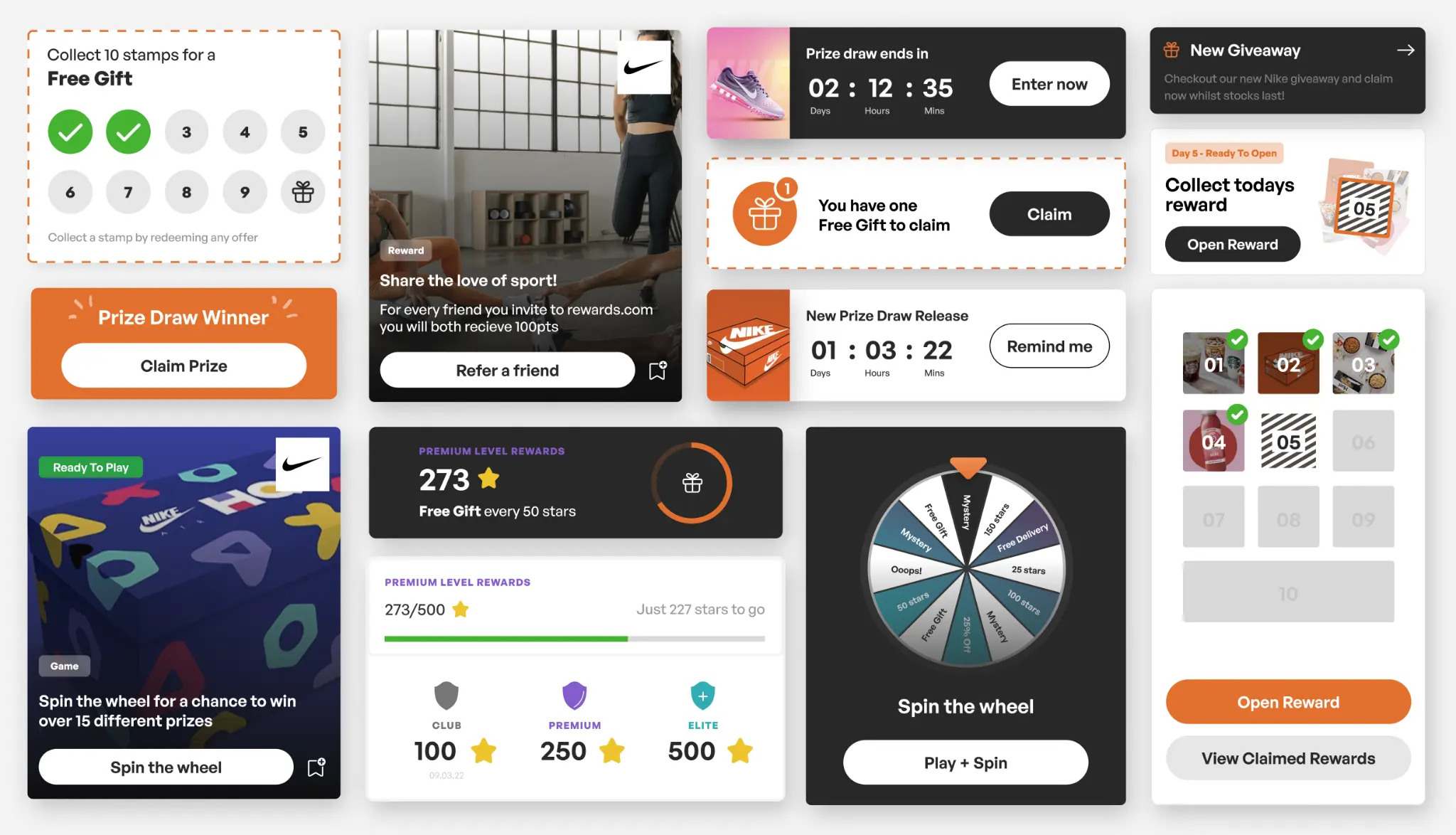
Gamification with rewards encourages small, everyday actions at every touchpoint. This could be as simple as logging into a mobile app, completing a short safety quiz, or participating in a challenge related to health, home, or car usage.
These activities keep the customer involved and also help reinforce behaviours that lower risk.
By using gamified experiences, insurers have an opportunity to make the relationship feel more interactive and rewarding without needing a claim to trigger communication.
Plus, it keeps the insurance brand top of mind, insulating the existing customer base from competitors’ marketing efforts.
How Do You Implement These Insurance Trends Successfully?
We’ve gone through several trends, but a full explanation of how to implement them probably requires its own full article. Stay tuned for that. It’s on its way.
For now, we’ve selected the 3 most pressing trends that we think you should implement before the end of 2025. Here are the key areas to focus on:
How Can Insurers Use Data Analytics to Personalise the Customer Experience?
Personalisation boosts customer engagement and loyalty in the insurance industry because it gives the brand a way of speaking to individuals.
Data analytics and customer segmentation are integral for achieving this feat. Without both, you won’t be capable of effectively tailoring products, services and rewards content to individual needs, preferences and interests.
That’s why our loyalty platform is designed to leverage the power of data and build detailed segmentation lists. It’s a centralised hub for creating hyper-relevant experiences.
You should consider a third-party solution like the Propello Cloud platform because it’s also able to integrate with your existing systems. It slots right in like a missing part in the puzzle, instantly providing advanced analytics.
As a result, our insurance clients gain a clear view (and deeper insights!) into their customers’ behaviour and preferences. Should you choose a software like ours, be sure to use the insights you gain to shape the personalised customer experience with your brand.
How Does Data and AI Enhance Operational Efficiency for Insurers?
As we’ve seen, data and artificial intelligence (AI) are some of the top methods for boosting operational efficiency. AI automates core processes like underwriting and claims management.
Insurers should invest in modernising their legacy systems with a solution like the Propello Cloud loyalty platform. Third-party solutions like Propello Cloud come with AI capabilities. They add flexibility and scalability to existing infrastructures, streamlining the process of leveraging data without costly overhauls.
For whatever reason you may use data or implement AI, it must always be in the service of delivering an efficient, transparent service. One that makes customers feel valued and informed.
How Should Insurers Add Sustainability to Their Business Strategy?
Sustainability and social impact not only respond to the interests of certain demographics, they also serve as key differentiators for your brand. Since modern consumers consistently seek out brands that align with their personal values, it’s only right that insurers demonstrate shared values in their brand image and persona.
It has to be genuine though.
Pick something from the environmental, social, and governance (ESG) principles that work well with your products and services. Show how by being a customer of your insurance business, they are contributing to a positive force, driving change in the world.
Trust is integral here as your customers will expect authenticity in your mission and commitment to society.
Which Insurance Companies Are Implementing These Trends?
Let’s take a look at some examples of insurance companies using loyalty programmes to deliver on some of the trends we’ve discussed.
Company
Description
Implemented Trends
Lemonade
InsurTech partnered with Allianz for expertise, scale, and reinsurance. Uses AI and ML for a customer-centric approach.
Customer-centric business models.
Technology Advancements.
Inclusivity Solutions
South African micro insurance provider for low-income customers in Africa and Asia. Products: health, P&C, mobile phone and small business insurance.
UK-based micro insurance company serving low-income customers in Asia and Africa. Products: health, P&C, mobile phone, and small business insurance.
Customer-centric business models.
Strategic loyalty partnerships.
Smile
Traditional insurers like Smile are adapting to keep pace with tech-savvy InsurTechs and accessible micro insurance providers. They’ve embraced a customer-centric philosophy, focusing on seamless, personalised experiences.
CEO Pierangelo Campopiano says Smile has been dubbed the “Netflix of insurance.”
Smile’s loyalty rewards scheme is central to their strategy. The app-based programme offers points for safe driving, online shopping protection, and special offers from ecosystem partners.
But their true innovation lies in their freemium business model.
Potential customers gain rewards before committing to full coverage, enjoying a taste of the experience. This builds emotional relationships and helps customers perceive the value they want.
“Rather than our value proposition,” Campopiano states, “we prefer to manage our value perception.”
Smile’s approach aligns with the trends we’ve discussed, as shown in the table above. They exemplify the shift towards customer-centric business models and the power of strategic loyalty partnerships.
By prioritising customer needs and leveraging gamification and community building, Smile demonstrates how traditional insurers can innovate to stay competitive in the evolving insurance landscape.
Embracing Change for a Customer-Centric Future
As insurance industry trends continue to evolve, it’s clear that embracing change is key to staying ahead of the curve.
By staying attuned to the challenges and opportunities and implementing the strategies discussed above, insurers can create a more customer-centric, resilient, and sustainable business model.
If you found this content useful and want to get some ideas about developing a customer-centric culture, download our guide + template.
FAQs
How is the insurance industry adapting to the changing customer preferences and expectations?
The insurance industry is shifting towards customer-centric models that are primarily focused on personalised experiences and using data analytics to effectively respond to customer needs. They are also adopting omnichannel support in order to amalgamate the overall customer experience into a single cohesive journey.
What role do strategic loyalty partnerships play in driving growth and innovation in the insurance industry?
Insurance companies that partner with complementary brands drive growth and innovation by co-creating unique value propositions. These often come as rewards that complement the core products and services of the insurance company or vice versa. This exposes each brand to the other’s audience.
How are insurance companies leveraging advanced technologies to streamline operations and enhance customer experiences?
Insurers adopt digital tools and third-party platforms that streamline operations, reduce operational costs, and improve overall customer experiences. Often, these solutions are coupled with CRM systems. Together, they automate core processes like underwriting and claims management.
What impact are artificial intelligence (AI) advancements having on the insurance industry?
AI assists with underwriting, claims management, customer service, and enhancing loyalty initiatives. The latter in particular benefits from AI. Smart loyalty programmes assess data 24/7 and shape the best possible rewards experience for every individual customer.
How can insurance companies personalise customer experiences through data analytics?
Insurance companies can use a CRM or loyalty programme to personalise customer experiences. The latter can also be AI-led. Analytics at the back-end inform which rewards are best to offer the user at the front-end. Often these rewards are based on insights about individual behaviour and preferences.
Why is embedding sustainability into business strategies becoming increasingly important for insurance companies?
Younger demographics overwhelmingly prefer brands that align with their personal values or commit to social causes. As these demographics like Millennials age, car, home, pet or life insurance will become a necessity. Therefore, the insurance sector has to adapt to demographics that are becoming its core base.
What can insurance companies learn from the examples of Lemonade, Toffee Insurance, Inclusivity Solutions, MicroEnsure, and Smile?
Each of these examples is tangible proof of how the insurance sector is responding to changing circumstances. These insurers are prioritising customer-centricity through strategic partnerships, flexible services and technological innovation.
Mark Camp
Mark is the Founder and CEO of Propello Cloud, an innovative SaaS platform for loyalty and customer engagement. With over 20 years of marketing experience, he is passionate about helping brands boost retention and acquisition with scalable loyalty solutions.
Mark is an expert in loyalty and engagement strategy, having worked with major enterprise clients across industries to drive growth through rewards programmes. He leads Propello Cloud’s mission to deliver versatile platforms that help organisations attract, engage and retain customers.
Start your customised Propello Cloud journey today
Explore the platform’s scalability, features and customisation options and get answers to your unique questions.


.webp)