What’s the True Cost of Loyalty Programmes? Build v Buy
25 min to read
Published: November 7, 2024
Updated: August 27, 2026
Loyalty programme costs split two ways. Build in-house and you carry higher upfront investment plus ongoing maintenance; buy an outsourced platform and technology, support and updates bundle into a predictable monthly cost. This guide breaks down both across setup, technology, rewards and long-term upkeep.
Mark Camp
CEO & Founder at PropelloCloud.com
Contents
Key Takeaways
Build or buy is the decision that shapes everything else. In-house means higher upfront cost and maintenance you carry yourself; a third-party platform bundles it into a predictable monthly subscription.
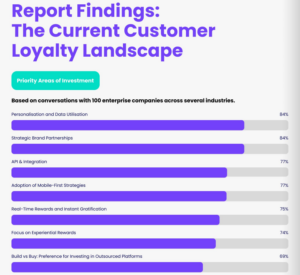
The market has largely made its choice. 69% of enterprise brands would rather outsource their loyalty platform than developing it in-house.
Loyalty pays back through lifetime value, not just the first sale. Members buy more often and spend more over time, lifting what each customer is worth.
Most businesses underestimate ongoing costs. Setup is the visible bill; maintenance, support and new features are where the long-term budget actually goes.
Technology is the foundation, and integration is the make-or-break. A platform that can't connect to your existing systems becomes a cost centre.
Reward structure decides cost efficiency. Segmentation and tiering aim spend at the members most likely to return value.
The most expensive option is inaction. A delayed programme is retention and revenue you never recover.
Every enterprise loyalty conversation now starts in the same place. Not “should we run a programme?” That question’s settled. The focus is now on the cost of loyalty programmes: “do we build one ourselves or buy one off the shelf?”
EY’s 2024 customer loyalty research puts the stakes plainly. 79% of consumers said loyalty programmes affect how likely they are to keep buying from a brand, and 80% said they bought more often once they joined one.
When a programme moves the needle for four in five customers, sitting one out stops being an option. Which is why the debate has moved on to cost, and specifically to where that cost lands.
I hear the build-versus-buy question on discovery calls most weeks, usually from businesses stuck halfway between the two. If that’s you, you’re in good company. I’ll break down what each path actually costs.
What Value Does a Loyalty Platform Bring to Modern Businesses?
A loyalty platform delivers value beyond the financial return: faster launches, lower maintenance, and enterprise-grade features without the enterprise build. What once demanded months of in-house development now runs on software you switch on, which is why the buy option keeps gaining ground.
The operational gain is the part businesses underrate. Modern platforms scale without the maintenance bill climbing to match, and APIs handle the integration into your existing stack.
Launches that once took quarters take weeks. And when the provider ships a new feature, it arrives plug-and-play, with none of the custom-build price tag attached.
But cost only makes sense against context.
Customer expectations have travelled a long way from a points card and a rubber stamp, and that shift is what reshaped both the bill and the complexity. To see where the money goes now, it helps to see how programmes got here.
How Do Loyalty Programmes Increase Customer Lifetime Value?
Loyalty programmes raise customer lifetime value by getting members to buy more often and spend more each time. Accenture’s research put the gap at 12-18% more revenue from members than non-members. The lift is real, but the mechanism underneath it matters more than the number.
So here’s the mechanism.
A well-run programme turns one-off buyers into a pattern, then uses targeted rewards and the data behind them to reduce acquisition costs while lifetime value climbs. I’ve watched that gap widen for businesses that treat the programme as an asset, not a giveaway.
Analytics are what make it repeatable. Members leave a trail of engagement and behaviour, and reading it properly is how you personalise the next offer instead of guessing.
That’s the difference between a programme that decays into a cost line and one that quietly grows in value, an expense turned retention engine.
What Costs Should You Consider When Investing in a Loyalty Programme?
The costs split into two buckets: upfront setup and ongoing operation. Most businesses map the setup bill to the penny and barely think about what the programme costs to run once it’s live. That blind spot is what wrecks scalability later. The build-versus-buy decision changes the shape of both, so get them in view early.
What Is the Initial Setup Cost of Loyalty Programmes Built In-House?
Building in-house means carrying the setup cost yourself, and it’s front-loaded across seven fronts, most of them invisible until you’re committed:
Programme design and strategy
Custom software development and testing
Technology infrastructure
Integration with your existing systems
Staff training
Customer support setup
Marketing and launch costs
The one businesses forget is people. You’re hiring loyalty specialists, integration developers and a support team, all before the programme returns a penny. Without tight planning, that’s where setup costs run away from you.
Buy instead, and the model inverts. That whole upfront outlay flattens into a predictable monthly subscription, with maintenance and updates folded in, so sophisticated loyalty software stops being a capital project and starts being a line item.
Where your money goes, and when, is really a build-versus-buy question in disguise.
How Do Different Loyalty Programme Types Affect Your Costs?
Each loyalty programme type buys a different behaviour, and each carries its own cost curve. Points-based systems push purchase frequency, but get redemption rates wrong, and the reward liability balloons. Tiered programmes drive upsell, though the gap between reward value and tier threshold is a fine line to walk. Subscription rewards bring steady, predictable revenue, then demand constant fresh content to stop members drifting.
None of these is cheaper in the abstract. They’re cheaper, or ruinous, depending on how well the structure matches what you’re actually trying to change in customer behaviour.
So the choice isn’t which type costs least. It’s which type earns its cost by lifting lifetime value, and whether your technology can carry that model as the programme scales.
How Do I Pick the Right Loyalty Technology Investment?
Choosing loyalty technology comes down to five factors, and one foundation underneath them. The factors decide what the platform can do. The foundation, integration, decides whether any of it works inside your business.
API strength is the quiet make-or-break. Loyalty tech that can’t talk to the systems you already run isn’t a worthwhile investment.
Why Are Businesses Choosing Outsourced Loyalty Platforms?
Because the maths keeps pointing the same way. In Propello Cloud’s 2025 Loyalty Uncovered report, 69% of enterprise brands said they now prefer to outsource their loyalty platform over building it in-house. With nearly seven in ten having stopped reaching for the build option, that tells you where the decision has settled.
Time is the cost nobody prices in. In-house development runs for months before a single member enrols, while a third-party platform can have a programme live in weeks. Same destination, a quarter of the calendar.
That speed is built in, not bolted on. Modern platforms deploy fast, ship secure by default, flex to your requirements and scale as the programme grows, none of which you’re building or maintaining yourself. The build route asks you to fund all of it, then keep funding it.
How Do Integration Costs Differ Between Build and Buy?
It depends which path you took. Third-party platforms keep integration cheaper, though how cheap varies with the complexity of your stack. In-house costs more but buys purpose-built architecture that fits your systems exactly. The trade-off is cost against fit, and only your tech requirements decide which one matters more.
What Is the Ongoing Cost of a Loyalty Programme?
Maintenance is where most of your long-term budget goes, not setup. A programme isn’t a one-time build. Customer expectations shift, competitors move, trends turn, and the programme has to keep up, which means paying to keep it current.
Build in-house and that bill is all yours: expert staff and training, customer service infrastructure, constant optimisation, scaling the platform, and building every new feature from scratch.
Buy instead, and leading platforms like Propello Cloud fold most of it into the subscription: regular updates, new features, technical support, and multiple programme types. Maintenance turns predictable and lower, which matters most for mid-sized teams that would rather build customer loyalty than babysit technology.
How Much Do Customer Rewards Cost?
Rewards always cost something, but the range is enormous, and structure decides where you land. The real question isn’t whether rewards cost money. It’s whether every pound spent is buying profitable behaviour or just discounting sales you’d have made anyway.
Discount-heavy programmes erode margin fast. Smarter ones use targeted rewards that lift engagement at lower expense, the kind that feel valuable to the customer but cost little to deliver.
That gap, between perceived value and actual cost, is where a well-run programme makes its money.
Which Types of Rewards Cost the Least?
The cheapest rewards are the ones that feel generous without draining margin, and that’s rarely a straight discount. Traditional programmes lean on discounts and points. The more nuanced approaches bigger businesses use spread the cost differently:
Points-based rewards with flexible redemption rates
Tiered benefits that grow with customer lifetime value
Experiential rewards that build emotional connection
Gamified challenges that drive specific behaviour
Partner rewards that share the cost across programmes
The thread running through all of them is personalisation.
Epsilon’s 2018 research found 80% of consumers are more likely to buy from a brand that offers personalised experiences. That means a well-aimed reward can outperform a blunt discount at a fraction of the cost. Design the structure well, and outlay falls while engagement climbs.
How Does Budget Allocation Compare Between Building and Buying?
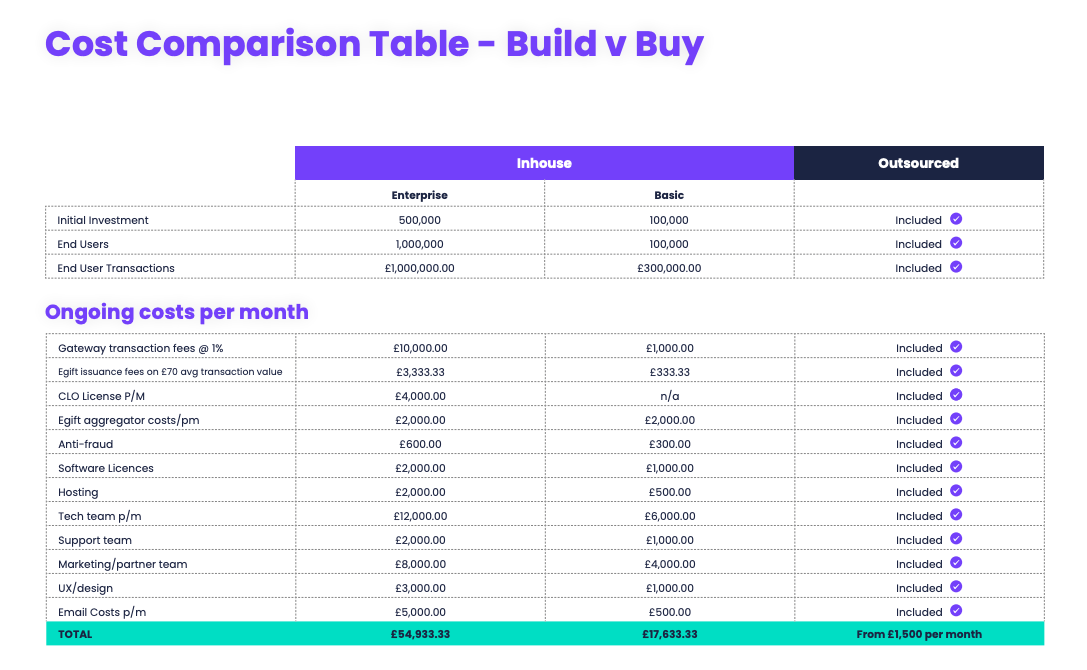
Build, and the budget scatters across a dozen line items you fund and maintain yourself. Buy, and it collapses into one monthly cost with everything essential bundled in:
Technology
Tech support
Integration
Ongoing updates and marketing support
That’s the real difference in budgeting terms. One path hands you a spreadsheet of separate, unpredictable costs. The other gives you a single number, the latest platform releases, expert support, and no upfront capital hit to absorb before launch.
How Do You Measure Loyalty Programme ROI?
Loyalty ROI comes down to whether the programme returns more than it costs to run, measured across a handful of factors rather than a single number. Effective ROI measurement weighs setup and running costs against what the programme brings back:
Implementation cost against revenue growth
Reduction in customer acquisition cost
Lift in customer retention rates
Maintenance cost against member spending
Operational cost against revenue per loyal customer
Get the measurement right and the returns build year on year. As your analytics mature, you sharpen the reward structure and the engagement strategy, and the programme pays back more the longer it runs.
How Does Customer Advocacy Drive ROI?
Advocacy is where loyalty stops costing and starts paying. Your best members don’t just buy more, they bring others with them, and that referred growth costs you almost nothing to acquire. The strongest advocates:
Buy again, and more often
Recommend the brand to high-quality leads
Respond better to your marketing
Feed back the insight that sharpens the programme
That’s the virtuous cycle. As the programme matures, operational costs tend to fall while customer lifetime value keeps climbing. Hold the balance between what you spend on rewards and what they return, and the ROI sustains itself.
How Can You Make Your Loyalty Programme More Cost-Effective?
Cost-effectiveness comes down to managing resources smartly, not spending less for its own sake. After years of running programmes at Propello Cloud, the pattern holds: the ones that control cost best aim their spend rather than cut it. Two levers do most of that work, segmentation and tiers.
How Does Segmentation Reduce the Cost of Loyalty Programmes?
Segmentation cuts costs by stopping you spending the same on customers who return very different value. Not every member is worth the same reward, and treating them as if they are is how budgets leak. Your platform’s analytics let you:
Identify different levels of customer lifetime value
Read varying purchase behaviours
Target marketing spend where it pays back
Tune the reward structure segment by segment
Point the expensive rewards at the members most likely to respond, and you spend less to get more. That’s the whole game: better results from a tighter, better-aimed budget.
How Do Tiered Rewards Control Programme Costs?
Tiered rewards control cost by reserving your most expensive perks for the members who earn them. Everyone else is working their way up, engaged but inexpensive. The structure pays off four ways:
Cost control: top-tier rewards go only to top-tier members
Engagement: the climb itself drives the behaviour you want
Resource allocation: spend concentrates on members most likely to grow
Lifetime value: members work to keep the status they’ve earned
There’s a social pull to it, too. Perks like priority support, early access, event invitations and free shipping cost little to extend but feel genuinely exclusive, which keeps members engaged without inflating the reward bill.
How Do You Future-Proof a Loyalty Programme Investment?
You future-proof a loyalty programme by choosing tech that absorbs change instead of resisting it. The fundamentals of retention hold steady; the way you deliver it keeps moving. A handful of trends are reshaping where the costs land:
AI and automation are cutting operational costs while sharpening personalisation
Mobile-first is now the baseline, not a nice-to-have
Integration has to be cleaner than ever
Scalability has to plan for international growth
Whichever route you take, build or buy, the test is the same: can the platform take on new features without a full overhaul every time? Pick for stability now and adaptability later, so you’re not paying to rebuild every time the landscape shifts.
The Real Cost of Loyalty is Choosing Not to Act
Third-party platforms give you faster launches and predictable running costs, with some trade-off on customisation. Build gives you control, at a higher price in money and time. Neither is automatically right.
The real question is which one fits your objectives and your appetite for maintenance, because the most expensive option of all is the programme you keep putting off.
Want the full picture? Download our cost comparison guide, which breaks down and scores both in-house and outsourced routes across 12 critical factors.
FAQs
How much does it cost to start a loyalty programme?
It varies enormously with scale and approach. Building in-house is a capital project, typically running into tens of thousands of pounds before launch once development, infrastructure and staffing are counted. A third-party platform replaces most of that with a monthly subscription, a far smaller and more predictable figure. Exact costs depend on your customer base, features and programme type.
Are loyalty programmes worth it for smaller businesses?
Often yes, provided the costs stay proportionate. Smaller businesses rarely need a custom build; a subscription platform gives them enterprise-grade features without the upfront outlay. The key is matching reward value to margin and keeping the programme simple enough to run without dedicated staff. Started lean, a programme can pay back on a handful of retained regulars.
How much should you budget for the rewards themselves?
Separately from software and staffing, the rewards carry their own cost. A common planning benchmark is to set aside roughly 1 to 3% of member revenue to fund rewards, then adjust as real redemption behaviour becomes clear. Cheaper-to-deliver perks like early access or free delivery stretch that budget further than straight discounts.
How does redemption rate affect what a programme costs?
Heavily. Not every reward customers earn gets claimed, and the gap between points issued and points redeemed is a real budgeting factor. Plan for expected redemption rather than full liability, but never ignore it: a spike in redemptions can strain a programme that budgeted too optimistically. Track it from launch and adjust reward values accordingly.
Can you switch an in-house programme to an outsourced platform later?
Yes, and many businesses do once in-house maintenance costs mount. Migration means moving member data, points balances and history into the new platform, so budget for a one-off transition alongside the ongoing subscription. A good provider supports the migration, but plan for a short parallel-running period to protect member records and trust.
Do loyalty programme costs vary by industry?
They do. A high-frequency, low-value sector like retail or telecoms runs very different reward economics from insurance or B2B, where purchases are rarer and higher in value. Industry shapes redemption patterns, reward types and the data you need, all of which feed cost. The right structure is the one matched to how your customers actually buy.
How quickly can a loyalty programme pay for itself?
It depends on margin and how much repeat behaviour the programme drives, but the maths often works sooner than expected. Because retaining an existing customer costs far less than acquiring a new one, even a modest lift in repeat purchases can cover a subscription platform’s cost. In-house builds take longer to break even, given the upfront investment.
What are the most common hidden costs of a loyalty programme?
The ones that catch businesses out are rarely the software. Reward liability that sits unredeemed on the books, staff time spent managing and optimising the programme, customer support for member queries, and the cost of refreshing rewards to stop members drifting all add up quietly. Budgeting only for the platform and the launch is where most plans fall short.
How many staff do you need to run a loyalty programme?
Fewer than most people expect, if you buy rather than build. A small business can typically run a subscription-based programme on a fraction of one marketing manager’s time, a handful of hours a month. Enterprise in-house programmes are another matter, often needing a dedicated team spanning management, support, analytics and development. Staffing is one of the largest hidden costs of building your own, and one of the biggest savings when you outsource.
Does loyalty fraud add to programme costs?
It can, and it’s rising. Account takeovers, fake sign-ups and point manipulation all carry a real cost, and a notable share of loyalty fraud originates internally through manual point adjustments. Prevention means budgeting for security monitoring, role-based access controls and audit trails. A good third-party platform builds much of this in, whereas an in-house build has to fund fraud protection as a separate line.
Mark Camp
Mark is the Founder and CEO of Propello Cloud, an innovative SaaS platform for loyalty and customer engagement. With over 20 years of marketing experience, he is passionate about helping brands boost retention and acquisition with scalable loyalty solutions.
Mark is an expert in loyalty and engagement strategy, having worked with major enterprise clients across industries to drive growth through rewards programmes. He leads Propello Cloud’s mission to deliver versatile platforms that help organisations attract, engage and retain customers.
Start your customised Propello Cloud journey today
Explore the platform’s scalability, features and customisation options and get answers to your unique questions.