10 Types of Loyalty Programs that Might Be Right for Your Brand
25 min to read
Published: January 3, 2023
Updated: June 18, 2026
This guide breaks down ten distinct types of loyalty programmes, covering how each works, which sectors they fit best, and what challenges to plan for, so you can make a confident, informed choice.
Mark Camp
CEO & Founder at PropelloCloud.com
Contents
Key Takeaways
Always On programmes are the simplest starting point for businesses new to loyalty.
Tiered and Premium programmes suit higher-value products and premium customer segments.
Gamification and Value-based programmes drive emotional engagement, resonating especially with younger audiences.
Hybrid programmes combine two or more types of loyalty programmes for greater flexibility but require more resources.
Omnichannel programmes meet modern consumer expectations for seamless cross-channel experiences.
Loyalty partnership programmes provide credibility and access to new audiences through strategic alliances.
Before exploring each one in close detail, here’s a quick summary of the main types of loyalty programs.
What Are the Different Types of Loyalty Programmes?
Programme Type
Best For
Key Benefit
Main Challenge
Always On
Most businesses, especially subscription/membership
Simple to launch; keeps customers engaged between purchases
Requires a compelling reward network and loyalty expertise
Earn & Burn (Points)
High-frequency purchase businesses
Familiar format; drives repeat purchase
Risk of becoming stale without extra engagement elements
High maintenance cost; needs consistently delivered value
Loyalty Partnerships
Brands seeking audience expansion
Cost-effective reach; builds brand credibility
Requires aligned goals and robust integration
Gamification
Engagement-first brands, wellness, food service
Strongest engagement driver of all programme types
High development and maintenance costs
Referral
Any business with advocacy potential
Low-cost acquisition; identifies most loyal customers
Fraud risk; ineffective without a compelling product
Hybrid
Retail, hospitality, services
Flexible; appeals to multiple segments
Complex to design and resource-intensive
Value-Based
Purpose-led brands, charities, and ethical retail
Builds emotional loyalty; differentiates in crowded markets
Risk of purpose washing if not authentic
Omnichannel
Multi-touchpoint businesses
Seamless CX across all channels; meets modern expectations
Significant technical infrastructure required
1) What Is an Always-On Loyalty Programme?
An always-on loyalty programme, also called an instant rewards programme, provides customers continuous access to rewards for as long as they remain a subscriber or active customer. Brands using this approach often configure conditional rewards to nudge customers towards specific actions, such as contract renewal, membership upgrades, or brand advocacy, making it one of the most flexible programme types available.
Which Industries Benefit from Always-On Programmes?
This programme type works across almost every industry, including subscriptions, memberships, retail, and financial services. Its flexibility and simple setup make it particularly useful to businesses that are new to loyalty or to established enterprises looking for a solid foundation to build on.
How Do Always-On Programmes Align With Business Goals?
This programme type is a strong fit if your primary objectives are retention, engagement, and growth in lifetime value. It also works well for businesses that need to stay visible to customers between purchases. Ask yourself whether each of the following applies before making a decision:
Do you need a scalable solution that rewards a growing audience without incurring high additional costs?
Do you want to keep customers engaged between purchase cycles?
Are retention, upsell, and cross-sell conversions among your top priorities?
If you answered yes to most of the above, an always-on programme is likely the right starting point for your brand. It offers a low-risk entry into loyalty, with plenty of room to expand and refine as your programme matures.
Do Demographics Affect Always-On Programmes?
Receiving rewards has near-universal appeal. Instant rewards tend to resonate across customer bases, provided the incentives are genuinely compelling; customers expect tangible value, such as discounts on the weekly shop, travel, or tech.
If you later combine an always-on model with another programme type, revisit your demographics, as some types skew toward specific age groups.
What Do You Need to Launch an Always-On Loyalty Programme?
While this option is the simplest programme type to launch, it still requires some work. Before going live, you need the right partner network, experienced personnel, and a thorough understanding of the loyalty ladder to deliver the right reward at the right time. At a minimum, you’ll need:
A partner network offering varied, relevant rewards for your customers that they genuinely value
Experienced personnel to manage and scale the programme as your audience grows
Technical resource to build a seamless, secure customer-facing experience
A clear understanding of the customer loyalty ladder so that the right reward is offered to customers at the right time
2) What Is an Earn & Burn (Points-Based) Loyalty Programme?
Earn-and-burn, also known as points-based loyalty programmes, are the most recognisable loyalty model. Customers earn points with every purchase and redeem them for rewards. Starbucks Rewards is one of the most cited examples. The model is transactional and straightforward: purchase frequency increases as long as the value of rewards remains compelling.
What Is the Ideal Industry for Earn & Burn Programmes?
Earn-and-burn programmes work well across most sectors where customers make regular purchases. They are especially suited to new businesses that want fast, simple implementation. Since their mechanics are familiar to customers and relatively straightforward to administer, they’ve become a reliable default for a wide range of industries.
How Do Earn & Burn Programmes Align With Business Goals?
It works best when there is a clear link between customer spend and reward value and when a streamlined experience is a priority. A points-based programme is a sensible choice if several of the following apply to your business.
You want to increase purchase frequency
You want to improve perceived value of your brand
You need an easy-to-budget, quick-to-launch solution
You want a programme that is straightforward for customers to understand and use
The more of the above that apply, the stronger the case for a points-based programme. It is one of the easiest loyalty models to communicate to customers and to manage internally.
Do Demographics Affect Earn & Burn Performance?
Points programmes work well for all age groups. The critical factor is simplicity: keep earning rules easy to understand. A reliable rule of thumb is to award 1 or 10 points per £1 spent. Avoid convoluted criteria (like ‘£5.00 gives you 72 points’), as complex rules reduce usability and hurt engagement across all demographics.
What Are the Common Pitfalls of Earn & Burn Programmes?
The risks here are differentiation, short-term value extraction, and programme staleness. Being the most recognisable loyalty model has its advantages, but it also means competing in a crowded market.
Differentiation: points programmes are ubiquitous, so standing out requires strong branding, design, and exceptional rewards.
Short-value: Some customers focus on extracting value quickly, which can erode long-term spend. Balance earning thresholds carefully against reward value.
Staleness: without supplementary engagement mechanics, such as gamification, points programmes can become stale over time, increasing churn risk.
Addressing these challenges early will help enhance the longevity of your points programme. With the right reward structure, strong branding, and supplementary engagement techniques in place, earn-and-burn remains one of the most reliable loyalty models available.
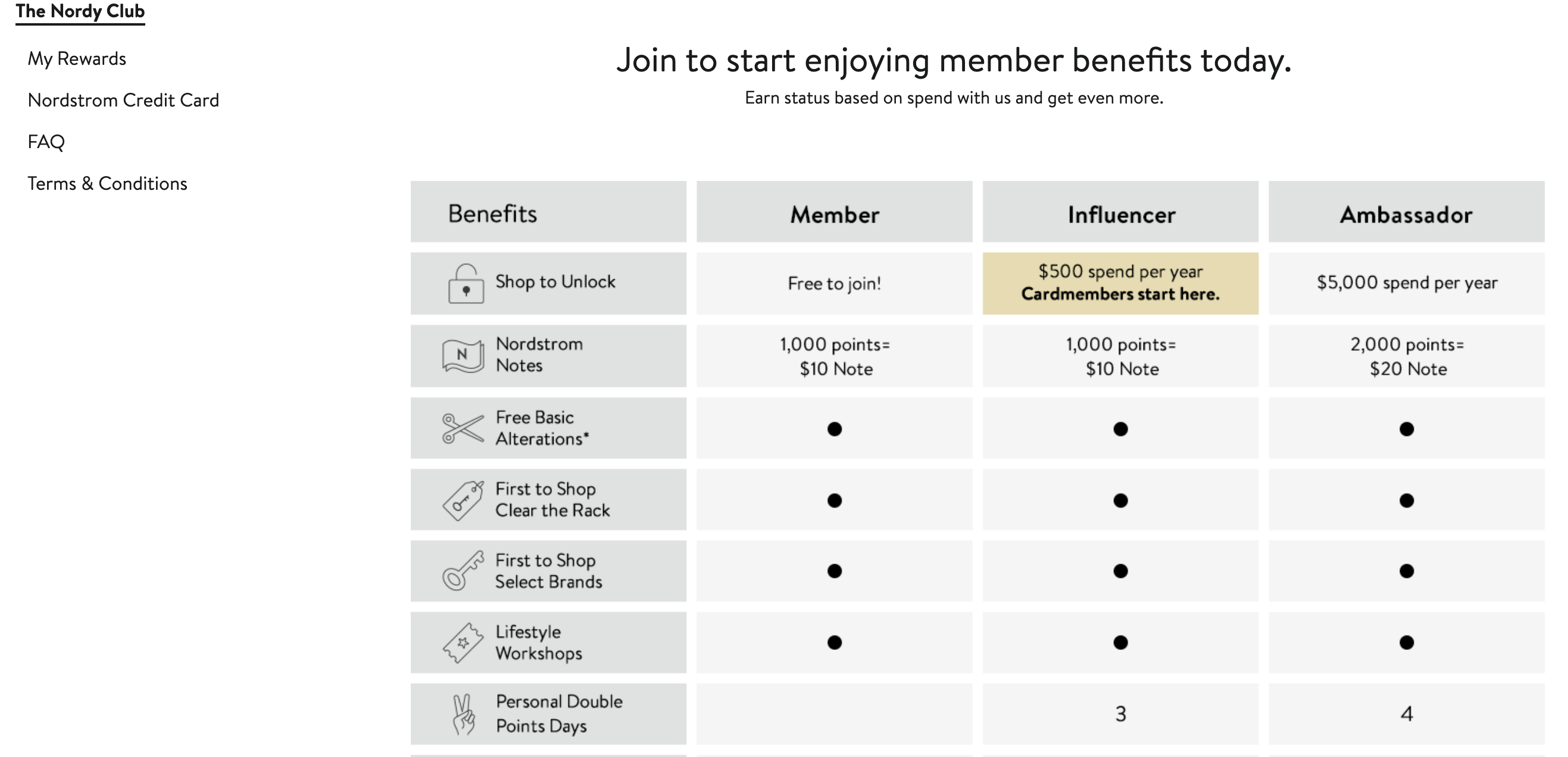
In a tiered loyalty programme, customers progress through levels by accumulating spend, points, or engagement. Each tier unlocks increasingly valuable rewards, better benefits, and premium privileges. Higher tiers incentivise the most commercially beneficial behaviours, encouraging customer aspiration. The Nordy Club is a well-known example that builds a strong sense of social status.
What Is the Best Industry for a Tiered Loyalty Programme?
Tiered programmes are most effective for brands where customers spend more but purchase less often. Automotive, hospitality, and travel are the clearest examples. High-quality brands with premium-priced products also commonly use tiered structures to offer complementary benefits or exclusive services at higher tiers.
When Do Tiered Loyalty Programmes Align with Your Goals?
Tiered loyalty is a good match for brands that want to reward their most valuable customers with more than just discounts. It works especially well when higher spending naturally unlocks greater privileges. Consider this programme type if any of the following align with your brand’s objectives:
You want to keep customers engaged between long-cycle purchase decisions
You want to shield top spenders from competitive switching
You want to tie social recognition or status to different levels of customer spend
You prioritise a premium shopping experience as a differentiator
If several of the above resonate, a tiered programme could be one of the most powerful tools in your loyalty strategy. Done well, it turns your highest-value customers into long-term advocates who are genuinely motivated to maintain and grow their relationship with your brand.
Do Demographics Affect the Performance of Tiered Programmes?
There is no conclusive research indicating that tiered programmes skew toward any particular demographic. However, according to the Capgemini Research Institute, 72-74% of consumers rank quality as the most important factor in purchasing decisions, suggesting that the quality of the tier experience matters as much as the rewards themselves.
What Are the Challenges of Tiered Programmes?
Tiered programmes offer rewards for brands that get them right, but they also come with significant operational demands. The complexity of managing multiple levels, each with distinct rewards and engagement requirements, means careful planning is essential before launch. The most common challenges to prepare for are:
Lower-tier members may find progression to higher tiers daunting, reducing engagement
CRM and marketing resources are needed to maintain engagement between purchase cycles
Tier structure and associated rewards must be clearly differentiated and perceived as genuinely valuable at each level
Despite these challenges, tiered programmes remain one of the most effective ways to build long-term loyalty with high-value customers. With the right CRM, reward structure, and engagement strategy in place, the returns can be substantial.
4) What Is a Premium (VIP/Paid) Loyalty Programme?
Premium loyalty programmes, also called VIP or paid programmes, require customers to pay a monthly or annual fee in exchange for exclusive benefits. Amazon Prime is the most recognised example. The model gives brands greater flexibility to enhance the customer experience with perks such as free shipping, early access to products, and personalised anniversary rewards.
When Do Premium Loyalty Programmes Work Best?
Not every industry sees equal returns from premium loyalty programmes. Sector fit matters, and the data bears this out. Research from Clarus Commerce analysed where paid loyalty models perform strongest, focusing on categories where customers make regular, high-value purchases and where exclusive benefits are most likely to influence behaviour:
The list goes as followed:
58% for Groceries
49% for Clothes & Accessories
36% for Health & Beauty
35% for Fuel
29% for Travel & Hospitality
28% for Entertainment
22% for Furniture
If your business falls into any of these categories, a premium model is worth serious consideration. The higher the purchase frequency and emotional investment in your product category, the more compelling a paid loyalty programme becomes for deepening customer relationships and driving lifetime value.
How Do Premium Programmes Align With Business Goals?
Premium loyalty centres your unique value proposition around the paying customer, effectively increasing lifetime value by providing rewards that nurture an emotional connection. It works best for brands that want to stand out in competitive markets and attract experience-driven customers. It’s a good match if:
You want to stand out in competitive markets such as fashion, health, or professional services
You want to develop a high perceived value for your products or services
You aim to attract experience-driven customers and convert them through upsells and cross-sells
Premium loyalty lives or dies on perceived value. Paying subscribers hold your brand to a higher standard, and rightly so. If your product, service, and rewards consistently exceed their expectations, you will see it reflected in renewal rates, average spend, and the quality of word-of-mouth your programme generates.
Do Demographics Affect Premium Programme Performance?
Premium programmes have broad demographic appeal. According to Retail Customer Experience, the proportion of each generation planning to join a premium loyalty programme when offered is consistent across all age groups. Adoption intent is highest among younger consumers but still substantial enough among older generations. The breadth of appeal makes premium programmes viable for most customer bases.
What Are the Drawbacks of Premium Programmes?
Premium programmes demand more from your business than most other loyalty models. Paying subscribers enter the relationship with higher expectations, and maintaining that standard requires ongoing investment in rewards, content, and experience. Before committing to this model, make sure your team is equipped to handle the following:
Benefits need regular rotation and ideation to sustain perceived value for paying subscribers
Because subscribers have already paid, they expect consistent, above-expectation value throughout their membership
Newer businesses with limited social proof tend to see lower take-up rates
Social proof and reward quality are the two pillars of a successful premium programme. Businesses that struggle with any one of them will find retention difficult. Start small, gather member feedback early, and build your offering iteratively rather than launching everything at once.
5) What Is a Loyalty Partnership Programme?
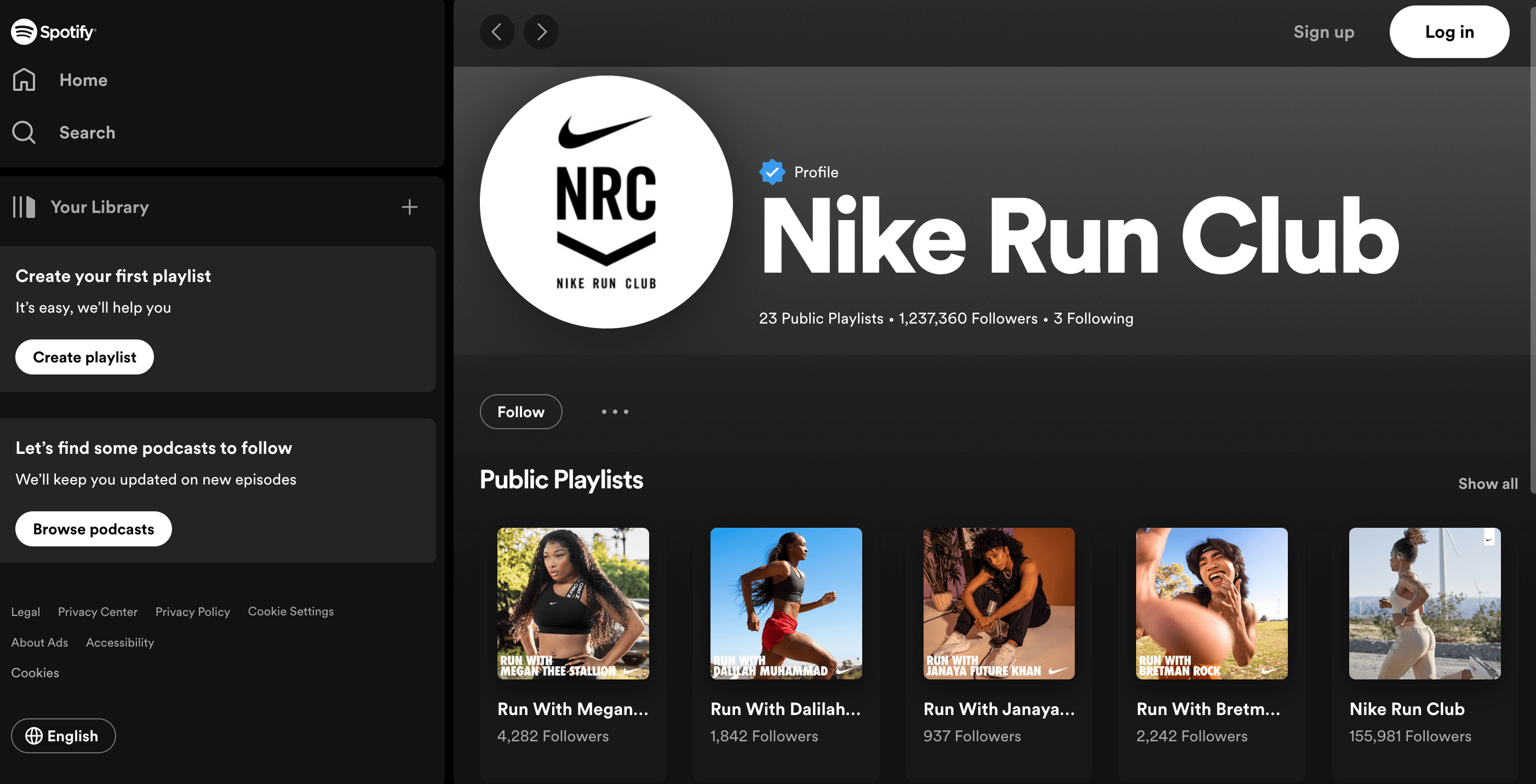
Loyalty partnership programmes reward customers for purchasing from or engaging with partner brands. The aim is to build a mutually beneficial alliance: each partner gains exposure to the other’s customer base through exclusive, cross-brand promotions. Airline and hotel partnerships are the classic example; Nike Run Club on Spotify is a more contemporary one.
Which Industries Suit Loyalty Partnerships Best?
Loyalty partnerships work across virtually every industry. Large, well-known brands most commonly benefit from this model. Smaller businesses also benefit too, particularly when partnering with a more established brand, as they gain rapid audience exposure and credibility with new customer segments.
What Makes Loyalty Partnerships Valuable?
Loyalty partnerships are most valuable when they solve a specific business problem, whether that is reaching a new audience, reducing acquisition costs, or strengthening brand credibility through association. Before exploring potential partners, it is worth identifying which of these objectives matters most to your business right now:
You want a cost-effective way to grow your marketing reach
You want to collect customer data that helps you understand new audience segments
You are actively interested in co-creating value with other brands
You want to enhance your brand’s reputation through association with credible partners
Partnerships work best when both brands bring something genuinely useful to the table. If the goals above resonate, start by mapping out which partner profiles would add the most value to your customers. A well-chosen alliance can deliver results that neither brand could achieve independently.
How Do Demographics Affect Success in Loyalty Partnerships?
Demographics are essential to how partnerships work. Both partnering brands must assess whether their audiences share sufficient overlap and genuine interest in the alliance. Use customer feedback as part of your partnership evaluation process. If the collaboration does not feel intuitive and valuable to customers, the partnership will not deliver meaningful results.
What Are the Challenges of Loyalty Partnerships?
Loyalty partnerships can deliver outstanding results, but they are among the most complex programmes to establish and maintain. The challenges tend to emerge when the businesses involved have different priorities. Going in with a clear-eyed view of the following will save time:
Aligned values, audiences, and goals
Mutually beneficial reward structures
Technical integration requirements for real-time data sharing and transparent reporting
Requirements for ongoing goal alignment between partners, as this can drift over time
Most partnership challenges are manageable with the right contractual foundations and communication cadence in place. Agree on goals, reporting structures, and review cycles before launch rather than after. Treating the partnership as an ongoing collaboration rather than a one-off deal consistently delivers better long-term outcomes.
6) What Is a Gamified Loyalty Programme?
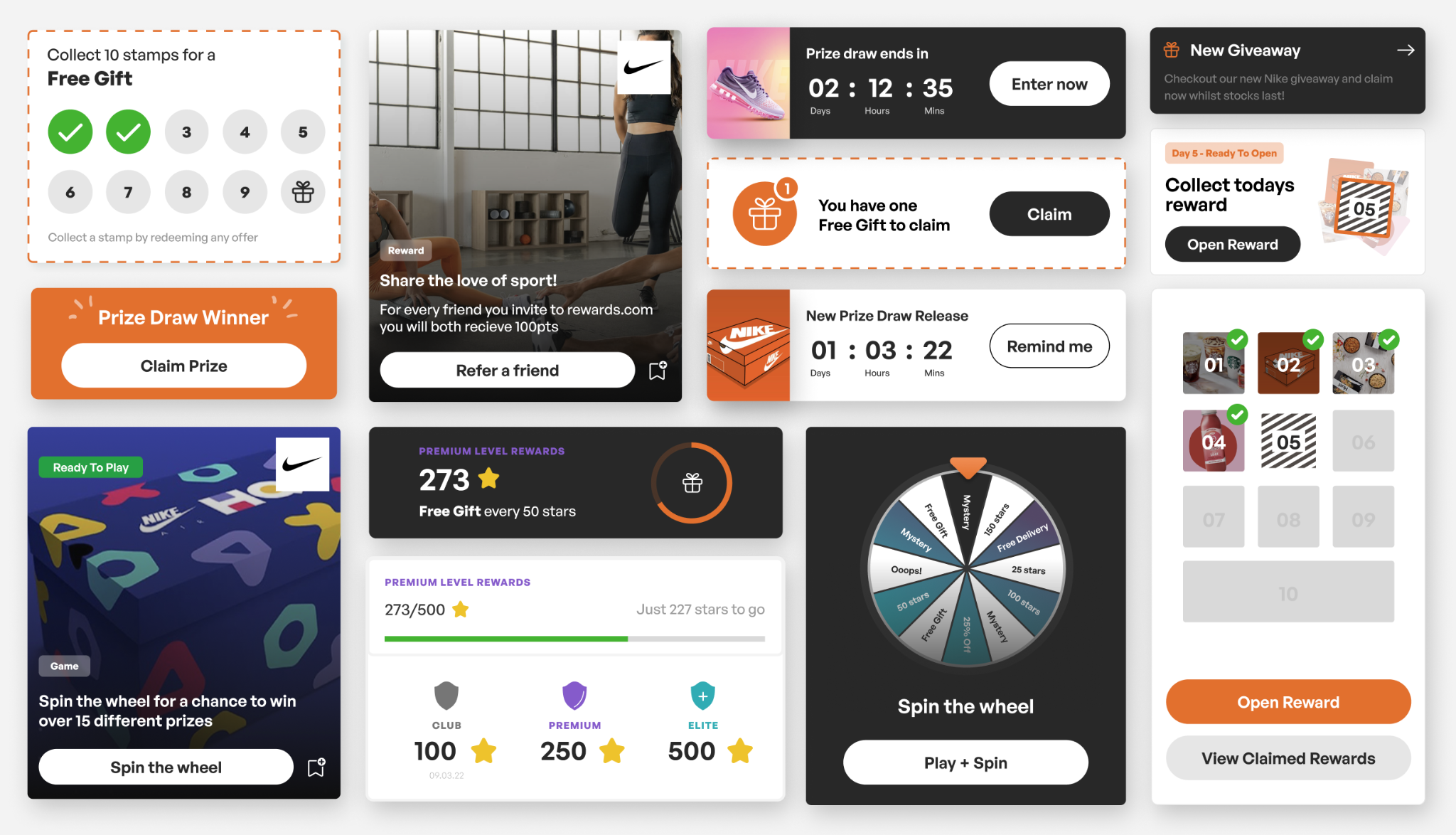
Gamified loyalty programmes use interactivity, including challenges, badges, leaderboards, and progress mechanics, to drive repeat behaviours. These can range from leaving a review to completing wellness goals. Brands often combine gamification with other programme types to boost customer engagement. According to TMS, 85% of consumers surveyed said gamified elements improved their engagement with loyalty programmes.
When Does Gamification Work in Loyalty Programmes?
Gamification benefits most sectors. Healthcare brands use it to promote well-being and reduce workplace stress; food brands use it to enhance the dining experience. Any business seeking to increase engagement beyond transactions can benefit from a well-designed gamified loyalty platform.
What Are the Key Benefits of Gamified Programmes?
Gamification consistently outperforms other loyalty mechanics for driving active, ongoing engagement. Its ability to reward behaviours beyond transactions makes it particularly valuable for brands that want customers to interact with them regularly, not just at the point of purchase. It is worth serious consideration if:
You want to incentivise repeat behaviours beyond purchases
You want to encourage non-transactional engagement with your brand
You are already using or expect to use more than one loyalty programme type
Building a sense of community and brand connection is a core objective
Brands that invest in gamification tend to see stronger communities and higher emotional attachment than those relying on transactional rewards alone. If building long-term behavioural habits around your brand is a priority, gamification offers more levers to pull than any other programme type.
How Much Do Demographics Affect Gamified Programmes?
Most research on gamification in loyalty focuses on adults in workplace settings. With mass adoption continuing, the 18 to 45 age group currently represents the strongest demographic for gamified loyalty. Importantly, most loyalty programmes require a minimum age of 18, which shapes the target audience.
What Are the Challenges of Implementing Gamification?
Gamification is one of the most engaging loyalty mechanics available but is also one of the most resource-intensive to build and sustain. The risks largely come down to underfunded or poorly designed game elements. These can do more damage to engagement than having no gamification at all.
Key challenges include:
High development costs if built internally rather than through a platform partner
Ongoing maintenance is required to keep the experience fresh; stale game mechanics quickly lose engagement value
Game design expertise is needed to create experiences that are genuinely compelling rather than superficial
Businesses that treat gamification as a one-time build tend to see engagement drop off quickly. Partnering with a specialist platform rather than building in-house is often the smarter route, reducing both upfront costs and the ongoing burden of keeping the experience fresh.
7) How Do Referral Loyalty Programmes Work?
Referral loyalty programmes reward customers for recommending your business to others. Rewards range from discounts and credits to early product access. The model delivers strong ROI: 77% of consumers trust recommendations from friends or family, according to a Nielsen study.
Dropbox’s model of awarding cloud storage for referrals is a well-cited example.
Where Are Referral Programmes Most Effective?
Every business benefits from referrals in some form. The question is whether to formalise that behaviour into a structured programme. Businesses where word-of-mouth already drives a meaningful share of new customers can formalise and scale what is already happening organically.
When Does a Referral Programme Align With Your Goals?
No matter what happens in business, one thing is for certain; customers will always share reviews and refer others. If it’s going to happen, why not build something that guarantees customer loyalty? Referral programmes are particularly useful if:
You want to expand your customer base with little cost because motivated brand advocates will be acquiring new prospects
You want an effective method of identifying your most loyal customers and targeting them with great rewards
You want to build strong relationships and deepen connection with loyal customers by converting them to brand ambassadors
You want to leverage the ultimate form of brand credibility, which is social proof
Peer recommendations carry a level of trust that paid marketing rarely achieves. Brands that regulate their referral process and reward it generously tend to attract higher-quality leads at a fraction of the usual acquisition cost. The key is making the entire process feel natural, easy, and worthwhile.
Which Demographics Respond to Referral Programmes?
Millennials were traditionally the primary focus for referral-led acquisition. As Gen Z’s buying power grows, the demographic emphasis is shifting. That said, people of all ages share positive experiences, and referral programmes can be effective across a broad age range when the product and rewards are genuinely compelling.
How Can You Build a Successful Referral Programme?
Referral programmes are only as strong as the product or experience sitting behind them. Unlike other loyalty models, their success is directly tied to genuine customer satisfaction; you cannot incentivise a recommendation that customers do not authentically want to make. The challenges here reflect that:
Referral programmes fail if your product or service does not genuinely outperform alternatives
The referral process must be easy, intuitive, and rewarding; friction kills conversion
Asking for referrals too early in the customer relationship can damage trust
Fraud prevention and programme monitoring require investment in tech and ongoing management
Getting referral programmes right requires equal attention to the customer experience, the mechanics of the programme itself, and the technology underpinning it. Brands that invest in all three consistently outperform those that treat referrals as an afterthought.
Hybrid loyalty programmes combine elements from two or more programme types to create a more comprehensive rewards experience. The most common combination pairs points-based earning with tiered benefits, but any pairing is possible. Starbucks Rewards is a well-known example. It blends Stars (points), tiers, and gamification into a single cohesive experience.
Which Industries Benefit From Hybrid Programmes?
Hybrid programmes are well-suited to industries where customers engage frequently and with varied behaviours, with retail, hospitality, and services being the strongest fits. If your customer base spans multiple segments with different engagement preferences, a hybrid approach can serve all of them without forcing trade-offs.
How Do Hybrid Programmes Align With Business Goals?
Hybrid programmes are designed for brands that cannot afford to leave any customer segment behind. By combining two or more loyalty mechanics, they create a richer, more flexible experience that accommodates different behaviours and preferences within the same programme. They are particularly worth considering if your customer base is diverse and you have any of the following goals:
You want to appeal to different customer segments simultaneously
You want multiple engagement paths within a single programme
You want to drive both transactional and emotional loyalty
You need flexibility to evolve your programme as your business grows
Variety is the core strength of a hybrid approach. Customers who are unmoved by points may respond strongly to gamification; those indifferent to tiers may value a cause-led programme. A well-designed hybrid programme covers all the angles, turning a broader range of interactions into meaningful moments.
Do Demographics Affect Hybrid Programme Performance?
Hybrid programmes have near-universal demographic appeal because they offer multiple engagement modes. Different customer groups can gravitate toward the aspects of the programme that resonate most with them, whether that is points, tiers, or gamified challenges. Which is why hybrid models are one of the most inclusive programme types.
What Are the Drawbacks of a Hybrid Loyalty Programme?
The flexibility that makes hybrid programmes so appealing is also what makes them the most demanding to execute. Combining multiple loyalty mechanics adds complexity at every stage, from initial design through to ongoing management. Brands considering this route should go in with a clear understanding of what they are taking on. Common drawbacks include the following:
More complex to design and roll out than single-type programmes
Managing multiple elements increases costs, especially as the programme scales
Too many options can overwhelm customers if the experience is not clearly structured and intuitive
Ongoing maintenance is resource-heavy in terms of time, technology, and team input
Balancing different elements requires careful design to avoid a disjointed customer experience
Complexity is manageable with the right systems and team in place, but it needs to be planned for rather than discovered post-launch. To succeed, start with two complementary mechanics and expand gradually, instead of trying to build the full vision from day one.
9) What Is a Value-Based Loyalty Programme?
Value-based loyalty programmes link customer rewards to social causes or community impact. These programmes align with customers’ personal values, allowing members to direct rewards to environmental initiatives or local and national charities. The Body Shop’s Love Your Body Club is a well-known example that combines points with social and environmental advocacy.
What Are the Common Use Cases for Value-Based Programmes?
Value-based programmes are especially effective in industries where customers care about ethical or social issues or professional interests, i.e., membership associations, charities and professional bodies. Brands in food, beauty, and fashion that sell sustainable or ethically produced products are also great fits. These programmes often work best when they reinforce an existing commitment to sustainability rather than creating one from scratch.
How Do You Know if a Value-Based Programme Is Right for Your Brand?
Value-based programmes are best suited to brands with a genuine story to tell beyond their products. Customers drawn to this model are motivated by purpose as much as rewards, so your business objectives and your social commitments need to point in the same direction. This programme type is the ideal choice when:
You want to build deeper emotional connections with customers
Your brand has genuine, demonstrable social or environmental commitments
You want to attract and retain socially conscious consumers
Differentiation in a crowded, competitive market is a priority
Brands that get the most from value-based loyalty make the programme feel like a natural extension of what they already stand for. If your social or environmental commitments are central to your identity, this model gives you a structured way to turn those values into lasting customer loyalty.
Which Demographics Participate More in Value-Based Programmes?
Value-based programmes resonate most strongly with Millennials and Gen Z, who are more likely to purchase from, and remain loyal to, brands whose values align with their own. That said, purpose-led programmes are growing in appeal across all age groups as consumer expectations around corporate responsibility continue to rise.
What Are the Drawbacks of Value-Based Programmes?
Value-based programmes carry a unique risk that most other loyalty models do not: inauthenticity. Customers who care deeply about social and environmental causes are also the most likely to scrutinise your commitments. Getting the execution wrong can cause more reputational damage than not having a programme at all.
Here are the key considerations to keep in mind before starting a programme:
Maintaining authenticity and avoiding accusations of ‘purpose washing’, customers are quick to spot performative commitments
Balancing commercial interests with genuine social impact
Measuring and communicating programme outcomes in a transparent, credible way
Implementation costs for social impact initiatives are typically higher than for transactional programmes
Navigating these challenges successfully often means treating social impact as a genuine business commitment. Transparency is non-negotiable; publish your outcomes, acknowledge shortfalls, and involve your customers in shaping the programme. That level of honesty is what builds lasting trust.
10) What Is an Omnichannel Loyalty Programme?
Omnichannel loyalty programmes consistently recognise and reward customers, regardless of whether they interact with your brand in a physical store, on a mobile app, through your website, or via social media. Sephora’s Beauty Insider is a typical example, offering a cohesive experience across online, in-store, and app touchpoints.
Where Do Omnichannel Programmes Work Best?
Omnichannel programmes are most valuable in retail, hospitality, and services – essentially any sector where customers routinely switch between online and offline interactions. Given that most businesses now have both a digital and physical presence, the relevance of omnichannel loyalty is broader than it once was.
When Is Omnichannel the Best Fit for Brand Loyalty?
Omnichannel loyalty programmes are best suited to brands that already operate across multiple customer touchpoints and want to make those interactions work harder. Evolving beyond treating each channel in isolation, the goal is to create a single, coherent experience that recognises and rewards customers wherever they engage. You’re making the right selection if:
You want to create a consistent brand experience across channels
You are looking to collect comprehensive customer datasets across all touchpoints
You want to drive traffic between online and offline channels
Modernising your customer experience is a strategic priority
Brands that commit to an omnichannel approach tend to see stronger data quality and better customer retention than those operating channel-specific programmes in parallel. If unifying your customer experience is already a strategic priority, a loyalty programme is one of the most effective ways to accelerate it.
How Do Demographics Affect Omnichannel Programme Performance?
Digital natives, Gen Z and Millennials have come to expect seamless omnichannel experiences as standard. However, the appeal of omnichannel loyalty is growing across all age groups. According to Harvard Business Review, 73% of shoppers of all ages now use multiple channels during their shopping journey, driven largely by convenience. Your omnichannel programme should match this accessibility.
When Do Omnichannel Loyalty Programmes Fall Flat?
Omnichannel programmes are technically the most demanding loyalty model to implement and maintain. The ambition of delivering a seamless experience across every channel is a huge undertaking. The gap between vision and reality can be wide without the proper resourcing. The challenges to plan for include:
Significant technical infrastructure is required to unify data across channels
Integration between disparate systems and platforms is complex and time-consuming
Implementation and maintenance costs are typically higher than for single-channel programmes
Consistent data collection and management across every touchpoint is operationally demanding
Staff training across all customer-facing channels is essential for maintaining experience consistency
Most omnichannel challenges are rooted in infrastructure and data, so the right technical partners and a phased implementation plan can solve them. Trying to connect every channel simultaneously rarely succeeds; start with two or three core touchpoints and expand methodically.
How Do You Choose the Right Loyalty Programme for Your Brand?
The right loyalty programme depends on four key factors: your business size and sector, your customer base and their behaviours, your available resources, and your primary objectives. Whether your goal is retention, acquisition, or deeper engagement, the answer will be different for every brand, so take the time to assess honestly before committing.
If you are new to loyalty, an always-on programme is the safest starting point. It is flexible enough to grow with your business, simple to implement, and appeals to most customer segments. From there, you can layer in additional programme types as your understanding of your customers deepens.
Whatever you choose, weigh the challenges honestly. The best loyalty programme is not the most sophisticated one; it is the one your team can execute well, your customers will genuinely value, and your business can sustain over the long term.
How do I choose between different types of loyalty programmes?
Start by assessing your business size, sector, customer base, and available resources. Then align your choice to your primary objective, whether that is retention, acquisition, or engagement. Consider your target demographics and your team’s capacity to launch and manage the programme effectively.
What makes premium loyalty programmes worth the investment?
Premium programmes generate recurring revenue through membership fees, provided the benefits are compelling. When executed well, they deepen customer relationships and drive lifetime value more than standard transactional programmes.
What is the difference between points-based and tiered loyalty programmes?
Points-based programmes reward customers in proportion to spend, with all participants earning equally. Tiered programmes add levels of membership with escalating benefits, incentivising customers to increase their spend and engagement to reach higher tiers and access more valuable rewards.
What role does customer data play in loyalty programmes?
Customer data powers personalisation, enabling businesses to tailor rewards, predict preferences, and optimise offerings over time. Without it, loyalty programmes default to one-size-fits-all mechanics that fail to build genuine connection.
How can I measure the success of a loyalty programme?
Track enrolment rates, reward redemption, purchase frequency, average transaction value, and customer lifetime value. Supplement these with engagement metrics and satisfaction scores, then review quarterly and adjust based on data.
What are the main benefits of hybrid loyalty programmes?
Hybrid programmes offer flexibility to serve different customer segments and balance transactional with emotional loyalty. Their modular structure means you can adapt the programme over time as your business and customer base evolve.
How often should loyalty programme rewards be updated?
Conduct a formal review quarterly, adjusting rewards based on redemption rates, customer feedback, and business objectives. Stale rewards are one of the fastest routes to disengagement, so regular refreshes are essential.
What makes omnichannel loyalty programmes effective?
Omnichannel programmes meet customers wherever they are. By recognising and rewarding them consistently across every channel, they eliminate friction and deliver the seamless experience that modern consumers expect.
How do value-based loyalty programmes drive engagement?
Value-based programmes build emotional loyalty by connecting rewards to causes customers care about. They attract socially conscious consumers and help brands stand out in crowded markets, but only if commitment to such values is genuine.
Mark Camp
Mark is the Founder and CEO of Propello Cloud, an innovative SaaS platform for loyalty and customer engagement. With over 20 years of marketing experience, he is passionate about helping brands boost retention and acquisition with scalable loyalty solutions.
Mark is an expert in loyalty and engagement strategy, having worked with major enterprise clients across industries to drive growth through rewards programmes. He leads Propello Cloud’s mission to deliver versatile platforms that help organisations attract, engage and retain customers.
Start your customised Propello Cloud journey today
Explore the platform’s scalability, features and customisation options and get answers to your unique questions.


.png)