10 Ways to Reduce Customer Acquisition Costs in Financial Services
22 min to read
Published: July 2, 2024
Updated: September 14, 2026
Customer acquisition is among the heaviest costs in financial services, and in a crowded market, winning customers the hard way bleeds your margins. It doesn’t have to. You keep CAC low by going after the whole cost of winning a customer, bringing them in cheaper and making each one worth more.
Mark Camp
CEO & Founder at PropelloCloud.com
Contents
Key Takeaways
Winning a customer in financial services is expensive, and most of that cost is staff time, not ad spend, so real savings come from rethinking the whole acquisition process, not just trimming media budgets.
Your existing customers are your cheapest growth: referral programmes and strong retention bring in new customers at a fraction of the cost, and referred customers tend to be worth more and stay longer.
Strategic partnerships reach new, already-trusting audiences and split the marketing bill, one of the fastest ways to lower CAC in a low-trust sector.
A tighter funnel is a cheaper funnel: fix drop-off points, prioritise quality leads over volume, and use attribution and split-testing to spend only where it converts.
Segmentation and personalisation cut acquisition cost and raise lifetime value together, by winning the right customers and keeping them longer.
The hard part isn’t finding customers. It’s winning them without spending more than they’re worth, then keeping them once you have. In our 2025 Loyalty Uncovered report, 70% of financial services firms flagged balancing acquisition with retention as a challenge. Get it wrong and CAC spirals, because every customer who churns is one you pay to win twice.
This blog breaks down 10 proven ways to bring CAC down in financial services, from brand partnerships and referrals to the retention work that stops you refilling the funnel every quarter.
Together they add up to a marketing engine that gets more efficient over time, not less. It’s the same approach I’ve watched cut acquisition costs for clients in this exact position.
But first, why tracking CAC matters at all.
Why Is It Important for Financial Services to Track and Reduce Customer Acquisition Costs?
As founder and CEO of Propello Cloud, I’ve watched customer acquisition costs (CAC) quietly decide which financial services firms thrive and which just tread water. When you’re competing on trust in a crowded market, the cost of winning each customer isn’t a back-office metric. It’s the number that sets your ceiling. Track it and cut it, or watch it cap your growth.
Cost-efficiency
Start with cost-efficiency. Every pound spent acquiring a customer is a pound you want working as hard as it can, which means looking hard at where the marketing budget goes and which channels actually pull their weight.
Cut the spend that isn’t converting, double down on the spend that is, and refine from there. The payoff is a business model that holds its margin instead of leaking it.
Sustainable Growth
Growth only counts if you can afford it. Financial services firms need to bring customers on at a pace they can actually sustain, and CAC is what decides whether that pace is possible.
Let the cost of each new customer climb too high and it drains the margin that should be funding your next stage of expansion. Keep it controlled and growth keeps building instead of stalling. That’s the difference between scaling and simply getting bigger.
Customer Lifetime Value (CLV)
CLV is the metric that makes CAC mean something. It’s what a customer is worth across the whole relationship, and it only means something read against what they cost to win.
A widely used rule of thumb, borrowed from SaaS, says lifetime value should run at least three times acquisition cost.
Treat it as a sanity check rather than gospel for financial services, but the principle holds: once CAC creeps past CLV, the model is broken and something has to change.
Strategic Decision Making
Finally, tracking CAC provides the data and insights needed to make informed, strategic decisions. It allows financial services providers to identify which marketing channels, campaigns, and customer segments are delivering the best return on investment.
That information lets you double down on what’s working and pivot away from what’s not. This data-driven approach is essential for optimising marketing efforts, allocating resources efficiently, and ultimately, driving growth.
How Can Financial Services Providers Lower Their Customer Acquisition Costs?
The most effective way to lower customer acquisition costs in financial services is to target the entire cost of winning a customer, not just the ad budget, because most of that cost isn’t media spend. Kitces Research puts the average cost of acquiring a single financial-advisory client at $3,119, and the part that stings is that around 83% of it is the adviser’s own time.
Trimming a media budget alone won’t move a number like that. The ten strategies below work because they attack the whole cost, the hours as much as the spend.
1) Strategic partnerships & collaborations
Strategic partnerships are one of the fastest ways to bring customer acquisition costs down. The right partner gives you access to a customer base that already trusts them, so you reach new segments and split the marketing bill instead of shouldering it alone.
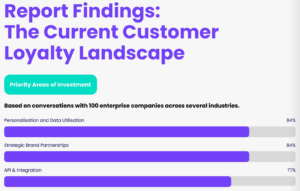
The wider market agrees. In our 2025 Loyalty Uncovered report, 84% of enterprise brands ranked strategic partnerships as a priority.
The trust that comes with partnerships matters more in financial services than almost anywhere. When people are wary about who they hand their money to, a familiar, credible brand alongside you lowers the guard that usually keeps acquisition costs high.
Co-branded campaigns take it further, splitting the cost and the creative across two budgets while putting your name in front of an audience you’d otherwise pay full price to reach.
Handled well, a partnership lowers the cost of the next customer and frees up budget and people to put toward everything else the business is trying to grow.
2) Referral programmes
Referral programmes turn the customers you already have into your cheapest acquisition channel. A happy customer vouching for you carries credibility no ad can buy.
The key to a successful referral programme is offering compelling incentives that motivate current customers to refer their friends, family, and colleagues. Whether it’s discounts, freebies, or cash rewards, showing appreciation for customer loyalty and support goes a long way in driving referrals.
And besides being cheaper to win, referred customers are also worth more once they’re in.
A Journal of Marketing study that tracked around 10,000 customers of a European bank found referred customers were worth at least 16% more over their lifetime than those acquired other ways and were less likely to leave.
The best part is referrals feed themselves. Every satisfied customer becomes a source of the next, and the cost of growth keeps falling as the programme runs.
3) Optimise lead funnels
Financial services has one of the most expensive lead funnels of any industry. First Page Sage puts the average cost per lead at around $653, rising past $760 for paid channels, well above most sectors.
When each lead costs that much, the funnel is where CAC is won or lost, so every stage of it earns scrutiny.
Start by finding the leaks. Map your customer acquisition strategy and pinpoint any bottlenecks or drop-off points from first touch to signed customer. Are potential customers losing interest at a particular stage? Are there obstacles preventing them from moving forward?
By addressing these issues and streamlining the conversion process, you can significantly enhance your overall conversion rate and minimise acquisition costs.
Then chase quality, not volume. A thousand leads that never convert cost more than a hundred that do, once you count the time and spend chasing them.
Target the audiences that actually fit your product and nurture the ones showing intent, and the cost of each new customer falls while the customers themselves get better. Cheaper funnel, higher-value customers, same spend.
4) Enhance customer retention
Retention is where the cheapest growth hides. Every customer you keep is one you don’t have to replace, which means lower churn, higher lifetime value and less pressure on acquisition to keep refilling the base.
In a sector where winning a customer is expensive, keeping one is the highest-return work you can do.
A well-designed loyalty and reward programme is one of the most reliable ways to enhance retention rates. Offering incentives and perks to customers who stick around creates a sense of loyalty and encourages repeat business.
These programmes also open a natural channel for cross-selling and up-selling, so each relationship is worth more the longer it runs.
Loyal, happy customers are more likely to become brand advocates who recommend you, and in financial services a personal recommendation clears the trust hurdle that makes cold acquisition so costly.
Turn enough customers into advocates and they generate new leads for you at a lower cost and with a higher conversion rate.
5) Analyse and optimise marketing channels
You can’t cut CAC if you can’t see where it’s coming from. That means knowing which channels actually bring in customers and which just spend money looking busy, then moving budget towards the ones that pay.
It sounds obvious, but plenty of financial services marketing runs on habit and gut rather than evidence, and that’s the habit that keeps CAC higher than it needs to be.
Attribution modelling is how you get that visibility. Assign credit to each touch-point a customer hits on the way to converting, and the channels doing the real work separate themselves from the ones just taking credit for it.
That’s what lets you cut budget deliberately, based on what’s driving conversions, instead of slashing lines because a quarter looked tight.
Pair that with straight ROI tracking, the cost of each campaign against the revenue it brings in, and you know exactly which channels earn their place. Then it’s a loop: test, measure, back the winners, drop the rest.
Run that loop consistently and marketing efficiency climbs while CAC falls, quarter after quarter.
6) Split testing
Split testing, or A/B testing, takes the guesswork out of what actually works. Run two versions of a page, ad or email against each other, measure which converts better, and let the winner earn its place.
There’s an upfront cost in setting tests up, but the return builds with every experiment you run. By refining your messaging, visuals and calls-to-action against real evidence rather than opinion, you steadily sharpen the assets that do your acquiring. And sharper assets convert more of the traffic you’re already paying for.
Sharpen it further by testing against segments, not just the whole audience. What converts a first-time saver won’t be what converts a high-net-worth switcher.
Split your tests by demographics, behaviour and need, and lean on your attribution data to read the results. Right message, right segment, right moment, and CAC keeps drifting down.
7) Social media and online advertising
Paid social and search are how you put your message in front of the exact people worth acquiring.
Platforms like Meta and Google let you target by age, income bracket, life stage, interests and behaviour, so a pension product reaches people near retirement and a first credit card reaches people who’ve never held one.
That precision is what makes the channel efficient. When your budget only shows ads to people with a real reason to care, less of it leaks on impressions that were never going to convert.
More of every pound goes toward customers you’ll actually win. Relevance is what keeps the waste out of the budget.
The other advantage is control. These platforms let you cap spend to the pound and watch performance in real time, so nothing runs away from you and nothing keeps running once it stops working.
You see what each campaign returns while it’s live, adjust on the evidence, and shut off whatever isn’t working.
8) Content marketing and thought leadership
Content marketing and thought leadership pull customers toward you instead of chasing them with ads. Genuinely useful content, the kind that answers the questions your customers are already asking, builds the one thing financial services runs on: authority.
When people see you understand their problem, trusting you with the solution is a smaller leap.
It doesn’t have to be complicated, blog posts, explainers, guides, the occasional webinar, all of it works if it’s worth reading. Publish consistently and you draw organic traffic and warm leads month after month, without paying a platform for every visit.
It’s slower than buying clicks, but the traffic keeps arriving long after the work is done.
Do it well and you stop competing on price and start competing on trust. A firm that reliably explains the confusing stuff becomes the obvious choice long before the customer is ready to buy, which means they come to you already half-sold.
That’s about the cheapest customer you can acquire, and often the most loyal.
9) Customer onboarding automation
Here’s a cost that hides in plain sight: the customers you’ve already paid to acquire, who give up halfway through signing up.
Every abandoned application is acquisition spend with nothing to show for it. Automating onboarding, digital forms, e-signatures, verification that happens in the background, is how you stop that leak.
A sign-up that takes minutes instead of days does two things at once. It cuts the manual work and paperwork that make each new customer expensive to process, and it removes the friction that sends people to a competitor before they’ve finished. Faster and smoother is cheaper for you and better for them.
Automated identity checks and credit verification carry their weight too, clearing compliance quickly and accurately without a person working through each case by hand.
That frees your team to spend time where it matters and keeps the cost of bringing each customer on board low enough that acquisition stays worth it.
10) Customer segmentation & personalisation
Blanket marketing is expensive marketing. Send the same message to everyone and most of it lands on people it was never going to convert, which is money straight out the door.
Segmentation fixes that: divide your audience by demographics, behaviour and need, and you can shape each message and channel around the group it’s actually for.
Speak to a segment’s actual situation and you convert more of them for less. A message built for someone remortgaging reaches them in a way a generic advert never will, so the same budget wins more customers.
Personalisation carries the same logic past the sale. Use what you know about each customer to make their experience genuinely relevant, and you win them and then you keep them. You also earn the right to offer the next product they actually need.
That’s a higher lifetime value from the same relationship, which is what makes the acquisition pay off in the first place.
Driving Financial Success through Cost-Effective Customer Acquisition Strategies
Lower CAC isn’t one tactic, it’s the whole system working together. The front end, sharper funnels, attribution, testing, partnerships, referrals, brings customers in for less. The back end, retention, personalisation, loyalty, keeps them long enough to pay back what they cost and more. Neglect either half and the maths stops working.
This is the work Propello Cloud does. We build loyalty and referral programmes that help financial services firms cut acquisition costs and keep the customers they win. If that’s what you’re trying to solve, let’s talk.
FAQs
What is customer acquisition cost (CAC) in financial services?
CAC is the total cost of winning one new customer, everything from ad spend and campaign costs to sales and marketing salaries, software and commissions, divided by the number of customers acquired. It runs high in financial services because trust takes longer to earn, so tracking and reducing it is central to staying profitable.
How can strategic partnerships help reduce customer acquisition costs?
Partnering with a brand your target customers already trust lets you reach new, pre-qualified audiences without paying full price to win their attention. You split marketing costs through co-branded campaigns and borrow the partner’s credibility, which matters most in a low-trust sector like financial services. The result is lower CAC and a wider reach.
What role do referral programmes play in reducing CAC for financial services?
Referral programmes turn existing customers into a low-cost acquisition channel by rewarding them for recommending you. A personal endorsement clears the trust barrier that makes cold acquisition expensive in financial services, so referred customers convert more readily. They also tend to stay longer and spend more, making them cheaper to win and more valuable.
What costs should be included in CAC?
Everything you spend to turn a prospect into a paying customer: advertising and media, marketing and sales salaries, software and tools, agency or contractor fees, and any commissions or referral rewards. Leaving out staff time is the most common reason a reported CAC looks lower than the real one.
What is a good customer acquisition cost for financial services?
There’s no single “good” number, because CAC only means something next to what a customer is worth. Rather than chasing a target figure, aim for a lifetime value at least three times your CAC and a payback period under a year. A high CAC can be perfectly healthy if those customers stay and spend.
What is the average customer acquisition cost in financial services?
It varies widely by sub-sector and how you measure it, but financial services consistently ranks among the most expensive industries. First Page Sage puts the sector’s cost per lead around $653, and Kitces Research puts the cost of acquiring a single financial-advisory client at roughly $3,119. Treat these as reference points, not targets.
What is a good LTV to CAC ratio?
A ratio of about 3:1, meaning each customer is worth at least three times what they cost to acquire, is the widely used benchmark, with 3:1 to 5:1 considered healthy. Below 1:1 you’re losing money on every customer; above 5:1 you may be under-investing in growth. The rule originated in SaaS, so treat it as a guide rather than a hard law for financial services.
What is a good CAC payback period?
The CAC payback period is how long it takes a customer to generate enough profit to cover what you spent acquiring them. Under 12 months is generally considered healthy, and the strongest performers recover their cost in around five to seven. The shorter it is, the sooner you can reinvest in winning the next customer.
How often should financial services firms measure CAC?
Track it every reporting period, and break it down by channel and customer segment rather than relying on one blended figure. A single company-wide CAC can hide the fact that some channels are wildly profitable while others quietly lose money. Segmented, regular measurement is what tells you where to shift budget.
Does reducing CAC mean spending less on marketing?
No. Reducing CAC is about efficiency, not austerity: getting more customers from the same spend, or the same customers for less. Blunt budget cuts often raise CAC by starving the channels that actually convert. The goal is to attack the whole cost of acquisition, including staff time and wasted funnel spend, not simply to spend less.
Mark Camp
Mark is the Founder and CEO of Propello Cloud, an innovative SaaS platform for loyalty and customer engagement. With over 20 years of marketing experience, he is passionate about helping brands boost retention and acquisition with scalable loyalty solutions.
Mark is an expert in loyalty and engagement strategy, having worked with major enterprise clients across industries to drive growth through rewards programmes. He leads Propello Cloud’s mission to deliver versatile platforms that help organisations attract, engage and retain customers.
Start your customised Propello Cloud journey today
Explore the platform’s scalability, features and customisation options and get answers to your unique questions.