Financial services lead generation is the work of attracting and qualifying prospects in a sector where trust runs low and regulation runs deep. Do it right and you build a pipeline of high-intent clients, not a list of cold names that never call back.
Mark Camp
CEO & Founder at PropelloCloud.com
Contents
Key Takeaways
Quality beats volume in financial services lead generation. Right-fit prospects convert more readily, cost less to serve, and grow into long-term clients rather than one-off wins.
Trust is the sector's core obstacle. Forrester found over half of US customers have low trust in their financial services providers, so earning it is the precondition for every lead.
The main challenges are a heavy compliance load, low consumer trust, a crowded market, and weak lead qualification. Each carries an opportunity for firms that handle it well.
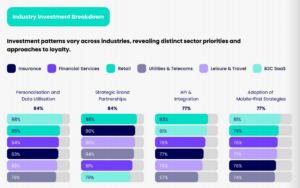
Personalisation and strategic partnerships are where the sector is investing. Propello Cloud's 2025 Loyalty Uncovered Report puts both at 84% among enterprise brands, the joint-highest priorities.
Referrals and loyalty are the strongest trust-based channels in a low-trust market, turning existing customers into leads who arrive already sold.
The avoidable mistakes are a weak value proposition, neglected nurturing, and ignoring the data. Fix those three and every tactic upstream works harder.
Why Does Lead Generation Matter in Financial Services?
Lead generation matters in financial services because it fills the pipeline and hands you a live read on what your market wants. Every enquiry is data, and read properly, it reshapes your whole marketing strategy, not just your prospect list.
You can gain a deeper understanding of your target audience’s needs, preferences and behaviours when you analyse lead information and engagement patterns. From there, you can:
Identify emerging trends
Refine your marketing messages to specific segments of your audience
Create personalised experiences that resonate with ICPs based on factors like income levels, investment preferences or financial goals
That’s the power of lead generation. You can create targeted campaigns that speak directly to the unique needs of each prospect, increasing the likelihood of conversion.
But the benefits don’t stop there.
What Are the Benefits of High-Quality Leads for Financial Service Providers?
High-quality leads pay off in three ways: better conversion rates, stronger ROI, and higher lifetime value. Chase fit over volume and you spend your time on the prospects most likely to become loyal clients, not the ones who were never going to sign.
Here is each benefit in closer detail.
Increased Conversion Rates
A prospect who already needs what you sell is halfway to yes before you say a word. That is the whole case for quality over volume at the conversion stage.
Right-fit leads arrive warmer, ask better questions, and move through the pipeline with less friction, because you are not talking them into something they never wanted.
Fewer dead ends, more signatures. That flows straight to more clients, more revenue, and a healthier bottom line.
Improved Return On Investment (ROI)
Conversion is about the individual deal. ROI is about where the money goes across all of them.
I tell finance teams the same thing every time: chase volume and you pay, in time and budget, to court people who were never going to buy. Chase fit and every pound works harder.
That is the real return. Not a bigger pile of leads, but a smaller pile of wasted effort. Concentrate spend on the prospects most likely to benefit and the maths turns in your favour.
Higher Lifetime Value
The best leads keep paying off long after the first sale. That matters more than ever in finance. Our 2025 Loyalty Uncovered Report found 70% of financial services firms struggle to balance winning new customers with keeping the ones they have.
Land the right prospects and that tension eases, because they stay.
They also grow. A client who trusts your judgement is the one who takes the second product, then the third, when the need arises. And the happiest of them become your cheapest acquisition channel, sending friends and colleagues your way without being asked.
The way to earn all of that is to keep serving the client you already won. Personalise around how their needs change, and lifetime value takes care of itself.
What Are the Challenges and Opportunities in Financial Services Lead Generation?
Financial services lead generation runs into four big challenges: heavy regulation, low consumer trust, a crowded market, and messy lead qualification. Each one also hides an opportunity. Handle them well and the same conditions that make finance hard to sell become the reasons the right prospects pick you.
Challenges
None of this is easy. Finance marketers are working against a minefield of compliance rules, a crowded market, and a public that starts from suspicion, all while trying to reach the right person and prove they can be trusted with the details. Here are the four that bite hardest.
1) Compliance and Industry Regulations
The first hurdle is reaching the right audience without falling foul of the rule-book. Anti-money laundering, know your customer, the FCA’s Consumer Duty in the UK: the compliance load is heavy and it is not optional.
Those checks exist for good reason, and they do confirm who a customer is. But every extra step is friction, and friction at onboarding is where hard-won leads quietly slip away.
2) Low Consumer Trust and Credibility of Financial Services
Regulation gets harder still when you remember where trust in this sector sits. It is low, and that is putting it kindly.
When trust runs that thin, people think twice before handing over personal details, and those details are exactly what you need to qualify and nurture a lead. Winning the data means winning the trust first.
3) Highly Competitive Market
The market is crowded and getting more so. Fin-tech disruptors have pulled customers across with slick, convenient, better-priced products, and traditional providers have answered by overhauling how they market themselves. The bar for a good experience keeps rising.
What are they all competing on? Increasingly, personalisation. Our 2025 Loyalty Uncovered Report found personalisation among the top investment priorities for enterprise brands, at 84%, with financial services firms right in step at 84%.
When that many providers chase the same thing, a personalised experience stops being an edge and becomes the price of entry.
So standing out is hard, and getting harder. To pull the right leads out of a sea of rivals, you need a strategy built to differentiate, one that engages customers instead of shouting at them.
4) Creating a Working Qualification Process
Not every lead is a real lead. Your sales team learns this fast: interest is not intent, and a form fill is not a signature.
That is why qualification matters more here than almost anywhere. Skip it and your team burns hours chasing prospects who were never going to convert.
Finance buys slowly, through long cycles, layered decisions and regulatory checks, so the discipline to sort the ready from the merely curious is what keeps conversion rates from sliding.
Opportunities
Every one of those challenges has a flip side. Handled right, the hard parts of finance lead gen turn into openings most other sectors never get.
1) Building a Customer Base
Capture a lead’s details, engage them properly, and you have done more than fill a database. You have started a relationship you can guide toward a sale, and the roster you build is made of people who actually want what you offer, not names you bought.
2) Relationship Building and Trust
In finance, trust is the whole game. Lead generation is your chance to earn it, one useful interaction at a time, by teaching rather than selling.
Educational content does that work. Answer the questions a nervous customer is actually asking, and you position yourself as the safe, expert pair of hands they want before a big financial decision. Give first, and the trust that is so scarce in this sector starts to build in your favour.
3) Up-selling and Cross-selling Opportunities
Lead generation is not only about new faces. Done well, it surfaces what your existing leads and clients actually need next, which is where cross-sell and upsell live. Line up the right additional product with a real goal and you lift lifetime value while deepening the relationship.
That is also where loyalty and reward programmes make a difference. Incentivise the behaviours you want, and engagement, referrals and repeat business tend to follow.
4) Referrals and Word-of-Mouth Marketing
In a sector starved of trust, a referral is worth more than any ad you could run. A recommendation from someone a prospect already trusts clears the credibility hurdle before the first conversation even starts.
That is why a referral programme can be such a rich seam for financial services. It turns your happiest customers into your most persuasive sales channel, bringing in leads who arrive pre-sold on the one thing finance struggles hardest to earn: trust.
10 Tips for Generating High-Converting Financial Services Leads
Generating high-converting leads in finance is not a campaign you launch and leave. It is a discipline: test, measure, refine, repeat. The providers who win keep sharpening their messaging, targeting and tactics against real data instead of setting them once and hoping.
The ten tactics below are where that work pays off, each one chosen for the financial sector specifically.
1) Define Your Target Audience
Everything starts here. You cannot write a message that resonates until you know exactly who you are writing it for.
Dig into the demographics, income levels, financial goals and investment preferences that define your ideal client. Then build your messaging around those specifics.
Speak to a prospect’s actual situation and they feel seen, which is the moment engagement turns into conversion.
2) Develop Compelling Value Propositions
In a crowded market, a strong value proposition is what pulls a lead toward you instead of the firm next door.
Features alone won’t do it, anyone can list what they offer. Show instead what the client actually gets: the problem you solve, the goal you help them reach, the specialised expertise behind it.
Make the distinctive value plain and the choice becomes easy.
3) Optimise Your Website for Lead Generation
For most leads, your website is the first impression, so build it as a conversion tool from the first click.
Clean navigation and a professional look keep people there. Clear calls to action tell them what to do next. Contact forms, consultation requests, newsletter sign-ups: place them where interest peaks and make them impossible to miss.
Every redundant step you remove is a lead you keep.
4) Create Informative and Educational Content
Good content earns trust before a sales conversation ever happens, and in finance that trust is half the battle. Aim to teach, not just promote. Vary the format so you meet people where they are: long reads for the researchers, video and podcasts for everyone else.
Offer genuinely useful insight, then gate the best of it behind a simple form. You capture the lead and prove your expertise in the same move.
5) Utilise PPC Advertising
Pay-per-click (PPC) advertising, on Google Ads or the social platforms, puts you in front of people already searching for what you offer. The targeting is the easy part. Execution is where PPC is won or lost.
Write ad copy that leads with a concrete benefit, point it at a landing page built for one action, and match the message across both. Get that alignment right and the clicks arrive primed to convert.
6) Leverage Social Media
Social media builds awareness and feeds your pipeline, but only if you fish where the fish are. For most financial services, that means LinkedIn first.
Show up consistently with content worth reading, join the conversations your prospects are already having, and answer questions in the open where the expertise is visible. Then put budget behind it.
Paid targeting by demographic and interest gets you in front of the right people at scale and drives them back to your site.
7) Offer Free Consultations or Assessments
Sometimes the fastest route to a lead is to give something away first. A free consultation or assessment puts your expertise on show and lets a wary prospect test you before they commit.
Use the session to listen more than you pitch: understand their situation, then give a genuinely useful recommendation. You build credibility and trust in real time, and you walk away with the insight to guide every conversation that follows.
8) Utilise Email Marketing
Email is still the workhorse of lead nurturing, cheap to run and unmatched for staying in touch across a long finance sales cycle. The lever is segmentation.
Split your list by behaviour, interests and where each lead sits in the journey, then send messages that actually fit. Lead with value every time, whether that is education, an exclusive offer or a simple check-in.
Watch open and click rates to spot your warmest leads, and concentrate your follow-up there. Stay useful and stay present, and you move leads through the funnel without ever having to shout.
9) Host Webinars
Webinars are one of the strongest lead generation formats finance has, because they let you demonstrate expertise live and interact with prospects in real time.
And finance audiences show up: ON24’s 2025 Digital Experience Benchmarks for Financial Services found meetings booked via webinars rose 26% year over year, a direct line from attendance to pipeline.
To earn that, pick topics that hit your audience’s real concerns head-on, then promote hard across email and social to fill the room. On the day, leave plenty of space for questions. An engaged attendee who got a straight answer from your team is a lead already halfway to trusting you.
10) Build Strategic Partnerships
Finally, don’t underestimate strategic partnerships as a lead generation channel. There is a reason they rank so high. Our 2025 Loyalty Uncovered Report found 84% of enterprise brands investing in strategic brand partnerships, level with personalisation as the single biggest priority.
The play is simple. Team up with businesses that serve your market but sell something different. A financial advisor might partner with an accountant, an estate planner or an estate agent, then cross-promote and swap leads that fit you both.
Everyone reaches a bigger audience, and your existing clients gain from being pointed toward other trusted names. Keep the relationship genuinely mutual, find content and events you can run together, and the referrals keep coming.
What Are the Most Common Financial Services Lead Generation Mistakes to Avoid?
Three mistakes quietly sink most financial services lead generation efforts: a weak value proposition that fails to land, lead nurturing left to chance, and decisions made without looking at the data. Each is avoidable, and fixing them lifts everything upstream.
Weak Value Proposition
The fastest way to lose a lead is to give them nothing to hold onto. A vague or generic value proposition gets scrolled past no matter how sharp the design or clever the copy.
So say plainly what you do, who it is for, and why it beats the alternative. Name the problem you solve and the outcome the client walks away with. Get that right and prospects stop skimming and start paying attention.
Neglecting Lead Nurturing
Most leads are not ready to buy the moment they find you, and in finance the gap between first contact and signature is long. Neglect that middle stretch and even good leads go cold.
Nurturing is the work of staying useful across it: personalised emails that speak to a specific need, content matched to each stage of the decision, a timely call when the moment is right. Keep showing up with value and you keep leads warm until they are ready to act.
Disregarding Analytics
Too many firms run on instinct: throw tactics at the wall and hope. Without data, that is just guessing with a budget.
Track the numbers that matter, conversion rates, cost per lead, where your best leads come from, and the picture stops being a hunch. But the data only pays off if you act on it.
Review it regularly, ask hard questions of it, and let what you learn reshape where the budget goes. That is how a lead generation programme gets sharper every quarter instead of repeating the same misses.
Start Your Lead Generation Journey Today
None of this is easy. Strict regulation, a distrustful public, and a market that gets more crowded every quarter make financial services one of the hardest places there is to win a customer. But every tactic in this guide chips away at that, and the firms that combine them build a pipeline that keeps filling itself.
Referrals and loyalty sit at the heart of it. Where trust is the scarcest currency, a reward that turns happy customers into advocates brings in leads who arrive already sold. That is what leading loyalty and referral platforms like Propello Cloud are built to do.
What is the difference between lead generation and demand generation?
Demand generation creates awareness and interest across a wide audience. Lead generation captures that interest as contactable prospects you can nurture toward a sale. In finance the two run in sequence: demand gen warms a sceptical market, and lead gen turns the warmest of it into names your sales team can act on.
How long is the sales cycle in financial services?
Longer than most sectors. Financial decisions are high-stakes and often involve several people and regulatory checks, so weeks or months between first contact and signature is normal, especially for complex or high-value products. That length is exactly why consistent lead nurturing matters so much in finance.
Should you buy leads or generate your own?
Generating your own almost always wins on quality. Bought lists are cheap and fast but arrive cold, often poorly targeted, and raise data-consent questions in a regulated sector. Leads you generate through content, referrals and your own channels come pre-warmed and consent-clean, which counts for more in finance than raw volume.
What is a good conversion rate for financial services leads?
It varies too widely to name a single figure, because it depends on the channel, the product and how you define a lead. The more useful benchmark is relative: referral and inbound leads typically convert far better than cold paid traffic, so track conversion by source and move budget toward what performs.
How do data protection rules affect financial services lead generation?
Heavily. In the UK, data protection and privacy rules govern how you collect and use prospect data and when you need consent to market, while the FCA’s Consumer Duty expects clear, fair and non-misleading communications. Build compliance into your forms and messaging from the start rather than retrofitting it later.
Which metrics should financial services track for lead generation?
Start with cost per lead, conversion rate by source, and lead-to-client rate, then add customer lifetime value so you judge leads on what they become, not just what they cost. Tracking by source is the key part: it shows which channels earn more budget and which to cut.
Is B2B financial services lead generation different from B2C?
Yes. B2B finance tends to involve longer cycles, multiple decision-makers and higher-value deals, so it leans on relationships, referrals and account-based outreach. B2C moves faster and at higher volume, favouring paid channels, content and streamlined sign-ups. The trust principle holds for both, but the tactics and timelines differ.
How can smaller financial services firms compete for leads against larger brands?
By going narrow and personal where big brands go broad. Smaller firms can own a specific niche, answer the local or specialist questions bigger players ignore, and build genuine relationships at a scale enterprises struggle to match. Sharp targeted content and referrals level the field without a large ad budget.
What role does AI play in financial services lead generation?
AI increasingly handles the heavy lifting: scoring leads by likelihood to convert, personalising outreach at scale, and surfacing the prospects most worth your time. Used well, it sharpens targeting and frees your team for the human conversations that actually close in finance. It supports judgement rather than replacing it.
How much does lead generation cost for financial services?
There is no fixed price, it depends entirely on channel and approach. Referrals and organic content cost mostly time and compound over the long run, while paid search and social carry a clear per-lead cost that runs higher on competitive finance keywords. Measure cost per lead by channel to see what actually pays.
Mark Camp
Mark is the Founder and CEO of Propello Cloud, an innovative SaaS platform for loyalty and customer engagement. With over 20 years of marketing experience, he is passionate about helping brands boost retention and acquisition with scalable loyalty solutions.
Mark is an expert in loyalty and engagement strategy, having worked with major enterprise clients across industries to drive growth through rewards programmes. He leads Propello Cloud’s mission to deliver versatile platforms that help organisations attract, engage and retain customers.
Start your customised Propello Cloud journey today
Explore the platform’s scalability, features and customisation options and get answers to your unique questions.