Discover Instant Reward Programmes: How They Deliver Instant Value
18 min to read
Published: January 23, 2025
Updated: September 24, 2026
An instant rewards programme gives customers a relevant reward the moment they act, instead of making them bank points for months. It runs through an app or web platform, turning everyday interactions into small, personalised wins. Those quick hits of value are what keep people coming back.
Mark Camp
CEO & Founder at PropelloCloud.com
Contents
Key Takeaways
Instant rewards give customers something relevant the moment they act, rather than points banked for a redemption months away.
The wait is what kills traditional points schemes. Closing the gap between effort and reward is where instant programmes win.
Instant programmes deliver rich first-party data on what customers actually want, which feeds sharper targeting and more relevant rewards over time.
The model suits any business built on repeat contact, subscription, membership or recurring revenue, where every renewal is a chance to reward.
Personalisation does the heavy lifting: rewards matched to the individual and delivered on their preferred channel beat generic perks every time.
Instant rewards cost less to run than a points economy, with no points liabilities to track or complex redemptions to reconcile.
At their best, instant rewards turn a transaction into a habit, and habits are what lift retention and lifetime value.
Instant rewards programmes work because the payoff lands while intent is still warm and the good feeling still attaches to your brand. That psychology has a business case behind it. Accenture found loyalty programme members generate 12 to 18% more revenue than non-members.
Give people a reason to stay engaged and that gap starts working in your favour.
Most loyalty programmes still run on patience. Earn points, wait, earn more, wait longer, and hope the reward is worth having before you lose interest.
That gap between effort and payoff is where members quietly drift, and it is the biggest reason points schemes under-perform.
What Is an Instant Rewards Programme?
An instant rewards programme recognises a customer with a relevant reward, incentive or experience at the moment they act, delivered through a branded mobile app or web platform. Also called always-on or real-time rewards, the model runs on dynamic personalisation. Data decides what each person sees, so the reward fits the individual rather than the average.
That is the shift I keep seeing across loyalty strategy work: away from generic points banked for some far-off redemption, towards value that arrives now.
It strips out the friction that makes traditional programmes drag:
No points to accrue for a reward that is months away
No waiting on mailers or delayed redemptions
No generic rewards that miss what the customer actually wants
What is left is a small, well-timed hit of value, delivered when the customer wants it. And it moves the numbers that matter: more sign-ups, and more redemptions once people are in, because the incentives are ones they care about.
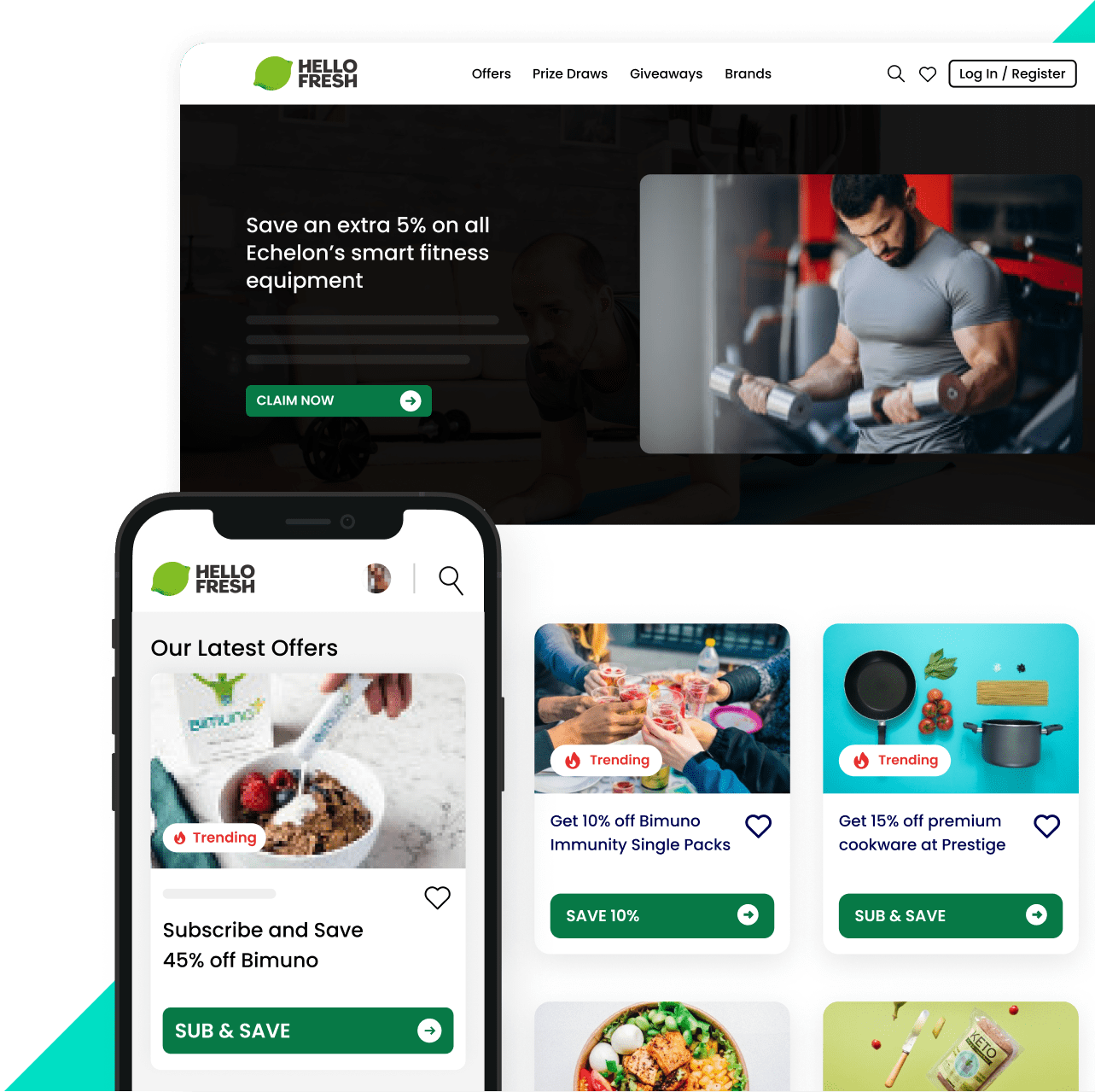
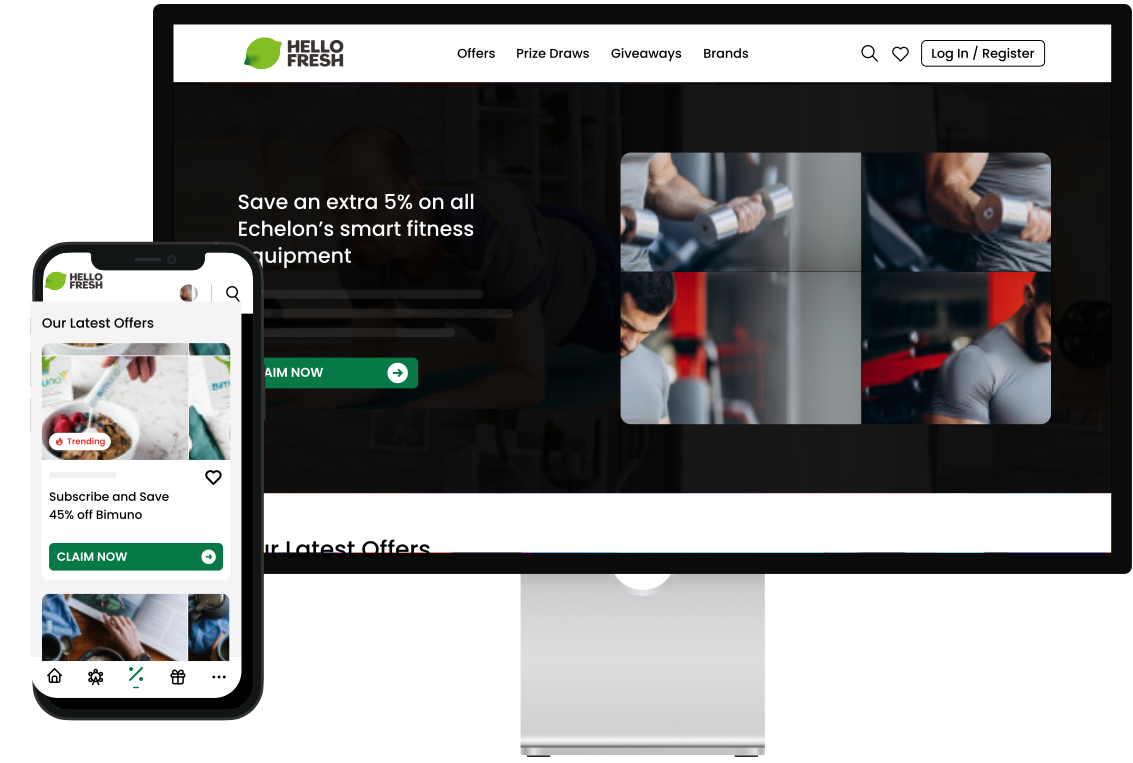
Take HelloFresh. The meal-kit subscription gives members money off cookware and savings on fitness equipment through complementary partner brands.
Those are things they would buy anyway, so the rewards quietly offset the cost of the subscription. It is a reason to stay subscribed month after month, which is how instant rewards lift retention and lifetime value.
There is a plain psychology underneath it.
Our brains are wired for instant gratification, and a reward delivered in the moment lands harder than one promised for later. Tie that feeling to your brand at the point of action, and you build a habit rather than a transaction.
Mobile is where that habit lives. The experience is quick, it sits in the customer’s pocket, and it removes the last bit of friction between action and reward.
Which Business Models and Industries Are Best Suited to Instant Rewards?
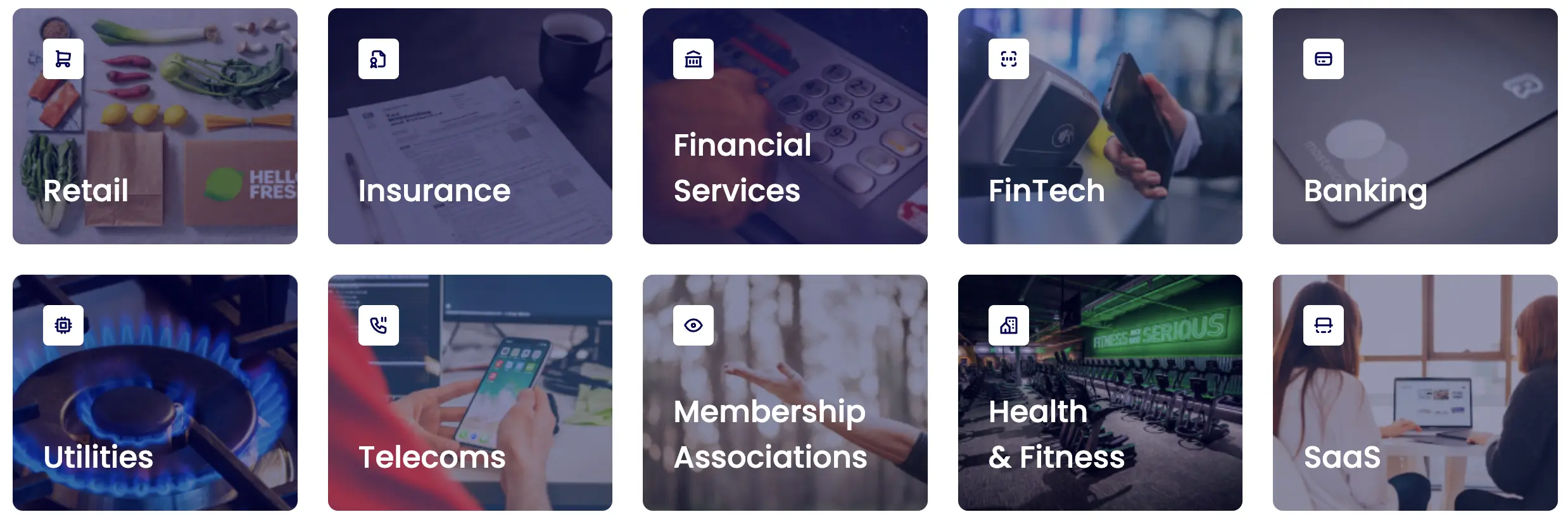
Instant rewards suit any business built on an ongoing relationship: subscription, membership or recurring revenue models. When customers return on a regular cycle, every visit is a moment you can reward and a reason to make staying feel better than leaving.
The thread running through them is repeat contact. Where customers have endless alternatives and little reason to think twice about switching, a well-timed reward at each renewal turns a passive subscriber into one who stays and talks.
What Are the Benefits of Instant Rewards Programmes?
Instant reward programmes earn their place on the numbers, not the novelty. Done well, they lift engagement and retention, hand you richer first-party data, cost less to run than a traditional points scheme, and give you an edge in any category where rivals still make customers wait.
Immediate Gratification
The reward lands at the moment of purchase or interaction, while the good feeling is still fresh and your brand gets the credit for it. That association is what brings customers back.
Increased Customer Engagement
Instant rewards give customers a reason to act now, whether that is renewing early, upgrading a subscription or moving up a tier. More of those small actions add up to deeper loyalty, and loyal customers are the ones who recommend you.
Competitive Advantage
In categories where everyone still runs slow points schemes, being the brand that pays out instantly is a real point of difference. Given the choice between waiting and being rewarded now, customers pick now.
Enhanced Customer Data Collection
Every interaction generates first-party customer data, pulled from the programme itself or through API integration with your CRM. That data feeds sharper targeting and more relevant rewards, which makes the next offer land better than the last.
Cost-Effective
A points economy is expensive to run: liabilities to track, redemptions to reconcile, a system to maintain. Instant rewards cut most of that admin out. Run it through a white label provider with marketing support rather than building in-house, and the saving grows again.
Flexibility
The format bends to fit you. Rewards can run from discounts and free products to exclusive experiences and personalised offers, so what you give away always matches your brand and the people you are trying to keep.
How Do You Implement an Instant Rewards Programme?
A programme that works comes down to three things: rewards people actually want, delivery that feels instant, and engagement that keeps them coming back. Start with the reward types, because everything else builds on what you offer.
What Types of Instant Rewards Can You Offer?
There is no single right reward. The strongest programmes mix a few types and match each to what the customer values in the moment. The main options:
Digital Gift Cards and Their Flexibility
Digital gift cards give customers instant, flexible value they can spend how they like. They land through your platform and cost less to run than physical cards, with nothing to print or post.
Cash Transfers and Immediate Benefits
Cash rewards and account credits give customers total freedom over how they spend. An instant cashback on a purchase is simple, immediate and felt straight away, which makes it a dependable habit-builder.
Special Access and VIP Privileges
VIP access rewards your best customers with what money alone cannot buy: early looks at new products, first pick of offers, or premium benefits others do not get. It signals status, and status breeds loyalty.
Personalised Promotional Codes and Instant Discounts
Personalised promo codes use a customer’s own buying patterns to shape the offer, so the discount fits what they actually want. Right person, right code, right moment, and you earn another purchase now and word-of-mouth later.
How Do You Deliver and Manage an Instant Rewards Programme?
Delivery and management run as a loop, not a launch. You set the triggers, fulfil the reward the instant the action lands, track what happens, communicate it, then refine. Get that loop turning and the programme keeps improving on its own data.
Triggered or Conditional Rewards
Start by deciding which customer actions are worth rewarding.
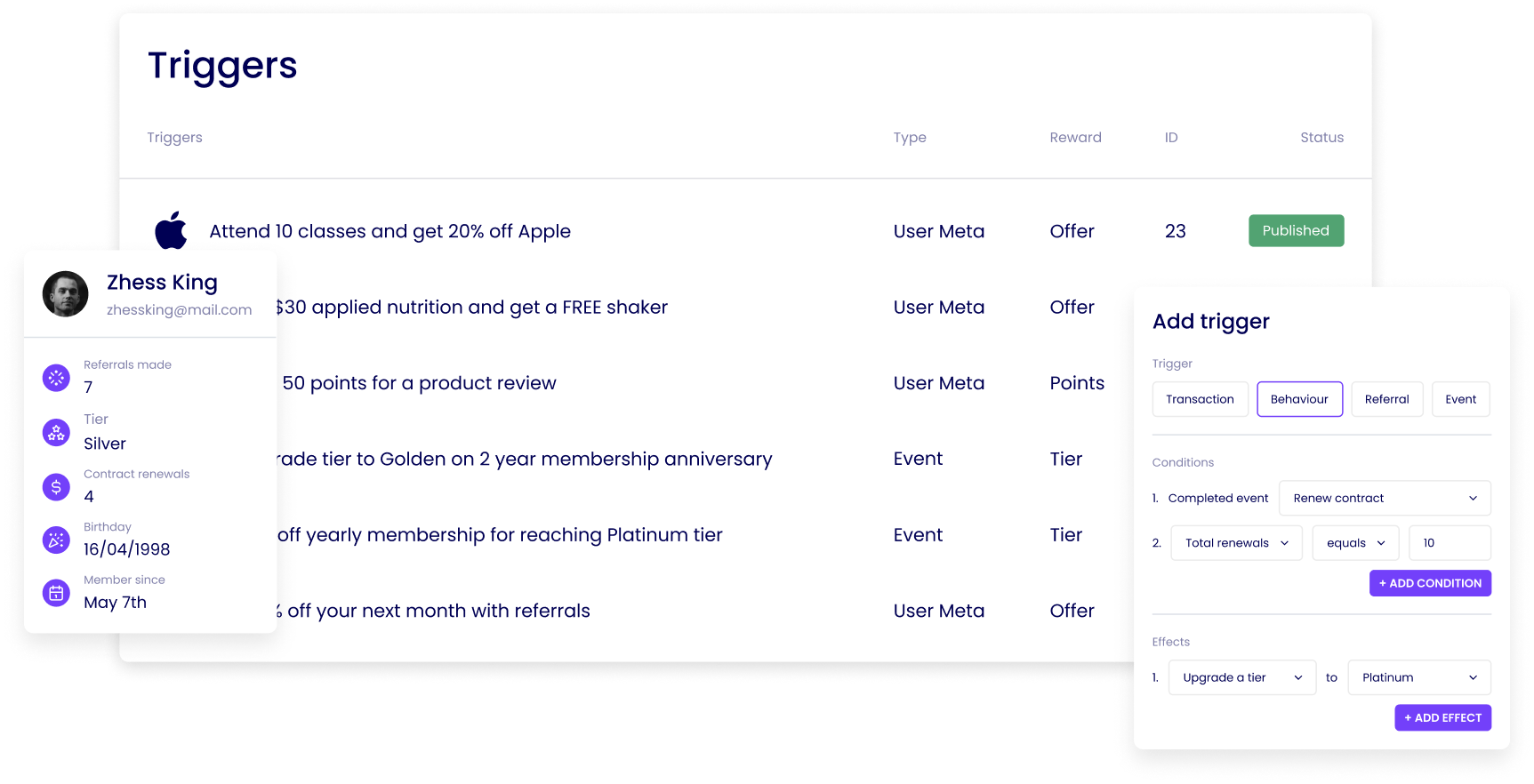
Alongside always-on rewards, you can set triggered or conditional rewards that fire on a specific action, such as a subscription or contract renewal. The logic is simple: do x, get y. Pick the behaviours you most want to encourage, and attach a reward to each.
Real-Time Reward Fulfilment
Fulfilment happens the instant the action completes, whether that is activating a discount or renewing a subscription. The reward reaches the customer on whatever channel suits them, mobile app, SMS, email or an on-site notification, and it arrives while the moment still counts.
Depending on the structure, there may be a set window before the next reward unlocks.
Feedback Loop and Tracking
Tracking is what turns a static programme into an improving one. Watching behaviour shows you which rewards land and which fall flat, and asking customers directly tells you why. That feedback is what keeps the offer sharp and the members engaged.
Promotion and Communication
Communication keeps the programme front of mind. Tell people what they can earn, clearly and often, and it works harder still when it is shaped by what your feedback loops reveal. Email, in-app messages and social all pull their weight here.
Adaptation and Iteration
Iteration keeps the programme alive. Customer expectations, category trends and reward innovations all shift over time, so a programme built to be modified if necessary will always outlast one set in stone.
Implementing all of the mechanics above creates an ecosystem that’s designed to thrive and versatile enough to modify it as and when needed.
What Are Some Instant Rewards Programme Examples and Success Stories?
Two Propello Cloud clients run instant rewards across very different models. JD Gyms uses them in a membership business; HelloFresh in meal-kit subscriptions. Both reward people for staying, and both deliver it through a branded digital platform.
JD Gyms
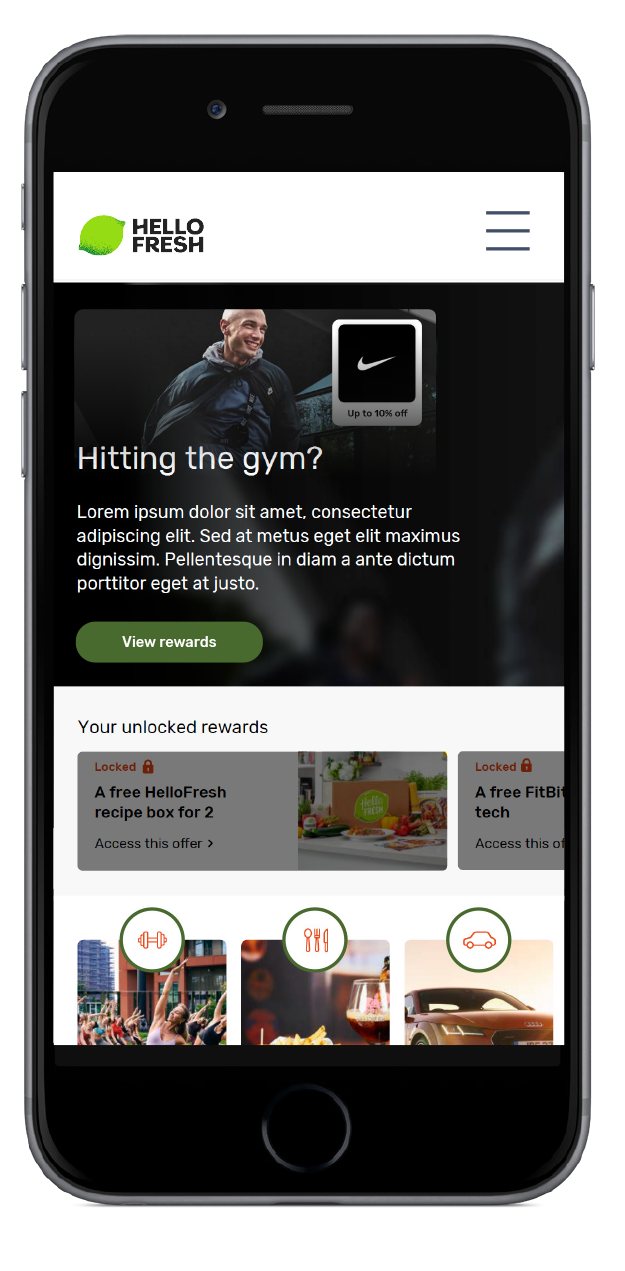
JD Gyms, part of the JD Group, runs affordable, community-focused fitness centres across the UK. Its paid upgrade, JD Gyms PLUS+, gives members multi-site access to gyms nationwide, along with a rewards platform of brand discounts and partner offers, including JD cash to spend at JD Sports.
Those savings sit on top of the membership, so the more a member uses them, the more the upgrade pays for itself. That is the instant-rewards mechanic doing its job: value that shows up in the moment and gives people a reason to stay subscribed.
HelloFresh shows why instant rewards and subscriptions pair so well. Subscribers get always-on access to offers and benefits, and they choose what to redeem and when.
That flexibility lasts as long as the subscription does, which quietly turns the rewards into a reason to keep it. The reward and the retention become the same thing.
The future of loyalty is about the small, well-timed moments that instant recognition creates and the emotional pull those moments build. Give customers value the instant they act, and you turn buyers into repeat customers who talk about you.
The programmes that work best share one habit: they understand their customers and reward them with things that genuinely land.
The channel matters less than the timing. Whether the reward arrives by app, by message or on-site, what counts is that spending leads to recognition while the moment is still warm. That is the shift worth making, and it is easier with a platform built for it.
Propello Cloud runs instant, data-targeted rewards for brands like the two above, with no points scheme for your team to build or run. If you want to see what that could look like for your customers, we will walk you through it.
What is the difference between an instant rewards programme and a points-based loyalty programme?
An instant rewards programme gives the customer value the moment they act, with no points to collect first. A points-based programme asks them to build up points over many purchases and redeem later. The trade-off is immediacy and simplicity against the slower, staged progression that points schemes are built around.
Are instant rewards the same as cashback?
Not quite. Cashback is one type of instant reward, where the customer gets money or credit back on a purchase. Instant rewards is the broader category, covering cashback alongside digital gift cards, discounts, exclusive access and personalised offers. Cashback is a popular option within an instant rewards programme, not a separate thing.
Do instant rewards programmes work for B2B, or only B2C?
They work for both. B2B businesses with contracts, renewals or repeat ordering can reward the actions that matter, such as an early renewal or a larger order. The principle is the same as B2C: recognise valuable behaviour the moment it happens, so the customer has a clear reason to keep choosing you.
Can a small business run an instant rewards programme?
Yes. Instant rewards suit small businesses well, because they avoid the cost and admin of a full points economy. A small team can start with a few simple, well-chosen rewards delivered through a single channel, then expand as the programme proves itself. The barrier to entry is lower than most points-based schemes.
What makes a good instant reward?
Relevance and timing. The best instant rewards match what the individual actually wants and arrive at the moment the action happens, while the intent is still fresh. Value matters too, but a smaller reward that feels personal and lands instantly usually beats a larger one that is generic or delayed.
Do you need special software to run instant rewards?
In practice, yes. Delivering rewards instantly, personalising them from customer data and tracking results all rely on a platform built for the job. You can attempt it manually at small scale, but it quickly becomes hard to manage. A dedicated rewards platform, often white label, handles the delivery, personalisation and reporting for you.
How long does it take to launch an instant rewards programme?
It depends on the route you take. Building the technology in-house can run to many months of development. Using an established white label platform is far quicker, because the delivery, integrations and reward network already exist, so the work is mainly configuration and branding rather than building from the ground up.
Can instant rewards work alongside an existing loyalty programme?
Yes. Many brands run instant rewards next to a points or tiered programme, using each for a different job. Points and tiers reward long-term loyalty, while instant rewards drive action in the moment, such as a renewal or an upgrade. Used together, they cover both the immediate and the long-term relationship.
How do you keep instant rewards from cutting into margins?
Careful design. Reward the actions that genuinely add value, such as renewals or upgrades, rather than giving something away for nothing. Partner-funded rewards, where a complementary brand supplies the offer, protect your margin further. Setting clear conditions on what earns a reward keeps the programme generous to customers and sustainable for the business.
What data protection considerations apply to instant rewards programmes?
Because instant rewards rely on customer data to personalise offers, they fall under data protection rules such as UK GDPR. You need a lawful basis for using the data, clear consent where required, and secure handling throughout. A reputable rewards platform will be built with these obligations in mind, but responsibility for compliance stays with the brand.
Mark Camp
Mark is the Founder and CEO of Propello Cloud, an innovative SaaS platform for loyalty and customer engagement. With over 20 years of marketing experience, he is passionate about helping brands boost retention and acquisition with scalable loyalty solutions.
Mark is an expert in loyalty and engagement strategy, having worked with major enterprise clients across industries to drive growth through rewards programmes. He leads Propello Cloud’s mission to deliver versatile platforms that help organisations attract, engage and retain customers.
Start your customised Propello Cloud journey today
Explore the platform’s scalability, features and customisation options and get answers to your unique questions.