Loyalty programme engagement is how often and how actively members earn points, redeem rewards and interact with your programme, and whether that behaviour deepens their loyalty to the brand. In 2026, the programmes that enhance engagement combine personalised rewards, gamification, tiered progression and relevant, well-timed communication, tracked against clear engagement metrics.
Mark Camp
CEO & Founder at PropelloCloud.com
Contents
Key Takeaways
Keeping members active is what makes a loyalty programme pay, since engaged members stay longer, spend more and refer others.
Gamification through points, challenges and tiered status taps the urge to progress and pulls members back between purchases.
Rewards personalised to each member’s behaviour beat generic offers, which puts customer data at the centre of engagement.
A mobile-first experience and steady communication across email, app and social keep the programme present in a member’s week.
Tracking the right metrics, from redemption and earn rates to dormancy and member lifetime value, shows whether the programme is working.
Experiences, exclusive access and well-timed surprises build an emotional connection that price alone cannot buy.
Partner rewards and premium paid tiers add member value and open a recurring revenue stream.
Most loyalty programmes don’t have a rewards problem. They have an engagement problem.
Members sign up, earn a few points, then go quiet. The card sits in the wallet, the app never gets opened, and a programme that cost real money to launch becomes a line item nobody touches.
I see it every week: brands pouring budget into acquiring new customers while the members they already have quietly drift.
A bigger discount won’t fix that.
What works is a programme members actually want to use, built on personalised rewards, gamification, tiered progression and communication that lands when it matters.
Here’s how to boost engagement, how to measure it, and what the brands getting it right are already doing.
Why Is Customer Engagement Important in a Loyalty Programme?
Engagement determines how often members buy, how long they stay, and whether they recommend you. A small core of repeat customers drives most of a programme’s revenue, so keeping that core active costs far less than acquiring new members and protects revenue already won.
Engaged members do what passive ones never get round to: they return, they redeem, and they talk about you. That activity is the entire return on a loyalty programme.
A member who stays for years is worth many times one who grabs a welcome offer and disappears.
Most of your revenue comes from a small group of regulars who choose you again and again. Their loyalty eases the hunt for new customers.
When a regular defects to a competitor, you lose far more than one transaction. Years of future purchases walk out with them.
How can brands provide value beyond transactions?
Brands provide value beyond transactions by treating members as people. Tailored rewards, early access and genuine recognition give the relationship meaning past the receipt.
A programme built that way forms an emotional tie to the brand, one that holds when a cheaper rival offer lands.
Recognition gives a reason to stay that price alone never matches, and the gain reaches both sides of the ledger: lower acquisition costs alongside deeper loyalty.
What Are the Benefits of Increasing Customer Engagement in a Loyalty Programme?
Higher engagement delivers four concrete benefits: stronger retention, greater lifetime value, more referrals, and sharper personalisation. Members who stay active cost less to keep, spend more over time, bring in new customers through word of mouth, and hand you the behavioural data that makes every future offer more relevant.
Improved customer retention and loyalty
Engaged members leave less often. A programme that keeps people interested makes defection to a competitor far less tempting, and retention climbs as a result.
Experience now sits at the centre of whether a member stays.
Higher customer lifetime value
Active members spend more over their lifetime. The trust built through regular, rewarding interactions opens them to premium tiers, new ranges and services they would once have ignored.
A three-year member who knows the brand is a different prospect from a first-week sign-up chasing a welcome offer. The longer the relationship runs, the more each member is worth.
Increased brand advocacy and referrals
Engaged members recruit for you. People who feel looked after talk, and they write the reviews that sway strangers deciding whether to buy.
Salesforce finds that 75% of customers have recommended a company on the strength of its customer service. That recommendation reaches people no ad budget can touch, and it lands with more weight than anything you could say about yourself.
Sharper personalisation and targeting
Engagement feeds personalisation. Every visit, redemption and reward a member touches tells you what they value, and that record sharpens the next offer you send.
The better you read a customer, the more relevant the reward, and relevance is what pulls the next purchase forward. Recognition and results move together.
How Do You Measure Customer Engagement in a Loyalty Programme?
Measure loyalty programme engagement by tracking how actively members use the programme and whether that activity changes what they buy. The core metrics are enrolment and activation, earn and redemption rates, segment response, social interaction, email engagement, and dormancy against lifetime value.
Read together, they show whether the programme is pulling its weight.
Enrolment is only the start: what counts is whether customers sign up for your programme and then use their accounts. These six metrics show what each part of the programme is doing and the signal to watch for each one.
Metric
What it measures
Healthy signal
Enrolment and activation
How many customers join, and how many go on to use the account they opened
Steady sign-ups, with most members activating rather than just registering
Earn and redemption rates
How actively members earn points and claim rewards, including conditional rewards like tier upgrades
Rising redemption and members converting on the rewards you set
Segment response
How different member groups react to personalised offers
Personalised segments out-engaging your generic sends
Social interaction
Mentions, shares and activity tied to the programme
Organic buzz, and advocates you can name
Email and messaging
Open rates, click-through and replies to programme communications
Opens and clicks above your baseline, holding over time
Dormancy and lifetime value
Abandoned accounts, short-lived memberships, and member versus non-member LTV
Few dormant accounts, and members worth visibly more than non-members
The last row is the one to act on. When members are worth no more than non-members, or dormant accounts pile up, the reward strategy needs another look.
What Are Some Common Challenges in Maintaining High Loyalty Programme Engagement?
Challenges differ by programme type, reward structure and business model. Four, though, turn up almost everywhere.
Weak or infrequent communication
Generic experiences that ignore personalisation
Redemption that is too complex or whose value is unclear
A programme that fails to move as customer tastes shift
Each one quietly erodes engagement until members stop showing up.
Ineffective engagement and communication strategies
Silence loses members. A programme that goes quiet fades from memory, and even loyal customers drift when nothing reminds them why they joined.
Consistent promotion across email, app and social keeps the programme present in a member’s week.
Lack of personalisation and relevance
Generic treatment reads as indifference. Members notice when a programme pushes the same offer to everyone, and relevance now counts as a baseline expectation.
Google’s research finds that 61% of people expect brands to tailor experiences to their preferences. A programme that falls short of that expectation watches engagement slide.
Complex redemption processes and unclear benefits
Friction kills redemption. When members cannot work out how to earn points or what the rewards are actually worth, many give up before they claim anything.
Clarity on how to earn, how to redeem and why it matters keeps people moving through the programme instead of abandoning it.
Inability to adapt to changing customer preferences
Tastes move, and a programme that stands still gets left behind. What thrilled members two years ago feels stale now. The brands that hold engagement adjust their rewards as preferences shift.
How Can You Increase Customer Engagement in a Loyalty Programme?
Increase engagement by giving members reasons to keep coming back: gamification and challenges, rewards personalised to each member, clear communication across every channel, tiers worth climbing, social and referral incentives, a mobile-first experience, partner perks that add outside value, and a premium paid option for your most committed members.
No programme needs all eight at once. Start where your engagement data says the gap is.
Implement gamification and challenges
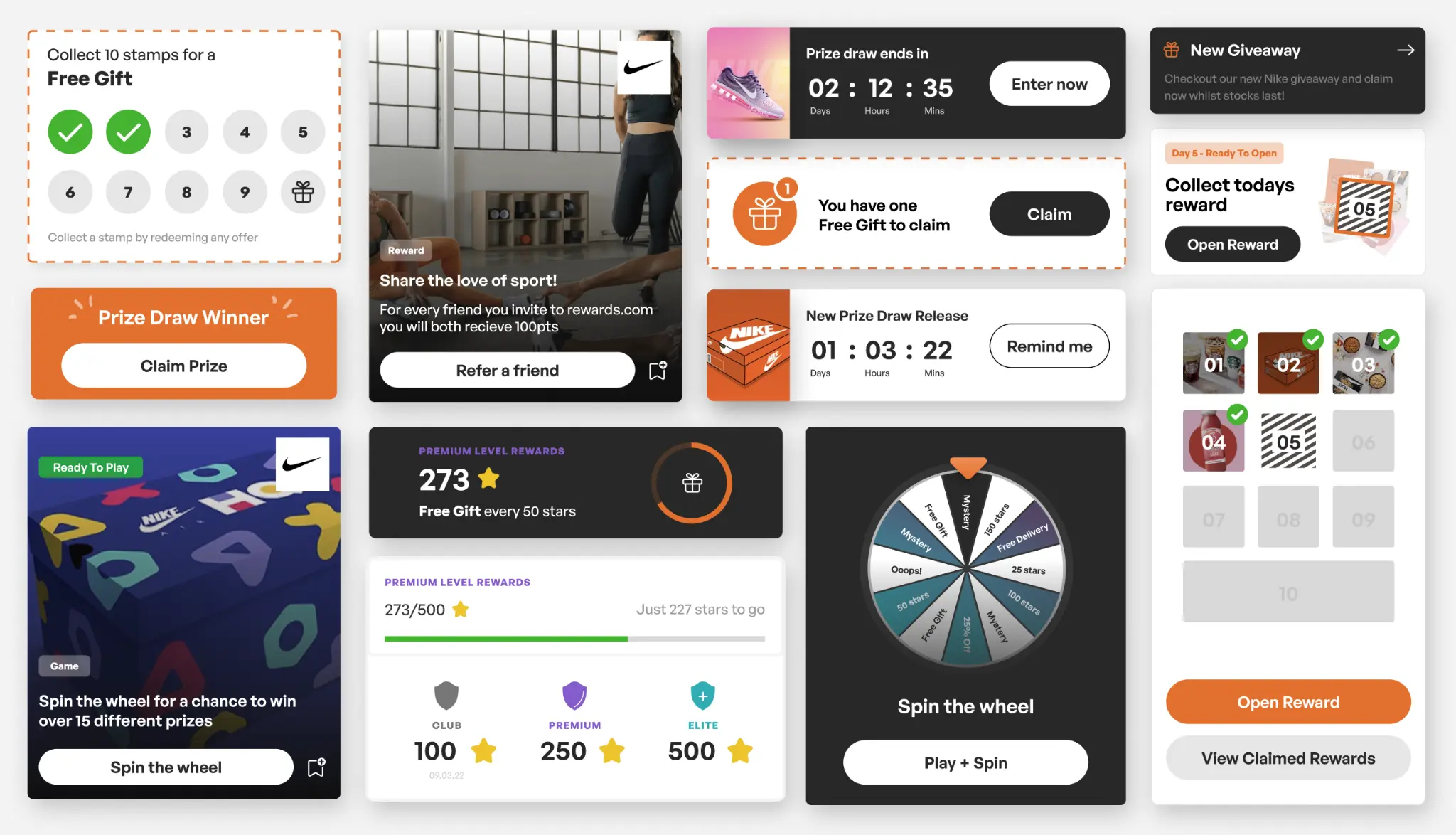
Play is a powerful motivator. Points, badges, leaderboards and challenges tap the instinct to progress and win, and they give members a reason to return that goes past the next discount.
In our 2025 Loyalty Uncovered Report, 65% of enterprise brands named gamification an area of interest.Gamification turns routine activity into something members actively want to do.
Set challenges that reward a purchase inside a window, or a first try of a new product. Build levels members unlock as they earn, so every visit moves them closer to the next reward.
Progress shown on a screen pulls people back to see how far they have come.
Offer personalised rewards and experiences
Relevance is what makes a reward land. A points balance means little when the reward attached holds no interest, so the win comes from matching rewards to what each member buys and does.
Segment members by behaviour and spend, then aim the right offer at the right group. Give your highest-value members access others cannot get: early product drops, exclusive experiences, recommendations drawn from past purchases.
Mark the moments that matter, a birthday or a favourite product back in stock, with a reward that shows you were paying attention.
Communicate across every touchpoint
A programme only works if members hear from it. Email, SMS, in-app messages and social each reach people in a different moment, which is why the mix beats any single channel.
Tell members what is happening: a launch, new rewards, a promotion, an improvement to how the programme works. Spell out how to earn and how to redeem, and make support easy to find.
Tiers give members something to climb towards. Tiered membership splits rewards into levels, so reaching the next one feels like an achievement worth the effort.
Higher tiers unlock better rewards and perks members cannot get lower down, which pulls them to spend and engage more to get there.
The climb itself does the work: a clear path from one level to the next keeps members moving, and each rung reached deepens the hold the programme has on them.
Reward social sharing
Social media works two ways for a programme.
The first is responsiveness. McKinsey found that customers spend 20 to 40% more with companies that answer their service requests on social, so a fast, helpful reply pays for itself.
The second is advocacy. Reward members who post about their experience to their own followers, with bonus points or a small discount for a tagged share. Each post reaches an audience your ads cannot buy, and it carries the proof of a real customer behind it.
User-generated content turns your members into a channel that grows the programme while it runs.
Design for mobile first
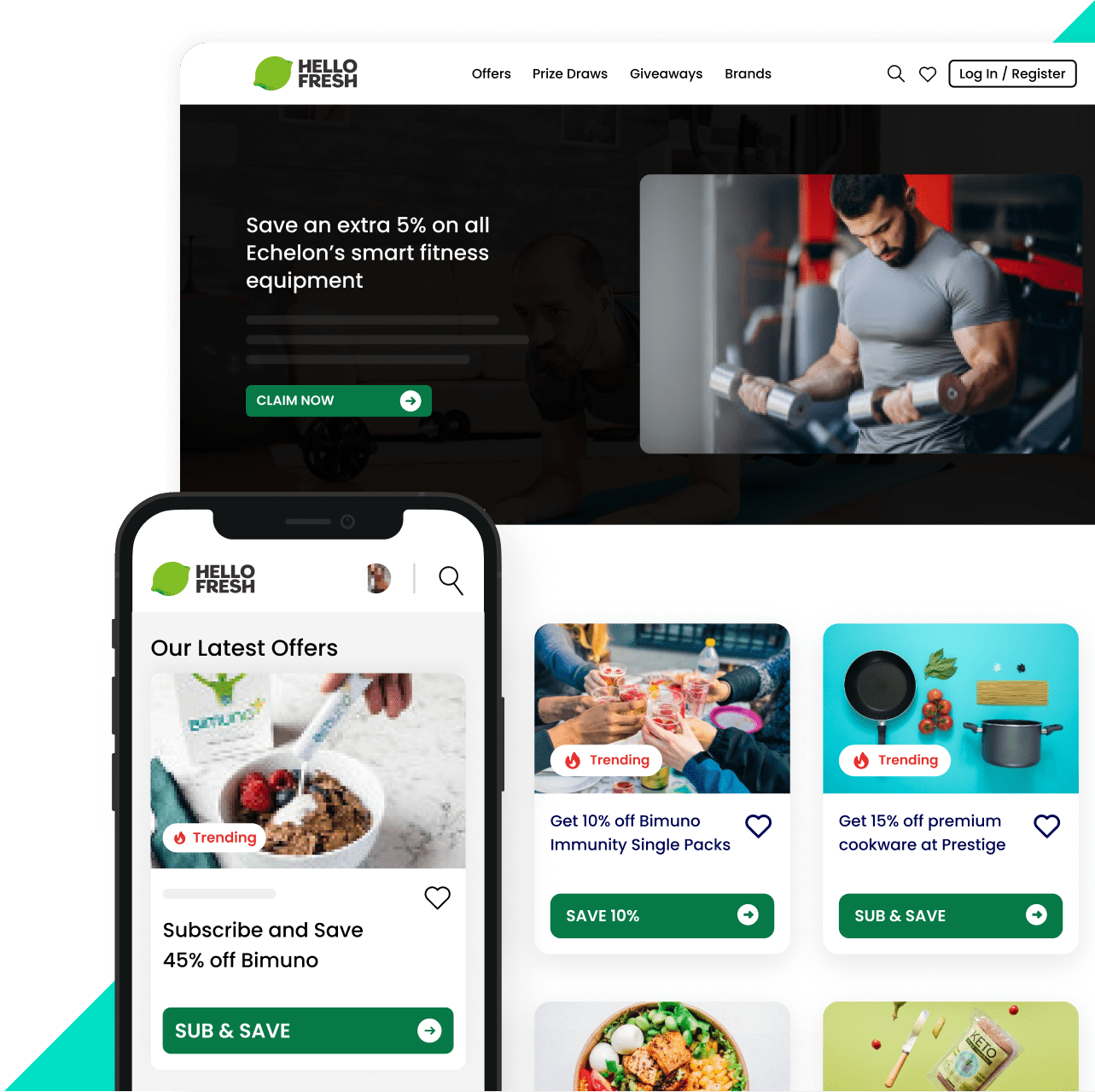
Members live on their phones, so your programme has to as well. Our 2025 Loyalty Uncovered Report found 77% of enterprise brands prioritising mobile-first strategies, and a desktop-first experience goes largely unused.
Put the essentials one tap away: points balance, available rewards, purchase history and account details, all reachable from a phone.
Fire a push notification the moment a member earns a reward or a promotion goes live, so the programme reaches them where their attention already sits.
Save some rewards and experiences for mobile only, which gives members a reason to keep the app close.
Partner with complementary brands
Partner with brands that complement yours. A reward from a well-matched business adds value you do not fund yourself, because the partner covers the cost of its offer in exchange for a place inside your programme.
Affiliate marketing is where this works hardest. Partner marketing pulls offers from brands your members already like and drops them into the programme as extra rewards.
Propello Cloud’s integration with Awin, the global affiliate network, gives programmes access to its advertiser network, so members get relevant partner offers without the programme paying for them.
Some members will pay for more. A paid tier, offered as a subscription or an add-on, gives your most committed members a reason to stay engaged all year, because they will want to use what their fee already covers.
Premium loyalty programmes put high-value perks, better rewards and access to premium services behind a monthly charge. That buys members a richer experience worth coming back to.
The business, meanwhile, gains a recurring revenue stream and a core of members with real skin in the game.
Why Do You Need Customer Data to Personalise Loyalty Programme Engagement?
You need customer data because personalisation only works when it reflects what members actually do. Interaction, profile and feedback data reveal each member’s preferences and habits, which lets you group members by behaviour and value and then match rewards, communications and experiences to each group.
Personalisation runs on data. A tailored reward is only as good as your read on how members behave, what they prefer and what motivates them. That read comes from several sources.
Collect and analyse customer behaviour
Start with three kinds of data:
Interaction data: how members engage across your website, app, social and email.
Profile data: demographic and psychographic detail such as age, location and interests.
Feedback: what surveys, reviews and social comments say about your brand and programme.
Pull these together and the patterns surface. Loyalty programme analytics does the work of finding them and grouping members into segments by shared traits and behaviour.
Segment customers and tailor rewards
Once the data shows who your members are, split them by profile and behaviour, then shape the rewards, messages and experiences each group receives.
A common cut is by lifetime value: VIPs and top spenders, high-potential members, and those slipping towards the exit.
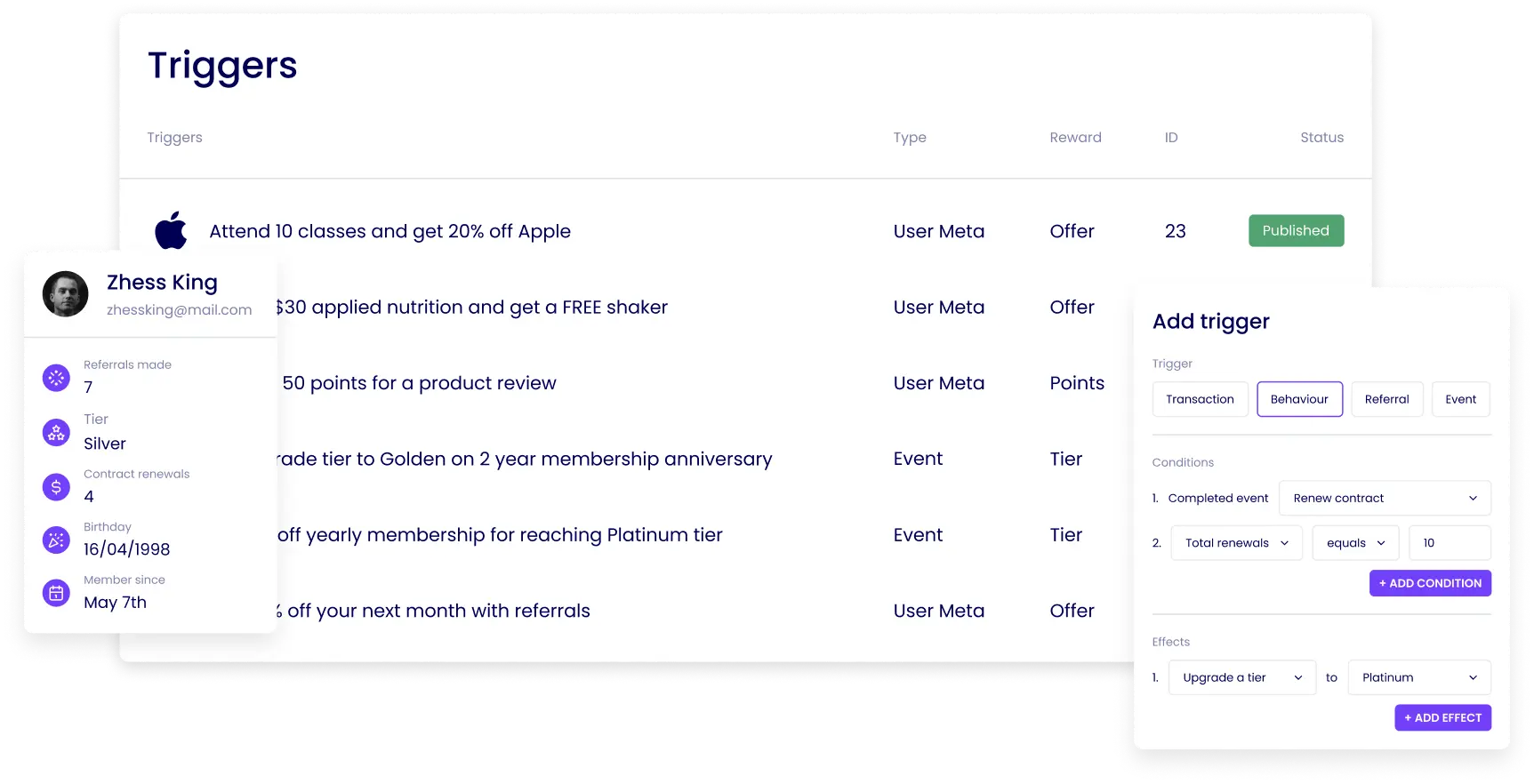
From there, build reward tiers, set conditional triggers (upgrade a tier or extend a subscription, receive a set reward) and write communications that fit each group.
It pays off: Twilio Segment found that 60% of consumers become repeat buyers after a personalised experience.
What Are Examples of Customer Engagement in Loyalty Programmes?
Three programmes show customer engagement done well. Each turns routine transactions into reasons to come back.
Starbucks Rewards uses gamification and tiered status to drive frequency,
Sephora Beauty Insider builds loyalty through personalisation and tier-based exclusive access, and
Marriott Bonvoy deepens emotional connection with points redeemable for experiences across every channel.
Starbucks Rewards: gamification and tiered status
Starbucks Rewards shows how gamification and status tiers lift frequency. Members earn Stars on every purchase and redeem them for drinks and food at set Star levels.
In March 2026 the programme introduced three membership tiers, Green, Gold and Reserve, set by the Stars a member earns over a rolling year, with faster earning higher up.
Double Star Days, in-app games and personalised challenges keep members engaged between visits.
Sephora Beauty Insider: personalisation and exclusive access
Sephora Beauty Insider earns loyalty through personalisation and exclusive access. Members collect points on purchases and spend them in the Rewards Bazaar on samples, full-size products and experiences.
The programme runs three tiers by annual spend, Insider, VIB and Rouge, with the top tier opening events and rewards others cannot reach. Sephora personalises email and app content from each member’s purchase history.
Marriott Bonvoy: omnichannel reach and emotional connection
Marriott Bonvoy connects with members across every channel and leans into emotional reward. Members earn points on stays and spend them in person, online or in the app, across all Marriott properties.
Beyond hotel nights, Marriott Bonvoy Moments lets members put points towards experiences: concerts, culinary events, sporting fixtures and VIP access, with the rarest reserved for high-tier members.
Those experiences build the kind of memory a points balance alone never creates.
Boost Loyalty Programme Engagement Today
The programmes that keep members make the same moves: rewards that feel personal, gamified momentum, a presence on every channel, and experiences worth remembering. None of it comes down to a bigger discount.
Pulling it off is easier on a platform built for the job. Leading loyalty platforms, Propello Cloud among them, hold personalisation, tiers, partner rewards and messaging in one place instead of a patchwork.
There is no universal figure, because a healthy redemption rate varies by industry, reward type and programme age. As a rough guide, many programmes treat 20% or above as healthy and below 20% as a sign that rewards feel out of reach. Track your own rate over time rather than chasing a benchmark.
How long does it take for a loyalty programme to improve engagement?
Expect directional signs within the first few months, but a fair read takes at least one full purchase cycle for your category, longer for infrequent buys. Compare engaged members against a holdout group so any lift is credited to the programme rather than seasonality or wider trends.
Why does loyalty programme engagement drop after launch?
Most programmes see a spike at launch, then a fade when they are left to run themselves. Members forget the programme exists, rewards stop feeling fresh, and nothing prompts a return. Active management, refreshed rewards, progress nudges and re-engagement messages keep engagement from sliding once the launch energy fades.
What is the difference between customer loyalty and customer engagement?
Engagement is how actively a customer interacts with your brand and programme; loyalty is the lasting preference that keeps them choosing you. Engagement is the behaviour you can see and measure, and sustained engagement is what builds loyalty over time. One is the activity, the other is the outcome.
How do you re-engage inactive loyalty programme members?
Start by spotting them early through signs like fewer visits, lapsed logins or unredeemed points. Then reach out with a reason to return: a personalised offer, bonus points, or a reminder of rewards they have already earned and could lose. A well-timed, relevant nudge beats a generic win-back blast.
How often should you contact loyalty programme members?
Often enough to stay present, not so often that members tune out or unsubscribe. The right cadence depends on your category and each member’s activity, so let behaviour guide it: trigger messages around earned rewards, expiries and relevant offers rather than sending on a fixed schedule everyone receives.
Do paid loyalty programmes drive more engagement than free ones?
They can, because a member who pays a fee is motivated to use the perks they have already bought, which lifts engagement and gives you recurring revenue. Paid tiers suit brands with frequent purchases and clear premium value. Free programmes still have the wider reach, so many brands run both.
What is breakage in a loyalty programme?
Breakage is the share of points or rewards that members earn but never redeem. Some breakage is normal, but a high rate can signal that rewards feel unappealing or too hard to reach, or that members have forgotten the programme. It also affects the cost and liability you carry.
How do you measure the ROI of a loyalty programme?
Compare the value members generate against what the programme costs to run and reward. The clearest method is a holdout: measure the extra spend, retention and referrals from members versus a similar group outside the programme, then weigh that incremental gain against reward, technology and management costs.
What is the difference between a loyalty programme and a rewards programme?
The terms overlap, but a rewards programme is usually the mechanics, earning points or perks for purchases. A loyalty programme is the wider strategy that uses those rewards, plus personalisation, tiers and communication, to build a lasting relationship. Rewards are one tool inside a loyalty programme, not the whole of it.
Mark Camp
Mark is the Founder and CEO of Propello Cloud, an innovative SaaS platform for loyalty and customer engagement. With over 20 years of marketing experience, he is passionate about helping brands boost retention and acquisition with scalable loyalty solutions.
Mark is an expert in loyalty and engagement strategy, having worked with major enterprise clients across industries to drive growth through rewards programmes. He leads Propello Cloud’s mission to deliver versatile platforms that help organisations attract, engage and retain customers.
Start your customised Propello Cloud journey today
Explore the platform’s scalability, features and customisation options and get answers to your unique questions.