Trends in loyalty come and go, but a core set of programme features keeps earning its place, from personalisation and mobile-first design to tiered rewards and watertight security. This guide breaks down the twelve worth building around.
Mark Camp
CEO & Founder at PropelloCloud.com
Contents
Key Takeaways
The must-have features fall into three groups: reward mechanics (always-on rewards, points, tiers), technical foundations (mobile-first, data analytics, white-label, security) and engagement tools (personalisation, gamification, referrals, social).
Personalisation is loyalty's top priority: 84% of enterprise brands rank it their joint-top investment, and 61% of consumers will share data to get it.
Strategic partnerships power the strongest programmes, a priority for 84% of enterprise brands, because a partner network delivers relevant rewards without funding every one in-house.
Mobile-first is where loyalty now lives, with 77% of enterprise brands prioritising seamless mobile experiences.
Most brands buy rather than build: 69% prefer a proven white-label platform for faster, lower-risk launch.
Engagement features do the retention work, gamification (a priority for 65% of brands), referrals, social integration and conditional triggers turn passive members into active advocates.
Security is non-negotiable: 78% of enterprise brands cite data privacy and compliance among their biggest challenges, and points balances are a genuine fraud target.
No programme needs all twelve at once, the winners combine the features that fit their objectives and let each reinforce the others.
In my experience implementing enterprise-level programmes, the loyalty programme features that matter most, personalisation, seamless omnichannel access and real-time data analytics, aren’t optional extras. They’re non-negotiable. Together, they lift customer lifetime value, drive repeat purchases and turn satisfied members into advocates, the kind of cumulative return a generous rewards budget alone never delivers.
Everything else builds on the critical success factors every strong programme shares, so that’s where we’ll start.
What Are the Critical Success Factors for Modern Loyalty Programmes?
A loyalty programme succeeds on four traits working together: a frictionless user experience, personalisation drawn from customer data, measurable impact that scales, and the flexibility to keep evolving. Each one turns a standard rewards scheme into something members actually engage with.
User Experience & Accessibility
The easier a programme is to use, the more people stay in it. KPMG found that 69% of Millennials see loyalty schemes as too hard to join and earn rewards from, and that friction costs you members before they see a single reward. So cut all the dead steps between enrolment and redemption.
Personalisation from Customer Insights
Generic rewards are easy to ignore. Personalisation drawn from customer data is what makes a member feel seen: rewards shaped by what they actually buy, tailored experiences that build real connection, and offers delivered in real time, on mobile.
Measurable Impact & Scalability
Enterprise programmes have to prove their worth. That means measuring what members actually do: engagement tracked, lifetime value quantified, cross-sell surfaced, and reward structures that scale with the customer base instead of buckling under it.
Programme Flexibility & Innovation
No programme stays still. The strong ones are built on frameworks that flex:
A loyalty programme needs support on three fronts: the technical infrastructure that keeps it running, the customer service that keeps members satisfied, and the marketing that keeps them engaged. Treat all three as core rather than afterthoughts and the programme keeps improving.
Technical Infrastructure
A reliable loyalty programme software foundation is essential for seamless operation. At a minimum, the technical infrastructure should include:
Real-time issue resolution.
Fraud prevention measures.
Mobile app support.
Integration maintenance across all touchpoints.
Continuous system optimisation.
Enhanced Customer Service
Modern customer support transcends basic troubleshooting, focusing on:
This comprehensive support framework ensures loyalty programmes not only operate efficiently but continuously evolve to meet customer expectations, transforming participants into brand advocates while delivering measurable commercial outcomes.
What Are the Core Features of Effective Loyalty Programmes?
The core features work in two directions at once: immediate value that gets members participating, and long-term engagement that keeps them. Always-on rewards, points and tiers, personalisation and omnichannel access each do both.
1) Always-On Rewards
Always-on rewards are benefits that never switch off. Instead of waiting for a seasonal campaign, members earn something for every qualifying purchase, or simply for staying in the programme, and that steady value keeps them engaged between one purchase and the next.
The strongest always-on programmes increasingly run on partner brands. In Propello Cloud’s 2025 Loyalty Uncovered research, 84% of enterprise brands named strategic partnerships a priority, because a network of partners means relevant rewards on tap without the cost of funding every one yourself.
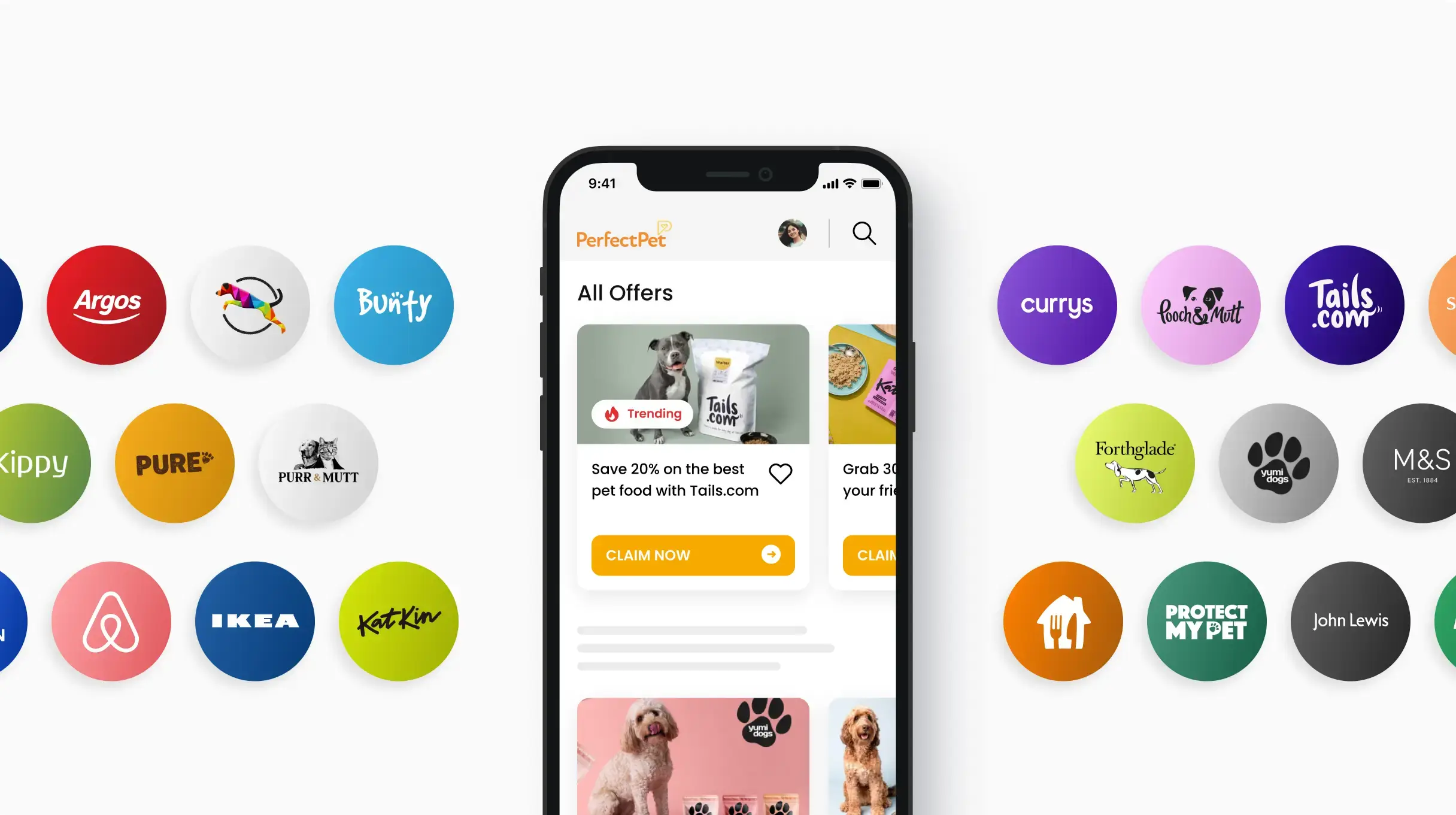
Perfect Pet, a UK pet insurer and Propello Cloud client, gives policyholders a range of always-on instant rewards from top brands. The programme is configured to surface the partner offers most relevant to each customer, pet nutrition discounts for instance, so the rewards feel personal.
Balancing Immediate & Long-term Benefits
The key to successful always-on rewards lies in their strategic deployment. Immediate benefits for qualifying purchases form the foundation, while targeted rewards for specific behaviours encourage desired actions. This approach creates clear paths to value that customers can easily understand and pursue.
The most successful programmes create engagement through carefully calibrated reward structures. Quick-win benefits drive initial participation, while more substantial rewards incentivise deeper engagement.
2) Points Systems + Tiers
Points and tiers give a programme its structure. Points reward the everyday actions that build a habit, while tiers turn that habit into status members climb toward. Together they reward engagement and drive deeper brand relationships.
Building Engagement Through Points
Points serve as the universal currency of loyalty, transforming everyday transactions into progress toward meaningful rewards. Beyond basic earn-and-burn mechanics, sophisticated points systems encourage specific behaviours, from repeat purchases to brand advocacy.
Strategic Tier Design
Effective tier structures balance accessibility with exclusivity. Entry levels provide immediate value while premium tiers offer truly distinctive benefits. These might include priority customer service, exclusive event access, or early product launches. The key is ensuring each tier delivers benefits valuable enough to drive progression while maintaining exclusivity at higher levels.
VIP Recognition & Benefits
Top-tier benefits must deliver genuine value that transforms transactions into meaningful relationships. I’ve found the most successful premium or VIP programmes create true differentiation through carefully selected benefits that resonate with high-value customers:
Dedicated account management.
Preferential booking or reservation privileges.
Behind-the-scenes brand experiences.
Customised shopping experiences.
Advanced access to sales and new products.
Set the qualification thresholds to match how your best customers already behave. That keeps the top tier reachable enough to motivate and rare enough to stay worth reaching.
3) Personalisation & Dynamic Rewards
Generic rewards get ignored. Personalisation is what makes one land, which is why 84% of enterprise brands named personalisation and data their joint-top investment priority in our 2025 Loyalty Uncovered research.
Dynamic rewards are how that works in practice. Read how someone actually behaves, in real time, and you can serve rewards that match their interests instead of the average customer’s.
That builds a cycle: the more members engage with relevant rewards, the more you learn, and the sharper the next offer gets. Done well, it lifts targeting, redemption, satisfaction, emotional connection and ROI together.
4) Omnichannel Capability
Omni-channel capability means members get the same programme wherever they meet it, app, website, in store, or on the phone. The moment those channels stop talking to each other, the experience fractures and engagement leaks away.
Single Customer View
Modern consumers expect seamless recognition whether they’re shopping in-store, through mobile apps, or via ecommerce platforms. This requires sophisticated integration across:
Point-of-sale (POS) systems.
Digital commerce platforms.
Mobile applications.
Customer relationship management systems.
Beyond basic integration, true omnichannel success requires careful journey mapping to understand and optimise every interaction. For instance, a customer who browses on mobile should seamlessly transition to in-store redemption without friction or confusion.
Building Connected Experiences
The key to effective cross-channel engagement lies in real-time data synchronisation. Customers should see instant updates to their points, rewards, and status regardless of interaction channel. That means providing:
Immediate reward crediting.
Cross-channel redemption options.
Synchronised status recognition.
Unified customer profiles.
Which Technical Features Improve Loyalty Programme Performance?
Three technical features do the heavy lifting: a mobile-first experience that meets members where they already are, data analytics that turn behaviour into decisions, and white-label technology that lets you launch fast and scale without rebuilding.
5) Mobile-First Experience
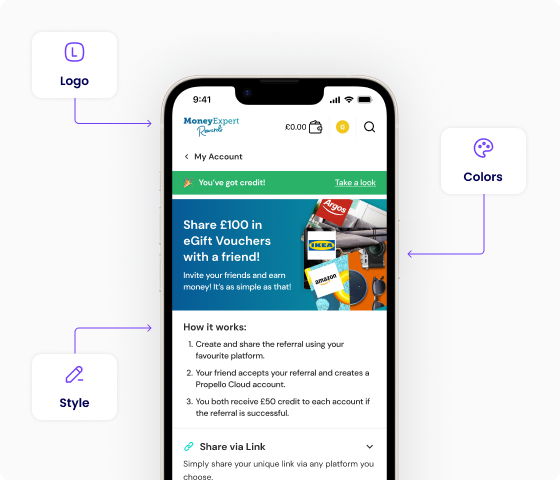
Mobile-first has become where loyalty lives. Members check points, redeem rewards and re-engage on their phones in the gaps of the day, not at a desk. That’s why 77% of enterprise brands in our Loyalty Uncovered report told us they’re prioritising mobile-first, seamless experiences that reach customers wherever they are.
But mobile success requires more than just responsive design. I find the most effective programmes emphasise:
Seamless enrolment and authentication that removes friction from the first interaction.
Quick access to earning opportunities and reward tracking keeps members engaged in their daily routines.
Instant redemption capabilities transform smartphones into powerful engagement tools.
These mobile-optimised experiences improve convenience and also fundamentally change how customers interact with loyalty programmes. Putting programme features literally in members’ hands will naturally yield higher engagement rates and more frequent interactions across all customer segments.
6) Data Analytics
Data analytics is what turns member behaviour into decisions. Every purchase, redemption and login is a signal, and reading those signals is how you personalise rewards, target the right people and sharpen the programme over time.
Track the KPIs that matter, watch how they move, and you can adjust in real time, keeping the programme relevant instead of guessing what members want.
7) White-Label Technology
White label technology lets you launch a fully branded loyalty programme without building the technology behind it. That’s why 69% of enterprise brands say they’d rather buy a proven platform than build one in-house: it’s the faster, lower-risk route to market (Propello Cloud Loyalty Uncovered, 2025).
Fast Speed to Market
The features are pre-built, so you launch in weeks, not the months or years an in-house build takes. And because everything sits under your brand, members never see the platform underneath, just you.
Scalable Solutions
As your member base grows, a good white-label platform scales with it, adding features and handling volume without a rebuild. The programme evolves as the market does, not two steps behind.
Competitive Advantage
The real value is where it lets you spend your attention. Hand the technical build to a proven platform, and your team is free to focus on what actually differentiates the programme: the rewards, the experience, the relationships.
Which Features Drive Loyalty Programme Engagement?
Points get members in the door. Engagement features are what keep them coming back: gamification, referrals, social integration and conditional reward triggers all turn passive membership into active participation.
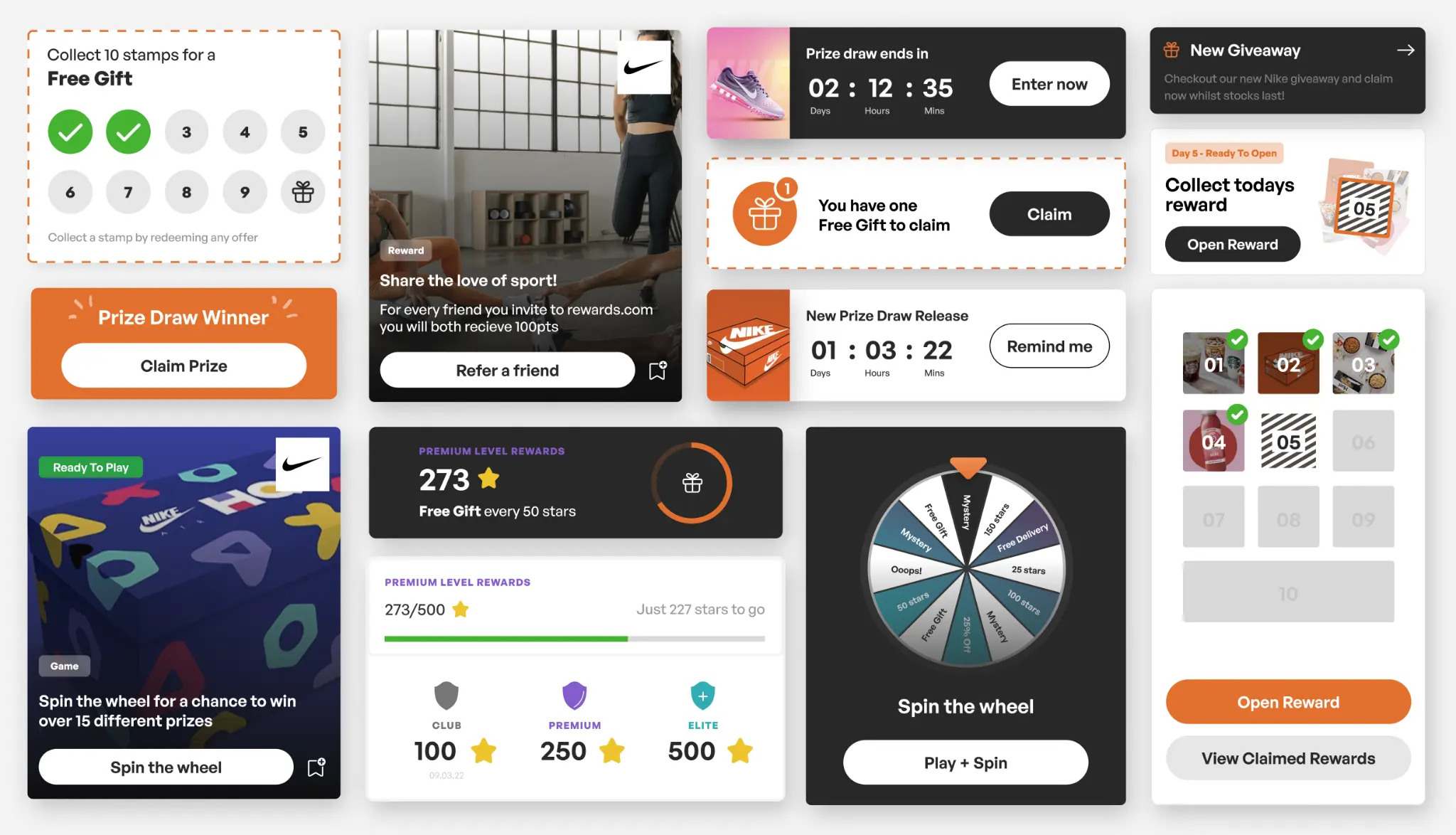
8) Gamification Elements
Gamificationturns routine transactions into something members actually want to take part in, using challenges, streaks and rewards to make engagement a game worth playing. It’s a live priority too: 65% of enterprise brands are investing in it, according to our Loyalty Uncovered report (2025).
Strategic Game Mechanics
Successful gamification extends beyond basic points and badges. Time-limited challenges create a sense of urgency that drives immediate action, while achievement milestones provide clear progression paths that keep customers engaged.
Mystery rewards add an element of surprise that maintains interest, and social competitions build community while encouraging friendly rivalry. Through carefully designed progressive tasks, we can guide customers toward specific behaviours that align with commercial objectives.
Measuring Success in Gamified Loyalty Programmes
Understanding gamification’s impact requires focused measurement. Track participation in challenges, but also monitor how these activities influence broader customer behaviour.
Completion rates for targeted activities provide immediate feedback on engagement effectiveness, while changes in purchase patterns reveal the commercial impact. What’s particularly valuable is monitoring how gamification drives social sharing and advocacy, creating organic programme growth.
Best Practices for Implementing Gamification
The key to successful gamification lies in strategic deployment. I always advise starting with clear commercial objectives, whether that’s driving cross-category purchases or increasing visit frequency.
From there, design game mechanics that naturally guide members toward these goals while maintaining an entertaining experience.
9) Referrals
In my experience, referral programmes are one of the most powerful growth engines a loyalty programme has. They turn your most engaged members into advocates, and an advocate’s recommendation reaches new customers with a credibility no ad can buy.
The people they bring in arrive pre-qualified, vouched for by someone they trust, so they engage faster and stick around longer. That’s the dual win: referrals drive acquisition and retention at once, building a self-reinforcing network of members who get your value from day one.
Done well, referrals become the natural endpoint of loyalty, members so satisfied they grow the programme for you.
Social media integration makes a loyalty programme visible. When members share rewards, show off a status tier or join a community challenge, the programme stops being a private transaction and becomes something their network sees, and wants in on.
The key is giving people a real reason to share, not just asking them to. I’ve seen this work when the social moment is built into the reward itself (exclusive drops, community recognition, status worth showing), so sharing feels more like a natural response.
11) Conditional Reward Triggers
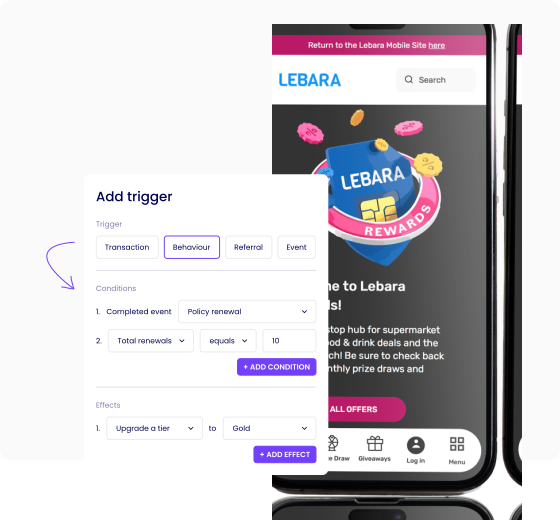
Conditional reward triggers fire a reward when a member does something specific, renews a contract, upgrades, refers a friend, hits a spend threshold. Instead of rewarding everyone the same, you reward the behaviours that actually matter to the business.
It’s part of the wider shift to real-time, responsive rewards that 75% of enterprise brands told us they’re prioritising (Propello Cloud’s Loyalty Uncovered Report, 2025).
Lebara, the UK mobile network and a Propello Cloud client, uses exactly this: triggers set on customer behaviour that deliver a targeted reward at the right moment, a renewal offer timed to when a contract is up, for instance.
And every trigger teaches you something. Watch which ones get the strongest response and you can keep sharpening the strategy, segment by segment.
In my experience it’s one of the most reliable ways to drive incremental revenue while deepening loyalty at the same time.
It’s a live worry too: 78% of enterprise brands in our 2025 Loyalty Uncovered research report that data privacy and compliance is one of their biggest challenges.
Building Trust Through Protection
By prioritising data privacy and anti-fraud measures, loyalty programmes not only safeguard customer trust but also bolster programme credibility, creating long-term engagement and relationships based on reliability and security.
Modern security measures must anticipate and prevent sophisticated fraud attempts that specifically target loyalty programmes, ensuring both points currencies and member data remain protected.
Building Your Path to Loyalty Programme Success
No programme needs all twelve features on day one. The strongest ones start with the handful that fit their objectives, the features that solve a real problem for their members, and build from there.
A points system means little without the data to personalise it; gamification falls flat without a mobile experience to run on. These features work as a system, not a shopping list.
Land that combination and a loyalty programme stops being a discount scheme and becomes something rarer: a reason for customers to stay and to bring others with them.
Download our Customer Loyalty and Reward Programme guide to work out which type of programme fits your business, and see how the right loyalty strategy creates lasting ROI and growth.
FAQs
Which loyalty programme feature has the biggest impact on customer retention?
No single feature carries retention on its own, the impact comes from how features combine. That said, personalisation tends to do the heaviest lifting, because relevant rewards keep members engaged where generic ones get ignored. It works best paired with the data analytics and mobile access that make personalisation possible.
How do you decide which loyalty features to prioritise?
Start from your objective, not the feature list. If the goal is retention, prioritise personalisation and always-on rewards; if it’s acquisition, referrals and social integration matter more. Then add the technical features those depend on, mobile-first and analytics underpin almost everything. Build the smallest set that solves your actual problem, then expand.
What's the minimum set of features needed to launch a loyalty programme?
A viable launch needs a reward mechanic (points, tiers or always-on rewards), a way for members to access it (mobile-first), and basic data capture so you can personalise later. Everything else, gamification, referrals, advanced tiers, can layer on once the core works. Launching lean beats waiting to build all twelve at once.
Which loyalty feature is the most complex or expensive to implement?
Custom API integration and AI-driven personalisation tend to be the most demanding, each needs technical resource, data infrastructure and time. That’s a major reason most brands choose white-label platforms, which deliver these capabilities out of the box. Simpler features like referrals or mobile wallet passes are far quicker and cheaper to stand up.
Which emerging features are becoming essential in loyalty programmes?
AI and machine learning are the clearest, moving from novelty to expectation as brands use them for predictive personalisation and churn prevention; 62% of enterprise brands are already investing in AI-driven loyalty (Propello Cloud Loyalty Uncovered, 2025). Real-time conditional rewards and experiential perks are also shifting from differentiators to baseline expectations as programmes mature.
Can you add new features to an existing loyalty programme?
Yes, and the best programmes evolve continuously rather than launching fully formed. A flexible, well-architected platform, especially white-label, lets you add gamification, new tiers or partner rewards without rebuilding. The key is a foundation that scales, so bolting on new capabilities strengthens the programme instead of straining it.
Do B2B loyalty programmes work differently from B2C ones?
Yes. B2C programmes reward individual customers for repeat purchases. B2B programmes reward trade partners, distributors, installers and channel accounts, incentivising repeat orders and consolidating spend away from competitors. The mechanics overlap (points, tiers, rewards), but B2B involves longer buying cycles, multiple decision-makers and larger, less frequent orders, so reward design differs.
What are the most common mistakes when launching a loyalty programme?
The most common is making rewards too hard to earn, if members can’t see a realistic path to value, they disengage early. Others include low-value or irrelevant rewards, weak ongoing promotion so members forget the programme exists, and measuring signups instead of changed behaviour. Enrolment growth means little if transactions don’t move with it.
What are the disadvantages of loyalty programmes?
The main risks are margin erosion (discounting purchases customers would have made anyway), ongoing management overhead, and exposure to fraud and reward abuse. Poorly designed programmes can also add friction or reward the wrong behaviours. Most of this is avoidable with clear objectives, achievable-but-profitable reward economics and proper security, but they’re real costs to plan for.
Are loyalty programmes worth the investment?
For most enterprise brands, yes, when the programme changes behaviour rather than just rewarding purchases customers would have made anyway. Returns come from higher retention, larger average orders and lower acquisition costs through advocacy. A programme that simply discounts loyal customers erodes margin; one that shifts behaviour compounds value over time.
Mark Camp
Mark is the Founder and CEO of Propello Cloud, an innovative SaaS platform for loyalty and customer engagement. With over 20 years of marketing experience, he is passionate about helping brands boost retention and acquisition with scalable loyalty solutions.
Mark is an expert in loyalty and engagement strategy, having worked with major enterprise clients across industries to drive growth through rewards programmes. He leads Propello Cloud’s mission to deliver versatile platforms that help organisations attract, engage and retain customers.
Start your customised Propello Cloud journey today
Explore the platform’s scalability, features and customisation options and get answers to your unique questions.


.png)