Premium Loyalty Programmes: The Smart Choice for Growth
23 min to read
Published: March 19, 2024
Updated: October 7, 2026
Most loyalty programmes give everything away for free, then wonder why members don’t care. Premium loyalty flips that. Customers pay to join, and that one decision changes how they behave. This guide covers how paid loyalty works, why your best customers prefer it, and how to build one that lifts retention and revenue.
Mark Camp
CEO & Founder at PropelloCloud.com
Contents
Key Takeaways
Premium loyalty programmes charge a membership fee or subscription in return for exclusive benefits and a VIP experience a free scheme cannot match.
For businesses, they deepen engagement and retention, turn membership fees into forecastable revenue, and generate sharper data on your most valuable customers.
Strong examples span sectors, from Amazon Prime and Costco in retail to JD Gyms PLUS+ in fitness.
Building one well means assessing your best customers, designing the rewards and fee around them, launching on the right technology, and refining it on the numbers.
The main challenges are convincing customers the fee is worth it, funding rewards without eroding margin, and keeping the programme feeling exclusive over time.
The future belongs to deep personalisation and to experiential, lifestyle rewards that feel worth far more than points.
What Are Premium Loyalty Programmes?
A premium loyalty programme, also called a paid loyalty programme, is one customers pay to join through a monthly or annual fee or subscription in exchange for exclusive benefits a free scheme never offers: priority service, free shipping, early access to new products, and genuine VIP treatment.
The word ‘premium’ has to earn itself. These are not cheap incentives dressed up with a better label.
Premium and free loyalty programmes pull in different directions from the moment someone joins. Here is how the two compare:
Premium loyalty programmes work by charging a membership fee, then making that fee the best money a customer spends with you. Three things do the lifting: the model members pay into, the rewards they unlock, and how smoothly those rewards reach them across every channel.
Programme Models
Every premium programme runs on one of two charging models: a flat fee, or tiers.
Basic Fee-Based and Subscription Programme
The simplest model is a flat monthly or annual fee for access to the rewards. It sounds like a hard sell, asking people to pay for loyalty. It isn’t.
Once a customer has paid to join, they use the benefits, because nobody likes paying for something they ignore. It is the gym membership effect. You turn up when the direct debit is leaving your account.
Tiered Programme
Tiered programmes charge different fees for different levels of access. They borrow the logic of earned tiers, where members climb by spending, but here the climb is something you can also pay to skip. A typical ladder runs:
Base or entry-level tier
Silver or intermediate tier
Gold or high tier
Platinum or premium tier
Diamond or elite tier
The higher the tier, the higher the fee, and the better the perks waiting at the top.
Reward Structures
The fee gets members in. The rewards are what they came for, and premium programmes lean on two kinds.
Instant Rewards and Bonus Perks
Instant rewards land the moment someone joins, so the value shows up before any doubt does. A welcome gift, bonus points for signing up, members-only sales and discounts the public never sees. The point is speed. A member who feels the benefit on day one is a member who stays past month one.
Experiential Rewards and Exclusive Experiences
Experiential rewards are the ones money struggles to buy anywhere else: VIP events, meet-ups with the people behind the brand, access to things the general public cannot get into. Instant rewards keep members happy. Experiences are what they tell other people about.
Omnichannel Integration
None of it works if the experience breaks the moment a member switches device or walks into a store. Omnichannel is what holds it together.
Seamless Experience Across Online and Offline Channels
A member should be able to earn points on the app, redeem them at the till, and check their balance online without the programme missing a beat. Online, in store, mobile, the reward follows the member, not the channel. Friction is where loyalty quietly leaks away.
Personalised Communication and Rewards Across Touchpoints
That fee also buys you data. Every purchase and redemption tells you what a member actually wants, so the next offer or message is built around them, not blasted at everyone. Paid members expect that precision. They are paying for it.
Why Do Customers Prefer Joining Premium Loyalty Programmes?
Customers prefer premium loyalty programmes because paying to join buys them something a free scheme cannot: a membership that feels like it is actually theirs. Three things drive the choice.
Exclusivity. Members get perks and experiences the public never see. Belonging to a closed group is a reward in itself.
Personalisation. A paid programme runs on member data, so offers and messages are built around the individual instead of blasted at everyone.
Enhanced benefits. Free shipping, priority service, early access to products and events: the practical upgrades members feel every time they use them.
Underneath all three sits something simpler. A programme a customer chooses to pay for feels like a relationship, and that emotional pull is what free loyalty rarely earns.
What Are the Benefits of Premium Loyalty Programmes for Businesses?
Customers get the perks. The business gets the better end of the deal: members who engage more, stay longer, pay on a predictable cycle, and hand over the data to keep all three improving.
Increased Customer Engagement and Loyalty
Paid members engage because they have skin in the game. The more they use the programme, the better the rewards get, and the more locked in they feel.
The numbers back it. A 2020 McKinsey survey found paid loyalty members are 60% more likely to spend more with a brand after joining, against just 30% for free programmes, and 43% more likely to buy from it weekly.
Paying changes how members feel and also how often they buy.
Improved Customer Retention and Lifetime Value
Premium programmes attract high-value customers and give them a reason to stay. These are the people happy to pay extra for VIP treatment, and they are the ones worth holding.
The same McKinsey survey reckons a paying member can be worth several times a non-paying one, before the membership fee is even counted. Retention is where premium loyalty quietly makes a difference.
Enhanced Revenue and Profitability
Membership fees turn loyalty into revenue you can forecast.
A monthly subscription or annual fee means you are no longer guessing at this group’s spend next quarter. You have booked part of it in advance, and that predictability goes straight to the bottom line.
Valuable Customer Insights
Every paid membership is a stream of first-party data: who buys what, when, and how often. Segment members by tier and behaviour and you start to see what they want before they ask for it.
That is the raw material for loyalty programme analytics and genuinely personal marketing, the kind that speaks to one customer rather than a list.
The better the data, the sharper every offer that follows.
What Are Some Examples of Successful Premium Loyalty Programmes?
The strongest premium programmes make the membership feel like a truly unique experience. Three names prove it across very different sectors, from everyday retail to fitness to warehouse shopping.
Amazon – Prime
Prime is the benchmark for paid loyalty. One fee, paid monthly or yearly, bundles fast free delivery, often next-day or same-day, with Prime Video, music, exclusive deals and members-only sales events like Prime Day, which now runs across several days rather than one.
Amazon stopped disclosing the exact membership count after 2021, but independent estimates put Prime beyond 230 million members worldwide in 2026.
That scale is the point. The real lesson is bundling: stack enough genuinely useful benefits behind a single fee and cancelling starts to feel like losing something, not saving money.
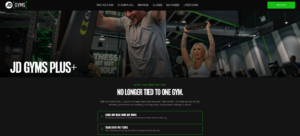
JD Gyms – PLUS+
JD Gyms sells a basic single-site membership, then charges a bit more for PLUS+, which unlocks the thing budget-gym members usually cannot have: freedom.
One no-contract monthly fee lets members train at over 100 JD Gyms across the UK, not just their home branch, which suits anyone who travels, commutes or likes a change of scene. PLUS+ also layers on a rewards programme, up to 10% back to spend at JD Sports plus partner discounts at the likes of Tesco, M&S and Costa.
The attraction is the removal of the one restriction low-cost gyms are built on.
Costco
Costco barely runs a loyalty programme in the usual sense. It runs a door you pay to walk through. No membership, no shopping, and in the UK that membership costs £33.60 a year for a standard card or £74.40 for Executive, the tier that hands back 2% of your spend.
The fee does what loyalty points only promise: once you have paid to get in, you funnel your shopping through Costco to make it pay off. The proof is in the renewals.
In its 2025 financial year, Costco held a 92.3% renewal rate across the US and Canada and 89.8% worldwide, and Executive members, just under half the base, drove close to three quarters of global sales.
Paying members stay, yes, but they also spend like they have something to protect.
How Do You Implement a Premium Loyalty Programme?
Implementing a premium loyalty programme comes down to four steps: work out who it is for, design the rewards and the fee, build and launch it on the right technology, then measure and refine. The order matters. Skip the first step and you will design perks nobody will pay for.
Step #1: Assess Your Business and Customer Base
Start with the customers you already have. Your top spenders and most frequent buyers are the natural first members: they are already committed, so they are the most likely to pay for more.
But do not stop at who they are. Find out what they would actually pay for. Which rewards, which experiences, which perks would feel worth a fee to them?
Ask them directly through surveys, interviews and purchase data, because a premium programme built on guesswork is a premium programme built to be ignored.
Step #2: Design Your Premium Loyalty Programme
Design is where business goals meet customer desire. Begin with clear objectives, because everything else follows from them:
higher customer retention
higher average order value
more frequent purchases
Make them specific and measurable, then build rewards around what customers genuinely love about your brand: exclusive access, personal service, perks with real value.
Last, settle the fee structure.
A single tier with a flat fee is simpler to sell and run. Multiple tiers earn more from your most committed members but ask more of your marketing. Neither is wrong. Just make the value at each level obvious and the price fair enough that signing up feels like a good deal.
Step #3: Build and Launch Your Programme
Now you choose how to build it, and the real decision is build or buy: develop a platform in-house, or run on a specialist loyalty provider.
Building your own gives you total control and a long, costly road to get there. Leading platforms like Propello Cloud take the other trade: you launch faster and keep your engineers on your core product, provided the platform slots cleanly into what you already run, from checkout to customer service.
Whichever route you pick, integration is the part most people underestimate. Then launch loudly. A premium programme nobody knows about earns nothing, so build noise with email, social and in-store promotion.
Step #4: Measure and Optimise Programme Performance
Track the numbers that show whether the programme is working: enrolment, redemption rates, average order value and customer lifetime value. Then act on them.
The data tells you what to add, what to reprice and which tiers are pulling their weight, and it will tell you when a perk has gone stale long before your members do. Keep tuning and improving the scheme to maintain consistent value delivery.
What Are the Common Challenges of Paid Loyalty Programmes?
Paid loyalty has three obvious failure points: convincing people to pay at all, keeping the rewards worth more than they cost you, and stopping the whole thing from going stale. None is fatal. But each needs planning from the start.
Communicating the Value of Paid Membership
The first hurdle is the obvious one. A free programme sits right next to your paid one, and if customers cannot see daylight between the two, they will stay free.
So make the value loud and specific, not implied. Spell out exactly what the fee buys, and lower the risk of a yes with a free trial or introductory rate, so the first step costs them next to nothing.
Balancing Cost and Benefit
Rewards have to genuinely improve your members’ lives, not just carry a premium label. That usually means real products, real experiences, or partnerships that extend what you can offer on your own. But every one of those costs money.
The balancing act is setting a fee high enough to fund benefits worth paying for and sustain the programme, yet low enough that customers still feel they are winning.
Price it wrong in either direction and the programme either bleeds money or nobody joins.
Maintaining Exclusivity and Differentiation
Exclusivity fades with time. What feels special at launch becomes ordinary once members get used to it, and the perks that won them over stop registering.
Keeping that feeling alive is constant work: refresh the rewards, bring in new partners, add experiences members have not seen before, and occasionally rework the programme wholesale.
The club has to keep feeling like a club worth being in, long after the novelty of joining has worn off.
What’s the Future Look Like for Premium Loyalty Programmes?
Premium loyalty is moving in two directions, and paying members are driving both. They want experiences built around them as individuals, and rewards that reach past points into the way they actually live. The fee raises the expectation. The programme has to meet it.
Personalisation and Customisation
AI and machine learning have made real personalisation cheap enough to do at scale. Everything from product recommendations that update in real time to rewards shaped around one member’s habits rather than a broad segment.
The technology to deliver those experiences is now ordinary, so members will come to expect it as standard.
Flexibility matters just as much. People want to pick the rewards and experiences that suit them, so the programmes that win will offer range, not a fixed menu everyone is handed.
Experiential and Lifestyle-Oriented Benefits
The sharpest programmes are moving past discounts into experiences money struggles to buy: exclusive travel, premium dining, the kind of moments members talk about afterwards.
These rewards feel worth far more than the points they cost, and they tie the memory of the experience to the brand that provided it. That is mindshare a discount cannot buy.
Boost Retention and Revenue with a Premium Loyalty Programme
A premium loyalty programme does one thing better than almost any other retention tool: it turns your best customers into members who have chosen to stay, and paid for the privilege.
That is the opportunity. The hard part is building it so the fee feels like a bargain, the rewards stay worth paying for, and the technology holds it all together without pulling your team off their real work.
That is where we come in. We will design a premium programme around your customers and your goals, and give you the platform to launch, run and keep improving it. No heavy lift for your engineers, no disruption to your marketing team.
Book a demo and we will walk you through what it could look like for your brand.
FAQs
How do premium loyalty programmes differ from free loyalty programmes?
The defining difference is the fee. Premium programmes charge a membership fee or subscription to join, while free programmes cost nothing to enter. Because members pay upfront, they tend to engage more and expect more in return, so the rewards have to be clearly better than anything the free tier offers.
Are premium loyalty programmes worth it for customers?
They are worth it when the benefits a member actually uses are worth more than the fee. Heavy, regular customers usually come out ahead, especially where the programme offers savings, free delivery or exclusive access. Occasional customers often do not use enough to justify paying, and are better served by a free programme.
Which businesses are best suited to a paid loyalty programme?
Paid loyalty suits brands with a core of frequent, engaged customers and benefits worth paying for. It works well in crowded or hard-to-differentiate markets, where a fee and exclusive perks give customers a reason to stay. Brands with mostly occasional or price-driven customers tend to find it harder to make the fee pay.
How do you set the right membership fee for a premium loyalty programme?
Price the fee below the value a typical member will get from the benefits they actually use, but high enough to fund those benefits and sustain the programme. Model the likely usage first, then test the price with a free trial or introductory rate before committing to it.
What is the difference between paid loyalty programmes and spend-based tiers?
A paid loyalty programme charges a membership fee or subscription to join. Spend-based tiers, like many free schemes, are free to enter and promote members as they spend more. Both reward loyalty, but only paid programmes generate fee revenue and the stronger commitment that comes from customers choosing to pay upfront.
Can premium loyalty programmes improve customer retention?
Yes. Paying to join raises a customer’s commitment, and the ongoing benefits give them a continual reason to stay rather than switch. Members also tend to consolidate more of their spending with the brand to justify the fee, which is why paid programmes often report high renewal and retention rates.
What role does customer service play in premium loyalty programmes?
A central one. Members paying for VIP treatment expect faster, more personal support, and often rank it among the benefits they value most. Strong service makes the fee feel justified and deepens loyalty, while poor service undermines the whole premise, since paying customers judge the experience far more harshly than free ones.
Can a paid loyalty programme damage your brand image?
It can, if handled badly. Charging for perks that used to be free, or making non-members feel like second-class customers, can breed resentment. The way round it is to add genuinely new value at the paid tier rather than stripping value from the free one, so members gain without others feeling penalised.
How long does it take a premium loyalty programme to pay for itself?
It varies with how quickly members adopt it and how much their spending rises. Fee revenue arrives immediately, but the fuller return, higher retention and increased spend, builds over the first year. Tracking enrolment, redemption and lifetime value early shows whether it is on course to pay back.
Can premium loyalty programmes work for B2B brands?
Yes. Paid loyalty is not limited to consumer brands. B2B companies use premium tiers to offer priority support, exclusive content, training or account benefits that help customers get more value, which strengthens retention in long, high-value relationships. The principle is the same: charge a fee, then make it clearly worth paying.
Mark Camp
Mark is the Founder and CEO of Propello Cloud, an innovative SaaS platform for loyalty and customer engagement. With over 20 years of marketing experience, he is passionate about helping brands boost retention and acquisition with scalable loyalty solutions.
Mark is an expert in loyalty and engagement strategy, having worked with major enterprise clients across industries to drive growth through rewards programmes. He leads Propello Cloud’s mission to deliver versatile platforms that help organisations attract, engage and retain customers.
Start your customised Propello Cloud journey today
Explore the platform’s scalability, features and customisation options and get answers to your unique questions.